 Haaland Has Seven Goals and Norway Runs Entirely Through Him
⚽️2026 FIFA WORLD CUP
Which Jackson Heights Roof Deck Shows Every Mundial Match for the Colombian Diaspora?
A residential building's top floor becomes open-air theater, coolers of aguardiente and empanadas passed hand-to-hand under strung Edison bulbs.
You find the building by following the sound—not music yet, just voices layering over each other in that particular cadence that means someone's already arguing about formation choices an hour before kickoff. The roof deck sits seven floors up on a residential block where Roosevelt Avenue's chaos fades into tree-lined cross streets, and during Mundial months it transforms into the kind of gathering space that doesn't advertise because it doesn't need to. You either know about it through family, or someone's cousin texts you the building number, or you follow a neighbor carrying a cooler up the stairwell.
The Climb Tells You Everything
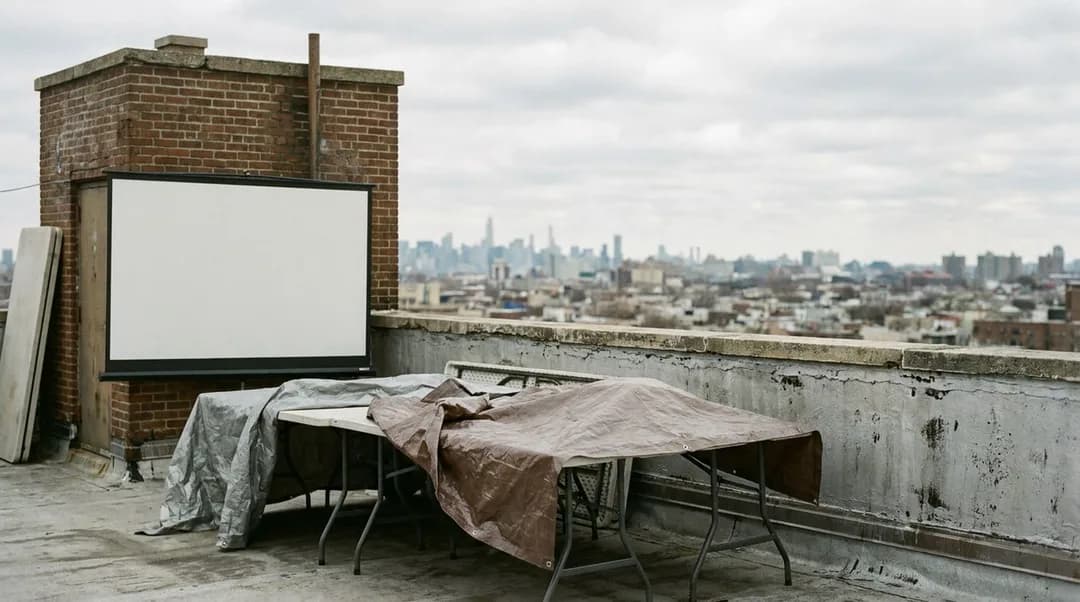
The elevator only goes to six, so you take the last flight on foot. Painted concrete steps, scuffed from years of foot traffic, and by the third match of the tournament someone's taped paper flags along the handrail—Colombia, Ecuador, a few Argentine ones that spark friendly trash talk. The metal door at the top pushes open to a blast of late-afternoon heat that hasn't yet broken, the kind that makes cold beer taste like salvation. Edison bulbs strung in zigzag patterns across the deck won't matter until after sunset, but they're already up, swaying slightly in whatever breeze makes it over the neighboring buildings. The deck itself spans maybe forty feet, L-shaped, with a projector screen rigged against the stairwell housing and folding tables positioned so no one blocks anyone's sightline. Someone's grandmother has claimed the best chair two hours early, a plastic lawn throne positioned dead center.
What Arrives in Coolers and Shopping Bags
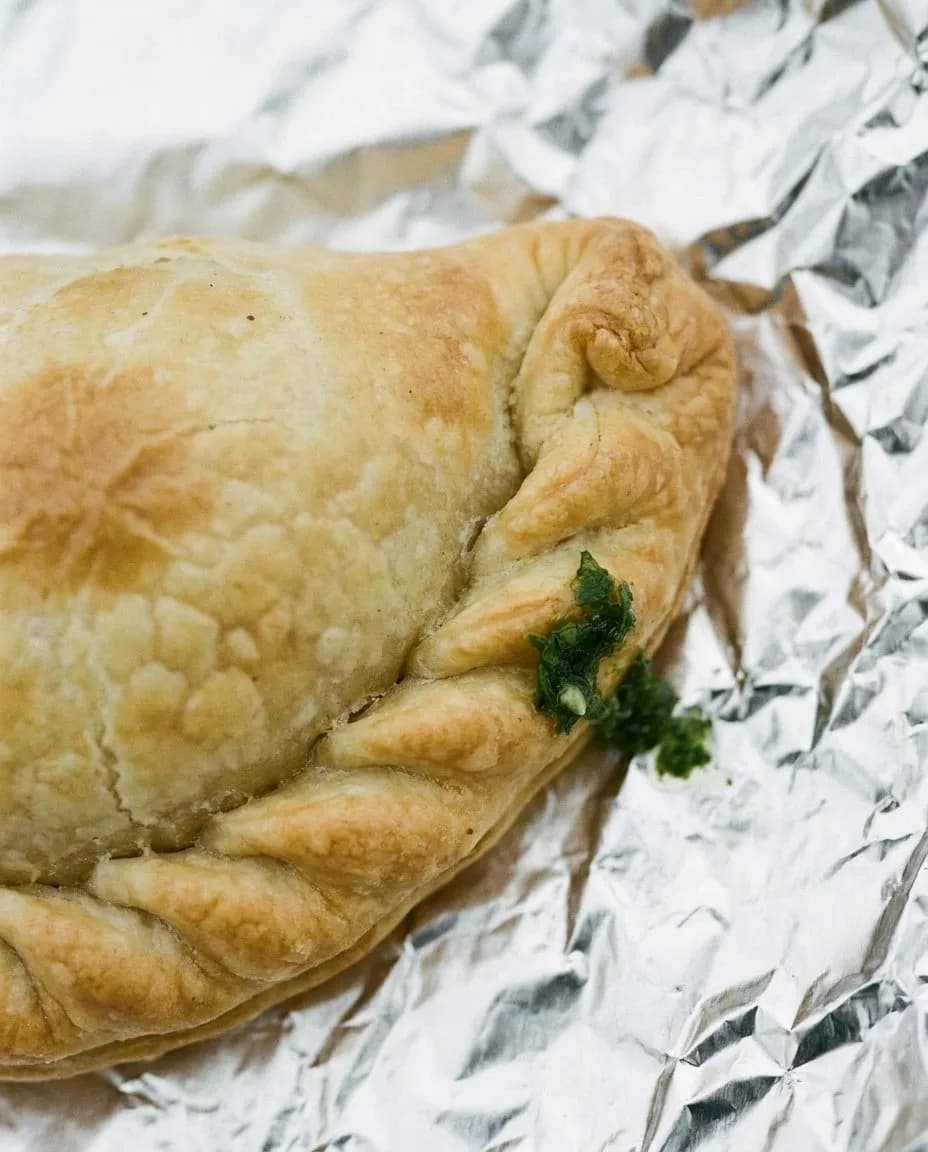
The food comes in waves, never catered, always communal. You'll see empanadas still warm in aluminum foil, the dough blistered just right, filled with beef and potato that's been seasoned with cumin heavy enough to smell from the doorway. Someone's cousin runs a spot on 82nd Street and always sends up extra when Colombia plays. Arepas con queso appear on paper plates, the cheese stretching when you pull them apart, and there's usually a massive aluminum tray of arroz con pollo that gets passed around in styrofoam containers. The aguardiente comes out as the sun drops—plastic bottles in coolers packed with ice that's already melting, poured into small plastic cups that get refilled without anyone asking. You taste the anise on your tongue, feel the warmth spread through your chest, and suddenly you're talking louder than you planned to. Colombiana soda for the kids, Club Colombia for anyone who wants beer, and someone always brings a thermos of coffee that no one touches until halftime.
The Projector Ritual and Screen Politics
Setup starts ninety minutes before kickoff, and there's a whole hierarchy to who touches the equipment. The projector lives in someone's apartment downstairs, carried up in a canvas bag with the extension cords wrapped separately so they don't tangle. The screen pulls down from a homemade frame—PVC pipe and white canvas that someone's uncle built three World Cups ago, patched now in two corners but still functional. Picture quality depends entirely on how much ambient light is left in the sky, which means early matches look washed out until someone rigs a bedsheet as a sun shade. The sound runs through a Bluetooth speaker that cuts out if too many people are streaming simultaneously, so there's an unspoken rule about putting phones away once the anthems start. Someone always brings a backup radio just in case, tinny AM frequency that's three seconds behind the picture but better than silence.
How the Crowd Layers Itself
Seating arranges itself by unspoken code. The elders get chairs, always, positioned in the front two rows where they can see without standing. Behind them, younger folks on folding chairs they brought themselves, or plastic crates flipped upside down, or just standing with shoulders pressed together as the deck fills. Kids weave through legs during slow passages of play, occasionally getting shushed when something crucial develops. The serious fans—the ones who played semi-pro back home or who still wake up for Copa Libertadores matches—congregate on the left side where they can yell at the screen without getting side-eye from someone's abuela. When a goal goes in, the entire deck surges forward, a wave of bodies pressing toward the screen, and you feel the floor vibrate under collective jumping. The celebration lasts longer than the replay, people hugging strangers, aguardiente spilling, someone's aunt crying actual tears.
The Halftime Economy
Fifteen minutes between halves and the deck reorganizes itself. This is when money changes hands—informal betting pools settled, new ones formed for the second half. Someone's selling beer from a cooler at basically corner-store prices, just enough markup to cover what they paid. The empanada supply gets replenished from a second wave that arrives via someone who couldn't make kickoff but showed up with reinforcements. Bathroom breaks mean heading back down to someone's apartment, and there's usually a line. The smokers cluster by the far railing, and this is when you hear the real analysis—not the shouting during play but the quieter debates about why the midfield isn't connecting, whether the coach should've started someone else, what this result means for the knockout round. Someone's always on their phone checking other scores, calling out updates that get absorbed into the collective consciousness.
When the Light Changes Everything
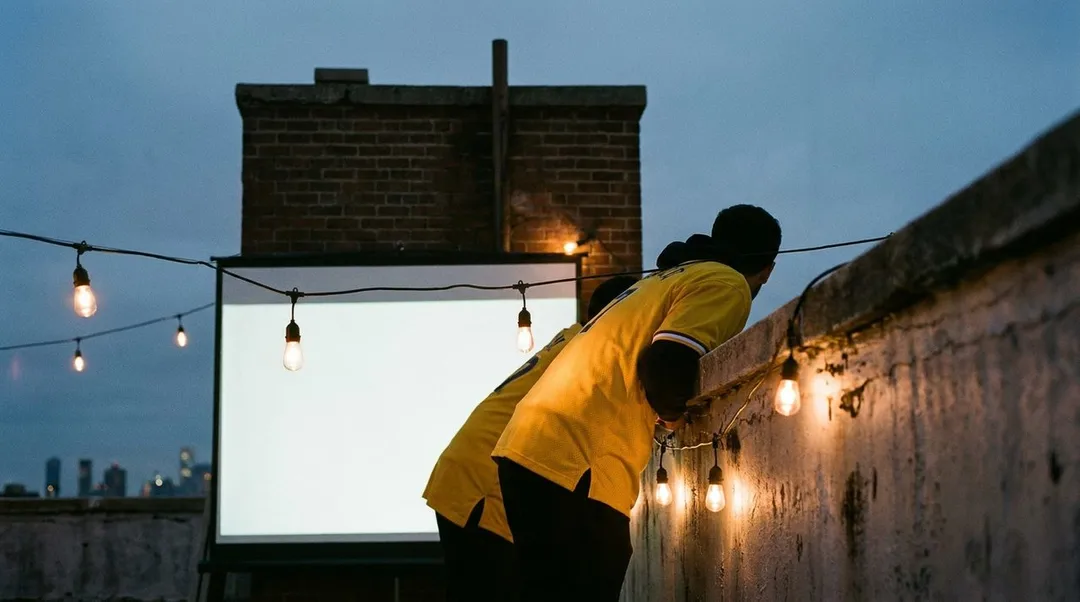
The best matches are the ones that start at dusk and finish under full dark. You watch the sky fade from blue to purple behind the screen, the buildings across the way lighting up window by window, and suddenly those Edison bulbs matter. They cast this warm glow across faces, and the projected image gets sharper as natural light drains away. Late goals hit different under artificial light—the shadows make people's reactions more dramatic, and when someone scores in the 88th minute the entire deck becomes a theater of silhouettes jumping against the night sky. The air cools enough that you're not sweating through your shirt anymore, and the sounds of Jackson Heights below—traffic, train rumble, someone's radio three buildings over—all fade into background texture. This is when the roof deck feels most like its own country, a temporary nation that exists only during these ninety-minute intervals.
Practical Notes
The gatherings happen throughout the tournament, typically evening matches that align with the diaspora's work schedules. Access is genuinely word-of-mouth—ask around at Colombian restaurants or bakeries along Roosevelt Avenue and 82nd Street, or connect with community groups that organize around the neighborhood. Bringing something to share isn't mandatory but reads better than showing up empty-handed. The space accommodates maybe sixty people comfortably, more when Colombia's playing. Transit is straightforward—multiple subway lines converge in Jackson Heights, and the walk from Roosevelt Avenue takes you through the neighborhood's commercial heart. No reservations, no cover, just show up early enough to claim your spot and prepare for the possibility that your voice will be gone by the final whistle.
Tags: #2026FIFAWorldCup #JacksonHeights #QueensNYC #ColombianDiaspora #RoofDeckCulture #MundialViewing #NYCWorldCup #ImmigrantStories #CommunitySpaces #QueensEats #ColombianFood #SoccerCulture #NYCNeighborhoods #DiasporaLife #WorldCupNYC
Sources consulted: fifa.com · espn.com · timeout.com
Please drink responsibly. Must be of legal drinking age.
All trademarks are the property of their respective owners.
Ask Karpo for more information.
Keep reading
- Haaland Has Seven Goals and Norway Runs Entirely Through Him
 World Cup Trophy Ceremony Timing Medals and Postmatch Celebrations
 Olise and France's Attack: The Semifinal Tactical Question