 Haaland Has Seven Goals and Norway Runs Entirely Through Him
⚽️2026 FIFA WORLD CUP
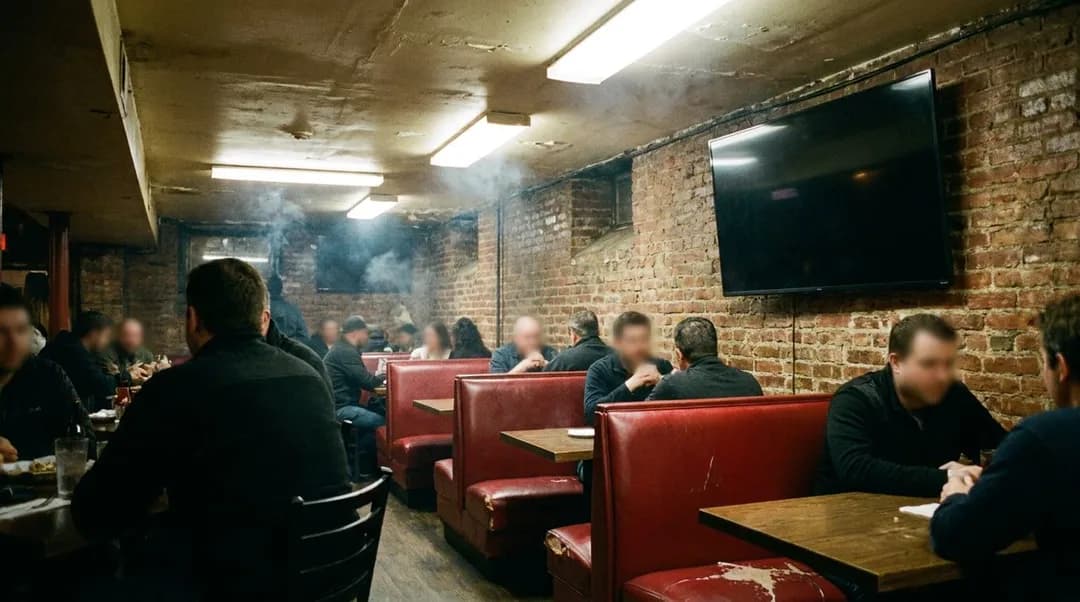
Where Do South Korea vs Czechia Crowds Gather Tonight in Koreatown?
Korean BBQ joints and Czech beer halls on 32nd Street share a block, each broadcasting to packed rooms of expats nursing soju and pilsner.
You know the match is on when the smell of charred galbi and yeasty pilsner starts competing for dominance on the same city block. Tonight in Koreatown, the South Korea vs Czechia game splits 32nd Street down the middle — Korean BBQ joints on one side broadcasting to rooms thick with soju steam, Czech beer halls on the other pouring half-liters for homesick expats who haven't missed a match in three tournaments. The energy doesn't blend so much as collide, two fan bases occupying the same hundred yards of Manhattan pavement with completely different soundtracks.
The Korean Side Sets Its Table Hours Before Kickoff
Walk into any of the bigger Korean spots mid-afternoon and you'll see staff already angling flat screens toward the center tables, adjusting volume levels, taping handwritten "World Cup Special" menus to the hostess stand. The prep work happens in full view — banchan stations getting restocked with kimchi and pickled radish, servers folding cloth napkins into tight triangles, someone testing the grill vents because they know what's coming. By early evening the front windows fog completely, condensation running in streaks down the glass. You can hear the sizzle before you even open the door.
The crowd skews multigenerational. Older Korean men in polo shirts claim the corner booths early, ordering bottles of soju and setting up for the long haul. Younger groups — college kids, recent transplants, couples on dates that happen to coincide with the match — fill in the middle. Everyone orders meat. Brisket, short rib, pork belly, whatever cooks fast and gives you something to do with your hands during tense moments. The rhythm of the room syncs to the game: dead silent during free kicks, erupting into shouts when Korea pushes forward, then back to the steady chatter and clatter of tongs on metal grates.
Across the Street the Pilsner Pours Never Stop
The Czech spots operate differently. Smaller spaces, darker wood, less spectacle. You're here to drink and watch, not to make an evening of it, though plenty of people do anyway. The bar tops are zinc or copper, worn smooth in the spots where regulars plant their elbows. Pilsner Urquell on draft, obviously, poured with the proper three-part technique that takes longer than you'd think. The first pour gets set aside to settle while the bartender starts the next one. By halftime there's a forest of empty glasses accumulating on every flat surface.
The demographic tilts older and quieter. Expats who've been in New York long enough to have routines, who know each other's names or at least faces. A few younger Czechs studying at NYU or working finance jobs in Midtown. Some Americans who married into Czech families and got adopted by the fan base. The conversations happen in a mix of Czech and English, sometimes switching mid-sentence. When Czechia scores — if Czechia scores — the eruption is brief and almost polite, more relief than celebration, followed immediately by nervous laughter and someone buying a round.
The Street Itself Becomes the Third Venue
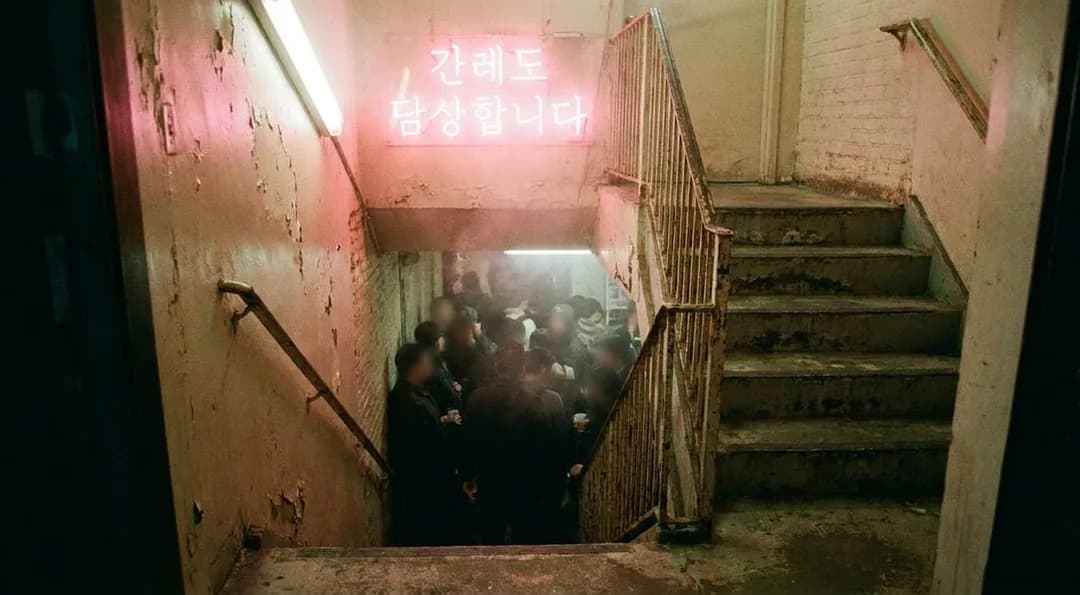
Between the two camps, 32nd Street fills with people who can't get a seat inside or don't want to commit to a full restaurant tab. They cluster outside convenience stores that prop open their doors and angle small TVs toward the sidewalk. Bodegas sell single tallboys and cigarettes to groups standing three-deep on the curb. You'll see Korean fans in red jerseys smoking between courses, checking their phones, debating substitutions in rapid-fire Korean. Czech fans in white kits doing the same in their own language twenty feet away.
The soundtrack is layered: muffled announcers bleeding through walls, car horns, the hiss of bus brakes, someone's Bluetooth speaker playing K-pop during a commercial break. The light changes depending on which side you're standing on — the Korean restaurants throw warm orange glows onto the sidewalk from their interior grills, while the Czech places leak cooler fluorescent tones. When both crowds react to the same moment, the noise funnels down the block like a wave, bouncing off the buildings and briefly drowning out the traffic on Fifth Avenue.
What You Actually Order When You Go
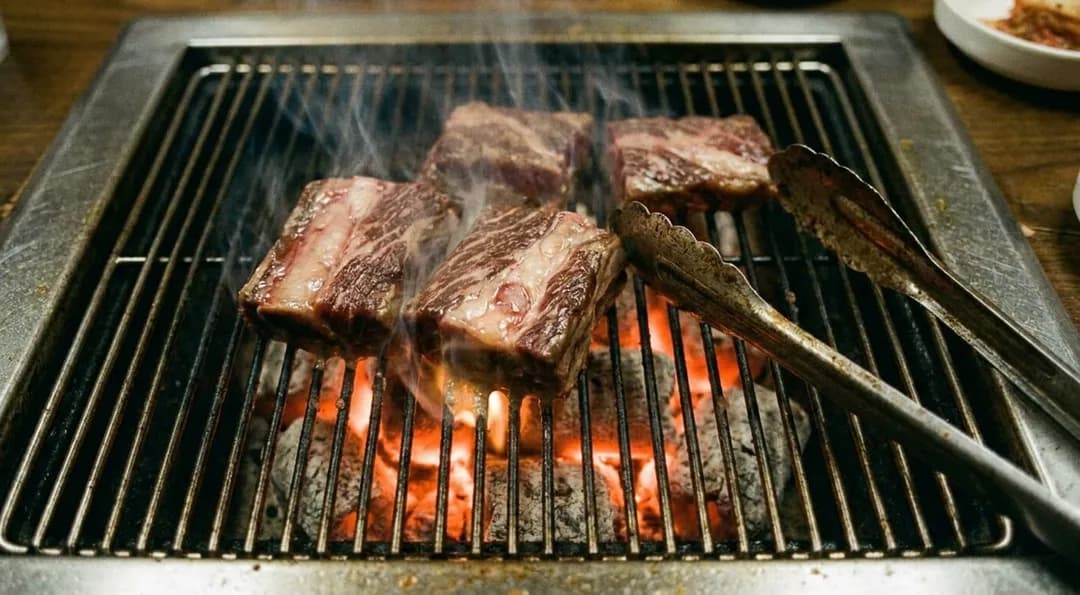
In the Korean spots, the move is to skip the entrées and go straight for the grill-it-yourself options. You want something that'll last you ninety minutes plus stoppage time, which means a combination platter with at least three proteins. The servers bring everything out on metal trays — raw marinated meat, scissors for cutting, a full banchan spread that covers half the table. You're expected to manage your own grill, flipping pieces with the tongs, pulling them off when the edges char. Soju comes in small green bottles, served ice-cold in shot glasses you're meant to drain in one go. Order a couple bottles early because the servers get slammed once the match starts.
Czech side, it's simpler. Pilsner, maybe a shot of Becherovka if you're feeling ambitious or need to settle your nerves. Some places offer sausages or goulash, heavy things that soak up the beer. The food is beside the point. You're here for the pour and the screen and the company. The bartenders work fast during commercial breaks, lining up six or eight glasses at once, filling them in assembly-line fashion. Everything's paid in cash, tabs settled at the end of each round to keep things moving.
When the Match Ends the Block Doesn't Empty
Win or lose, both sides linger. The Korean restaurants stay packed through dinner service, tables turning over slowly as groups finish their meals and new arrivals claim the seats. The energy shifts from game-watching intensity to regular Saturday night buzz — louder conversations, more laughter, someone's birthday being celebrated three tables over. The grills keep smoking, the soju keeps pouring, and if you walked in an hour after the final whistle you might not even know there'd been a match.
The Czech spots thin out faster but don't close. The regulars stay planted at the bar, rehashing key moments, arguing about tactics, ordering one more round. By late evening it's down to the core group, the people who were there before kickoff and will stay until last call. The mood depends entirely on the result, but even in defeat there's a certain satisfaction in having watched together, in having held this small piece of territory in a city that mostly doesn't care about your team or your country.
Practical Notes
Most Korean restaurants in the area operate continuously from late morning through midnight or later, especially on match days. The Czech beer halls keep more traditional pub hours, opening mid-afternoon and running until late evening. Getting a table during major matches requires showing up well before kickoff or being prepared to wait — reservations aren't standard for bar seating but some dining rooms take them. The nearest subway stops are Herald Square and Penn Station, both a short walk west. If you're planning to stay for the full match plus a meal, budget accordingly — Korean BBQ runs higher than beer-hall pricing, but both options exist at multiple price points along the block. Cash helps speed things up at the Czech spots, though most places take cards. Street parking is mythical; take the train.
Tags: #KoreatownNYC #WorldCup2026 #SouthKoreaVsCzechia #ManhattanEats #KoreanBBQ #CzechBeer #32ndStreet #SoccerCulture #ExpatLife #PilsnerUrquell #SojuNights #FIFAWorldCup #NYCNeighborhoods #StreetFood #DiasporaDining
Sources consulted: fifa.com · espn.com · timeout.com
Please drink responsibly. Must be of legal drinking age.
All trademarks are the property of their respective owners.
Ask Karpo for more information.
Keep reading
- Haaland Has Seven Goals and Norway Runs Entirely Through Him
 World Cup Trophy Ceremony Timing Medals and Postmatch Celebrations
 Olise and France's Attack: The Semifinal Tactical Question