 Haaland Has Seven Goals and Norway Runs Entirely Through Him
⚽️2026 FIFA WORLD CUP
What Plaza Shows Senegal vs Saudi Arabia Under the Stars Tonight?
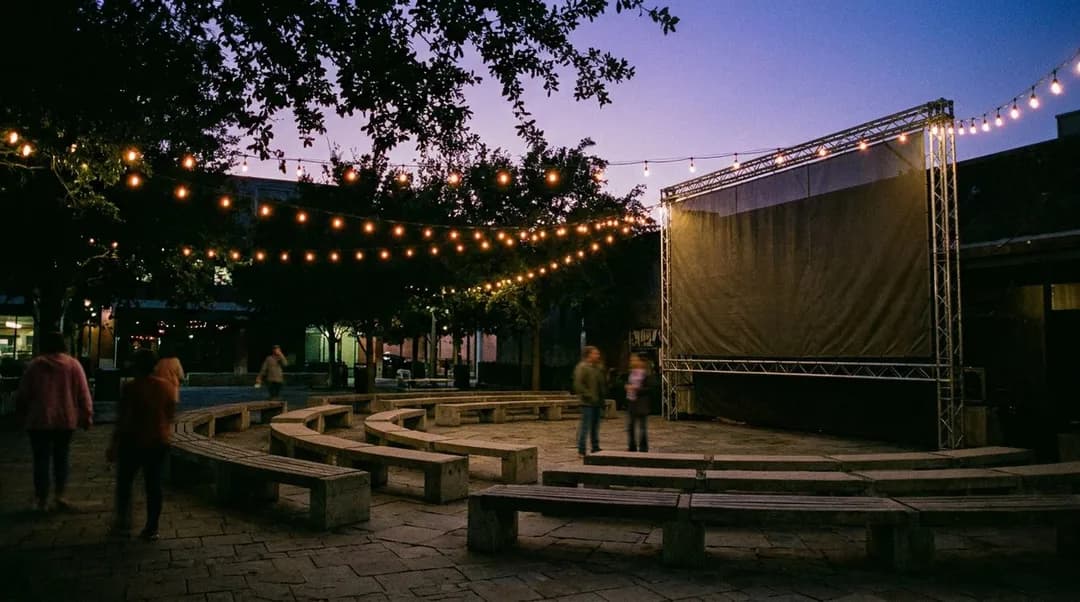
A public square transforms into an open-air cinema where two communities claim opposite benches and the screen glows against jacaranda branches.
The Square That Holds Two Countries at Once
You're standing in Leimert Park Village Plaza after dark, and the screen flickers to life against the branches of jacaranda trees that frame the northern edge. Tonight it's Senegal versus Saudi Arabia, and the benches have already divided themselves—green jerseys claiming the east side, white thobes and green scarves gathering west. The air smells like grilled lamb from the carts that rolled in an hour before kickoff, and someone's rigged a sound system that's better than it has any right to be. This isn't a bar with a projector. This is the plaza doing what it's done for decades: becoming whatever the neighborhood needs it to be.
When Concrete Becomes a Living Room
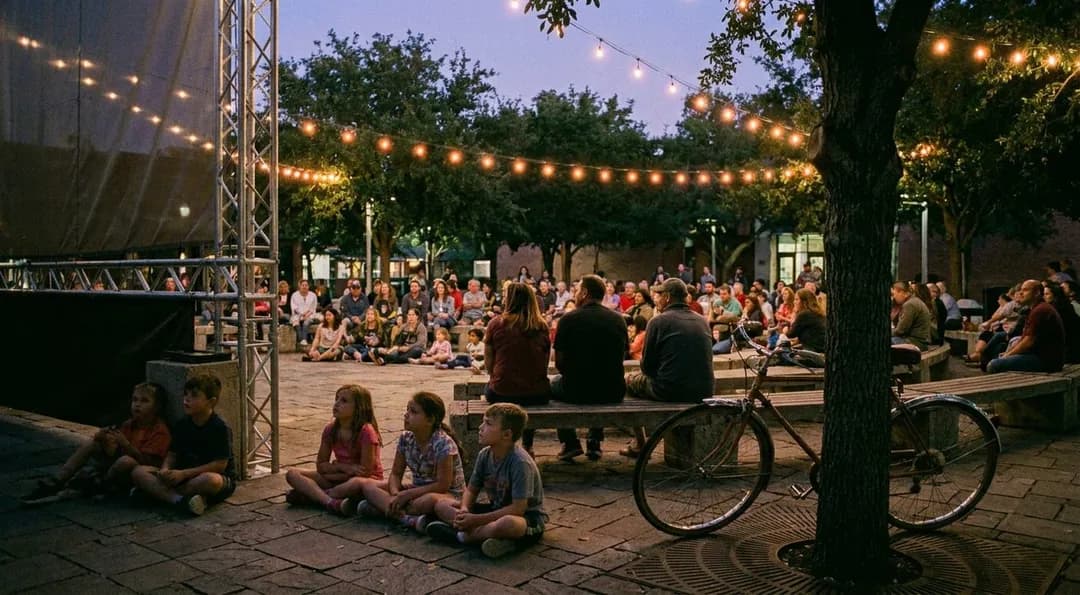
The plaza sits at the heart of Leimert Park, a neighborhood that's been the cultural pulse of Black Los Angeles since the postwar years. By day it's a transit point, a place where older folks sit and talk and younger ones pass through on their way to the drum circles that still happen on weekend afternoons. But when the World Cup comes around, the space transforms. Someone—and it's never quite clear who organizes this, it just happens—sets up a screen on the north wall of the Vision Theatre. Folding chairs appear. The benches fill. You can smell incense from the shops that stay open late, mixing with whatever's cooking on the portable grills that vendors wheel in from the surrounding blocks. The light from the screen catches faces in blue-white flashes, and you realize you're watching two games at once: the one on screen and the one happening in the crowd.
The Benches Have Memory
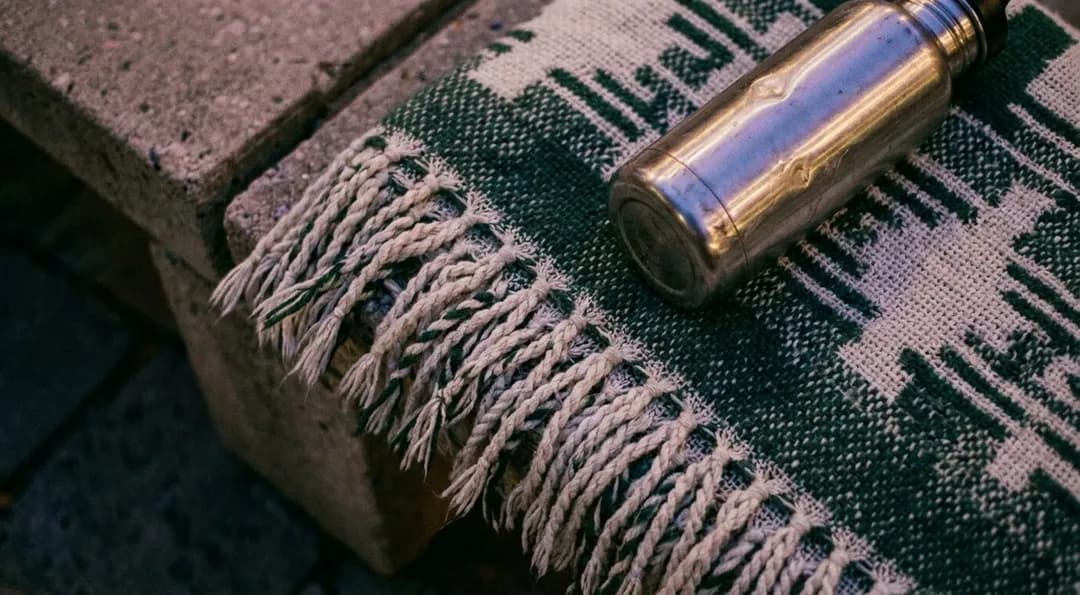
If you arrive early—and you should, maybe an hour before the match starts—you'll notice how people choose their spots. The regulars know which bench catches the least glare, which angle gives you the clearest sightline without craning your neck. There's a rhythm to it. The Senegalese community, many of whom run businesses along Degnan Boulevard and the surrounding streets, tend to gather on the east side where a low wall provides back support. The Saudi and broader Arab community, some driving in from further east, claim the western benches near the steps. It's not territorial in any tense way. It's more like an unspoken agreement, the kind that lets everyone feel at home while sitting ten feet from someone rooting for the opposite outcome. Between matches, people cross over. You'll see someone in a Saudi scarf sharing a laugh with someone in a Senegal jersey, passing a phone back and forth to show photos of family back home.
What the Carts Know That You Don't
The food situation here isn't planned by any official body, and that's exactly why it works. Around dusk, carts start appearing from the side streets. One regular setup—run by a woman who's been doing this for years during big soccer events—serves thieboudienne, the Senegalese fish and rice dish that stains your fingers red from tomato and turns every napkin into evidence. Another cart, manned by a guy who barely speaks but whose lamb skewers speak for themselves, sets up near the southern entrance. You pay in cash, a few bucks for something that would cost three times that in a sit-down spot. The best move is to grab food before kickoff, because once the match starts, the lines get impossible and you miss the moments when the crowd collectively holds its breath. Bring small bills. Nobody's making change when a goal is imminent.
The Sound System That Shouldn't Work But Does
Whoever handles the audio setup deserves some kind of engineering award, because they're pulling a clear broadcast feed and pumping it through speakers that have no business sounding this good in an open plaza. The commentary comes through in whatever language the stream provides—sometimes English, sometimes French, sometimes Arabic—and nobody seems to mind. The crowd provides its own translation. You hear the rise in voices before you see the play develop on screen. Someone's always running their own commentary in Wolof or Arabic, loud enough that their section gets the call a half-second before the announcers catch up. When something controversial happens—a questionable call, a near miss—the plaza erupts in multilingual protest, and for a moment it sounds like you're in three different stadiums at once. The acoustics of the space, enclosed on three sides by buildings, turn every reaction into an echo that feeds back on itself.
Where to Position Yourself for the Full Experience
If you want to actually watch the match, grab a spot in the center sections with a straight view of the screen. But if you want to understand what makes this gathering different from watching at home or in a sports bar, position yourself on the edges. Stand near the back by the drum shop that closes at sundown but leaves its security gate half-up. From there you can see both the screen and the crowd's faces, watch how the light plays across different reactions, catch the moment when someone jumps up and their shadow stretches fifteen feet across the plaza floor. You can also duck out easily to grab more food or take a call without disrupting anyone's sightline. The other strategic spot is near the steps on the west side, where you're close enough to hear the Arabic commentary that someone's streaming on their phone, turned up just loud enough for their immediate circle. You get two audio feeds, two emotional registers, and somehow your brain synthesizes it into something richer than either alone.
Practical Notes
The plaza sits in the heart of Leimert Park, easily reached by metro with a short walk from the station. Screenings typically start around match time during the World Cup, but people gather well before kickoff—arrive early if you want a seat rather than standing room. There's no admission, no tickets, no formal organization. It just happens, driven by community momentum and whoever steps up to make it work that night. Parking on surrounding streets is possible but fills up fast. Better to take transit or ride-share and save yourself the circling. Bring cash for food vendors, and maybe a light jacket—even summer nights in LA can cool down once the sun drops. The plaza is all-ages, and you'll see families with kids, older folks who've been coming here for decades, and first-timers who heard about it and showed up curious.
Tags: #LeimertPark #LosAngeles #WorldCup2026 #SoccerCulture #PublicSpace #DiasporaCommunity #SenegaleseCommunity #OpenAirCinema #LANeighborhoods #CulturalLA #CommunityGathering #StreetFood #SouthLA #HiddenLA #WorldCupViewing
Sources consulted: fifa.com · espn.com · timeout.com
All trademarks are the property of their respective owners.
Ask Karpo for more information.
Keep reading
- Haaland Has Seven Goals and Norway Runs Entirely Through Him
 World Cup Trophy Ceremony Timing Medals and Postmatch Celebrations
 Olise and France's Attack: The Semifinal Tactical Question