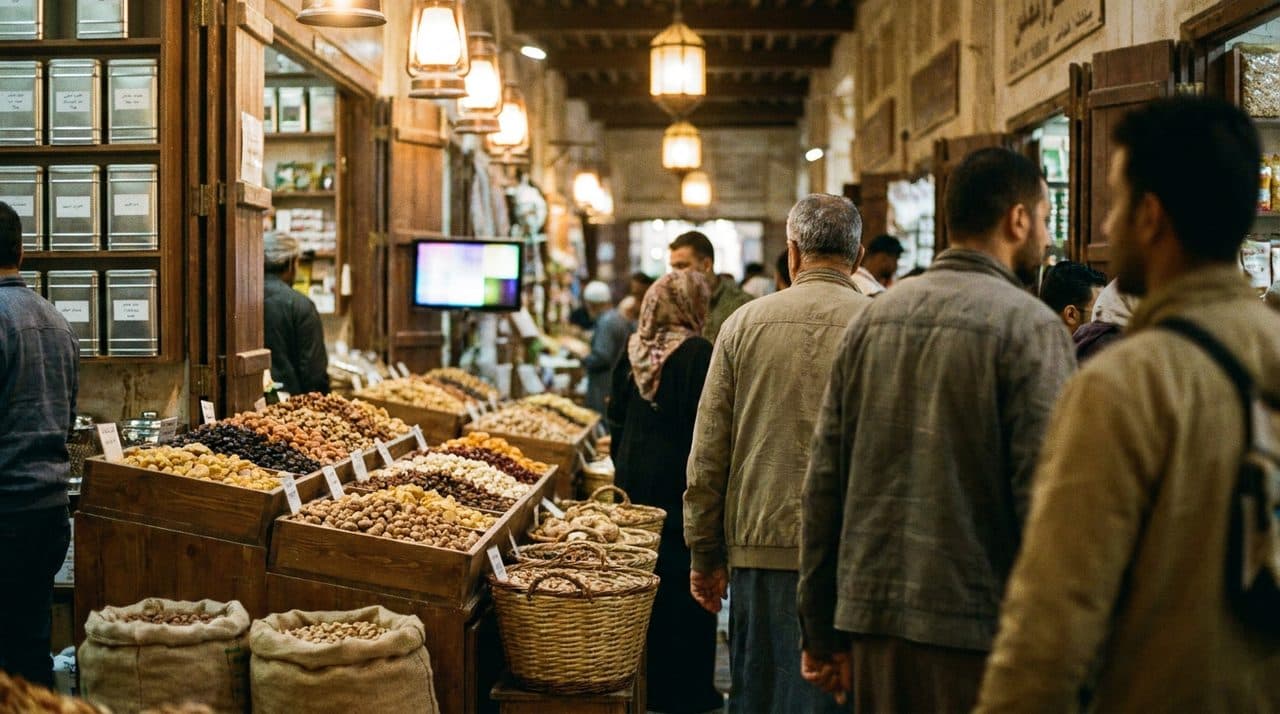
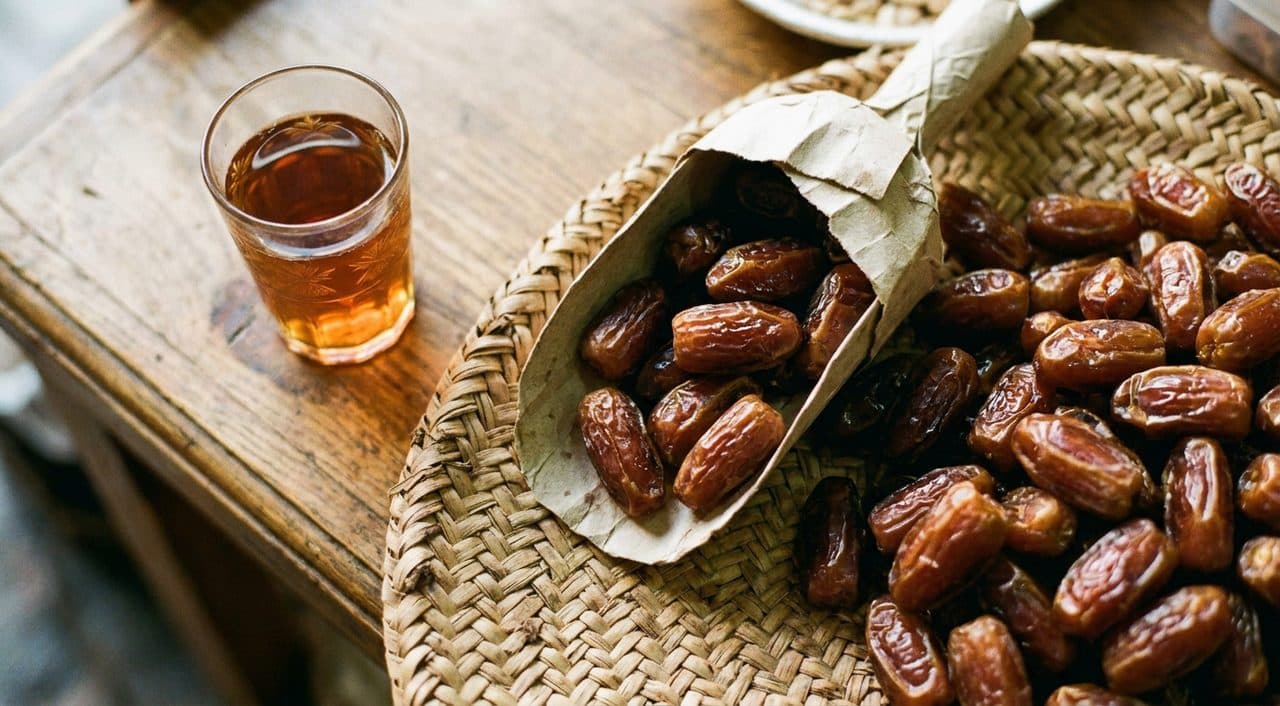
You walk into a Crown Heights grocery mid-morning and the air smells like cardamom and dried apricot, a faint sweetness hanging over crates of Medjool dates stacked waist-high near the register. Someone's already claimed the folding chair by the window, tea glass in hand, eyes on a small screen propped against a bag of pistachios. This is how match day starts here—not in a sports bar with a drink minimum, but in markets where the World Cup becomes a reason to linger, to share a plate of fruit, to nod at strangers who suddenly feel like neighbors because you're all watching the same game unfold half a world away.
The Medjool Economy and Why Everyone's Stocking Up
Date fruit sales have spiked across the US in ways that mirror immigration patterns and diaspora nostalgia, and Crown Heights sits at the center of that surge. Walk along Nostrand or Utica in the weeks leading up to a tournament and you'll see it: bulk bins overflowing with amber-colored dates, dried figs gone within hours of restocking, apricots so sticky they cling to the scoop. The growth isn't abstract—it's visible in how quickly inventory moves, how many customers ask for a kilo not a handful, how the same varieties that were niche five years ago now occupy prime real estate near the checkout. You're watching a food culture assert itself in real time, one that treats dried fruit not as a snack but as a social anchor, something you set out when people gather, when a screen gets turned on, when a match is about to start.
Where the Screens Go Up and the Chairs Come Out
The markets themselves transform. A produce shop on a residential block that you'd walk past without noticing suddenly has a crowd spilling onto the sidewalk, because someone dragged a TV out from the back and angled it so you can see from the street. Inside, the usual hum of transaction gives way to something slower, more communal. Regulars arrive early to secure a sightline. The owner's cousin sets up a folding table. Someone brings a tray of baklava from two doors down. You're not obligated to buy anything beyond a tea or a small bag of almonds, but most people do, because it feels right, because the shopkeeper is letting you take up space for two hours while a match unfolds. The light through the front window hits differently around kickoff—late morning or early afternoon depending on the time zone—and the whole room seems to exhale when the whistle blows.
Tea Service as Social Contract
Tea here isn't coffee-shop fussy. It's poured from a dented kettle into small glasses with no handles, sometimes with a sugar cube balanced on the rim, sometimes with fresh mint if the shop has it that day. You drink it standing or perched on a crate of onions someone's shifted to make room. The ritual matters more than the setup. Accepting a glass means you're part of the room's temporary ecosystem, that you'll cheer or groan in sync, that you won't hog the best angle or talk through a corner kick. The tea stays hot longer than you expect, and by halftime your glass has been refilled without asking. It's a low-key contract: the shop provides the screen and the space, you provide your presence and a few bucks toward whatever's on the counter. No one's checking receipts. The transaction is softer than that.
The Geometry of Watching Together
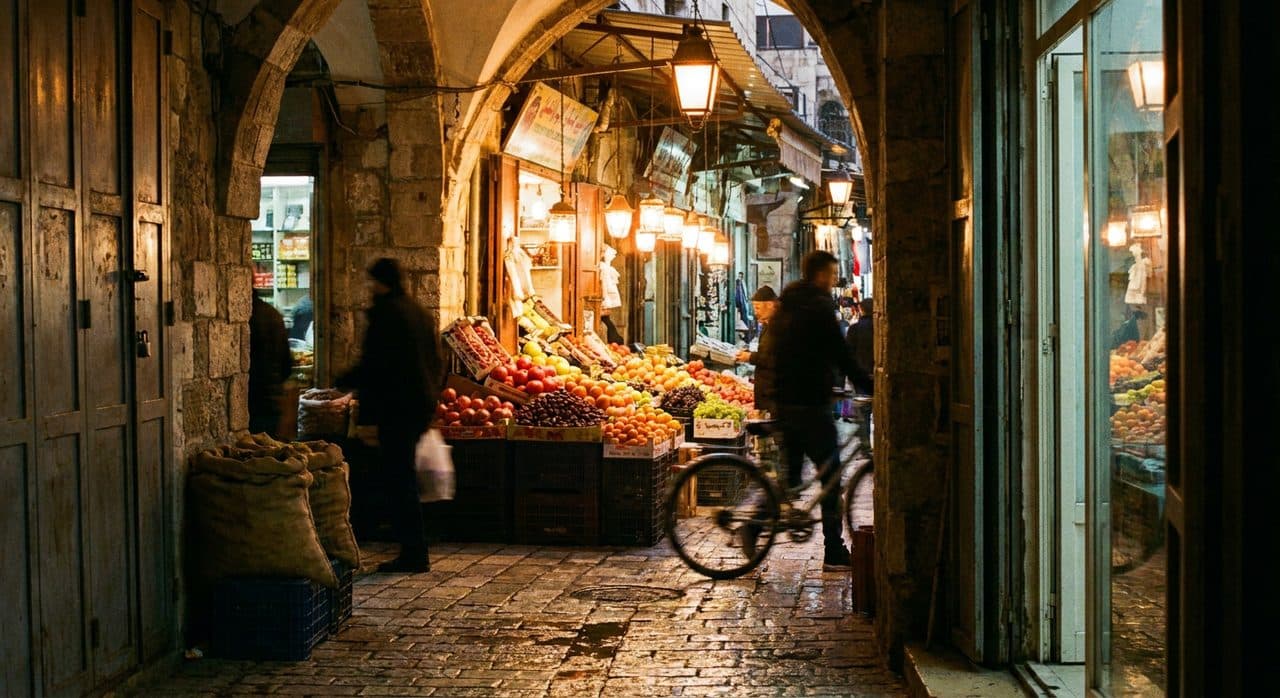
These aren't stadium crowds. They're intimate, maybe a dozen people at most, and the physical arrangement tells you everything about the social order. The shopkeeper gets the chair with the back. Older men stand closest to the screen, arms crossed, silent except for sharp intakes of breath. Younger guys cluster near the door, half-watching, half-scrolling, ready to erupt if something happens. Kids weave between adults, drawn by the noise and the rare permission to be underfoot. You end up shoulder to shoulder with someone you've never spoken to, and when a goal goes in—or doesn't—the reaction is collective, a single exhalation or shout that makes the space feel smaller and more generous at once. The geometry shifts throughout the match, people drifting in during a lull, others stepping out to take a call, but the core group holds, anchored by the screen and the shared investment in what's happening on it.
What's Actually on the Counter
Dates, obviously, but also dried apricots with a tartness that cuts through the sweetness, Turkish figs dense enough to feel like a meal, roasted chickpeas dusted with cumin, shelled pistachios still faintly warm. The counter becomes a grazing table without anyone announcing it. Someone opens a bag and it circulates. You take a handful of something you didn't buy and pass it along. The informality is the point—this isn't catered, it's spontaneous, driven by the same impulse that makes you offer your phone charger to a stranger or hold a door when your hands are full. The food itself carries weight beyond flavor: these are ingredients tied to specific geographies, to childhoods spent elsewhere, to mothers and grandmothers who served fruit after dinner, who made tea a condition of hospitality. Eating here during a match is a way of asserting that those traditions travel, that they're alive and relevant even in a Brooklyn grocery with fluorescent lighting and a cash-only policy.
The Post-Match Dispersal and What Lingers
When it's over—win, loss, draw—the room empties faster than you'd expect. Chairs get folded, the TV gets unplugged, someone sweeps up pistachio shells. The shopkeeper returns to weighing produce, ringing up milk and bread, the ordinary rhythm of retail. But something lingers: a slight buzz in the air, a sense that the space briefly held more than it was designed for. You see the same faces again a few days later, maybe for the next match, maybe just shopping, and there's a flicker of recognition, a nod that says we were here together, we watched that unfold. The markets don't advertise this. There's no signage, no social media event page. You find out by walking past at the right time, by noticing a crowd where there shouldn't be one, by following the sound of a commentator's voice drifting through an open door. It's infrastructure built on trust and repetition, on the assumption that if you create the conditions, the community will show up.
Practical Notes
Most of these markets operate on neighborhood time—open late morning, closed by early evening, sometimes shuttered on certain days depending on the owner's schedule. You won't find them on Google Maps with accurate hours, so your best bet is to walk Nostrand, Utica, or the side streets between them, especially in the days leading up to a major match. Bring cash; card readers are hit or miss. The MLS runs north-south through the neighborhood, and the closer you are to a station, the more likely you'll stumble onto a spot. If a shop looks closed but you hear voices inside, knock—sometimes the door's locked but the gathering's already started. Don't expect seating for everyone. Don't expect English commentary. Do expect to be offered tea, to be handed something to eat, to be folded into a temporary assembly that dissolves as soon as the final whistle blows.
Tags: #WorldCup2026 #CrownHeights #Brooklyn #NeighborhoodMarkets #DateFruit #DriedFruit #TeaCulture #DiasporaFood #MatchDay #CommunityGathering #FoodAndSport #NYCFood #BrooklynEats #SoccerCulture #ImmigrantCuisine
Sources consulted: fifa.com · espn.com · timeout.com
All trademarks are the property of their respective owners.