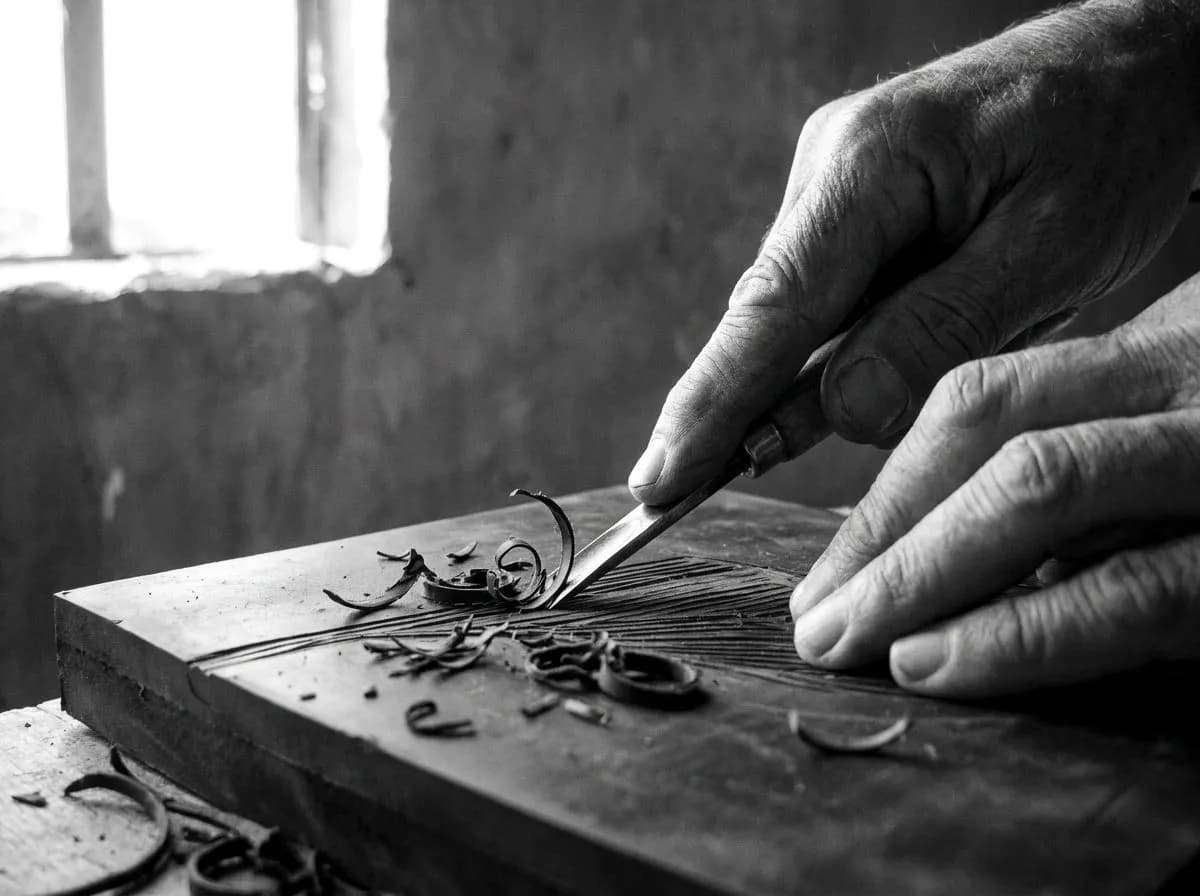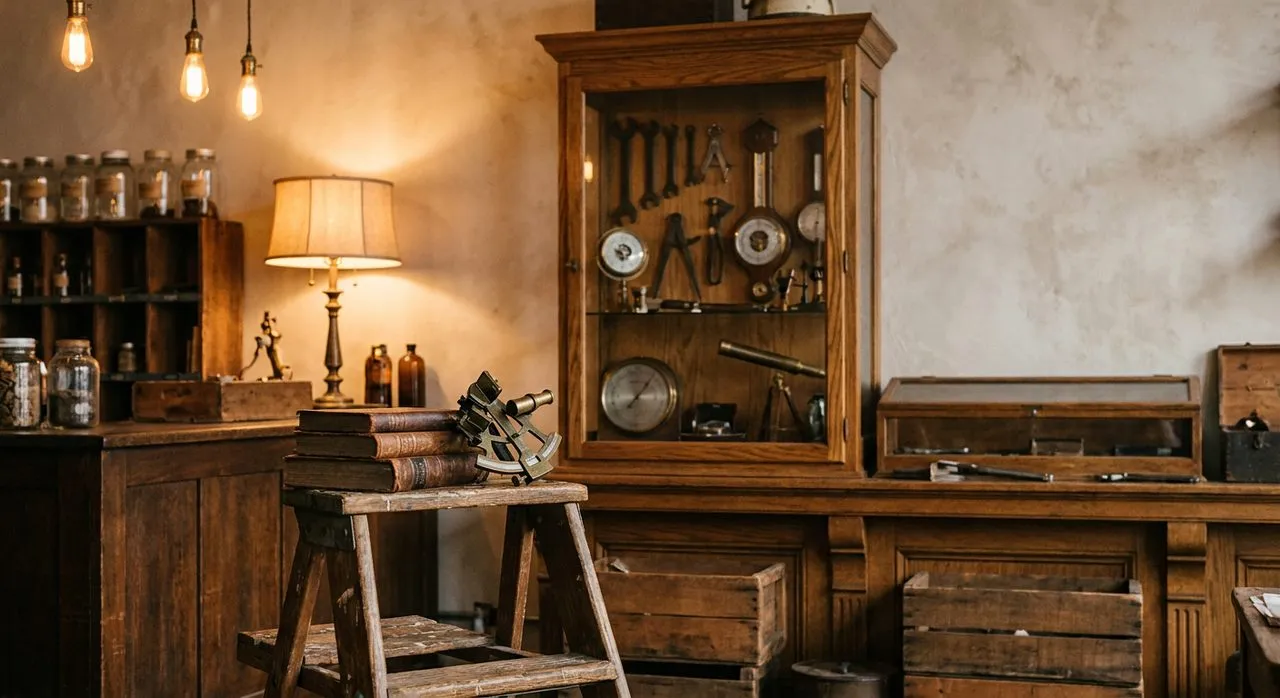
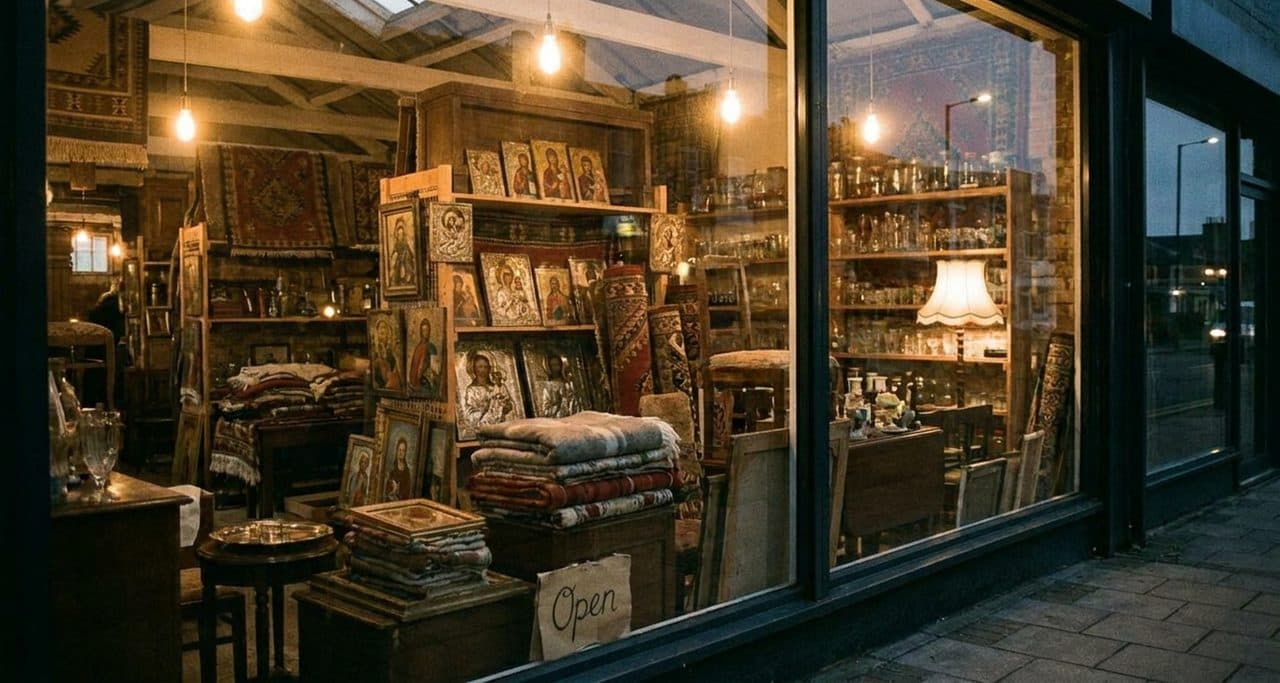
The storefront on Chicago Avenue measures barely twelve feet across, wedged between a taqueria and a shuttered dry cleaner. A hand-lettered sign in the window reads "Open" maybe three days a week, maybe four, depending on whether the proprietor feels like unlocking the door that morning. Inside, the narrow space stretches back like a railroad apartment, each room more densely packed than the last, decades of Eastern European domestic life compressed into a corridor that smells of old wood and mothballs and something faintly medicinal.
The Geography of Accumulation
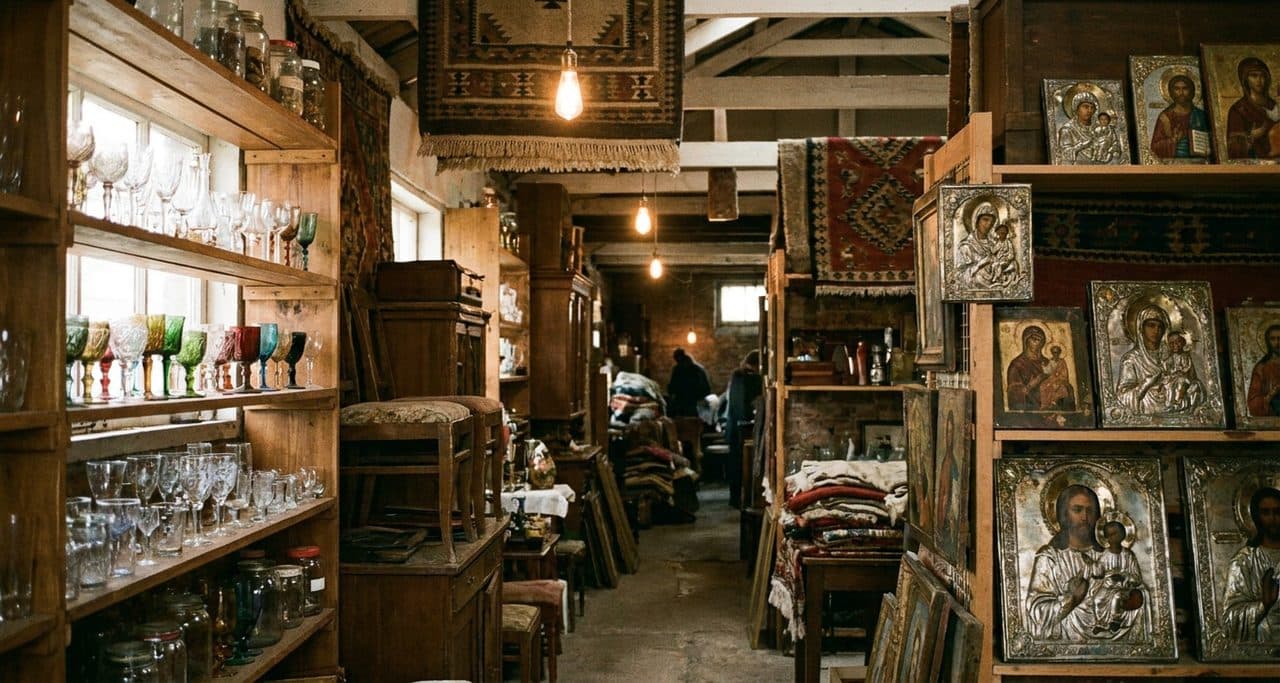
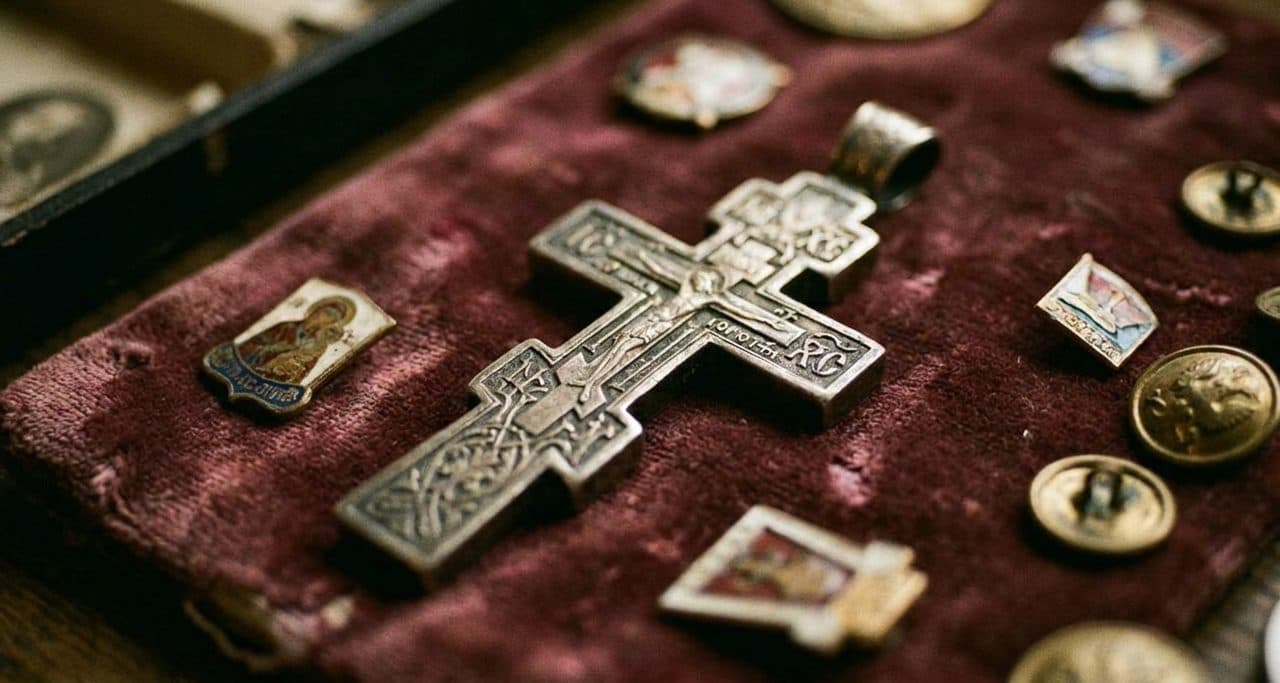
The front room maintains a pretense of organization. Amber jewelry sits in a glass case near the register. A few Orthodox icons lean against the wall, their gold leaf catching whatever sunlight makes it through the dusty window. Painted wooden eggs fill a basket on a side table. This is the staging area, the introduction, where newcomers pause and wonder if they've found anything worth the irregular hours and the gamble of showing up.
The real collection begins in the second room. Enamelware in shades of robin's egg blue and cream yellow crowds every horizontal surface. Stacks of embroidered linens teeter on chairs. A samovar the size of a small child sits on the floor, its copper surface gone green in patches. The air grows thicker here, dust motes suspended in the dim light from a single overhead bulb. The temperature drops a degree or two, the heating apparently rationed to the front of the shop.
When the Door Actually Opens
The schedule operates on a logic known only to the owner, a compact woman in her seventies who speaks English with the kind of accent that hasn't softened in forty years. Regulars have learned to check the window from the sidewalk before committing to parking. The "Open" sign appears most reliably on Thursday and Saturday mornings, though Tuesday afternoons sometimes happen, and there was that stretch in November when the place stayed dark for two straight weeks.
Those who've been coming for years know to arrive before noon if the sign is up. The owner keeps a folding chair near the register and tends to lose interest in commerce by early afternoon, at which point she'll flip the sign and lock up regardless of whether anyone is mid-browse. She doesn't take cards, doesn't have a phone number listed anywhere, and responds to questions about provenance with vague gestures toward "my cousin" or "from the old country" without specifying which cousin or when.
The Back Room Theorem
Past the second room, the corridor narrows further. The third space is barely navigable, shelving units crammed so close together that anyone broader than average has to turn sideways. This is where the serious accumulation lives. Wooden crates stacked to the ceiling contain who knows what—the owner herself seems uncertain. A mannequin wears a wool coat from the 1940s, the fabric still intact but smelling of storage and time. Porcelain figurines of shepherdesses and workers in heroic poses crowd a shelf near the ceiling, their paint fading to ghost versions of the original colors.
The back wall holds the overflow, items that haven't been sorted or priced, things that arrived in estate lots and never made it to the front. A wooden rocking horse missing one ear. A set of nesting dolls with the faces worn nearly smooth. Framed photographs of people no one remembers, their sepia tones suggesting the 1920s or earlier. The floor creaks differently back here, the wood older or less stable, and the single window looks out onto an alley where nothing much happens.
The Regular Archaeology
A handful of dedicated browsers have been making the pilgrimage for a decade or more. They know which days offer the best odds, know to dress in layers because the temperature varies wildly from front to back, know that the owner's mood determines whether she'll negotiate or simply shake her head and turn away. One regular, a set designer for a small theater company, has furnished entire productions from this corridor. Another, a retired professor, comes for the books—Ukrainian and Russian volumes stacked in precarious towers, their spines cracked and pages yellowed but the text still readable.
These veterans have learned to read the room, literally. They can spot new arrivals by the way items shift position, the way a previously buried crate suddenly appears near the front. The owner adds to the collection in waves, inheriting things from friends or distant relatives, buying out estate sales in the surrounding neighborhoods. Nothing gets catalogued. Nothing has a consistent pricing system. Two identical teacups might be marked three dollars and fifteen dollars respectively, the logic inscrutable.
The Transaction Ritual
When someone decides to buy, the process unfolds at its own pace. The owner pulls out a calculator older than most smartphones, pecks at the numbers with one finger, and announces a price. Sometimes she'll accept a counteroffer. Sometimes she'll look offended and wave the customer away. Cash only, and she makes change from a metal box that looks like it once held cookies. No receipts unless specifically requested, and even then they're handwritten on scraps of paper torn from a notebook.
She wraps purchases in newspaper, usually Ukrainian-language editions from the community center down the street, and ties the bundles with string from a spool that seems to have no end. The whole transaction can take five minutes or twenty-five, depending on whether she wants to tell a story about where the item came from or who owned it before. These stories may or may not be accurate—regulars have learned to take them as atmospheric flavor rather than verified history.
Practical Notes
The shop sits on Chicago Avenue in the heart of Ukrainian Village, walkable from the Division Blue Line stop. No phone, no website, no social media presence. Hours remain genuinely unpredictable, though Thursday and Saturday mornings offer the best odds between October and May. Summer sees even more irregular openings. Cash only, with an ATM two blocks east. Parking on side streets is metered but usually available. The surrounding neighborhood offers several Ukrainian restaurants and bakeries for before or after. Arrive early if the sign is up—the owner has been known to close at 1 PM on a whim. Bring patience, a flashlight for examining items in the darker back rooms, and a willingness to leave empty-handed if nothing speaks. The collection changes slowly but constantly, rewarding repeat visits over months rather than weeks.
Tags: #ChicagoAntiques #UkrainianVillage #TheOddEdit #VintageFinds #EasternEuropeanAntiques #ChicagoHiddenGems #AntiqueHunting #EstateFinds #ChicagoNeighborhoods #IrregularHours #SecondhandChicago #VintageChicago #ChicagoShopping #CuriosityShop #ChicagoStories
Sources consulted: atlasobscura.com · timeout.com · nytimes.com
All trademarks are the property of their respective owners.
Ask Karpo first
Want to know which days the Ukrainian Village antique shops are actually open?
Ask Karpo for the odd-hours storefronts worth tracking down in the neighbourhood before you head out.