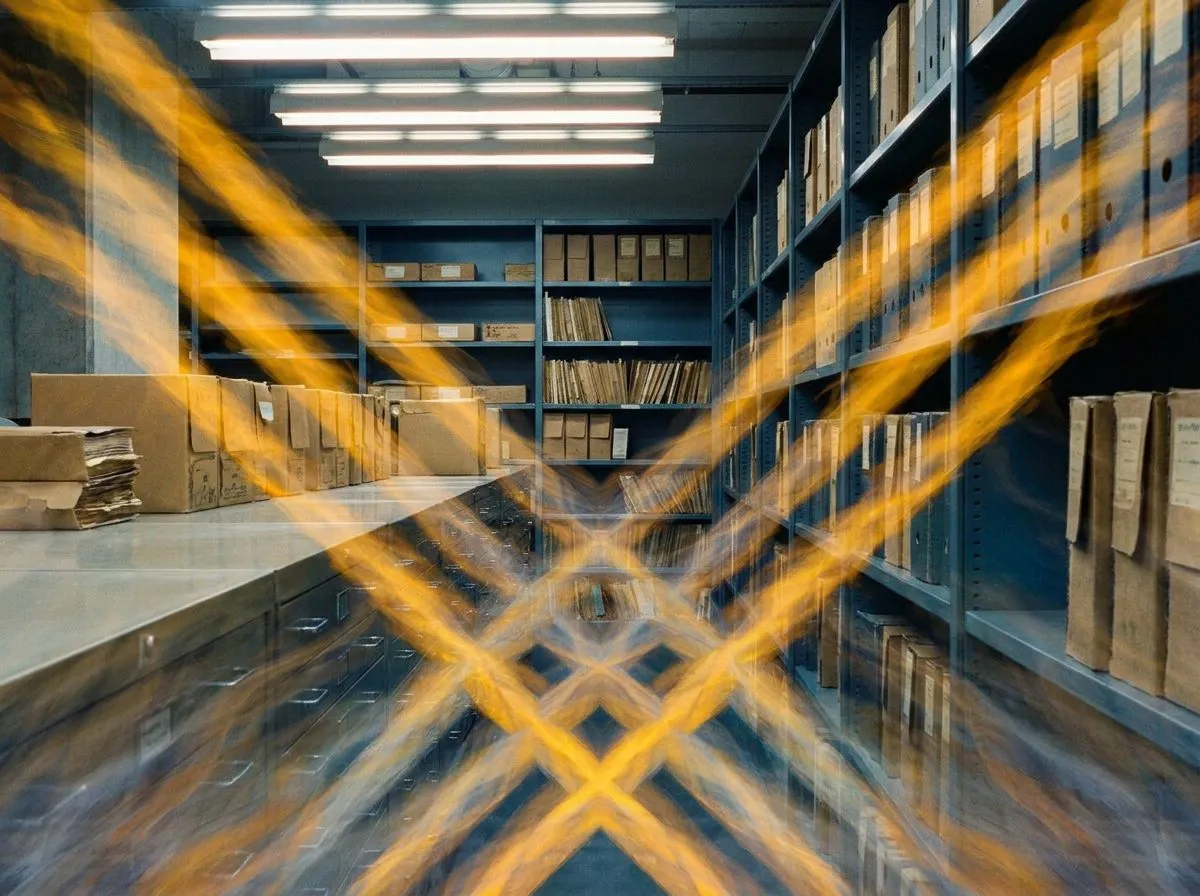
The vertical file room at Chicago's Leather Archives & Museum smells faintly of archival paper and old newsprint, the particular scent of history preserved in manila folders and acid-free sleeves. This is not a museum built for casual browsing or summer travel drop-ins. It is a working archive, housed in a former synagogue in Rogers Park, where the labor of remembering a community's ephemera unfolds quietly, methodically, and by appointment only. The building's exterior offers no grand signage, just a street number and the knowledge that inside, thousands of indexed items wait under fluorescent lights, cataloged by volunteers who understand that preservation is both reverence and radical act.
The Card Catalog System
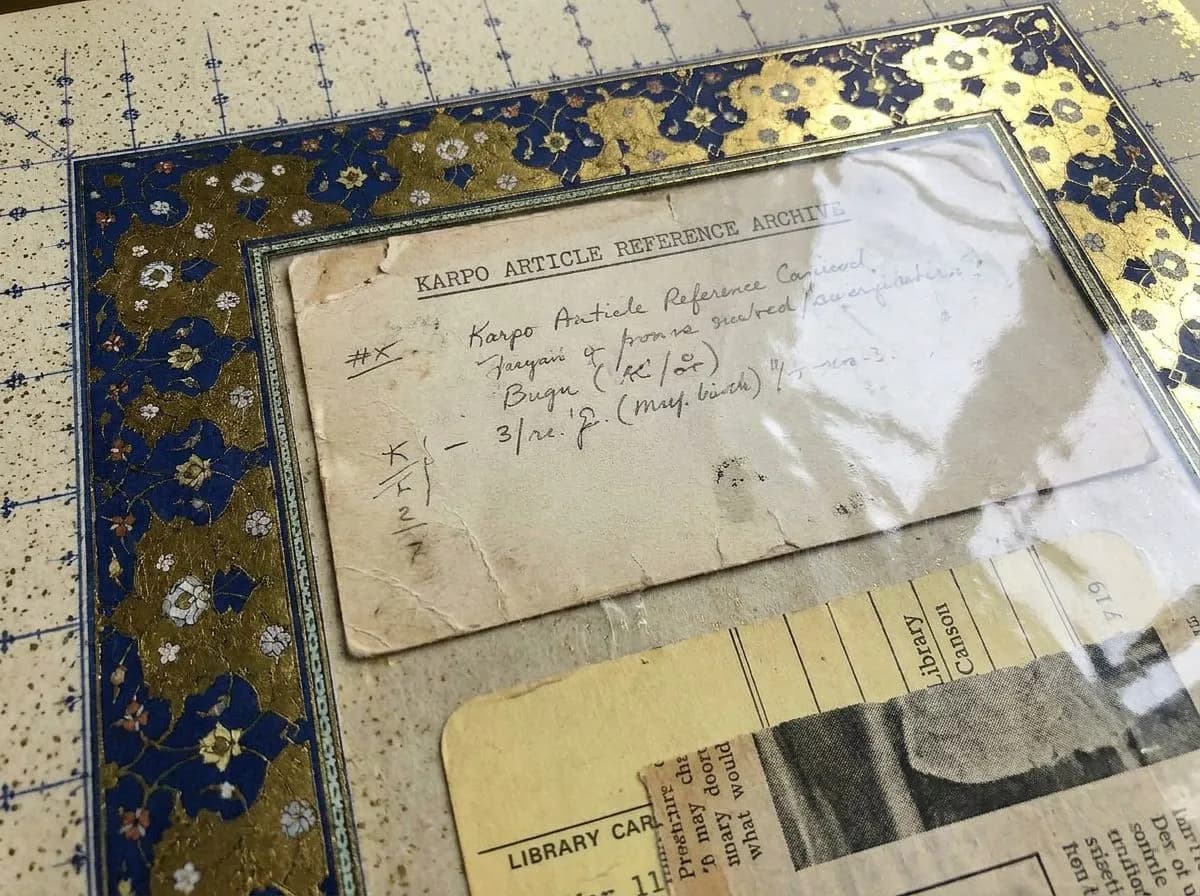
The vertical file system at the Leather Archives indexes over 8,000 items using a modified Dewey Decimal adaptation created in 1991, when the museum's founders recognized that mainstream classification schemes could not accommodate the breadth and specificity of leather, kink, and BDSM community materials. The adaptation is elegant in its practicality: flyers for dungeon parties, safe-sex pamphlets, hand-drawn event maps, and personal correspondence all receive their own numerical ranges, typed onto three-by-five catalog cards that live in oak drawers along the reading room's east wall.
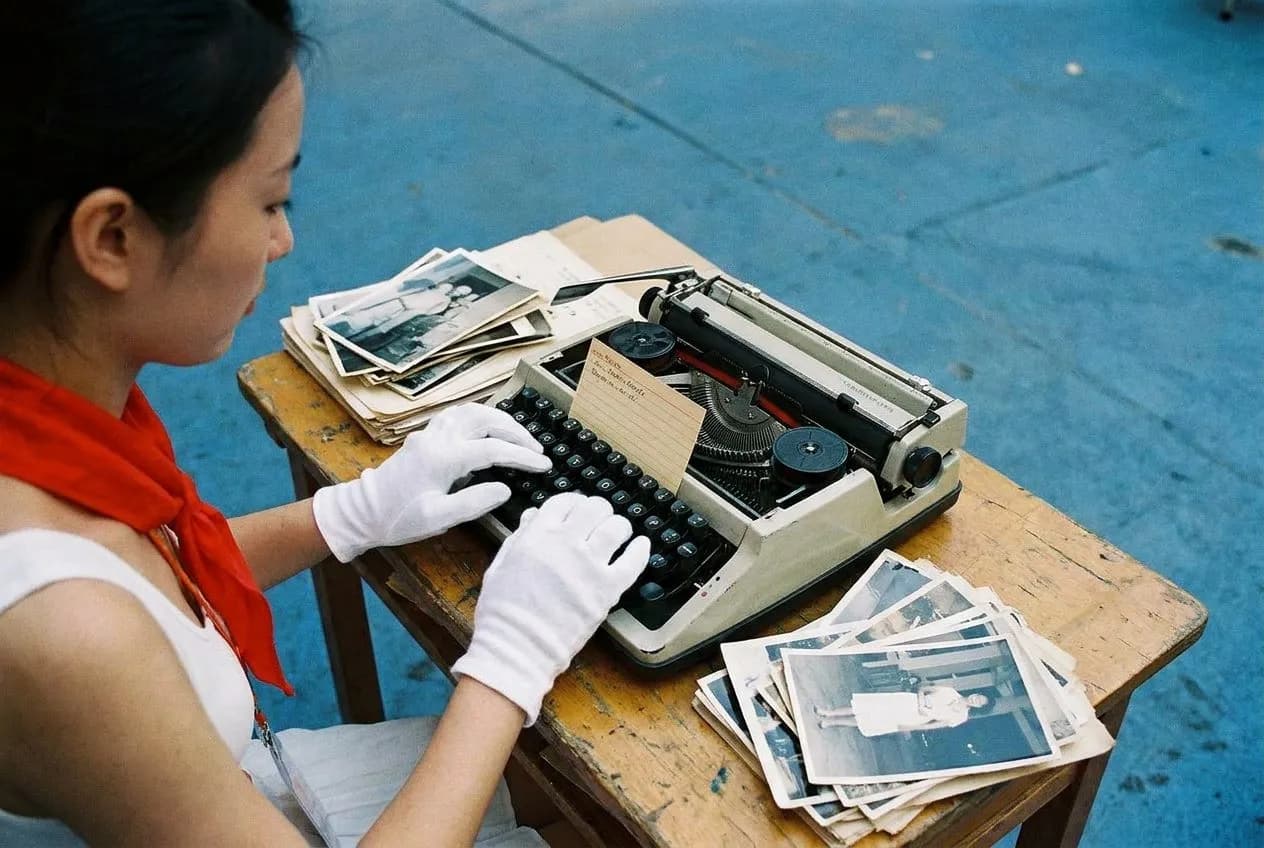
Touch one of those cards and you feel the mechanical typewriter's embossed strike, the slight curl at the edges from humidity and handling. Volunteers add notations in pencil—never pen—so future archivists can amend without obscuring. It is a system that predates digital redundancy, and it survives because it works, because the cards themselves become artifacts of curatorial labor. The taxonomy evolves slowly. New subcategories emerge as donations arrive: a run of newsletters from a 1980s women's motorcycle club, a cache of Polaroids from a now-defunct leather bar, annotated and cross-referenced with the patience of people who know that searchability is care.
Thursday Evening Cataloging Sessions
Thursday evening cataloging sessions run from six to nine, and volunteers use pencil-only notation to preserve original ephemera, their hands gloved in white cotton as they lift fragile newsprint or unfold decades-old posters. The room is quiet except for the scratch of graphite on card stock, the occasional murmur as an archivist confers with another over a tricky classification question. Should this 1978 run notice go under Events or Publications? Does a handwritten dungeon etiquette guide belong with Instruction or Community Standards?
The volunteers are a mix of graduate students, longtime community members, and meticulous hobbyists who find satisfaction in the incremental work of making the invisible findable. No one is paid. The reward is the privilege of proximity to history's texture: the feel of a mimeographed zine, the surprising heft of a leather bar's anniversary booklet printed on card stock. By late 2026, the sessions have become small rituals, anchored by routine and the shared understanding that this work matters precisely because it is not glamorous. Someone brews coffee in the small kitchen down the hall. The archive grows, one card at a time.
The Appointment-Only Reading Room
Reading room appointments require 48-hour advance notice, and researchers work at a single oak table under archivist supervision, a protocol born of necessity rather than suspicion. The materials are irreplaceable. Many exist in no other collection. The archivist on duty—often one of the Thursday volunteers—retrieves requested files, explains handling procedures, and sits nearby, available for questions but unobtrusive. The oak table is wide and scarred, its surface marked by decades of elbows and notebooks, and the single overhead lamp casts a pool of warm light that narrows the world to whatever folder lies open before you.
There is no hurry here. Researchers might spend an afternoon with a single box, photographing pages with a smartphone or taking notes in pencil. The archivist logs each item consulted, maintaining the parallel record that lets future visitors trace what has been seen, cited, excavated. This is not a city guide's typical recommendation—there are no gift shop tchotchkes, no Instagrammable moments designed for virality. But for those whose work or curiosity intersects with queer history, kink culture, or the archive's expansive holdings on leather communities worldwide, the reading room offers something rarer: access, context, and the tactile proof that these lives were lived, documented, and deemed worth keeping.
What the Files Hold
The vertical files contain material that ranges from the mundane to the extraordinary: bar matchbooks, protest flyers, personal letters, safe-sex posters from the height of the AIDS crisis, Polaroids of pride parades and private parties, event programs, membership rosters, how-to guides typed on manual typewriters. Some folders are slim, holding only a single fragile flyer. Others bulge with correspondence, annotated and cross-indexed. The ephemera resists easy narrative. It is fragmentary, uneven, dense with in-jokes and coded language that require patient decoding.
What emerges from these fragments is not a single story but a dense network of overlapping communities: bikers and artists, activists and educators, dungeon masters and newsletter editors. The archive holds evidence of joy, grief, organizing, play, and survival. It holds proof that leather culture and kink communities built institutions, developed ethics, argued fiercely over protocol, and sustained one another through decades of stigma and loss. The card catalog's modified Dewey system attempts to organize this complexity without flattening it, a taxonomy that bends toward nuance.
The Rogers Park Context
The museum's Rogers Park location, far from the Loop's tourist corridors and Boystown's rainbow pylons, feels deliberate. This is a residential neighborhood of brick walk-ups and corner groceries, where the lake wind cuts sharp in winter and the summer streets hum with multiple languages. The former synagogue that houses the archive fits into the block's quiet scale, its interior repurposed with respect for the bones of the building. High ceilings, original wood trim, rooms that once held religious school classes now lined with metal shelving and archival boxes.
Rogers Park has long been home to artists, immigrants, and communities priced out of trendier enclaves, and the Leather Archives belongs to that tradition of making space on the margins. It is a museum that operates without flashy fundraising galas or blockbuster exhibitions, sustained instead by donations, membership dues, and the labor of volunteers who show up on Thursday evenings with pencils sharpened and cotton gloves tucked into their bags. The neighborhood context matters. This is not an archive that seeks mainstream validation. It exists because the community it documents decided preservation was non-negotiable.
Practical notes
The Leather Archives & Museum is in Chicago’s Rogers Park neighborhood; verify the current street address before publishing. Use current transit and parking information from the museum or CTA before visiting. Reading room hours vary and appointments should be confirmed directly with the museum before visiting. Bring a notepad, pencil, and photo ID. The building is partially accessible; contact staff in advance to discuss specific needs. Verify current hours and appointment protocols directly before planning your visit.
Tags: #LeatherArchives #RogersPark #ChicagoMuseums #QueerHistory #ArchiveWork #CommunityHistory #TheOddEdit #ChicagoCityGuide #SummerTravel #KinkCulture #VerticalFiles #LGBTQHistory #ChicagoHistory #ArchivalResearch #CulturalPreservation
Please drink responsibly. Must be of legal drinking age.
Sources consulted: Leather Archives & Museum Official Site · Rogers Park, Chicago - Wikipedia · Chicago Department of Cultural Affairs · Card Catalog - Wikipedia
All trademarks are the property of their respective owners.