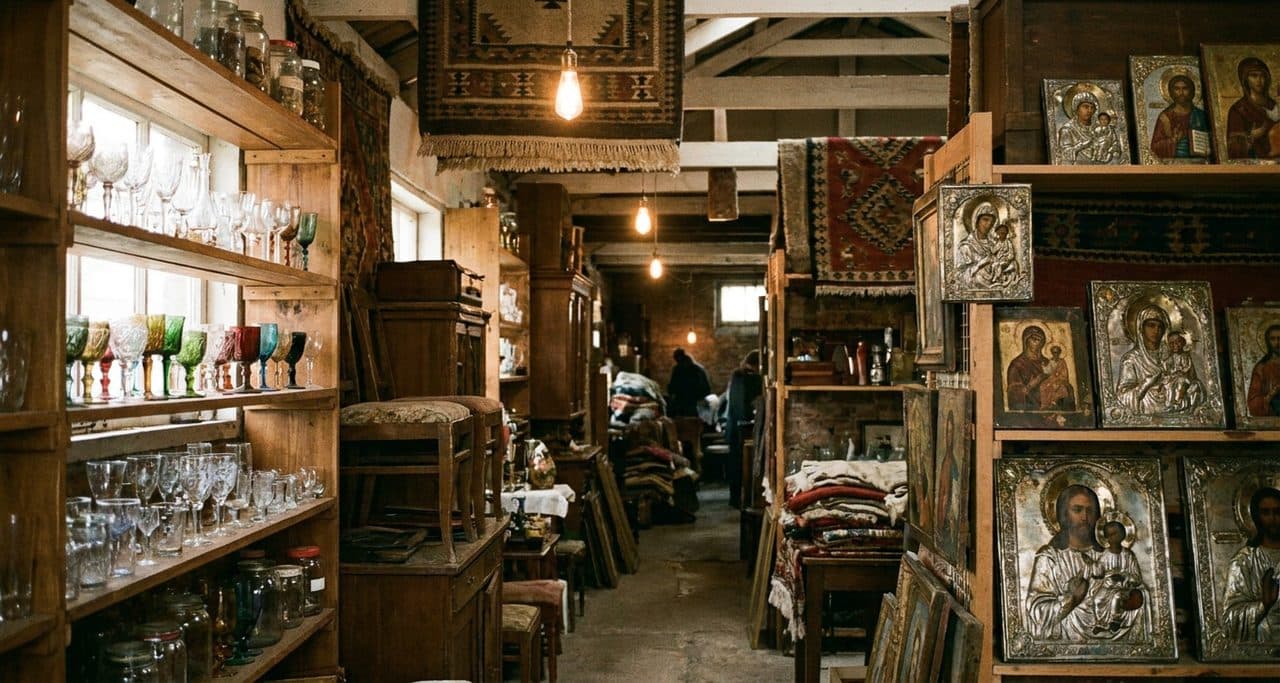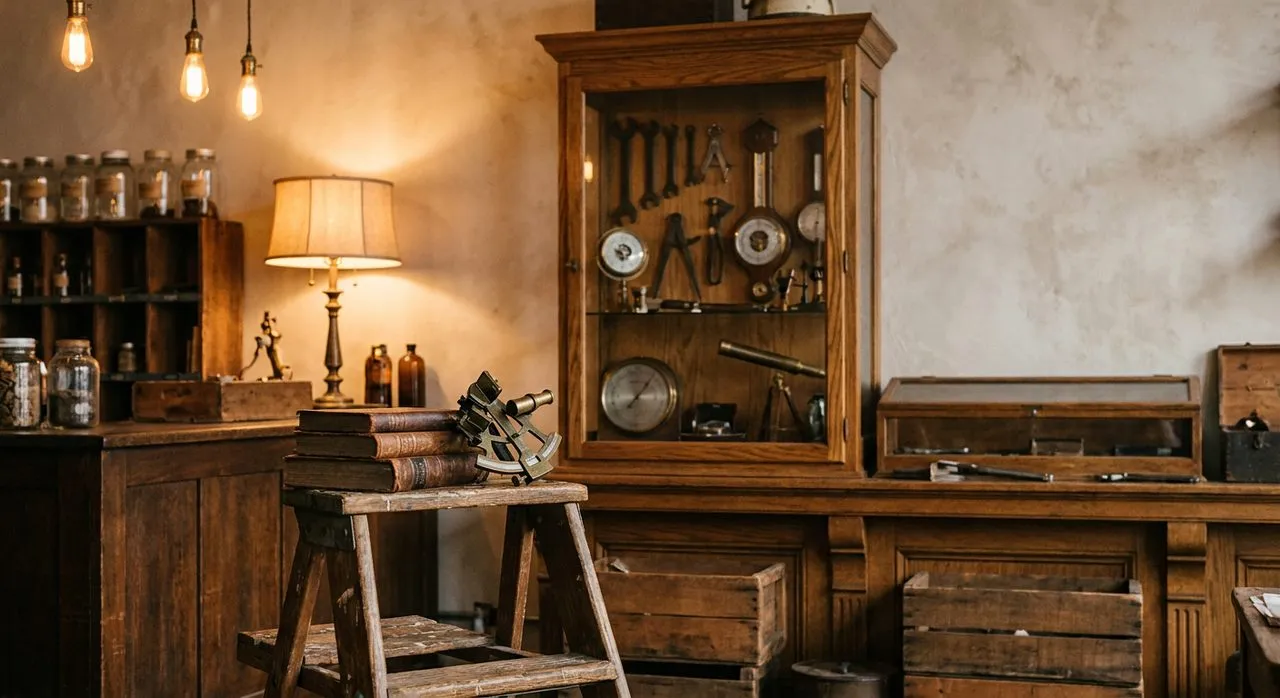
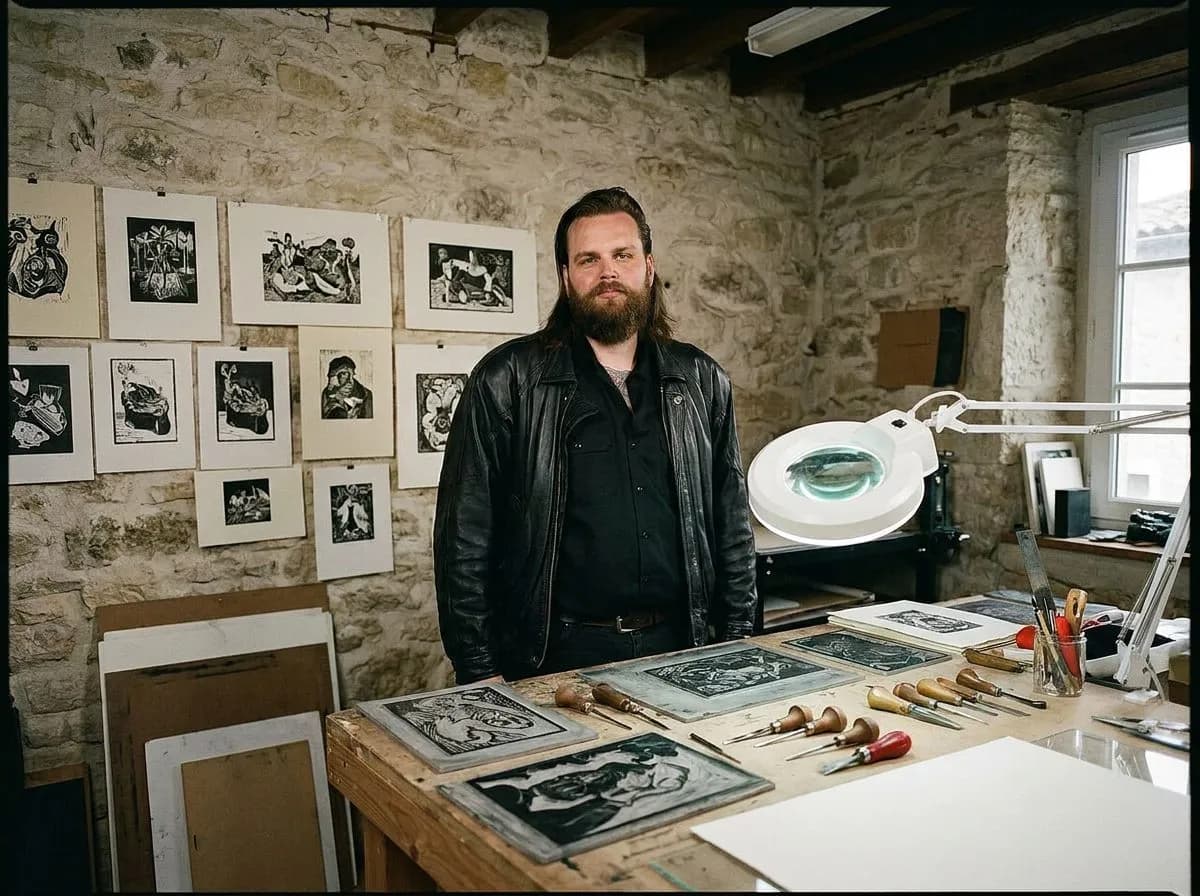
The studio occupies a sun-drenched corner of a third-floor Logan Square walk-up, its windows facing south over a tangle of catalpa trees. Inside, every horizontal surface serves a purpose: wooden blocks in various stages of mounting, ink-stained test prints thumbtacked in overlapping layers, and rows of carving tools arranged by blade width in shallow wooden trays. The air carries the faint scent of rubber and ink, punctuated by the occasional scrape of metal on polymer as the carver bends over a magnifying lamp, cutting delicate lines into a block destined for a botanical wedding suite.
The Material
The vulcanized rubber stock arrives from a Cleveland supplier that manufactures blocks specifically for letterpress shops, each piece cut to custom dimensions based on the commission at hand. These aren't the red erasers of elementary school stamp-making; they're dense, fine-grained blocks that hold crisp detail and withstand thousands of impressions. The carver orders them in batches, storing the surplus in flat files alongside linoleum sheets and mounted cork.
The rubber itself has a particular density that resists both the blade and the pressure of printing. It's forgiving enough to allow correction but firm enough to maintain edges measured in fractions of millimeters. Each block arrives with a smooth, matte surface that the carver first sketches on with graphite before committing blade to rubber.
The Carving Process
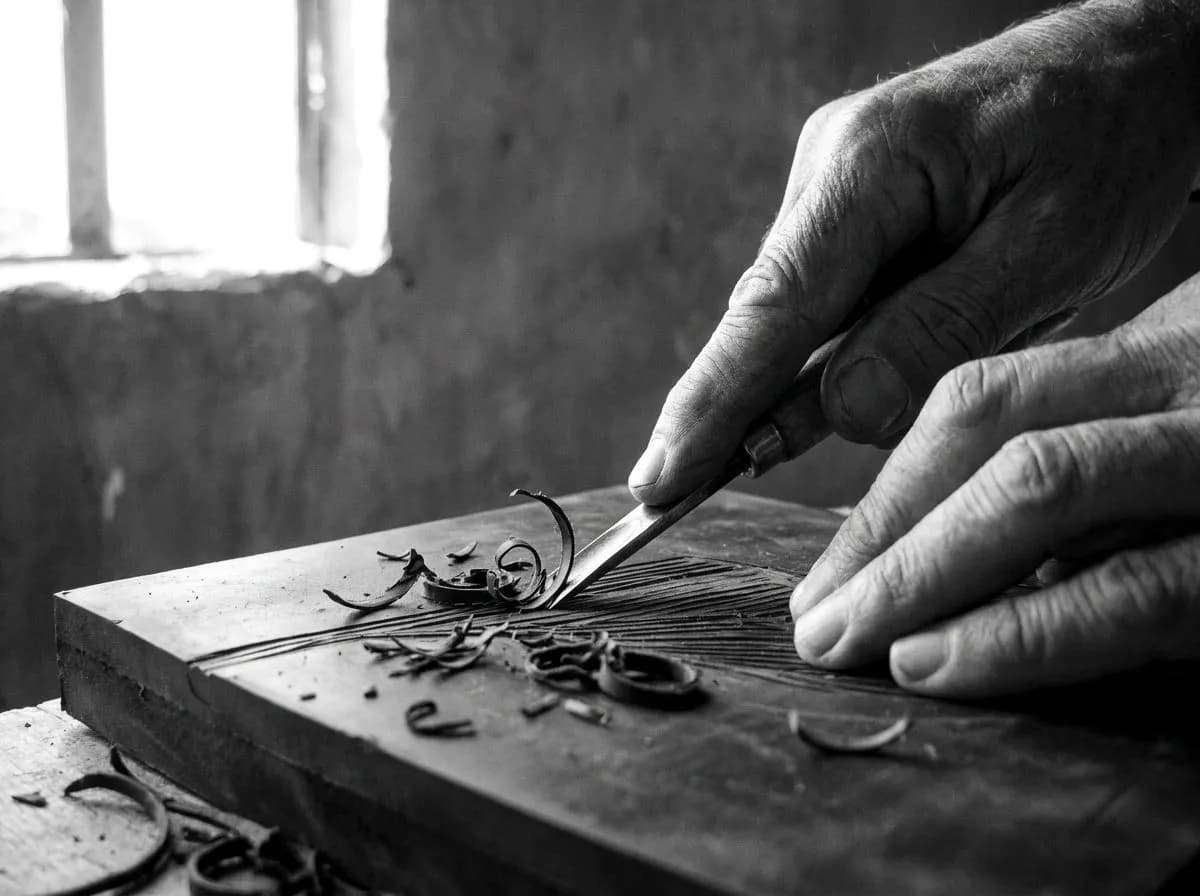
Fine botanical stamps require four to six hours of carving time using a 1mm V-gouge for leaf veins and stem details at 10x magnification. The carver works at a bench hook—a simple wooden jig that braces against the table edge and catches the block—to control the angle and depth of each cut. For monograms and geometric patterns, the work moves faster; for photorealistic portraits or intricate lace patterns commissioned by textile designers, a single stamp might span two full days.
The tools themselves are organized with the care of a surgeon's kit: wide U-gouges for clearing backgrounds, fine V-tools for hairline details, and knife blades for undercutting edges. Most are vintage linoleum cutters with wooden handles worn smooth from decades of use, supplemented by Japanese carving knives for particularly fine work. The magnifying lamp, adjustable on a long arm, casts a circle of white light that follows the carver's hands across the block.
What Gets Commissioned
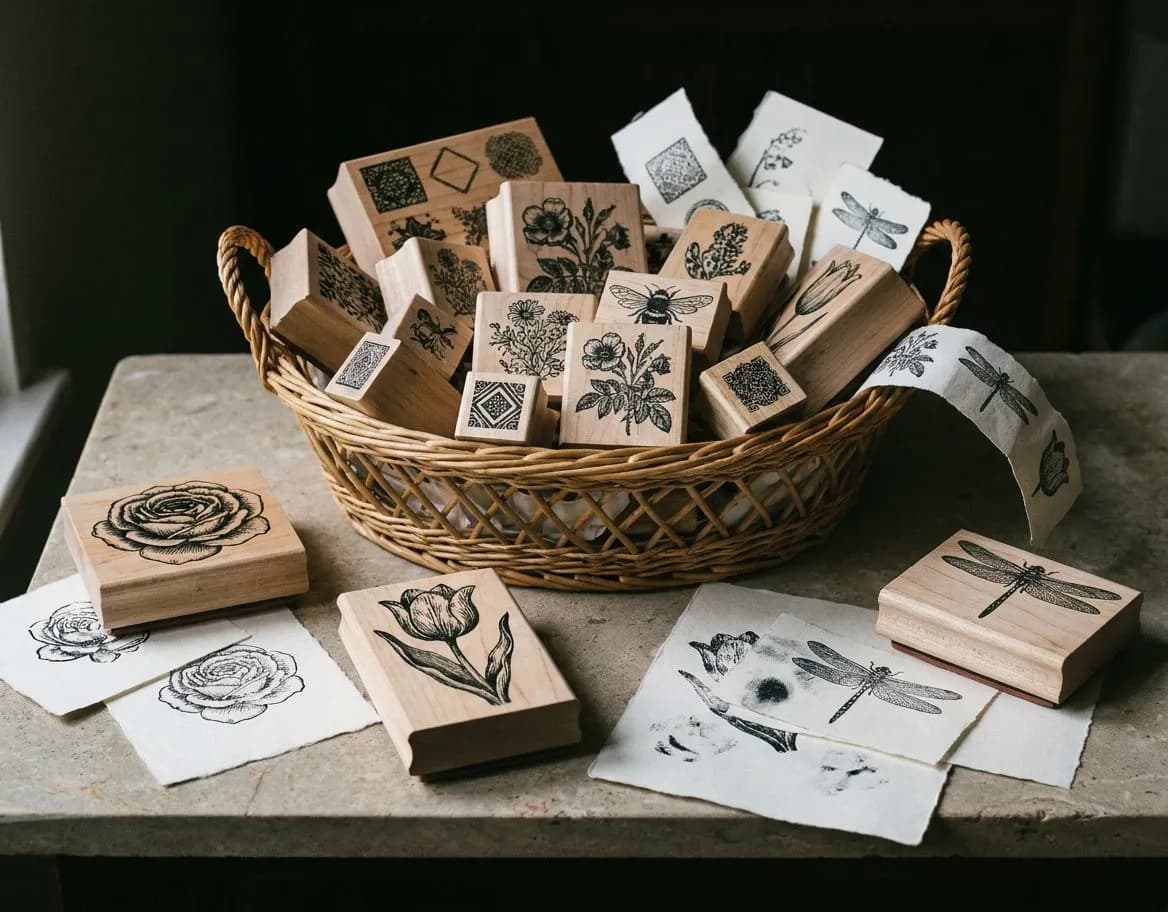
The portfolio binders stacked on a side table tell the story: botanical illustrations for a local seed library, custom monograms for a stationer's wedding line, repeating geometric patterns for a textile artist screen-printing tea towels. One recent commission involved a family crest for return-address stamping, complete with a Latin motto carved at a scale that required tweezers to hold the block steady. Another was a whimsical series of vegetable stamps for a farm's CSA box labels.
Wedding season drives a predictable surge in monogram requests—interlocking initials, laurel wreaths, date stamps for favor bags. The carver has learned to build in a two-week turnaround, with rush orders available for clients who've left things late. Each finished stamp ships with a sheet of test impressions showing the design in multiple ink colors and pressures, a guide for the printmaker or designer who'll put it to use.
Saturday Morning Sessions
Saturday morning studio visits often coincide with test printing sessions using a tabletop Vandercook press borrowed from a nearby print collective. The press, a small proof model on a rolling stand, lives in the studio for weeks at a time during busy seasons. Visitors who arrive for consultations or workshops might find the carver inking a fresh stamp, rolling the press's cylinder over inked rubber to pull a first impression. The smell of oil-based ink mixes with coffee from a French press on the kitchen counter.
These sessions offer an unusual glimpse into the full arc of the work—not just the carving but the testing, the adjustments, the sometimes multiple rounds of refining a design based on how it performs under pressure. If you're planning weekend plans that lean toward the quietly industrious, a Saturday appointment here delivers both craft education and the satisfaction of watching a tool come to life.
The Teaching Work
Monthly workshops in relief printmaking fill the studio with four or five students at a time, each working on their own small block at the dining table draped in canvas. The carver provides starter kits: a rubber block, a basic set of gouges, graphite paper for transferring designs. Participants leave with a finished stamp and the foundational skills to continue at home, though many return for the companionship of focused, quiet work in a room where the walls are papered in other people's test prints.
The workshops draw a mix of hobbyists, designers looking to add a skill, and the occasionally curious who saw a mention online and wanted to try something tactile. The carver's teaching style is patient and technical, emphasizing tool control and the logic of relief printing—what cuts away, what remains, how ink will sit in the recesses or on the ridges.
Why It Persists
In an era when any design can be laser-cut or digitally printed, the appeal of hand-carved stamps lies partly in their imperfections. The slight variation in line weight, the tiny decision points where the carver chose to round a corner or sharpen an edge—these are the signatures of human attention. Letterpress shops and textile artists prize them for exactly that quality, the evidence of a hand at work.
The carver's client list includes invitation designers across the Midwest, a handful of small publishers, and a growing number of artists who commission stamps as components of larger mixed-media works. Each commission is documented in a spiral-bound archive, photographs of the carved block alongside the best test prints. It's a quiet practice that measures time in hours per square inch, sustained by clients who value the particular texture of work done slowly and well.
Practical notes
The studio operates by appointment only, with Saturday mornings the most reliable window for visits. Email inquiries are answered within a day or two; include reference images and dimensions if you have a specific project in mind. The building is a third-floor walk-up with no elevator access. Street parking is generally available on surrounding blocks; the California Blue Line stop is a twelve-minute walk east. Bring design sketches or digital files on a phone or tablet for consultation. Standard turnaround is two weeks; rush orders accommodated during spring and early fall wedding season. Workshop schedules and commission rates provided via email.
Tags: #HandCarvedStamps #LoganSquare #ChicagoCraft #ReliefPrintmaking #LetterPressArt #CustomStamps #TheOddEdit #ChicagoArtisans #WeekendPlans #PrintmakingStudio #BotanicalIllustration #WeddingStationery #TextileDesign #ChicagoCreatives #Fall2026
Sources consulted: Rubber Stamp · Printmaking · Logan Square, Chicago · Chicago Department of Cultural Affairs · Chicago Tribune Business
All trademarks are the property of their respective owners.