The Chinatown Kopitiam Still Pulling Kopi Through a 60-Year-Old Cloth Sock
Before the City Wakes
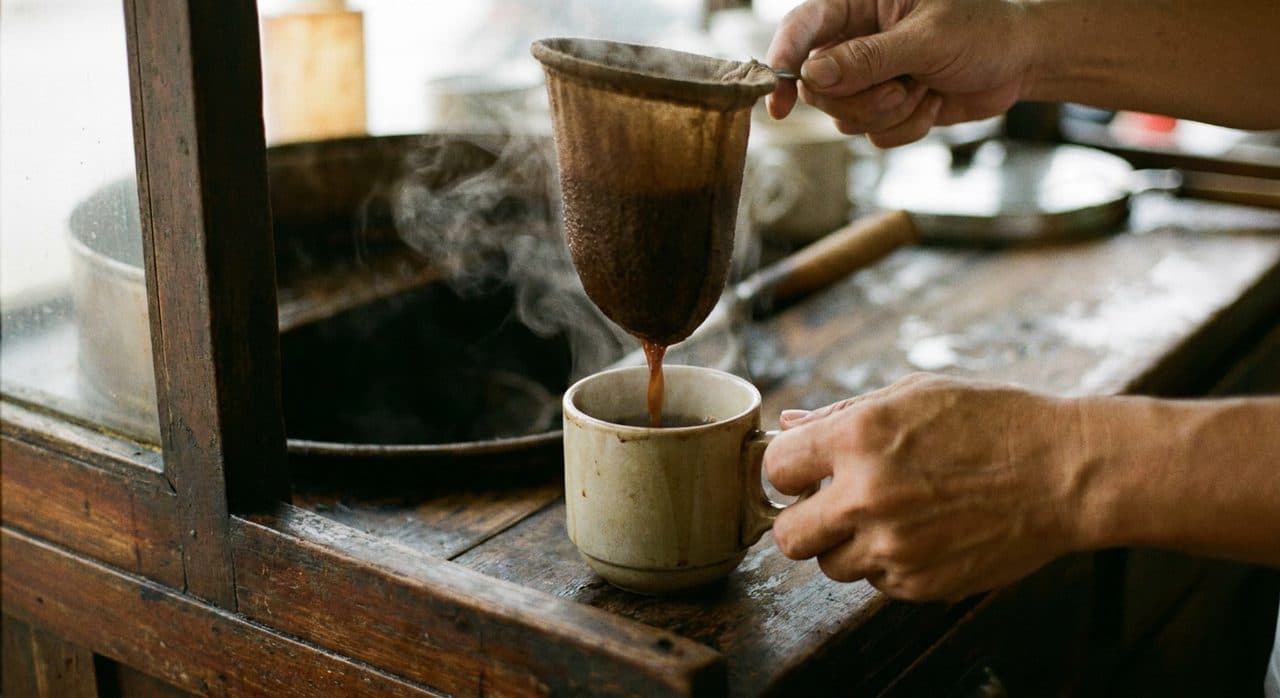
The fluorescent lights flicker on at 5:15am, fifteen minutes before the metal shutters roll up on Smith Street. Inside, Tan Ah Kow moves through darkness with the certainty of sixty years of muscle memory, filling kettles, checking the charcoal burner, running his fingers along the wooden counter worn smooth by three generations of elbows. By the time the first customers arrive — taxi drivers ending their night shifts, elderly neighbours who haven't slept past five since the 1970s — the kopitiam is already breathing, steam rising from kettles, the first batch of kopi dripping through cloth into waiting pots.
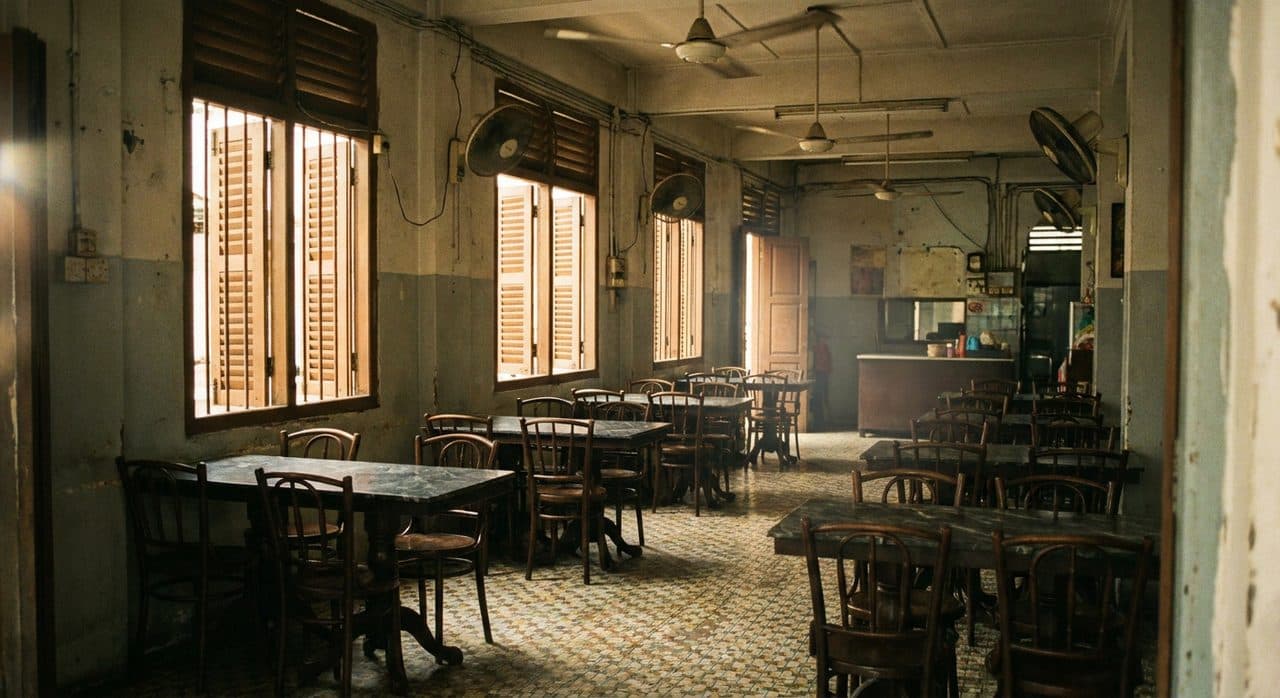
This corner of Chinatown, where Smith Street meets Temple Street, has transformed dramatically over the decades. Heritage shophouses now contain boutique hotels and craft cocktail bars. Tourists photograph the restored facades without knowing what once lived inside them. But this kopitiam remains stubbornly, beautifully unchanged — a living museum that refuses to acknowledge itself as one, because the family running it has never stopped working long enough to notice the world shifting around them.
The Sacred Geometry of the Sock
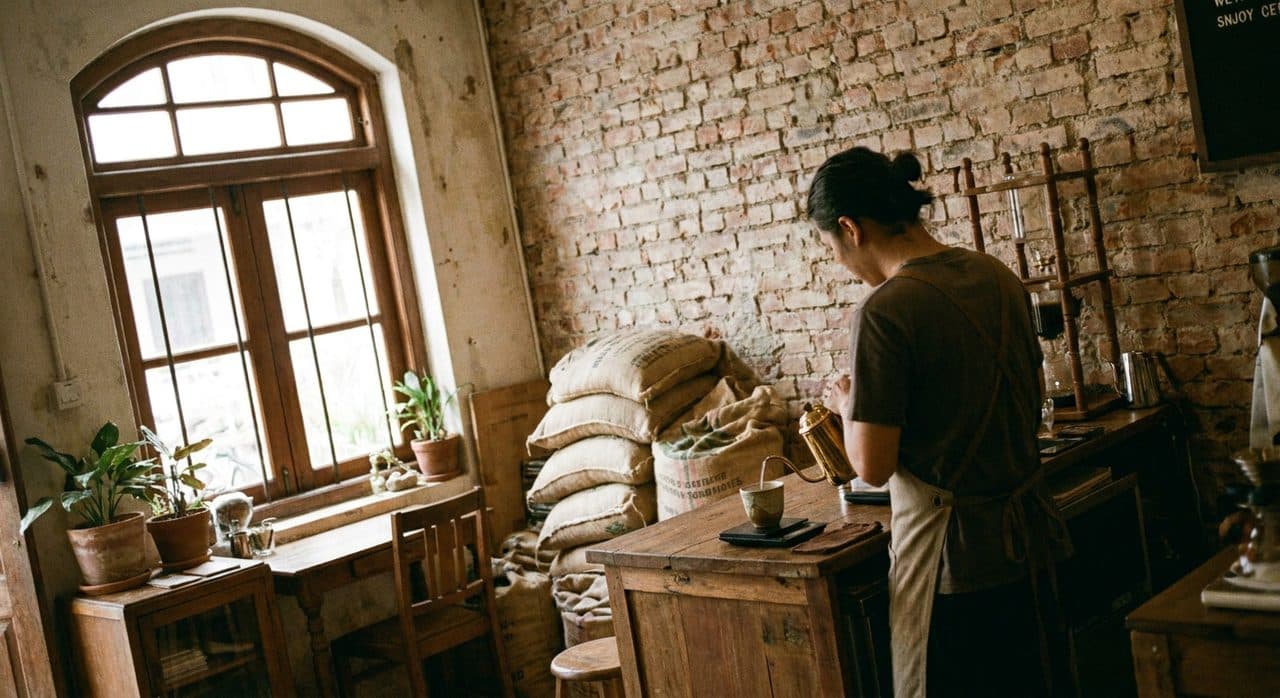
The cloth sock filter hanging from its metal frame looks deceptively simple — a metre-long cotton sleeve stretched over a wire hoop, stained the colour of dark mahogany from years of use. But watching Mr. Tan work it reveals a choreography that cannot be taught from books. He lifts the sock high, lets gravity pull the hot water through the grounds in a steady stream, then raises it again, repeating the motion until the coffee reaches the precise strength that exists only in his mind's eye.
The sock itself receives more attention than most people give their prized possessions. After every thirty cups, Mr. Tan carries it to the back sink and washes it by hand with plain water — never soap, which would leave residue that ruins the flavour. A spare set soaks constantly in a bucket behind the counter, ready for rotation. Every two weeks, without exception, the working sock is retired and a fresh one takes its place. He considers this maintenance sacred, a ritual as important as the brewing itself. "The sock remembers every cup," he explains, though he rarely elaborates further. The replacement schedule has never varied in the decades he's been running the shop.
The resulting coffee carries a texture impossible to achieve through paper filters or modern machines — a slight thickness, an almost creamy body that coats the tongue before the bitterness arrives. Regular customers can taste when a sock is nearing the end of its two-week life, the coffee growing marginally thinner, and they know renewal is coming.
Roasting by Nose and Intuition
Every Monday and Thursday morning, the back courtyard transforms into something from another century. A massive wok sits over a charcoal fire, and into it goes a mixture that would horrify specialty coffee purists: Liberica beans, white sugar, and a generous knob of butter. Mr. Tan's son, Wei Ming, now handles most of the roasting, stirring constantly with a wooden paddle as the sugar caramelises and coats each bean in a glossy shell.
The smell is extraordinary — burnt caramel, dark chocolate, something almost savoury from the butter — and it doesn't stay contained to the courtyard. On Thursday mornings especially, when the wind blows right, the aroma of caramelised Liberica carries three blocks through Chinatown's narrow streets. Regulars who live in the surrounding HDB flats have learned to read roast day by nose alone, the scent drifting through their windows like an alarm clock made of sugar and smoke. Some time their morning walks to arrive just as the fresh batch cools, knowing the coffee that day will carry an extra vibrancy.
The choice of Liberica is itself a statement. While most modern kopitiams have switched to cheaper Robusta or trendier Arabica, this family has maintained relationships with Malaysian suppliers who still grow the jackfruit-scented Liberica that defined Nanyang coffee for generations. The beans cost more, the roasting takes longer, and the flavour is polarising — but it tastes like Singapore used to taste, before the city decided to become something else.
A Price Held Like a Promise
The handwritten menu board above the counter lists kopi-o at S$1.20. This price has not changed in four years, despite rent increases, despite ingredient costs climbing, despite every economic pressure that has pushed neighbouring establishments to charge three or four dollars for inferior coffee. Mr. Tan adjusts his margins elsewhere — the toast is slightly thinner, the kaya made in smaller batches — but the coffee price remains fixed, a small act of defiance against the gentrification consuming his neighbourhood.
"When I raise the price, I tell the old people they cannot afford to come anymore," he says, gesturing toward a table of retirees nursing their cups through a slow morning. Some of these customers have been coming daily for decades, their social lives built around this corner table. To price them out would be to break something that money cannot measure. The tourists who wander in, guidebooks in hand, often seem confused by the cost — surely something this authentic, this storied, should command a premium? But that confusion is precisely the point.
The kopitiam operates on a different economics, one where loyalty is currency and consistency is wealth. Regular customers leave tips that Mr. Tan initially refused but now accepts with gruff gratitude, understanding that his neighbours want to participate in keeping this place alive without him having to compromise his principles.
The Morning Congregation
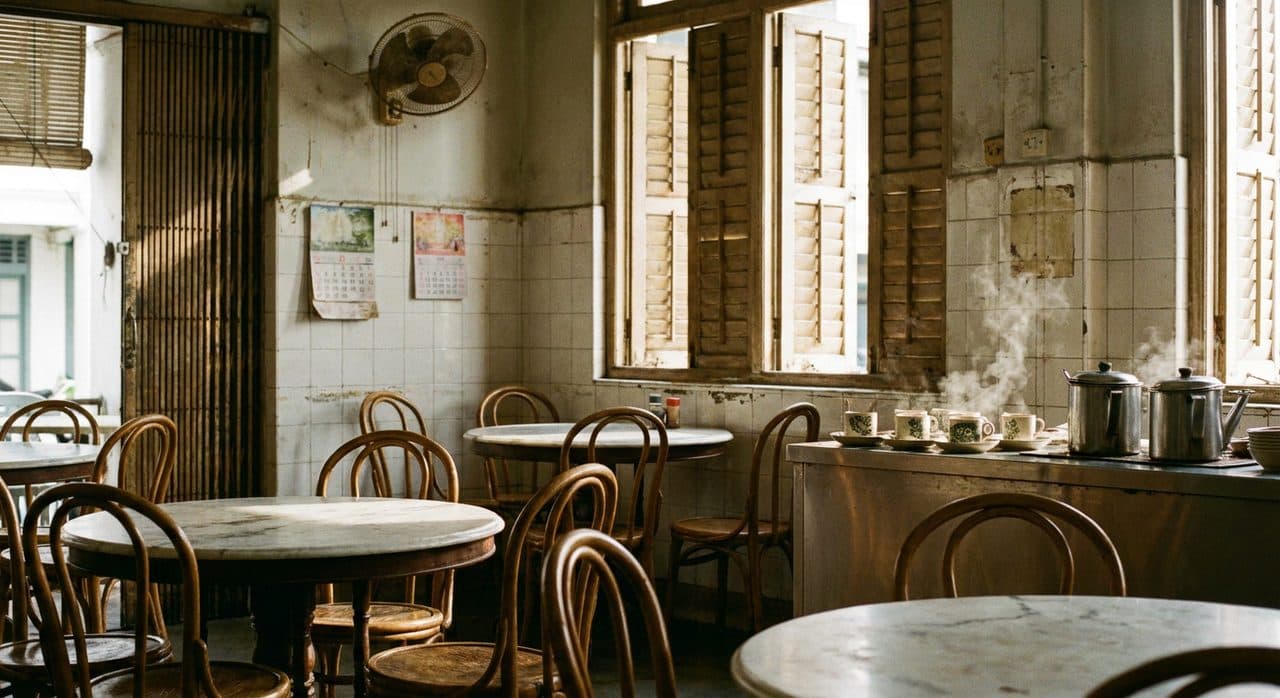
By 7am, the kopitiam reaches its daily peak. Every marble-topped table is occupied, conversations overlapping in Hokkien, Cantonese, Mandarin, and English. The clientele spans generations in ways that feel increasingly rare in Singapore — elderly men reading Chinese newspapers beside young professionals checking phones, construction workers in dusty boots sharing space with gallery owners from the shophouse next door.
The coffee arrives in thick ceramic cups that have survived since the 1980s, their edges chipped, their glazing crazed with age. No two cups match exactly, and regulars have their preferences — Mr. Lim always gets the cup with the blue rim, Mrs. Chen the one with the hairline crack she claims makes the coffee cool faster. These small accommodations happen wordlessly, part of the kopitiam's invisible service language.
Kopi tarik — pulled coffee with condensed milk — is the theatrical option, the hot liquid streaming between two cups held a foot apart, aerating and cooling simultaneously. Mr. Tan performs this dozens of times each morning, his movements economical, almost bored, the showmanship worn down to pure function. But first-time visitors still watch transfixed, phones recording, not realising they're witnessing something that exists in fewer and fewer places each year.
What Survives and What Fades
The kopitiam has no social media presence, no website, no interest in the food bloggers who occasionally appear with cameras and questions. Mr. Tan's daughter, who works in finance and visits on weekends, has offered multiple times to help with marketing. He declines. The customers who need to find this place will find it, he believes, and the ones who need Instagram to discover it probably won't understand it anyway.
This isn't stubbornness so much as a different theory of value. The kopitiam survives not because it markets itself as heritage but because it continues to provide something useful: good coffee, cheap prices, a place to sit without being rushed. The heritage is incidental, a byproduct of simply continuing to exist while everything else changes. Whether this model can survive another generation remains uncertain — Wei Ming has children who show little interest in waking at 4am to roast beans — but for now, the kopitiam persists, one cup at a time.
The cloth sock will be washed again in an hour, replaced again in twelve days. The charcoal will be lit again on Monday. The price will hold at S$1.20 until it becomes impossible, and then perhaps a little longer after that. Some things continue not because they make sense but because stopping them would mean admitting that a certain kind of world has ended.
Practical Notes
The kopitiam opens daily at 5:30am and closes when the coffee runs out, typically between 1pm and 2pm. Arrive before 7am for the quietest experience, or time your visit for Thursday morning to catch the roasting aroma at its peak. Cash only — the family has never installed card payment and shows no intention of starting. The corner location has no official address signage; look for the green-tiled facade at the Smith Street and Temple Street intersection. Ordering is simple: kopi-o (black with sugar), kopi (with condensed milk), or kopi tarik (pulled with condensed milk). Say "siu dai" for less sweet, "gao" for stronger. The adjacent stall sells excellent soft-boiled eggs and kaya toast, a traditional pairing. No reservations, no Wi-Fi, no pretence — just coffee made the way it was made before anyone thought to call it artisanal.
Tags: #Singapore #Chinatown #Kopitiam #TraditionalCoffee #KopiO #KopiTarik #HawkerCulture #SingaporeFood #CoffeeLovers #HeritageFood #LocalEats #SoutheastAsia #FoodHeritage #CoffeeCulture #HiddenGems
Sources consulted: timeout.com · straitstimes.com · misstamchiak.com · thesmartlocal.com
All trademarks are the property of their respective owners.
Ask Karpo first
Want to know if the kopitiam is open today, whether they're doing a roasting session, and what time the traditional kaya toast sells out? Ask Karpo before making the trip to Chinatown.