 Geylang Serai Chendol Dessert Crawl: Market Bowls to Pick
Coffee & Dessert

Chinatown Chendol Dessert Crawl: Hawker Rows and Tea Lanes
Follow a Chinatown chendol dessert crawl from upper-level hawker complexes to quiet shophouse lanes. Compare red-bean bowls, palm syrup, and route timing.
Climbing the concrete stairs from the bustling wet-market basement into the sprawling cooked-food complex above Smith Street and Sago Street, you hear the rhythmic whirr of ice-shaving machines cutting through the chatter of midday lunch tables. When Marcus hosts his sister Claire on her visits from Melbourne, they structure their Chinatown chendol dessert crawl to dodge the souvenir-stall bottlenecks on Pagoda Street and focus instead on the multi-story hawker centers and quiet shophouse parlors tucked between Banda Street and Ann Siang Hill. In Chinatown, chendol sits at the crossroads of Cantonese sweet-soup craftsmanship and Straits hawker tradition: stalls slow-simmer red azuki beans until the skins barely split without turning mushy, press fresh coconut milk every morning, and reduce dark palm sugar with pandan knots in deep metal vats. Walking from a breezy second-floor hawker balcony to a shuttered tea parlor along Keong Saik Road reveals how two neighboring blocks can turn the same four ingredients into completely different afternoon rituals.
Mastering the Upper-Deck Hawker Strategy Around Smith and Banda Streets
Start your crawl on the upper cooked-food level of Chinatown's main market complex, where veteran cold-dessert stalls operate side by side with roasted-meat and claypot-rice counters. Before joining a fast-moving line, scan the open-air parapet tables facing Banda Street and the red-and-white timber roof of the Buddha Tooth Relic Temple. Securing a shaded edge seat with natural cross-ventilation matters more than saving two minutes in the queue, because carrying a towering cone of shaved ice through crowded central aisles in still heat causes the dome to collapse before you sit down.
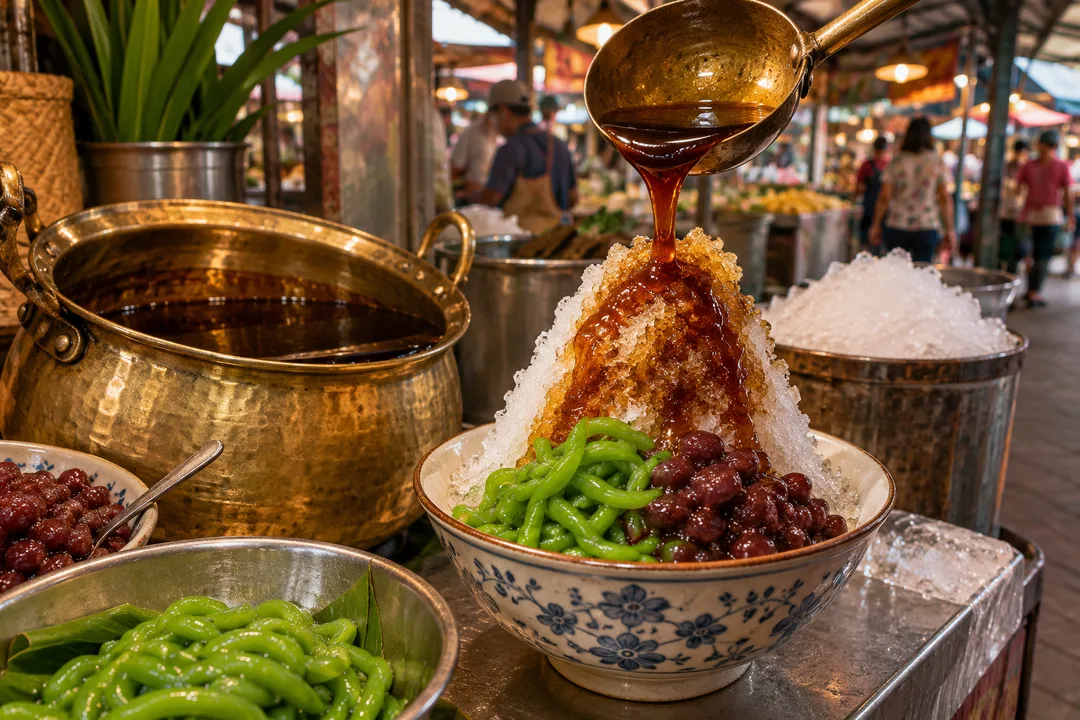
Watch how the Chinatown hawker assembles each bowl to order. A compacted block of ice spins against a razor-sharp blade, throwing a fine snow cone into a chilled ceramic or melamine dish; next comes a generous scoop of whole red beans cooked until creamy at the core, a handful of emerald pandan rice-flour strands, a splash of salted white coconut cream, and finally a ladle of dark amber palm syrup poured right across the summit. Because Chinatown stalls draw heavily from Chinese tong sui techniques, the red-bean component here is treated as a star player rather than a token garnish.
One practical rule saves every first-time visitor from disappointment: never order hot char kway teow, fried carrot cake, or claypot rice at the exact same moment you pick up your chendol. If you queue for a sizzling wok dish while holding your dessert tray, your shaved ice will melt into lukewarm soup before you reach the table. Finish your savory lunch first, clear your plates to the tray-return station, and then walk over to the dessert row with clean hands and a cold spoon.
Transitioning to Shophouse Dessert Parlors Near Keong Saik and Bukit Pasoh
After testing the classic red-bean-forward hawker bowl, cross South Bridge Road or stroll west through the back lanes behind Kreta Ayer toward Keong Saik Road and Bukit Pasoh for your second stop. Tucked beneath louvered timber shutters and cantilevered plaster balconies, traditional Cantonese and Nyonya-inspired dessert parlors serve chendol in a calmer, sit-down setting where ceiling fans turn lazily above marble-topped tables. Here you can slow the pace of your crawl and compare how indoor kitchens calibrate sweetness when they are not racing through a hundred lunchtime trays.
In these shophouse parlors, the ice is often shaved finer and packed lower into wide bowls, allowing toppings like chewy sago pearls, black grass jelly cubes, or golden jackfruit strips to sit neatly beside the green pandan worms. Ask the server whether their gula melaka syrup is infused with ginger or screwpine leaf, and notice how a lighter hand with salt in the coconut milk lets the floral aroma of the pandan strands linger on the finish.
If you are walking with a companion who prefers variety over back-to-back shaved ice, pair one shophouse chendol with a small porcelain bowl of chilled sago gula melaka or warm red-bean paste scented with aged tangerine peel. Alternating between icy coconut milk and warm citrus-scented bean broth keeps your palate awake and highlights how traditional Chinatown kitchens balance cooling and warming ingredients across a single afternoon menu.
Connecting Temple Courtyards, Chess Tables, and Ann Siang Hill Park
The walk between Chinatown's dessert clusters is half the reward when you use the shaded side lanes instead of the main traffic arteries. Step out of the market complex onto Banda Street to watch neighborhood regulars playing Chinese chess under the concrete pavilions, then cut past the incense coils and carved stone guardians of the Buddha Tooth Relic Temple toward Ann Siang Hill. The narrow footpath climbs gently through a pocket park shaded by cinnamon, nutmeg, and frangipani trees, offering quiet wooden benches above the tiled rooftops of Club Street.
Continue down the brick-paved walkway at the far end of the hill toward Telok Ayer Green and the carved granite courtyards of Thian Hock Keng along Telok Ayer Street. Walking this heritage spine gives you twenty minutes of gentle movement between your first and second bowls, letting the richness of the coconut milk settle while you take in early coastal temple architecture and preserved clan-association facades.
Whenever midday sun or sudden rain alters your route, open the Karpo APP to browse nearby hawker dessert rows, air-conditioned shophouse sweet parlors, and sheltered heritage walkways across Chinatown, Maxwell, and Tanjong Pagar. Filtering by neighborhood pocket lets you pivot smoothly from an open-air market deck to a quiet tea lane without losing your place on the walk.
Practical Notes for Crowd Timing, Cutlery, and Lane Navigation
For the calmest tasting window in Chinatown, start your crawl either mid-morning after the market's early produce rush or mid-afternoon once the central-business-district lunch wave has returned to the offices around Raffles Place and Tanjong Pagar. During that afternoon shoulder period, hawkers have time to pack each ice cone carefully and top up fresh trays of pandan jelly and red beans without a twenty-person queue pressing behind you.
Keep a small umbrella and a bottle of plain water in your daypack as you move between Kreta Ayer, Club Street, and Telok Ayer. While five-foot ways shelter most of the shophouse blocks, the short hill crossings around Ann Siang and Duxton Plain Park are open to the sky, and a sip of plain water between stops clears your palate far better than sweetened iced tea.
When sharing bowls across two or three people on the upper hawker deck, ask for an extra porcelain soup spoon rather than stirring the entire mountain of shaved ice into a flat pool right away. Working around the base of the bowl lets you taste how the chilled coconut cream and warm red beans meet the dark palm syrup before the upper snow cone melts in the afternoon breeze.
Ask Karpo for more information.
Keep reading
- Geylang Serai Chendol Dessert Crawl: Market Bowls to Pick
 Katong Chendol Dessert Crawl: Peranakan Bowls Worth a Walk
 Kampong Glam Chendol Dessert Crawl: Sultan Mosque to Lanes