 Geylang Serai Chendol Dessert Crawl: Market Bowls to Pick
Coffee & Dessert
Katong Chendol Dessert Crawl: Peranakan Bowls Worth a Walk
Map a Katong chendol dessert crawl along East Coast Road and Koon Seng Road. Compare Nyonya pandan strands, attap chee, and shaved ice after laksa.
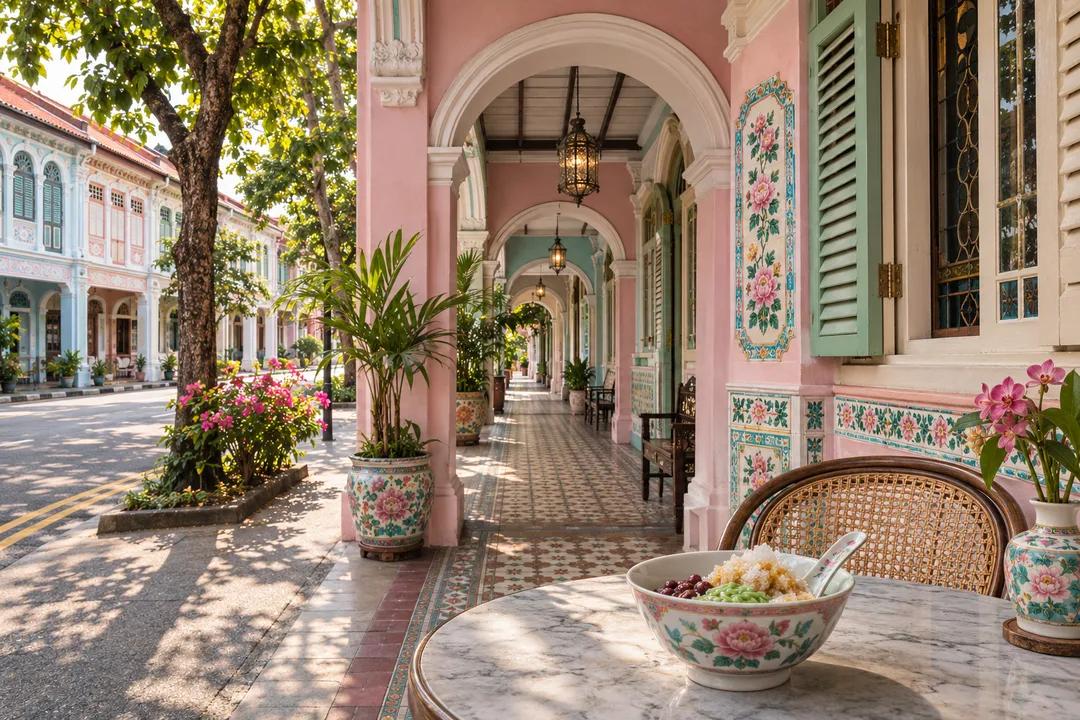
Nothing makes a porcelain bowl of Nyonya chendol taste sharper than the lingering chili-and-laksa-leaf heat of a midday meal along East Coast Road. When architectural illustrator Mei Lin and her two studio friends walk through Katong on a sunny Saturday afternoon, they treat their Katong chendol dessert crawl as a two-part cooling ritual between the tiled five-foot ways of Joo Chiat Road and the sea breeze of East Coast Park. In a Peranakan kitchen, chendol is never an afterthought thrown together from canned ingredients: cooks pound bundles of pandan leaves to extract deep chlorophyll aroma, add a drop of alkaline water so the mung-bean strands hold a gentle bounce against the tooth, and simmer coconut-palm sugar with bruised screwpine knots until it pours like dark satin. Moving between heritage kueh parlors and contemporary East Coast dessert bars lets you taste how that Straits Chinese craft adapts from grandmotherly porcelain bowls to modern shaved-snow platters.
What Sets a Peranakan Nyonya Chendol Apart from a Standard Hawker Bowl
Walk into a traditional Nyonya kueh and dessert shop under the shaded arcades off East Coast Road and you will notice the difference before your spoon touches the ice. Peranakan families prize visual harmony and layered aromatics, serving their chendol in high-footed blue-and-white porcelain bowls or fluted glass coupes that keep the coconut cream chilled right to the rim. Instead of dumping syrup straight over the peak of the ice, the counter server ladles dark palm-sugar reduction around the base of the dome so you can control the sweetness of each bite.
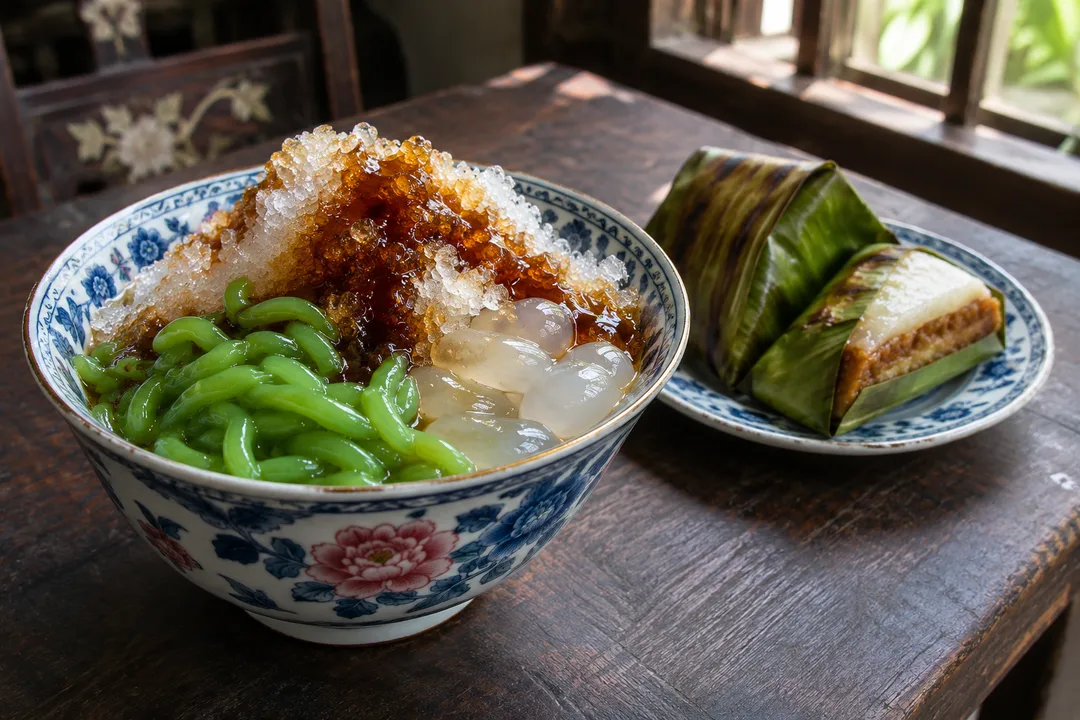
Taste the green jelly strands on their own first. Nyonya cooks blend mung-bean starch with fresh pandan juice and pass the hot paste through a coarse sieve into iced water, creating tapering, emerald-tinted tails that carry a grassy, almost nutty fragrance. Paired with cold, freshly pressed santan that has been lightly seasoned with salt, the jelly feels silky rather than chalky. Many Katong parlors also crown the bowl with translucent, oval attap chee—the tender seeds of the nipah palm—which offer a firm, jelly-like bite that contrasts with soft red kidney beans.
Alongside your cold bowl, scan the glass counter for bite-sized Nyonya kueh that complement palm sugar without overwhelming it. A triangular parcel of pulut inti—steamed glutinous rice stained indigo with butterfly-pea flowers and topped with grated coconut cooked in palm treacle—echoes the core flavors of chendol in warm, chewy form, while savory rempah udang rolls filled with spiced dried-shrimp sambal cut cleanly through the richness of thick coconut cream.
Comparing Heritage Kueh Parlors with Modern East Coast Shaved-Ice Cafes
Once you have finished your classic porcelain bowl, stroll ten minutes east toward the intersection of Joo Chiat Place and Tembeling Road for your second tasting stop. Several contemporary cafes along this stretch reimagine the dessert using Korean-style rotary snow shavers that freeze coconut water and milk into a cylinder before shaving it into weightless, ribbon-like folds. Because the snow itself already holds coconut flavor, these modern bowls melt into a velvety cream rather than diluting into plain water on a humid afternoon.
Modern Katong cafes also experiment with textural toppings that go beyond red beans and sweet corn: toasted coconut flakes, crushed cashew brittle, house-churned gula melaka gelato, or cubes of pandan chiffon cake tucked around the rim. When evaluating a contemporary version, check whether the kitchen still respects the salt-and-bitter spine of traditional palm sugar. Skip bowls buried under whipped cream, caramel drizzle, or chocolate wafer sticks—those heavy cafe garnishes mask the delicate floral aroma of fresh pandan leaves.
If you are walking as a trio, order two contrasting bowls at your second stop rather than three identical portions: one focused on shaved coconut snow with attap chee and red beans, and a second glass featuring chilled sago pearls or grass jelly swimming in salted santan. Sharing across the table keeps everyone refreshed for the architectural walk ahead without weighing you down in the afternoon heat.
Walking the Pastel Shophouse Lanes from Koon Seng Road to the Seawall
Between dessert stops, let Katong's Peranakan streetscape set an unhurried walking pace. Turn onto Koon Seng Road to admire the two-story terrace houses decorated with relief tiles of peonies, phoenixes, and swallows, swinging pintu pagar half-doors that allow airflow while preserving privacy, and pastel plaster pilasters in mint green, rose pink, and sky blue. Walk along the covered five-foot ways rather than the exposed asphalt carriageway so you can examine the geometric floor tiles and carved teak fanlights up close in the shade.
From the shophouse enclave, head south past the heritage churches and low-rise courtyard apartments along Ceylon Road and Amber Road toward Katong Park. Under the wide canopy of mature rain trees and heritage fort stones, park benches offer a breezy spot to rest your feet and compare notes on which stall nailed the silkiest santan and most aromatic pandan worms. Families and dog walkers gather here as the late-afternoon light softens across the lawn.
To finish your afternoon by the water, follow the pedestrian underpass beneath the expressway straight onto the coastal path at East Coast Park. Use the Karpo APP before you set out to filter Nyonya dessert parlors, shaded shophouse cafes, and scenic walking corridors across Katong and Marine Parade, making it effortless to sequence your laksa lunch, two-stop chendol tasting, and seaside sunset stroll in one smooth loop.
Practical Notes for Timing, Sharing, and Shophouse Etiquette
Plan your Katong crawl for early-to-mid afternoon on a weekday or Saturday, right after the midday laksa and chicken-rice queues begin to thin out and while traditional kueh trays still hold their full assortment of afternoon parcels. Popular family-run parlors prepare pandan jelly and freshly squeezed santan in finite morning batches; arriving too close to evening dinner hours means you may miss out on sought-after toppings like attap chee or freshly steamed pulut.
When photographing the ornate facades along Koon Seng Road and Joo Chiat Road with takeaway cups in hand, remember that these shophouses are private residential homes. Stay on the public walkway, avoid resting cold, condensation-wet dessert cups on residents' tiled ledges or window sills, and carry empty bowls or banana-leaf wrappers to the public bins along East Coast Road.
If you want to bring a taste of Katong home after your walk, ask the kueh counter for uncut boxes of pandan-layered kueh salat or palm-sugar kaswi rather than trying to pack shaved-ice chendol for a long transit ride. Store the boxed parcels in the coolest part of your bag while you stroll through Katong Park, and enjoy your cold shaved ice right at the marble shop tables where the texture of the freshly pressed coconut cream and chilled pandan strands is at its peak.
Ask Karpo for more information.
Keep reading
- Geylang Serai Chendol Dessert Crawl: Market Bowls to Pick
 Chinatown Chendol Dessert Crawl: Hawker Rows and Tea Lanes
 Kampong Glam Chendol Dessert Crawl: Sultan Mosque to Lanes