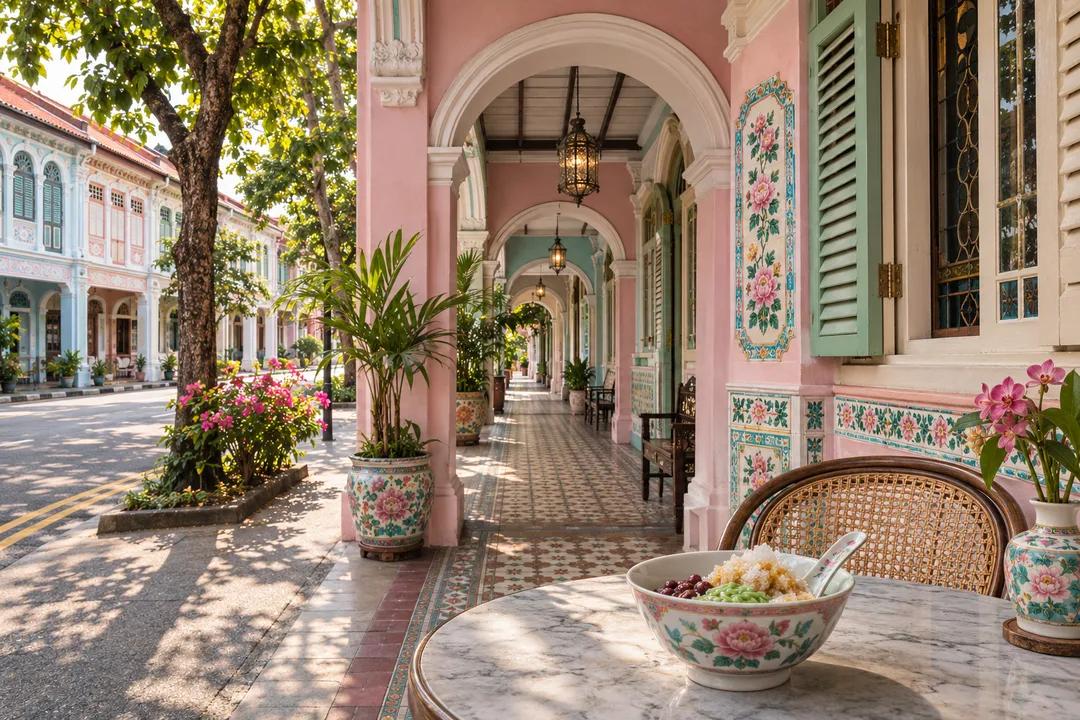
 Katong Chendol Dessert Crawl: Peranakan Bowls Worth a Walk
Coffee & Dessert
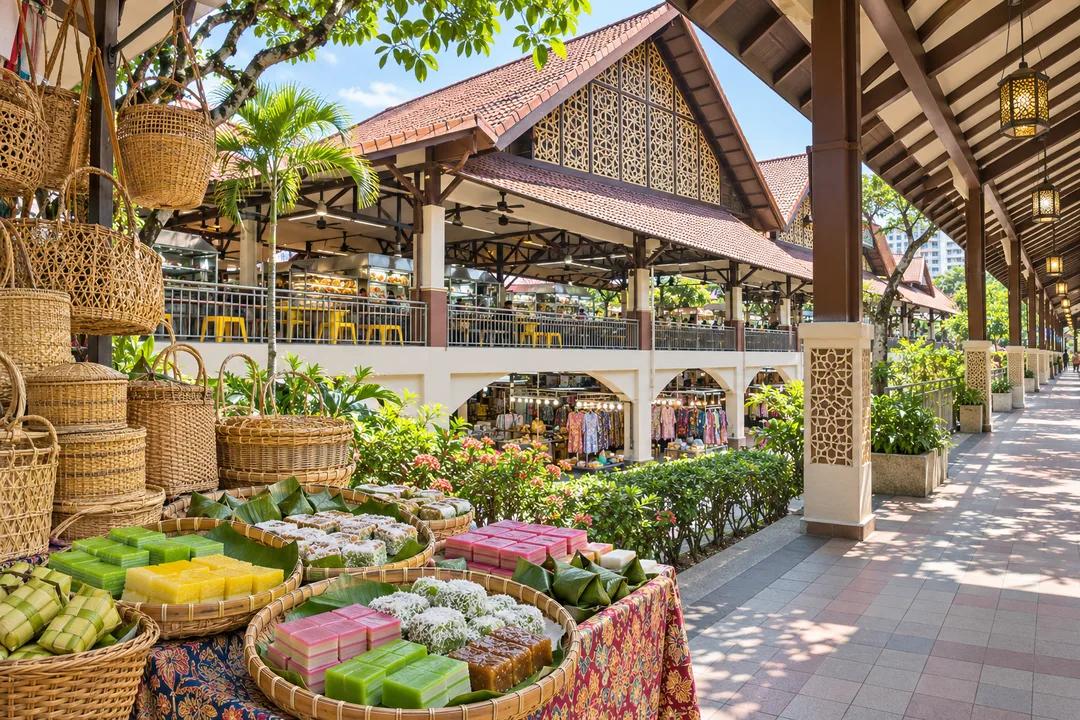
Geylang Serai Chendol Dessert Crawl: Market Bowls to Pick
Plan a Geylang Serai chendol dessert crawl across upstairs hawker galleries and bazaar lanes. Compare pandan jelly texture, fresh santan, and palm syrup.
Stepping off the escalator onto the upper cooked-food deck at Geylang Serai Market, you can spot a serious chendol stall before you even read a signboard: look for the deep stainless-steel basin where pea-green pandan strands float in chilled water beside a squat earthen pot of dark palm-sugar syrup. Nadia and her aunt Rahimah, who crosses the Causeway from Johor whenever she needs bolts of baju kurung silk at Joo Chiat Complex, always begin their Geylang Serai chendol dessert crawl right here on the breezy perimeter gallery. Down on the ground floor, wet-market vendors stack bruised bundles of screwpine leaves, grated white coconut flesh, and cylindrical blocks of palm sugar wrapped in dried leaves, which means upstairs dessert hawkers have no excuse for artificial green food coloring or thin carton milk. When tropical humidity hangs heavy over Changi Road and Sims Avenue, a two-stop or three-stop tasting loop through this Malay heritage quarter turns a simple bowl of shaved ice into a masterclass in coconut fat, pandan fragrance, and slow-simmered treacle.
Reading Pandan Strands, Santan, and Palm Syrup at the Stall Window
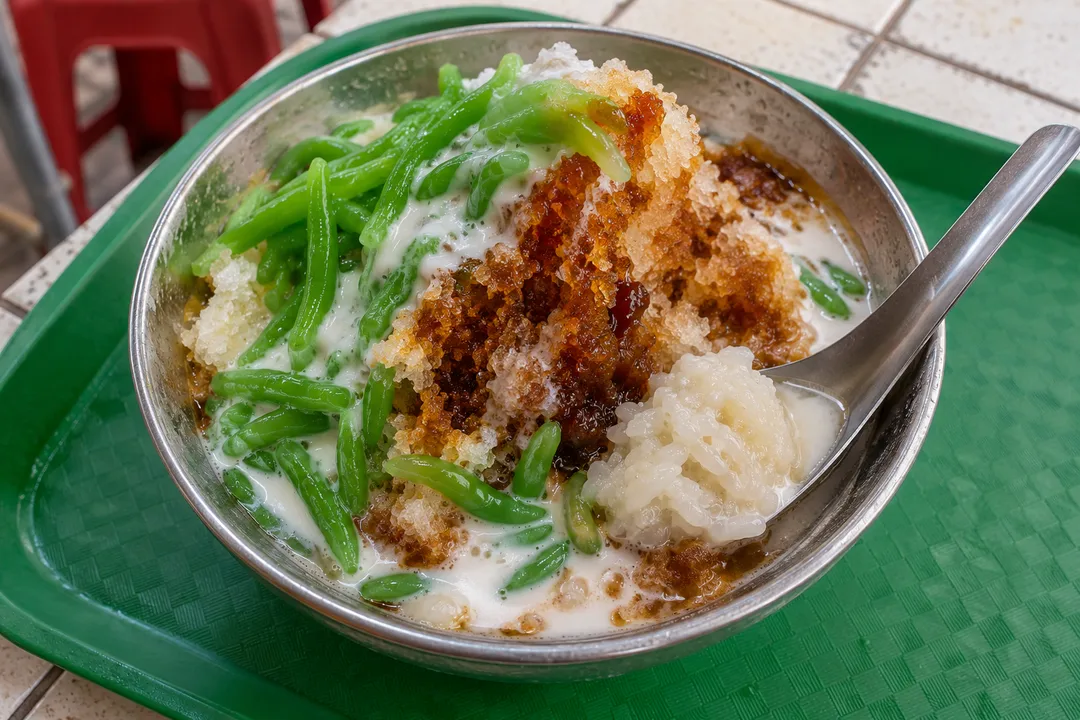
Before joining a queue on the upper hawker deck, watch how the stallholder ladles the three core elements into the bowl. Authentic Malay-style chendol relies on short, slightly irregular green droplets made from mung-bean or rice flour steeped with fresh pandan juice and pressed through a perforated brass colander directly into ice water. When you lift a spoonful, those strands should feel supple and softly fragrant rather than rubbery or neon-bright. If the jelly worms look uniform and stiff like plastic noodles, save your appetite and walk twenty paces down the aisle to the next cold-sweets counter.
Next, look at the coconut milk container and the syrup ladle. Traditional stalls around Geylang Serai press grated coconut flesh with a pinch of coarse sea salt so the santan tastes savory-rich against the deep, caramelized bitterness of dark gula melaka. Rahimah always checks whether the palm syrup clings to the shaved ice in slow amber ribbons or immediately washes straight to the bottom like tinted sugar water. A thick, molasses-dark reduction that coats the back of a metal spoon will hold its flavor even after the tropical breeze melts the top half of your ice mound.
Pay attention to the ice shaver itself as the hawker builds your bowl. Older rotary blades shaved from solid blocks produce feathery snow that absorbs coconut cream like a sponge, whereas coarse ice crystals crunch loudly and leave a watery pool at the base. When ordering your first bowl of the afternoon, ask for the classic three-part combination—pandan jelly, salted santan, and dark palm syrup—before adding heavy extras, so your palate can judge the balance of the house base.
Pacing Your Two-Stop Tasting Between Upstairs Decks and Bazaar Lanes
A smart Geylang Serai crawl separates pure, unadorned traditional bowls on the upper market deck from loaded topping variations along the ground-floor bazaar arcades and neighboring coffee shops. Start upstairs during the mid-morning lull after the early wet-market shoppers have packed their marketing trolleys and before the midday office crowd fills the central tables. Claim a seat along the outer concrete balustrade overlooking the open plaza: the cross-breeze keeps you cool while keeping your cold dessert away from the rising heat of satay grills and mutton-soup cauldrons in the center aisles.
For your second stop, descend toward the shaded walkway linking the market building with Wisma Geylang Serai and the peripheral kopi stalls along Haig Road. Here you can test heavier Malay and Javanese variations layered with steamed glutinous rice (pulut), sweet creamed corn, or soft red kidney beans. Steamed pulut adds a warm, chewy grain contrast that turns a light refresher into a filling midday snack, while sweet corn brings a bright pop of salt and starch that pairs surprisingly well with salted coconut milk.
Resist the temptation to order a durian-topped bowl on your very first stop. Rich Mao Shan Wang or D24 durian flesh is delicious over palm-sugar ice, but its pungent sulfur-sweet aroma coats your tongue and makes every subsequent pandan jelly or coconut cream taste muted. If your group wants durian chendol, save it as the grand finale of your route and share a single bowl among two or three people alongside cups of unsweetened hot teh O.
Pairing Cold Bowls with Savoury Kueh and Exploring the Textile Quarter
Walking straight from one shaved-ice counter to another can give you brain freeze and sugar fatigue within twenty minutes, so build a savory intermission into the middle of your crawl. Between bowls, stop at a family kueh tray for warm epok-epok stuffed with curried potatoes and a wedge of hard-boiled egg, or pick up grilled pulut panggang wrapped in char-scented banana leaf. The black pepper, dried shrimp sambal, and toasted coconut fillings reset your taste buds and make the next spoonful of icy santan taste twice as refreshing.
Use the fifteen-minute walk between dessert stops to explore the textile, spice, and homeware arcades that give Geylang Serai its neighborhood rhythm. Cross the pedestrian walkway into Joo Chiat Complex to browse stacked bolts of batik sarongs, embroidered kebaya lace, and brass cake molds used for festive kueh bahulu. From there, loop back through the timber-and-steel canopy of Wisma Geylang Serai, where community exhibitions and shaded courtyard benches offer a calm pause out of the midday sun.
If an afternoon downpour rolls across the east side, stay under the continuous covered linkways connecting the market, civic hub, and nearby bus shelters along Sims Avenue. Open the Karpo APP to filter nearby traditional dessert stalls, halal snack counters, and shaded seating pockets across Geylang Serai and neighboring Paya Lebar, then adjust your walking loop on the fly without backtracking through wet street crossings.
Practical Notes for Navigating Geylang Serai and Paya Lebar Connections
Arriving on foot from the Paya Lebar interchange takes less than ten minutes along the sheltered pedestrian promenade that follows the Geylang River canal toward Changi Road. If you are carrying wet-market purchases or boxes of festive cookies from the ground-floor shops, use the passenger lifts at the eastern corner of the market building rather than climbing the central escalator with bags in both hands. Keep small packets of tissue paper and a reusable cloth tote in your daypack, as upstairs hawker tables turn over quickly and trays must be returned to the designated clearing racks along the outer corridor.
When tasting in a pair or small group, bring two extra soup spoons from the cutlery tray at the stall counter rather than stirring a single bowl from top to bottom right away. Scoop from the lower edge of the shaved-ice mound first, pulling up a little liquid palm sugar and salted coconut milk with each mouthful of green pandan jelly while leaving the upper dome intact so the ice melts slowly in the warm air. By the time you finish your final bowl and stroll past the brightly lit spice stalls toward Joo Chiat Road, you will know exactly which texture, syrup viscosity, and topping combination defines your personal benchmark for Singapore chendol.
Ask Karpo for more information.
Keep reading
- Katong Chendol Dessert Crawl: Peranakan Bowls Worth a Walk
 Chinatown Chendol Dessert Crawl: Hawker Rows and Tea Lanes
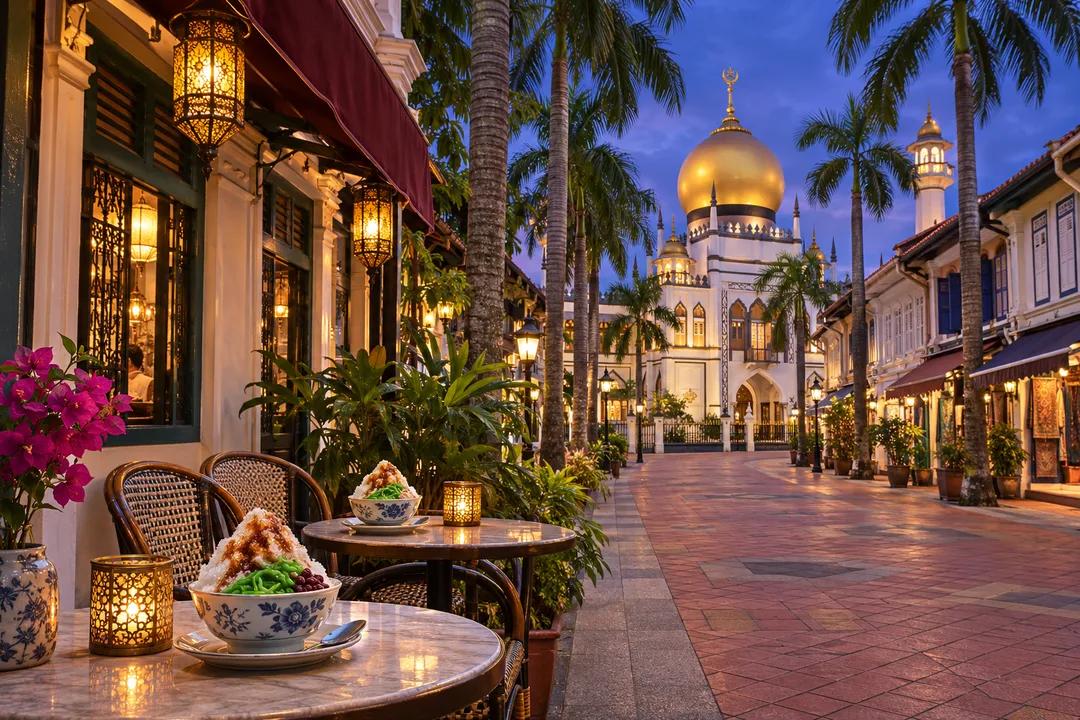 Kampong Glam Chendol Dessert Crawl: Sultan Mosque to Lanes