 Haaland Has Seven Goals and Norway Runs Entirely Through Him
⚽️2026 FIFA WORLD CUP
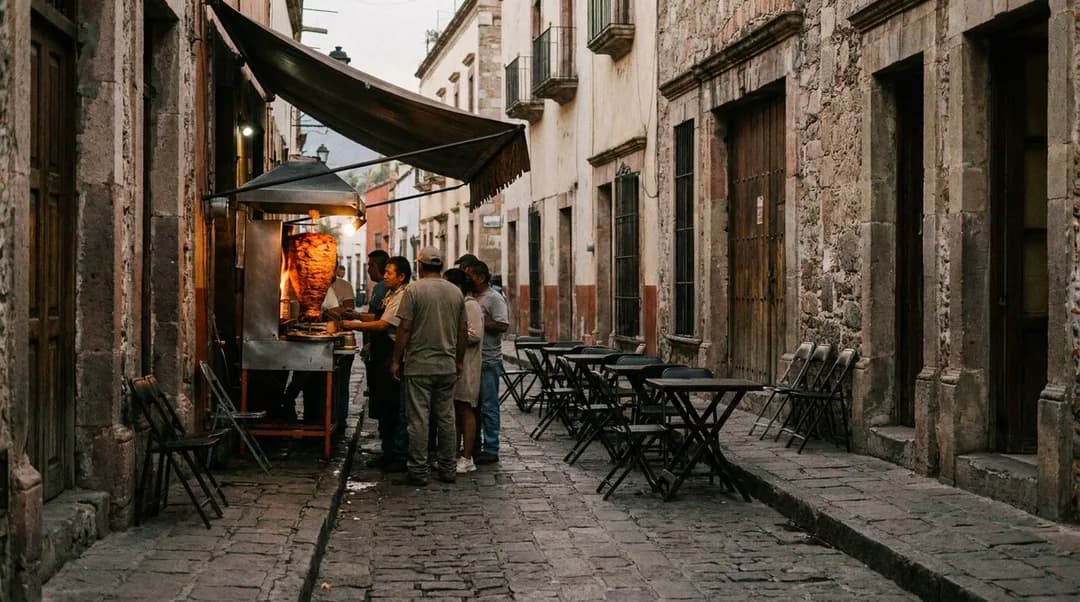
Tacos al Pastor in Monterrey While the social reckoning Plays Out on Cantina Screens
Spit-roasted meat and pineapple slices anchor a neighborhood ritual as patrons toggle between match commentary and live cultural debate feeds.
# Article Body
You catch the charcoal smoke before you round the corner into Barrio Antiguo, that sweet-savory smell of pork fat dripping onto coals while pineapple caramelizes on the vertical spit. By the time the opening whistle blows for whatever World Cup match has packed the cantinas, you're already three tacos deep, standing at a trompo cart where the taquero's knife work looks like muscle memory set to cumbia. The neighborhood's cobblestone plazas fill with a specific energy during tournament season—half sports bar, half town square, entirely Regio.
The Geometry of the Spit
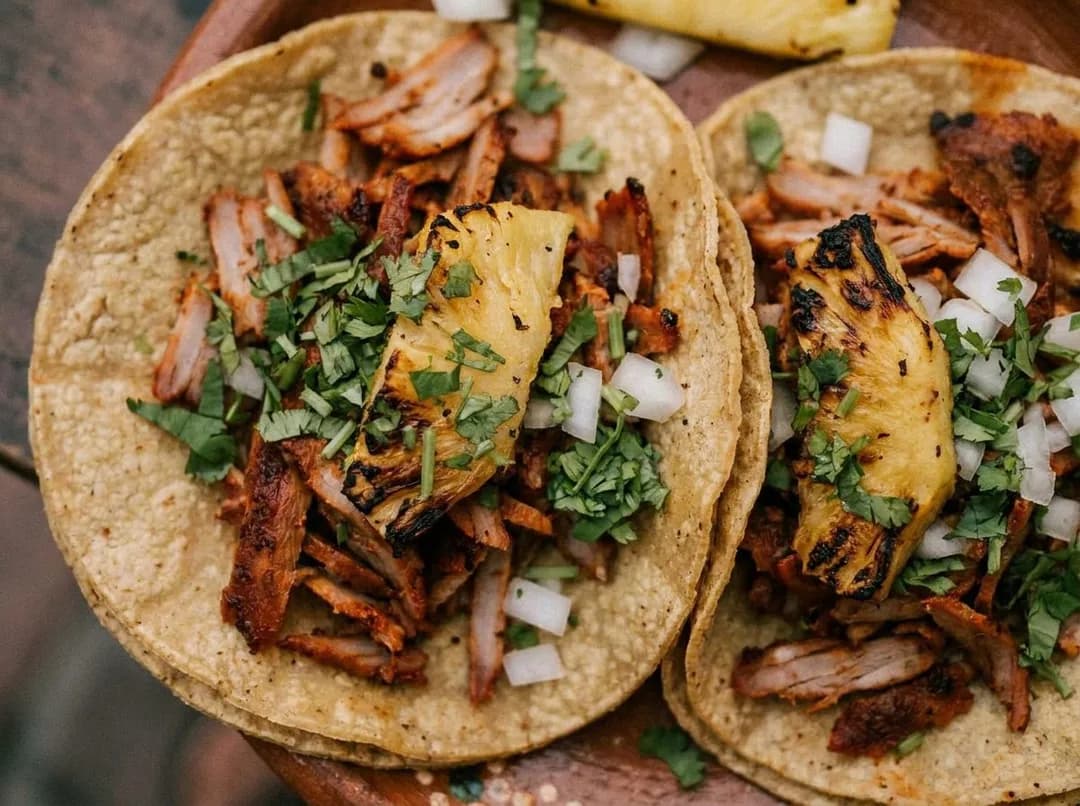
The trompo stands taller than most people expect, a cone of marinated pork shoulder stacked tight and spinning slow under gas flames that hiss when fat hits them. You watch the taquero shave ribbons of meat directly onto doubled corn tortillas, the motion so practiced he never looks down. The pineapple slice crowns the whole operation, its sugars blackening at the edges, and when he carves a chunk to land on your taco it's half candy, half acid. The meat itself has that brick-red adobo crust from dried chilies and achiote, but the inside stays pink and yielding. You're eating this on the street, probably near a cantina entrance, definitely within sight of multiple flat screens already showing pre-match commentary. The tortillas come from a woman stationed two meters away with a comal, flipping them at intervals that suggest she's been doing this since before you woke up.
Screens Glow, Conversations Split
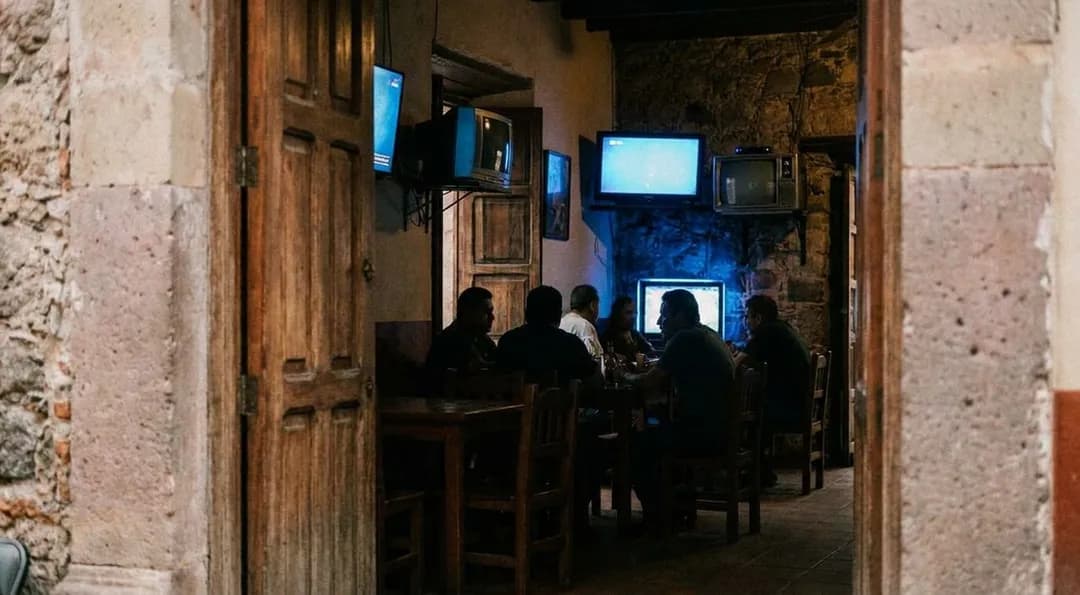
Inside the cantinas—and Barrio Antiguo has a dozen worth your time—the light drops to amber and the noise doubles. Flat screens hang in every corner, some showing the match feed, others tuned to streaming panels where cultural critics and ex-players dissect not just formations but what the tournament means for national identity, migration patterns, regional pride. You notice tables where half the group watches the game while the other half watches the debate, and every few minutes someone swaps attention. The bartender keeps the volume balanced so neither feed dominates, which creates this layered acoustic where you catch a referee's whistle under someone's impassioned monologue about diaspora representation. The wood tables are scarred and sticky. The ceiling fans do almost nothing. You order another round of tacos and a cold Carta Blanca that arrives in a glass frosted from the freezer.
The Regulars Have a Corner
There's always a table near the back—sometimes a long communal setup, sometimes a cluster of smaller ones pushed together—where the same faces appear for every match. They're not wearing jerseys. They're not shouting at the screen. They're the ones who nod at the bartender without ordering, who get their tacos delivered on real plates instead of paper, who've been coming here since before the World Cup was announced and will keep coming after. You can tell who they are by posture: they lean back, arms draped over chair backs, commenting on the game with the economy of people who've watched a thousand matches together. One guy always brings his own salsa in a small jar, something his wife makes with chiles de árbol and too much garlic. He offers it around. It's legitimately punishing.
Pineapple Juice Runs Down Your Wrist
The thing about eating tacos al pastor during a tense match is that you stop paying attention to mechanics. You're supposed to fold the tortilla, trap the meat and pineapple and onion and cilantro, tilt your head, commit. But when a striker breaks through the defense you freeze mid-bite and the pineapple juice escapes, running warm and sticky down to your wrist. The napkins here are thin, the kind that disintegrate on contact. You learn to order in waves—two tacos, watch, two more, watch—because eating a full plate while something crucial happens on screen feels like a betrayal of both the food and the game. The salsa verde here has a sharp tomatillo bite that cuts the pork's richness. The salsa roja tastes like it has chocolate in it, or maybe that's the chilies talking. You use both. You use too much of both.
The Halftime Economy
When the whistle blows for halftime the entire neighborhood exhales. People spill onto the streets, smoking, arguing, checking phones, forming instant lines at the trompo carts. The taqueros work faster now, knowing they have a fifteen-minute window to feed everyone before the second half starts. You see vendors selling sliced mango with lime and chile powder, others pushing carts loaded with cold beer in ice chests. Someone's set up a folding table with bootleg jerseys for teams that didn't even qualify. The cantina doors stay open and the debate feeds keep rolling, analysts now picking apart the first half with the kind of intensity usually reserved for post-game coverage. You duck into a different cantina, just to compare, and find the same setup: screens, smoke, the smell of pork and onions, tables full of people treating this like the social event it actually is.
When the Light Changes Everything Does
Late afternoon in Barrio Antiguo during World Cup season has a specific quality. The colonial buildings turn gold, the shadows get long, and the temperature finally drops enough that standing outside with a taco doesn't feel like punishment. This is when the neighborhood's rhythm shifts from frenetic to something more sustained. The matches keep coming—different time zones, different stakes—and the cantinas stay full but the crowd changes. Earlier groups head home, new ones arrive, and the taqueros rotate shifts, a fresh guy taking over the knife work while the previous one sits on a plastic crate drinking a Coke. You're still here because leaving feels premature, like walking out of a party that's just hitting its stride. The debate feeds have moved on to post-match analysis for games that finished hours ago, but people still watch, still argue, still order another round.
Practical Notes
Most trompo carts in Barrio Antiguo operate from late morning until the early hours, especially during tournament season when match schedules dictate foot traffic. The cantinas open around midday and stay open as long as there's a game worth watching. You can walk here from the Macroplaza area in about fifteen minutes, or catch a ride that drops you near the main plaza and explore from there. Bring cash—some places take cards but the taco vendors prefer bills. If you're planning to watch a high-stakes match, arrive at least half an hour before kickoff to claim a table. The neighborhood gets loud, crowded, and wonderfully chaotic when the home nation plays or when a match features a team with strong local diaspora support.
Tags: #TacosAlPastor #Monterrey #BarrioAntiguo #WorldCup2026 #MexicanStreetFood #TrompoLife #NuevoLeón #RegioCulture #FIFAWorldCup #CantinaCulture #NeighborhoodRituals #TacoStands #StreetFoodScenes #FootballCulture #MonterreyEats
Sources consulted: fifa.com · espn.com · timeout.com
Please drink responsibly. Must be of legal drinking age.
All trademarks are the property of their respective owners.
Ask Karpo for more information.
Keep reading
- Haaland Has Seven Goals and Norway Runs Entirely Through Him
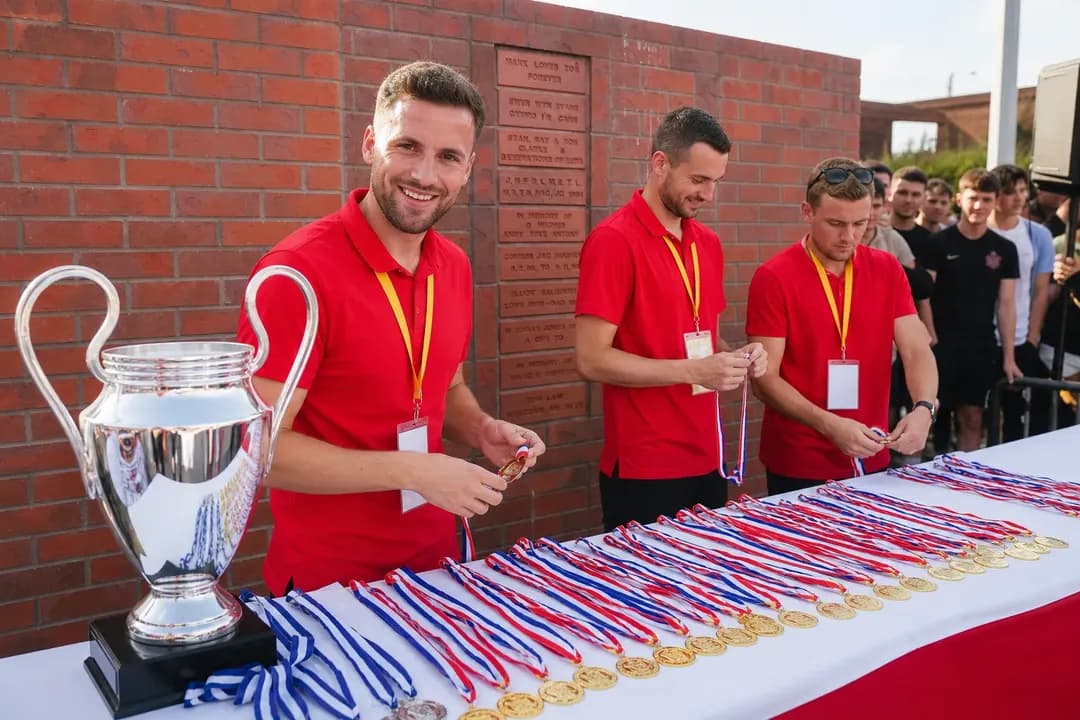 World Cup Trophy Ceremony Timing Medals and Postmatch Celebrations
 Olise and France's Attack: The Semifinal Tactical Question