 Haaland Has Seven Goals and Norway Runs Entirely Through Him
⚽️2026 FIFA WORLD CUP
Sweden vs Japan Was the Best Group Stage Match of the Entire World Cup and It Wasn't Even Close
A five-goal thriller with two red cards, a penalty save, and a 94th-minute equalizer made Sweden vs Japan the match that everyone at the 2026 World Cup is still talking about.
Five Goals, Two Red Cards, One Unforgettable Night in Seattle
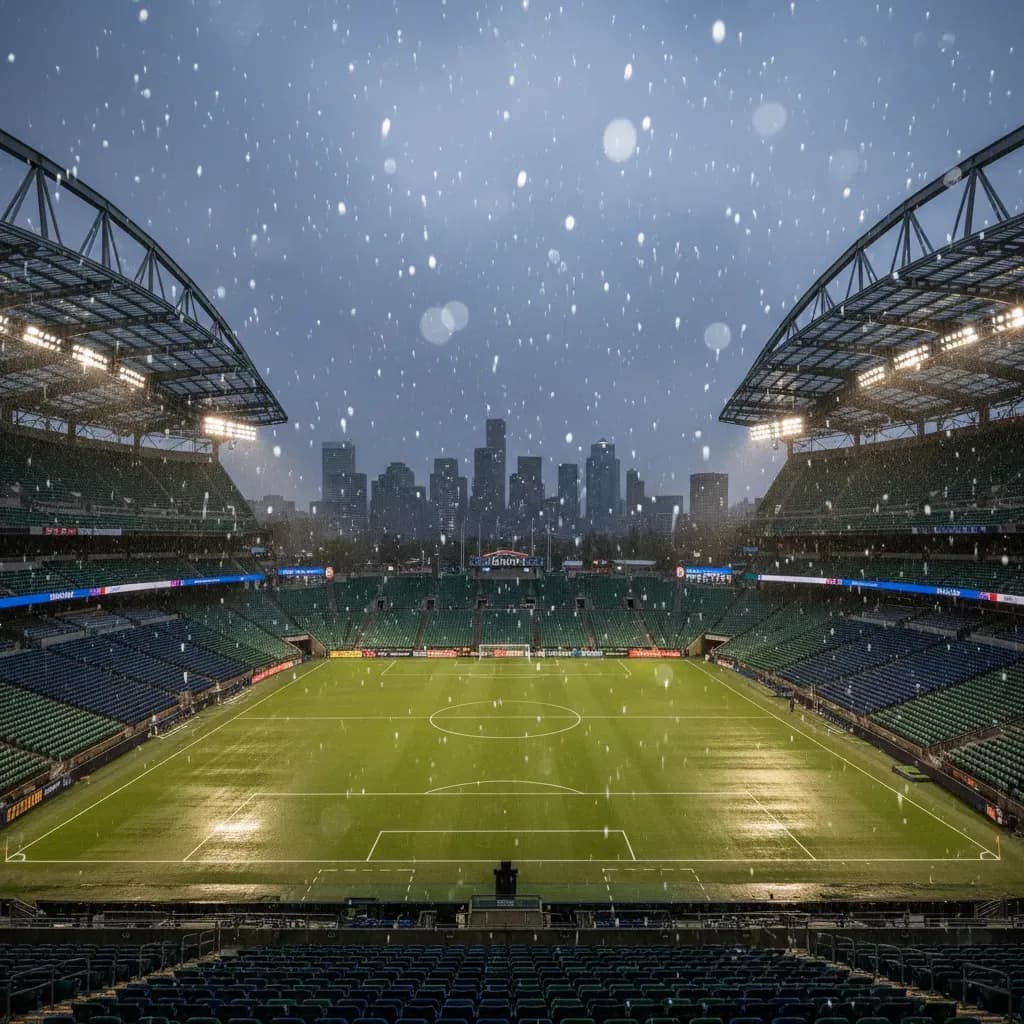
There are matches you watch and matches you experience. Sweden versus Japan at Lumen Field in Seattle was the latter — a 3-2 rollercoaster that packed more drama into 94 minutes than most tournaments produce in an entire group stage. The rain was biblical. The atmosphere was electric. And when the final whistle blew, both sets of fans applauded each other in a moment of mutual recognition that they had just witnessed something exceptional.
The match had everything: an early Swedish lead, a Japanese comeback, a controversial red card that shifted the tactical landscape, a penalty save that seemed to seal the result, and then a stoppage-time equalizer that nobody in the building — including, visibly, the players — could quite believe had happened. This was football at its most chaotic, its most dramatic, and its most addictive.
Japan's Tactical Brilliance Met Sweden's Brute Determination
Japan came into the match as slight favorites based on their recent tournament pedigree. Their structured 3-4-2-1 system had been suffocating opponents for months, and the technical quality of their squad — anchored by the Bundesliga contingent of Wataru Endo, Takefusa Kubo, and Ko Itakura — suggested a team capable of controlling any game. For the first twenty minutes, they did exactly that.
Then Sweden reminded everyone why they had been dark-horse picks before the tournament. Gyökeres bulldozed through the Japanese defensive line for the opening goal — a pure power play that no amount of tactical sophistication could prevent. Isak added a second on the counter with a finish so composed it looked rehearsed. At 2-0 down, Japan looked genuinely rattled for the first time in the tournament.
The Red Card That Changed Everything
The turning point arrived in the 55th minute when Sweden's right-back received a second yellow for a tactical foul on Kubo that denied a clear attacking opportunity. The decision was correct by the letter of the law but devastating in its consequences. Japan, already pushing forward with increasing urgency, now had a numerical advantage that their technical superiority could exploit fully.
Within twelve minutes of the red card, Japan had scored twice to level the match. The goals were textbook — quick combinations through the Swedish lines, exploiting the spaces that the man disadvantage had opened up. Lumen Field shifted from a primarily Swedish atmosphere to something more evenly split, with the Japanese contingent in the upper tier producing a noise that seemed physically impossible for their numbers.
The Penalty Save That Should Have Been the Final Act
With ten minutes remaining and momentum entirely with Japan, Sweden's goalkeeper produced the save of the tournament. A penalty — awarded for a clumsy challenge in the box that VAR confirmed in thirty seconds — seemed destined for the bottom corner. The striker's run-up was confident. The shot was well-placed. And the goalkeeper guessed correctly, diving full-stretch to his left to push the ball around the post.
The stadium erupted. Sweden's ten men celebrated as if they had won the match. Japan's players dropped to their knees. In most narratives, this would be the climax — the heroic save that preserved a precious point for the undermanned underdogs. But this match had other ideas.
The 94th-Minute Equalizer Nobody Saw Coming
Deep into stoppage time, with Sweden defending their penalty area with everything they had left, Japan worked the ball wide and delivered a cross that was more hopeful than precise. It found its way through a forest of bodies to a substitute who had been on the pitch for less than four minutes. His volley was hit with the instep from eight yards. It went in off the underside of the crossbar. The net rippled. The scoreboard changed. And Lumen Field collectively lost its mind.
The celebrations were extraordinary — Japanese staff members sprinting down the touchline, Swedish players lying flat on the wet grass in exhaustion and disbelief, neutral fans in the stands hugging strangers. The referee allowed the restart but blew the final whistle seconds later. The 3-2 scoreline barely captured what had happened over the preceding 94 minutes.
Why This Match Will Define the Tournament's Legacy
Great World Cups are remembered for great matches, and Sweden vs Japan has already claimed its place as the defining group stage encounter of 2026. It had technical quality, physical intensity, tactical drama, individual brilliance, and the kind of emotional arc that screenwriters would reject as too dramatic. The rain-soaked setting at Lumen Field added an atmospheric perfection that even the best-planned productions could not have manufactured.
For both teams, the result's practical implications were secondary to its emotional impact. Japan's never-say-die mentality was validated on the biggest stage. Sweden's resilience with ten men — and the agony of conceding so late — will fuel their remaining matches with a siege mentality that makes them dangerous in the knockouts. This was football at its absolute best.
Tags: World Cup 2026, Sweden vs Japan, Lumen Field, Seattle, group stage, five-goal thriller, red card, penalty save, stoppage time, Gyökeres, Isak, Kubo
All trademarks, team names, and player likenesses mentioned in this article are the property of their respective owners and are used here for informational and editorial purposes only.
Ask Karpo First
Want to catch the next big match at Lumen Field or find the best watch spots in Seattle? Ask Karpo for the latest World Cup Seattle schedule, fan zone locations, and a walkable route from Pike Place Market to the stadium.
Ask Karpo for more information.
Keep reading
- Haaland Has Seven Goals and Norway Runs Entirely Through Him
 World Cup Trophy Ceremony Timing Medals and Postmatch Celebrations
 Olise and France's Attack: The Semifinal Tactical Question