 Haaland Has Seven Goals and Norway Runs Entirely Through Him
⚽️2026 FIFA WORLD CUP
Sunnyside's Turkish Watch House: Kebabs, Raki, and Red-and-White for Every Türkiye Match
A Queens restaurant on Greenpoint Avenue transforms into a Turkish fan zone during World Cup matches, with grilled kebabs, raki toasts, and standing-room crowds.
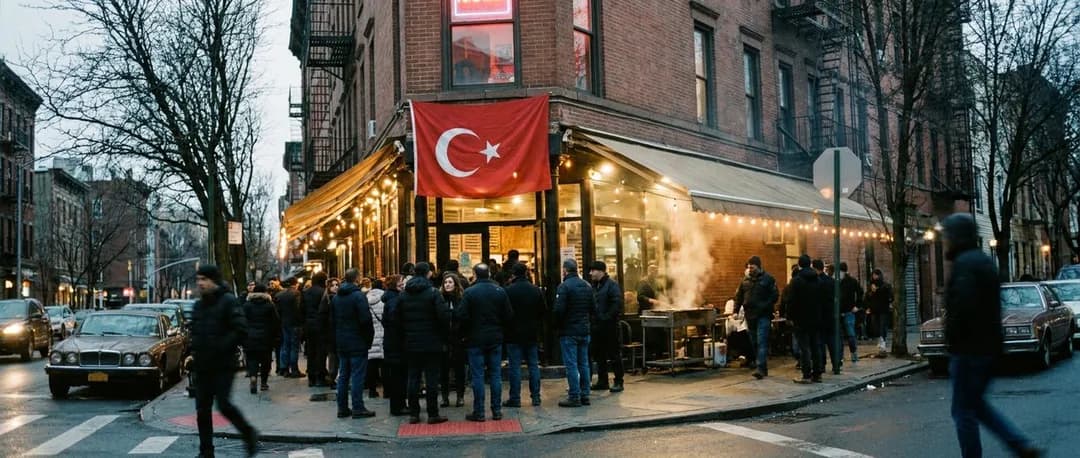
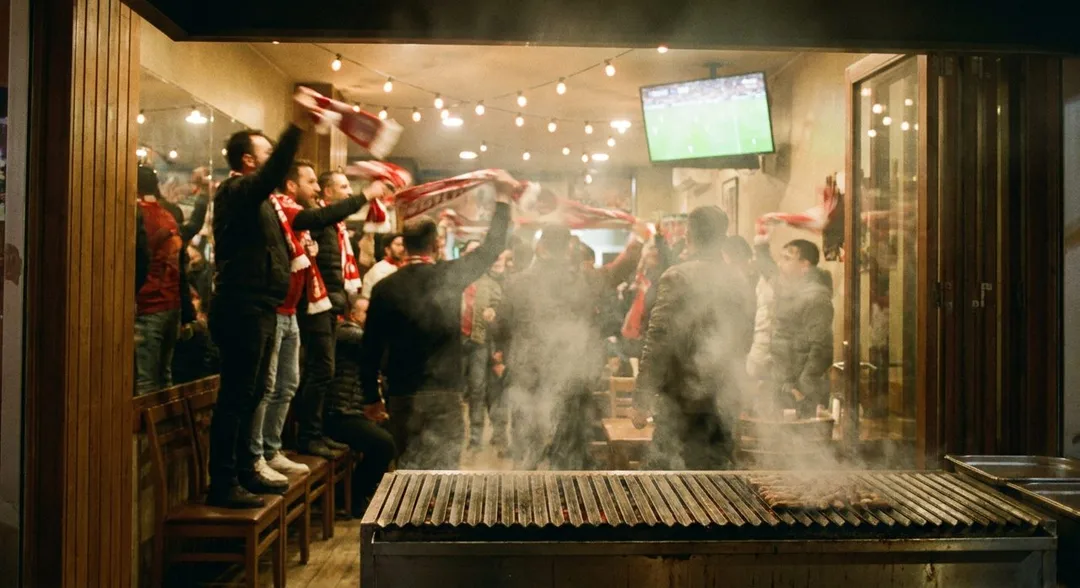
You walk into a narrow storefront on Greenpoint Avenue in Sunnyside and the first thing that hits you is charcoal smoke threading through the air, thick enough to taste. The second thing is the noise—a wall of Turkish commentary from three mounted screens, each tuned to a different feed but somehow all showing the same match. By the time Türkiye takes the pitch at the 2026 World Cup, this place stops being a restaurant and becomes something closer to a living room in Istanbul, except the living room is packed with fifty people who may or may not know each other but are about to spend ninety minutes acting like family.
The Grill Never Stops, Even at Kickoff
The kitchen sits open to the dining room, separated only by a low counter where skewers pile up faster than they disappear. You can watch the cook—sleeves rolled, forearms shiny with heat—work the mangal grill with the rhythm of someone who's done this ten thousand times. Adana kebabs char and blister. Chicken thighs glisten under a yogurt marinade. The lamb ribs, which nobody orders enough, sit fat-side down, rendering slowly while he flips everything else. During a match, he doesn't look up at the screen. He doesn't need to. The room tells him everything: the collective inhale before a shot, the groan when it goes wide, the explosion when it doesn't. On match days, the kitchen doesn't close between lunch and dinner. It just keeps going, a constant supply line of meat and bread, because you can't ask a crowd like this to sit still and not eat.
Raki Rounds and the Ritual of the Toast
The tables fill early, but the bar is where you want to position yourself if you're serious. Bottles of raki line the back shelf—Yeni, Tekirdağ, a few others you won't recognize unless you grew up with them. The pour is generous, the water added tableside until the liquid clouds into that milky, anise-heavy haze. Before the match starts, someone always raises a glass. It's not organized. It just happens. A toast to the team, to the old country, to being here and not there but still feeling like you're there. The raki goes down sharp and warm, a little sweet, a little medicinal, and by halftime you've had two more without quite realizing it. They don't serve it in shot glasses here. It's tumblers, over ice if you want, and the expectation is you'll nurse it, sip it, pace yourself against the slowburn of the game. But expectations and reality are two different things when the score is tied in the eightieth minute.
The Crowd Composition: Who Shows Up and Why
You get the older men who've been coming here since before it was a match-day spot, back when it was just a place to eat lunch and read the Turkish papers. They sit near the back, closest to the kitchen, and they don't cheer so much as nod approvingly or mutter criticisms under their breath. Then there's the younger crowd—second-gen, third-gen, some who speak Turkish fluently and some who just know enough to shout at the referee. A few wear jerseys, the red crescent moon and star across their chests, but most are in regular clothes, work shirts and jeans, because they came straight from a shift or a job site. You'll spot a handful of non-Turkish faces too, dragged along by friends or partners, gamely trying to keep up with the chants they don't understand. And there's always at least one person filming everything on their phone, not for social media clout but to send back to relatives in Ankara or Izmir who are watching the same match six hours ahead.
What to Order When You Can't See the Menu
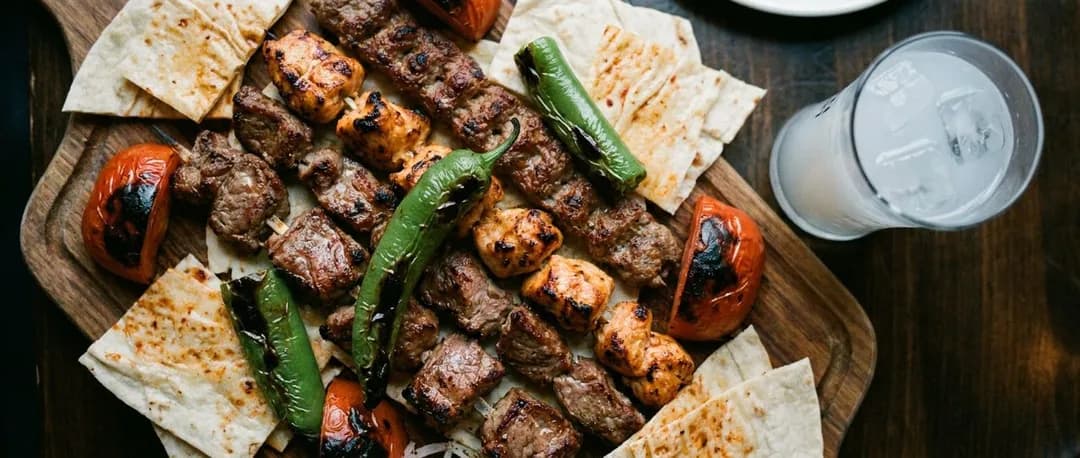
The menu exists, laminated and thumbtacked near the register, but on match days nobody's reading it. You order what everyone else is ordering. Adana kebab, spicy and crumbling, wrapped in lavash with charred tomatoes and a fistful of parsley. Pide if you want something you can tear and share, the boat-shaped bread loaded with ground lamb and egg, crispy at the edges and soft in the center. The lentil soup appears without asking, small bowls passed down the bar like communion. Someone will inevitably order a whole sea bass, grilled and filleted tableside, but that's a power move and it takes up too much room when the place is standing-room-only. Stick with the skewers. Stick with the bread. Drink the ayran—salty, cold, thicker than you expect—because it's the only thing that cuts through the richness and the raki and the smoke in your throat.
The Emotional Architecture of Ninety Minutes
The match unfolds in waves and the room rises and falls with it. A near-miss and everyone's on their feet, hands on heads, someone slapping the bar hard enough to rattle glasses. A goal and the place detonates—chairs scraping, people hugging strangers, the cook finally looking up from the grill to pump his fist. There's a specific kind of silence that happens after a bad call, a referee decision that feels personal. It's not quiet, exactly, but it's a unified low rumble, a collective disbelief that hums through the room like a held breath. You feel it in your chest. The commentary gets louder, angrier, and then someone cracks a joke and the tension breaks and everyone's laughing and arguing and it starts all over again. By the final whistle, win or lose, you're exhausted. Not from drinking or eating, though you've done plenty of both, but from the sheer emotional expenditure of caring this much about something happening on a screen.
The After-Match Slow Dissolve
When it's over, people don't leave immediately. They linger. They debrief. They replay key moments with their hands, acting out passes and shots with invisible balls. The cook finally takes a break, stepping outside for a cigarette, and a few regulars join him, the post-game analysis continuing in Turkish too rapid for you to follow. Inside, the screens switch to other matches or Turkish league games, the volume dropped low. Someone orders more food—the kebabs that got forgotten during the second half, the baklava that nobody had room for until now. The raki bottles get capped and returned to the shelf. The tables slowly empty, but the bar stays full for another hour, maybe two. You walk out into the Sunnyside evening, the 7 train rumbling overhead, and the charcoal smoke is still in your clothes, the taste of anise still in your mouth, and you're already wondering when the next match is.
Practical Notes
The spot is on Greenpoint Avenue, walkable from the 46th Street stop on the 7 train—about three blocks south, look for the Turkish flag in the window. Match days mean it opens early, sometimes before lunch service officially starts, and it stays open as long as people keep showing up. No reservations, no table holds. You show up, you find space, you make it work. Cash is easier than card, though they take both. Parking is street-only and a nightmare during match hours, so take the train. If Türkiye's playing a morning match because of time zones, expect the place to be full by ten a.m., coffee and tea flowing before the raki comes out. Bring patience. Bring an appetite. Bring your voice.
Tags: #2026FIFAWorldCup #TurkiyeFootball #SunnysideQueens #QueensEats #TurkishCuisine #WorldCupWatch #KebabCulture #RakiLife #NYCFoodScene #ImmigrantFood #MatchDayEats #QueensNYC #TurkishDiaspora #NeighborhoodGems #AuthenticEats
Sources consulted: fifa.com · espn.com · timeout.com
Please drink responsibly. Must be of legal drinking age.
All trademarks are the property of their respective owners.
Ask Karpo for more information.
Keep reading
- Haaland Has Seven Goals and Norway Runs Entirely Through Him
 World Cup Trophy Ceremony Timing Medals and Postmatch Celebrations
 Olise and France's Attack: The Semifinal Tactical Question