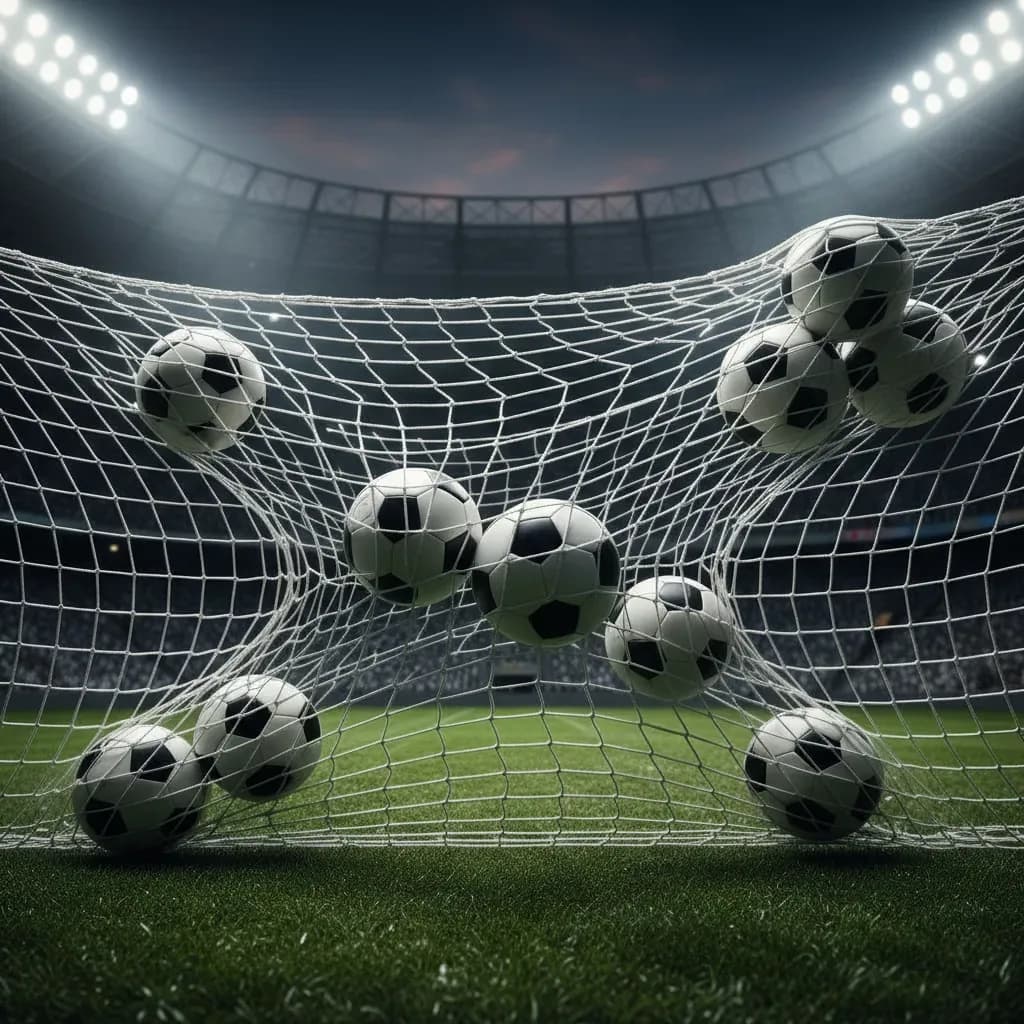
 Haaland Has Seven Goals and Norway Runs Entirely Through Him
⚽️2026 FIFA WORLD CUP
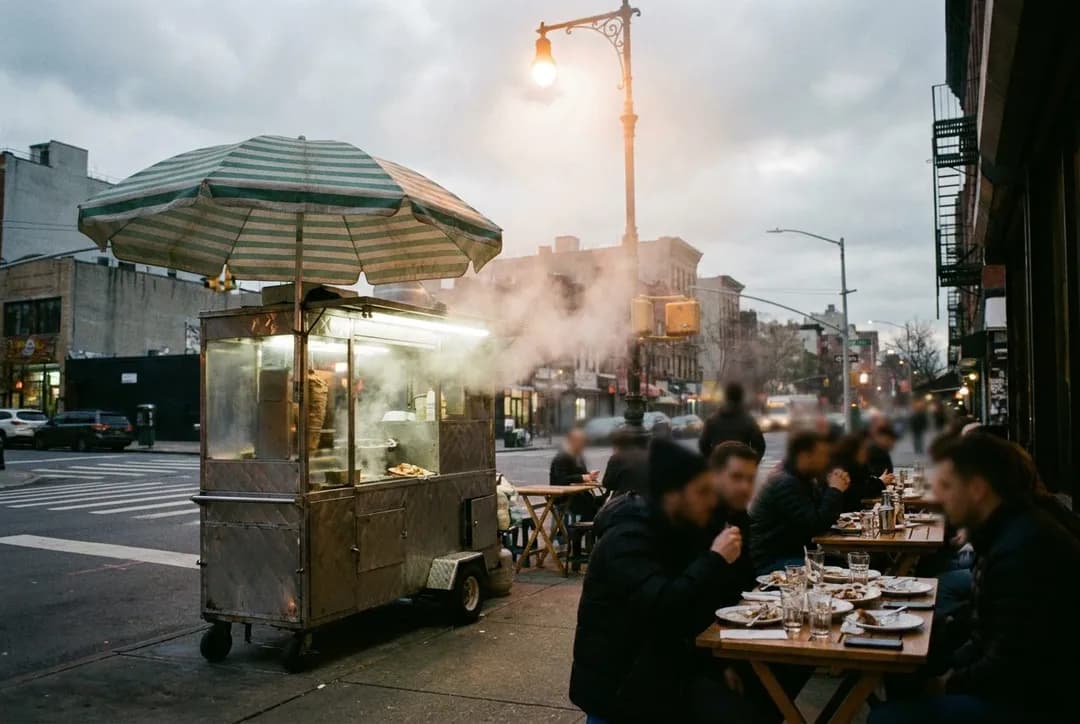
Souvlaki Carts in Astoria the Night kaley cuoco Headlines Flash Between Halves
Grilled lamb and lemon potatoes fuel a multilingual crowd as celebrity news and World Cup updates scroll across diner windows in tandem.
The lamb fat sizzles loud enough to cut through traffic on Steinway Street, and the guy flipping skewers doesn't look up when the diner window behind him flashes "Kaley Cuoco spotted in LA" before cutting to a penalty kick replay. You're here because the souvlaki carts in Astoria don't care about your algorithms—they care about char and timing and feeding the kind of crowd that shows up when a World Cup match bleeds into American primetime and nobody wants to go home yet.
When the Smoke Means More Than the Screen
The carts cluster near the corner where the elevated subway casts moving shadows every few minutes, and the smoke from the grills rises thick enough that you smell it before you see the lines. Pork and chicken rotate on vertical spits, but the lamb skewers get pulled off the grill by hand, the cook using a folded piece of pita as a glove. You watch him work in the gap between two parked cars, his rhythm faster than the pedestrian countdown. The meat comes off the fire with a crust that's almost black in places, and when he wraps it, the foil goes on so tight you have to let it rest a minute or your first bite will burn the roof of your mouth. No one here is precious about presentation. The tzatziki bleeds through the paper, and you eat standing up because the benches are full of people refreshing their phones and arguing in three languages about a call the referee made twenty minutes ago.
Flash Bulletins and Lemon Potatoes
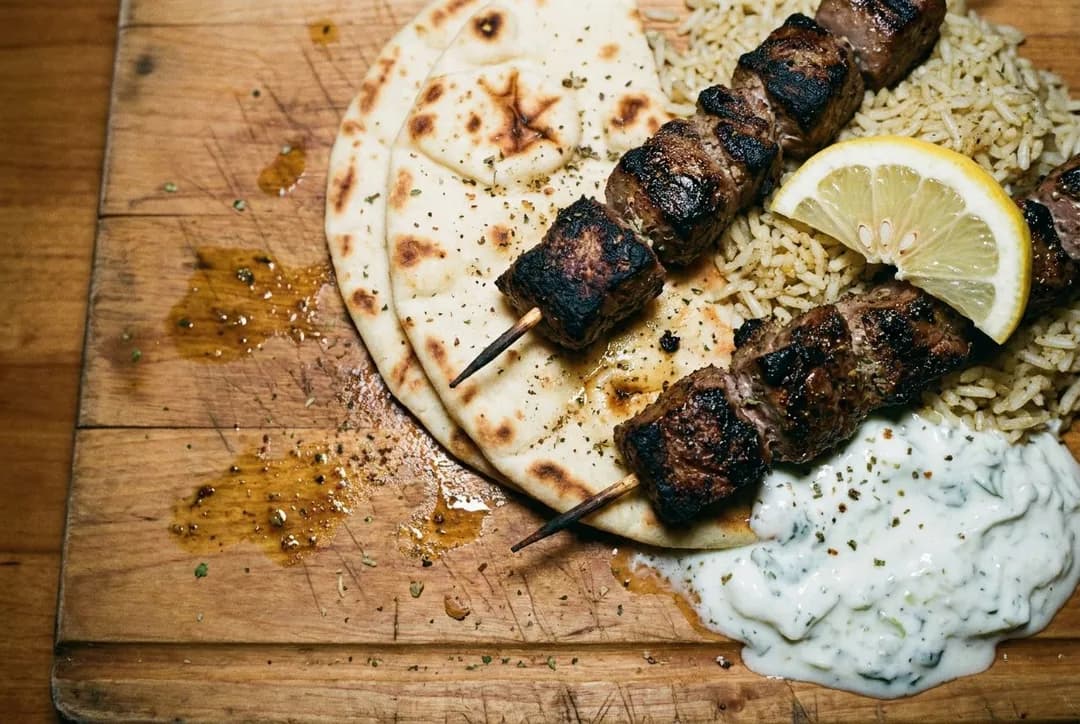
The diner windows run a split feed—celebrity gossip on one screen, live sports on another—and you realize no one's really watching either. The updates scroll like ambient noise, Kaley Cuoco's latest project announcement sliding past a corner kick, and the whole thing feels like the visual equivalent of a radio you keep on for company. Inside, the lemon potatoes come out in oval dishes with enough olive oil pooled at the bottom that you use bread to soak it up. They're not crispy; they're soft and nearly translucent, cooked low and slow with oregano that's been in the kitchen long enough to lose its brightness and turn earthy. The waitress doesn't write anything down. She repeats your order back in a hybrid accent that pulls from two continents, and when the food comes, it's the same portion size your neighbor got, which is to say: more than you expected and less fussy than anywhere below Fourteenth Street would dare.
The Crowd That Finds Itself Here
You sit near people who planned their day around kickoff and people who just got off a double shift and people who wandered over because their cousin texted them the address. Someone's kid is wearing a jersey that doesn't match anyone else's, and no one cares. The multilingual hum is constant—Greek blending into Spanish blending into Arabic blending into English—and every time a goal almost happens, the volume spikes and then crashes back down into the regular noise floor. You notice the regulars because they don't look at the menu. They point, sometimes just holding up two fingers, and the guy behind the counter knows what that means. One older man in a wool flat cap eats the same thing every time: grilled octopus with nothing on it, a glass of something clear, and a small salad he mostly ignores. He sits in the same seat near the window, where the light from the street cuts across his table in a stripe that moves as the sun drops.
What You Order When You Know
The skewers are the obvious move, but if you're here past the initial rush, ask what's been marinating since morning. Sometimes it's pork shoulder that's been sitting in red wine and garlic, sometimes it's chicken thighs with enough lemon to make your teeth hurt. The rice pilaf comes as a side whether you want it or not, and it's better than it has any right to be—each grain separate, cooked in stock that tastes like someone's grandmother made it in a pot she's been using since the eighties. Skip the fries unless you see them coming out fresh; otherwise they sit under a heat lamp and lose their snap. The horiatiki salad is the size of your head, and the feta comes in a block you have to break apart with your fork. No one cuts it into cubes here. You get it the way it was pulled from the brine, and the tomatoes are the kind that actually taste like something because they're not refrigerated into oblivion.
The Halftime Surge and Its Aftermath
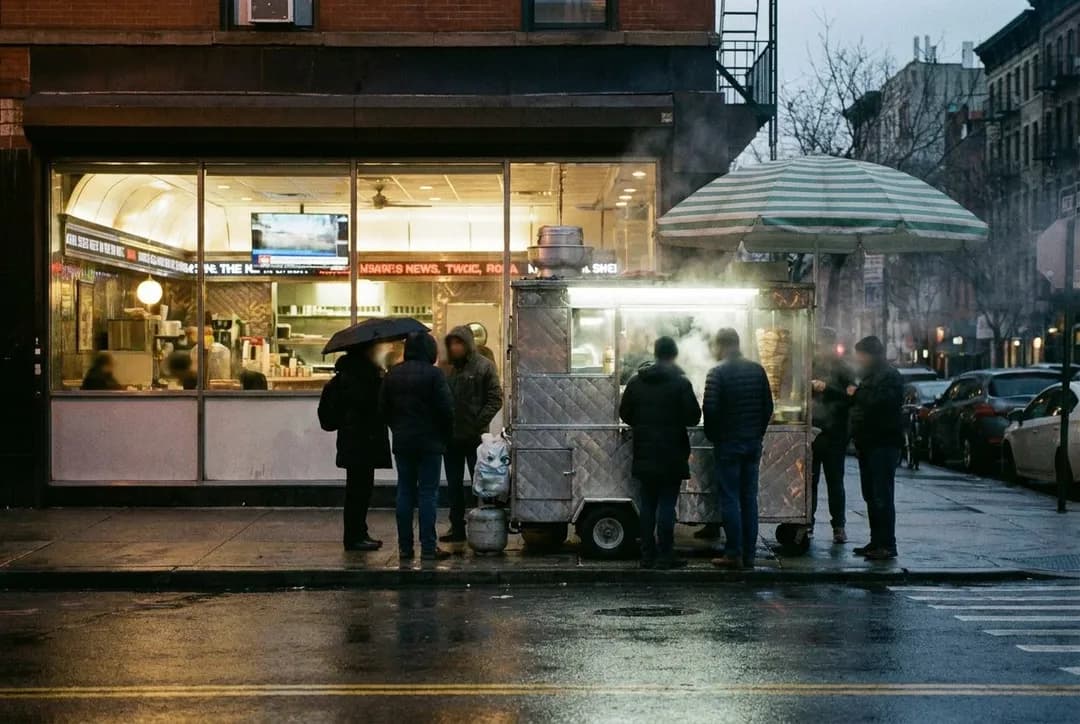
When the match hits halftime, the carts get slammed. The line doubles in the span of two minutes, and the guys working the grills move faster without looking rushed. They've done this enough times that it's muscle memory—flip, pull, wrap, hand off, next. The celebrity news ticker keeps running its loop, something about a red carpet appearance wedged between a replay of a near-miss header, and you catch yourself reading it without meaning to. That's the texture of the night: everything happening at once, nothing demanding your full attention, all of it adding up to the specific feeling of being in a neighborhood that doesn't perform for visitors. The foil-wrapped skewers accumulate on the cart's narrow counter, each one tagged with a Sharpie number that corresponds to nothing you can see. People call out their orders, and somehow the right person gets the right food. After the match ends, the energy doesn't drop—it shifts. The crowd thins but doesn't disappear, and the carts stay open long enough that you could come back for a second round if you wanted to.
The Light, the Oil, the Smell of Char
There's a specific quality to the light here after dark, when the streetlamps mix with the blue glow from the diner signs and the orange flicker of the grills. It's not romantic; it's industrial and a little harsh, but it makes the food look exactly like what it is. The oil on the potatoes catches the light. The char on the lamb looks black-brown instead of gray. You smell the smoke in your jacket later, and it's not unpleasant. It's proof you were there, in the middle of the noise and the crowd and the overlapping conversations about a match that's already being dissected and a celebrity headline that no one will remember tomorrow. The guy at the cart hands you your order, and the foil is warm enough that you shift it between your hands. You walk half a block before you open it, and the steam that rises smells like garlic and oregano and the specific kind of hunger that only gets satisfied when you eat something made by someone who's been making it the same way for years.
Practical Notes
The carts run late, especially on match nights—expect them well past midnight when the crowds stay thick. The diners nearby keep flexible hours, generally opening mid-morning and staying lit until the neighborhood's done with them. You're in Astoria, so take the N or W train and walk toward the Greek stretch of Steinway; you'll smell the grills before you need a map. Seating is first-come in the diners, and the carts are stand-and-eat by default. Cash moves faster than cards, though most places take both now. If you're coming for a specific match, show up twenty minutes before kickoff to claim a spot, or wait until halftime when the initial rush clears and you can actually see what you're ordering. No reservations, no waitlists—just timing and a little bit of luck.
Tags: #AstoriaEats #WorldCupNYC #SouvlakiCulture #QueensFood #StreetFoodNYC #FIFA2026 #GreekTownAstoria #LateNightEats #MulticulturalNYC #GameDayGrub #SteinwayStreet #AuthenticAstoria #NYCFoodScene #NeighborhoodGems #CelebrityNewsScrolls
Sources consulted: fifa.com · espn.com · timeout.com
All trademarks are the property of their respective owners.
Ask Karpo for more information.
Keep reading
- Haaland Has Seven Goals and Norway Runs Entirely Through Him
 World Cup Trophy Ceremony Timing Medals and Postmatch Celebrations
 Olise and France's Attack: The Semifinal Tactical Question