 Haaland Has Seven Goals and Norway Runs Entirely Through Him
⚽️2026 FIFA WORLD CUP
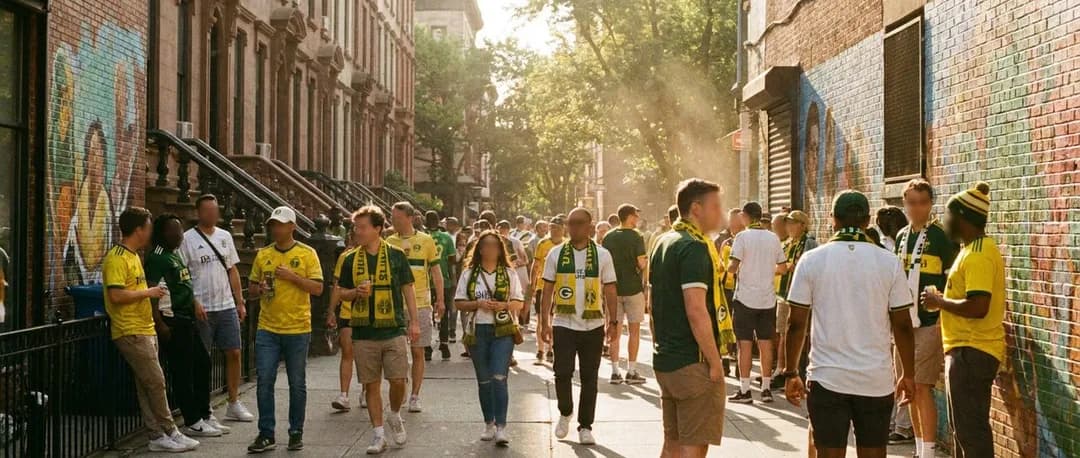
South Africa's World Cup Presence Finds Voice in Harlem
New York's South African community, concentrated in pockets of Harlem and Washington Heights alongside a broader pan-African diaspora, is using the World Cup as a focal point for building visibility and community connection, with watching events, Bafana Bafana supporter meetups, and neighborhood gatherings that reflect both pride and the team's growing continental profile.
The green and gold flags appear in storefront windows along Frederick Douglass Boulevard weeks before kickoff, a quiet but unmistakable signal that Bafana Bafana's World Cup campaign has awakened something in upper Manhattan. South Africa's national team may not command the global spotlight like Brazil or Argentina, but in the stretch of Harlem between 110th and 145th Streets, and spilling north into Washington Heights, the team's presence registers as something more personal—a chance for a dispersed community to gather, to be seen, and to claim public space in a city where African voices often blend into the broader immigrant chorus. The World Cup offers a rare moment when neighborhood pride and national identity converge on living room screens, bar televisions, and community center projectors, turning ordinary match days into exercises in collective visibility.
Bars and Lounges Become Temporary Embassies
The gathering spots emerge organically, without official coordination. Shrine, the Nigerian-owned bar on Adam Clayton Powell Jr. Boulevard, opens its doors early for South African matches despite its West African roots, recognizing that continental solidarity matters more than national boundaries when the tournament begins. The crowd that assembles there runs diverse—South Africans in Bafana jerseys, Ghanaians and Kenyans offering neighborly support, second-generation Americans curious about their parents' homelands. The television volume stays high enough to hear over the street noise filtering through the open door. Patrons order Castle Lager when it's available, settling for Heineken when it's not, and the atmosphere carries the particular intensity of fans watching a team that rarely gets this stage.
Further north, a smaller contingency claims tables at Harlem Public on 149th Street, where the brunch crowd gives way to soccer devotees on match mornings. The space lacks the dedicated supporter culture of European football pubs, but the staff has learned to keep the main screen locked on the match and to tolerate the eruptions that follow near-misses and controversial calls. These aren't purpose-built soccer venues—they're neighborhood establishments adapting to demand, proof that the community creates its own infrastructure when none exists.
Apartment Gatherings Carry the Weight of Intimacy
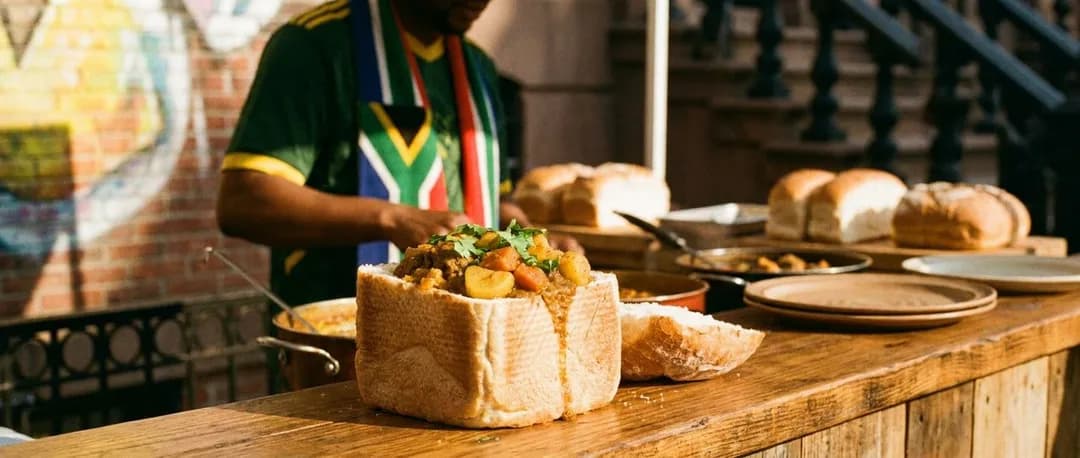
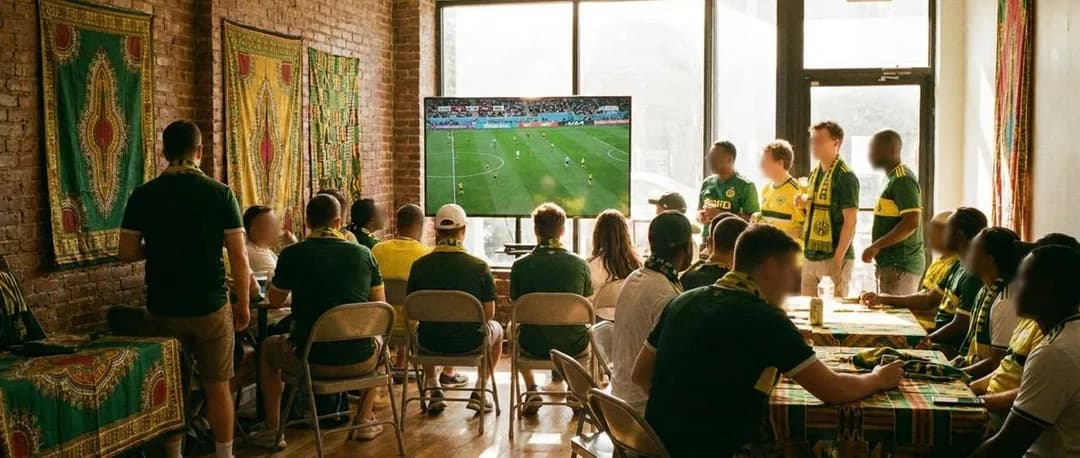
The most fervent viewing happens behind closed doors, in living rooms and basement rec spaces where families and friends recreate the communal watching rituals from home. In a third-floor walkup near St. Nicholas Park, a regular group of eight to twelve convenes for every South African match, bringing potluck contributions that mirror the country's culinary diversity—Cape Malay curries, Durban bunny chow, Johannesburg-style boerewors rolls. The host keeps a WhatsApp group active between matches, sharing lineup speculation and tactical debates that would seem outsized for a team ranked outside the global top twenty, except that for this room, Bafana Bafana represents something beyond sporting achievement.
These private gatherings carry an intimacy the public venues can't match. Children sprawl on the floor in oversized jerseys, absorbing a connection to a place many have never visited. Adults switch between English, Zulu, Xhosa, and Afrikaans, the linguistic code-switching as natural as breathing. When South Africa scores, the eruption rattles windows and prompts neighbors to text congratulations, evidence that the community's presence has registered beyond its own walls.
Braai Culture Meets Upper Manhattan Summer
The World Cup timing—northern hemisphere summer—transforms the tournament into an excuse for outdoor gatherings that blend South African braai tradition with New York park culture. Marcus Garvey Park and Jackie Robinson Park see clusters of South African families claiming picnic areas on match days, portable grills producing smoke that carries the distinct aroma of boerewors and sosaties. Coolers hold Appletiser and ginger beer alongside American sodas. Folding tables support laptops and tablets streaming matches when kickoff times don't align with bar schedules.
The braais function as more than viewing parties—they're cultural demonstrations, ways of asserting presence in public space. Passersby slow down, drawn by the unfamiliar smells and the sound of languages rarely heard in these parks. Some stop to ask questions, receiving impromptu explanations of South African food culture and invitations to stay for a plate. The gatherings remain open enough to welcome curiosity while maintaining their cultural specificity, a delicate balance that characterizes much of immigrant community life in New York.
Neighborhood Commerce Responds to Visibility
The World Cup creates temporary economic opportunities. Bodegas along Amsterdam Avenue stock Castle Lager and Amarula for the duration of the tournament, small gestures that don't go unnoticed by customers who normally travel to specialty stores in Brooklyn for South African products. A Senegalese-owned restaurant on 116th Street adds bobotie and malva pudding to its menu as specials, recognizing that the tournament has created appetite for foods beyond its usual West African offerings.
Street vendors appear near popular viewing spots on match days, selling knockoff jerseys and flags with the efficiency of pop-up retail. The quality varies wildly—some flags fade after a single rain, some jerseys feature misspelled player names—but the community buys them anyway, valuing the gesture over the product. A woman operates a small side business from her apartment, taking custom orders for proper Bafana Bafana gear shipped from Johannesburg, her WhatsApp filling with requests as the tournament progresses.
Post-Match Rhythms Extend Into Evening
Win or lose, match days linger in the neighborhood long after final whistles. The crowds that gathered for morning kickoffs—adjusted for European time zones—spill out onto sidewalks in early afternoon, energy still crackling. Conversations dissect referee decisions and missed chances with the intensity of professional analysts. Plans form spontaneously for evening meetups, for continued celebration or consolation depending on results.
By evening, the scene shifts. The same bars that hosted morning matches fill with different crowds, but the South African presence remains visible—jerseys worn through dinner, flags draped over shoulders on warm nights. The tournament creates a sustained community activation that extends beyond ninety-minute matches, turning ordinary weeks into periods of heightened collective identity. Musicians at Harlem Stage incorporate South African songs into sets, DJs at Silvana work kwaito and amapiano into rotation, small acknowledgments that the World Cup has made the community impossible to ignore.
Practical Notes for Match Day Navigation
• Transit access: The 2, 3, A, B, C, and D trains all serve Harlem and Washington Heights; the B and C lines along Central Park West offer the most direct access to Frederick Douglass Boulevard gathering spots
• Timing considerations: European-hosted matches typically kick off between 9 AM and 3 PM Eastern time; arriving thirty minutes early secures seating at popular venues
• Weather planning: Summer heat makes outdoor gatherings in parks most comfortable before 11 AM or after 5 PM; afternoon matches can push temperatures into the uncomfortable range
• Community etiquette: Most gatherings welcome respectful visitors, but spaces skew toward established community members; genuine interest in South African football culture opens doors more effectively than tourist curiosity
Tags: Tags: #Harlem #WashingtonHeights #SouthAfricanCommunity #BafanaBafana #WorldCupNYC #AfricanDiaspora #UpperManhattan #NYCFootball #CommunityGatherings #FrederickDouglassBoulevard #NYCSoccer #DiasporaCulture #HarlemCulture #NYCImmigrants
Sources consulted: fifa.com (https://www.fifa.com) · nycgo.com (https://www.nycgo.com) · timeout.com/newyork (https://www.timeout.com/newyork)
All trademarks are the property of their respective owners.
Ask Karpo first
Wondering where New York City's South African community and Bafana Bafana fans are gathering for World Cup viewing this summer?
Ask Karpo for the latest on Harlem viewing spots, South African community events, and the neighborhood scene around Bafana Bafana's World Cup campaign in New York.
Ask Karpo for more information.
Keep reading
- Haaland Has Seven Goals and Norway Runs Entirely Through Him
 World Cup Trophy Ceremony Timing Medals and Postmatch Celebrations
 Olise and France's Attack: The Semifinal Tactical Question