 Geylang Serai Chendol Dessert Crawl: Market Bowls to Pick
Coffee & Dessert
Tanjong Pagar Tea Room Afternoon Picker: First Gongfu Pot
Tanjong Pagar's shophouse tea rooms are a gentle place to show visiting friends their first gongfu tea session, with a slow walk up Ann Siang Hill afterwards.
When friends from overseas ask what to do in Singapore beyond the famous sights, a gongfu tea session in a Tanjong Pagar shophouse is one of the most memorable answers. The neighbourhood sits on the edge of Chinatown, where restored two-storey shophouses line sloping streets and a handful of tea rooms still brew Chinese tea the patient way, in small clay pots and tiny cups, steep after steep. Nobody needs prior knowledge to enjoy it. You need an unhurried afternoon, a table for your group and a willingness to slow down. Here is how to choose a room, how the session works, and where to walk afterwards.
Why Tanjong Pagar Suits a First Session
Tanjong Pagar grew up around the old port, where Chinese immigrants worked the docks and the surrounding streets filled with clan associations, tea merchants and shophouse homes. Many of those buildings survive, carefully restored, and the area still carries traces of that community in its temples, clan halls and small specialist shops. Chinese tea culture has deep roots here, so tea rooms in the neighbourhood often feel connected to a living tradition rather than staged for visitors.
It also helps that the area is easy to reach and easy to walk. Your friends can arrive by MRT, you can wander through Chinatown before or after, and there are plenty of food options nearby when the session ends. Compared with the busier streets around the main Chinatown market, the lanes around Duxton, Ann Siang and Club Street feel calmer in the afternoon, which suits a tea session. You go from a city street to a quiet room in a few steps.
How a Gongfu Session Works
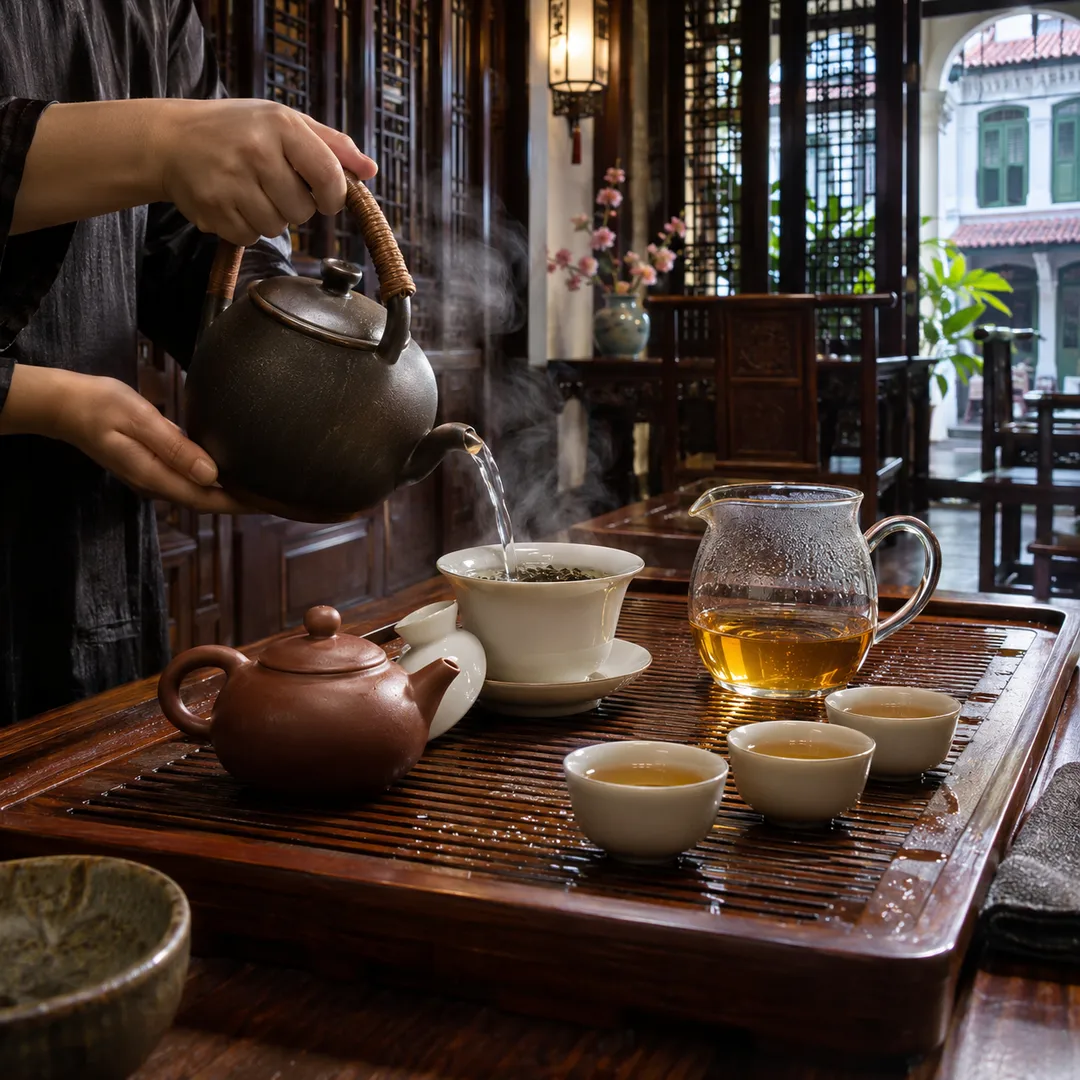
Gongfu tea means brewing with skill and patience. Instead of a big pot steeped once, the host uses a small teapot or a lidded bowl called a gaiwan, fills it with a generous amount of leaves, and pours very short infusions, often just a few seconds each. The first rinse wakes up the leaves and warms the cups, and is usually poured away. Then each round is poured into a small pitcher so everyone gets an even cup, and from there into tiny cups you finish in two or three sips.
The magic is in how the tea changes. The third cup tastes different from the first, the sixth different again, and good leaves can go on for many rounds. For visiting friends, this is the point to highlight: you are not ordering a drink, you are tasting a story that unfolds over an hour. Ask the host to explain each step the first time. Most tea rooms that offer gongfu service are happy to do this, and the explanation is half the experience.

Choosing the Right Room for Your Group
Look for a tea room that offers table service with a host for first-timers, rather than one that simply hands you the equipment. A good host sets the pace, explains the teas and makes sure everyone gets a turn. Ask whether they can seat your group around a single tea tray, since sharing one pot is what makes the session social. For more than four people, it is worth booking ahead, as shophouse rooms are often small.
Atmosphere matters too. Some tea rooms are quiet and traditional, with dark wood, scroll paintings and soft music. Others are brighter and more modern, with clean lines and a younger crowd. For visiting friends who want a strong sense of place, the traditional rooms usually make a deeper impression. Use Karpo APP to look at tea rooms around Tanjong Pagar and pick one whose style matches what your friends are hoping for.
Choosing Teas for First-Timers
Do not try to taste everything in one afternoon. Two teas are plenty for a first session, chosen to show contrast. A good pairing is a fragrant, lightly oxidised oolong, which is floral and easy to like, followed by a deeper roasted oolong or an aged pu'er, which shows how much tea can change with time and fire. That pairing gives your friends a clear sense of range without overwhelming them.
If anyone in the group is sensitive to caffeine, mention it at the start. Lighter teas, fewer steeps or a caffeine-free herbal option can be arranged. Skip the most expensive rare teas on a first visit; their subtleties are easier to appreciate once you know the basics. Many tea rooms also serve small snacks such as dried fruit, nuts or simple Chinese pastries, which help between rounds and keep the palate fresh.
Tea Table Manners Worth Knowing
A few small customs make the session feel richer. When someone pours tea for you, tapping two fingers lightly on the table is a traditional way of saying thank you, often explained with a story about an emperor travelling in disguise. Your friends will love it. Hold the small cups with both hands if you like, and sip rather than gulp. Keep phones away from the tea tray, where hot water and steam are everywhere.
Take turns pouring if the host invites you to try, and do not worry about mistakes. Spilled water on a tea tray is expected; the tray is designed to drain it. Avoid adding sugar or milk, which would hide the tea's changing character. If you want a break between rounds, simply leave your cup empty and wait, and the host will read the table. These little rituals give the session its calm, almost meditative feeling.
A Walk Up Ann Siang Hill Afterwards
After tea, walk it off on the slopes of Ann Siang Hill. The streets climb gently past colourful restored shophouses with ornate facades, wooden shutters and decorative tiles. Look for the small park at the top, a quiet green pocket where you can catch your breath and look down over the rooftops. From there, Club Street and Ann Siang Road lead past bars and restaurants that get livelier as evening approaches, while Duxton Hill offers a parallel stroll through more restored terraces.
If your friends want to see more of Chinatown, continue down to the Buddha Tooth Relic Temple and the Sri Mariamman Temple, both within a short walk. Dress modestly for temple visits and remove shoes where required. The walk turns a tea session into a half-day of heritage, and it gives your friends time to talk about what they tasted. Many people find the flavours of the last tea still lingering while they walk.
Timing and Pacing the Afternoon
Allow at least an hour for the session itself, and ideally ninety minutes. Gongfu tea cannot be rushed, and an afternoon slot works well because it falls between lunch and dinner without competing with either. Weekday afternoons are calmer than weekends, when tea rooms in the area can be busy with families and groups. If your friends are jet lagged, a late morning session can be gentler, as the caffeine arrives spread out over many small cups.
If your first choice is full, do not settle for a rushed session somewhere else. Look on Karpo APP for another gongfu tea room nearby and book a slot later in the day, or take your friends for a Chinatown food walk first and come back. Rain is rarely a problem, since the five-foot ways along the shophouses keep you sheltered between stops, and a heavy afternoon storm outside makes the tea room feel even cosier.
Practical Notes for Hosts
Book ahead for groups and mention that your friends are first-timers who would like an explanation. Arrive a few minutes early so everyone can settle before the session begins. Wear comfortable clothes, as some tea rooms have low seating. Bring cash and a card, and ask whether the tea room sells the leaves you tasted, since many visitors like to take a small packet home as a souvenir and a reminder of the afternoon.
Drink water between rounds to stay hydrated in the heat, and pace the caffeine if the group has evening plans. Take a photo of the tea names or ask the host to write them down so your friends can find them again at home. Save the tea rooms you liked in Karpo APP, so the next time visitors arrive you already have a plan that gives them a slower, deeper side of Singapore than the usual itinerary.
Ask Karpo for more information.
Keep reading
- Geylang Serai Chendol Dessert Crawl: Market Bowls to Pick
 Katong Chendol Dessert Crawl: Peranakan Bowls Worth a Walk
 Chinatown Chendol Dessert Crawl: Hawker Rows and Tea Lanes