 Geylang Serai Chendol Dessert Crawl: Market Bowls to Pick
Coffee & Dessert
Tiong Bahru Neighborhood Bakery Breakfast Route on a Weekday
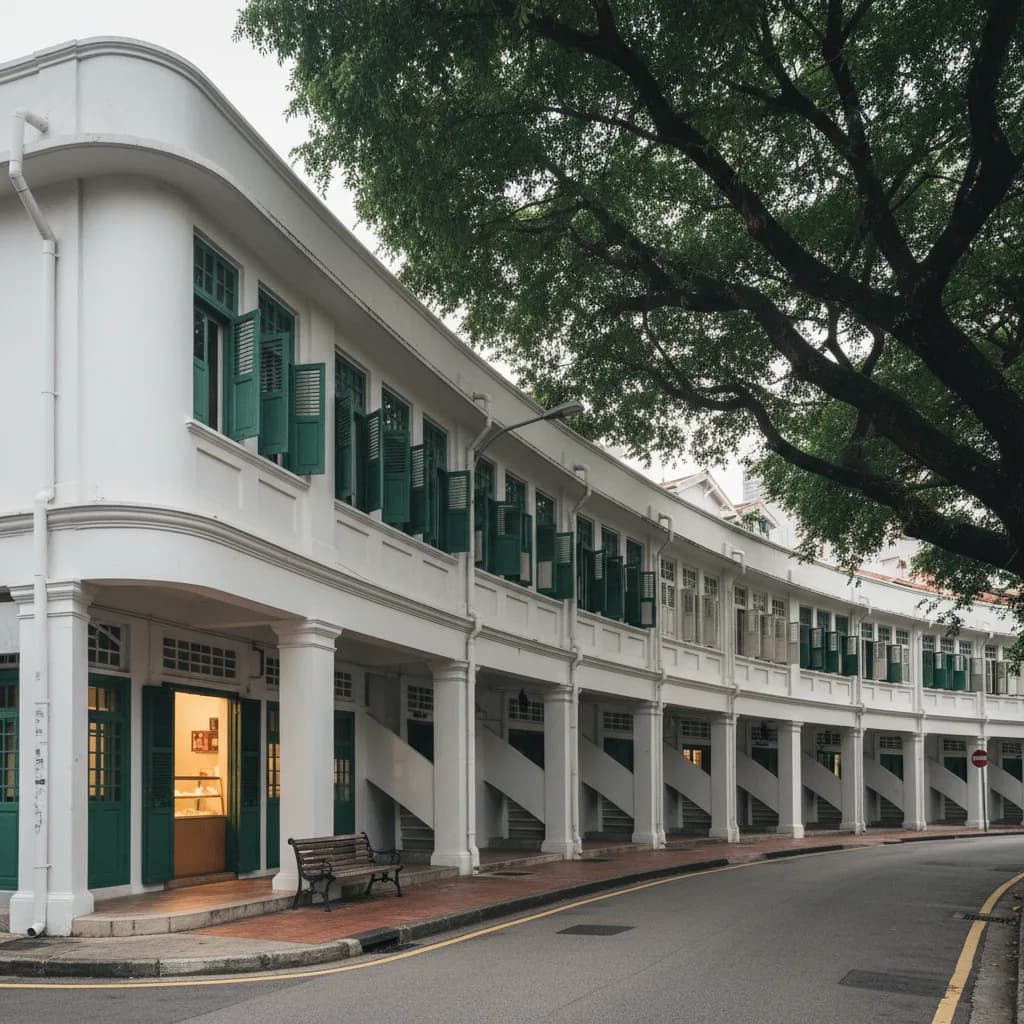
Tiong Bahru works best as a weekday bakery breakfast route: one laminated pastry, one hawker plate, then a slow loop of the Art Deco blocks before brunch.
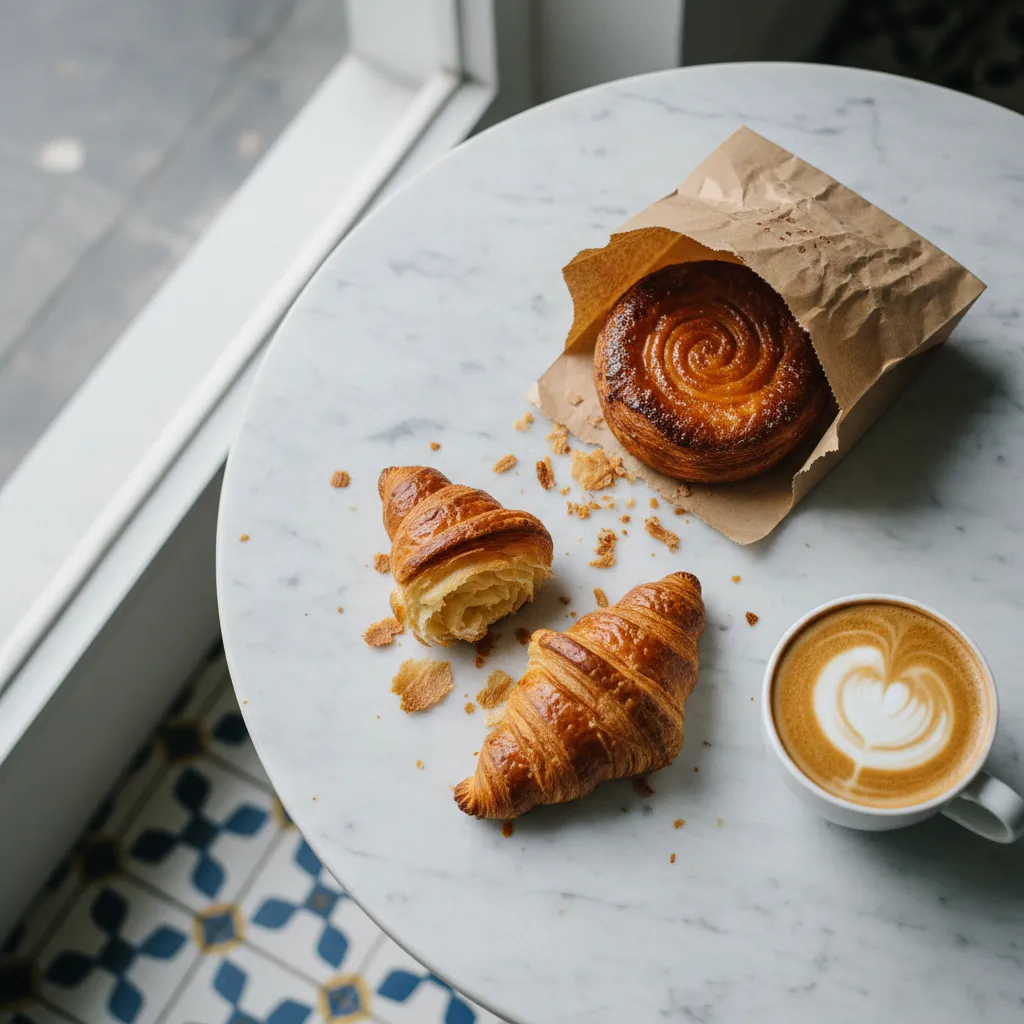
A neighborhood bakery breakfast route in Tiong Bahru is really a walk through one of Singapore's oldest public housing estates, and the bread is the excuse to slow down inside it. The pre-war walk-up blocks curve around corners like ocean liners, their spiral back staircases and porthole windows giving the streets a softness that newer estates lack. Bakeries have tucked themselves into the ground-floor units, sharing the five-foot ways with old provision shops, florists and a bird corner where regulars once hung their cages. Arrive on a weekday and the place belongs to residents walking to the market, which is exactly the mood you want with a warm pastry in hand.
The Estate Before the Pastry
Tiong Bahru was built by the colonial-era housing trust, and the lines of the blocks still follow the streamline style of that period. Many of the streets are named after Chinese pioneers, so you will read names like Eng Hoon, Seng Poh and Yong Siak on the corner plates as you walk. None of that history is on the menu, yet it changes how breakfast feels. You are eating a croissant in a courtyard designed for families who arrived with very little, and the scale of the buildings keeps everything human and close.
The bakeries that settled here leaned into that scale. Most are narrow, with a short counter, a glass case and a few seats pushed toward the window or out onto the walkway. Expect shared tables, quick turnover and staff who move fast when the queue is three deep. It is not a place for a long laptop session at the bakery itself; the better plan is to take your bag outside and let the estate become your dining room.
Building the Route in Three Stops
Think of the morning as three stops rather than a checklist of famous names. Stop one is a laminated pastry, ideally the first thing you eat while it still shatters: a plain butter croissant tells you more about a bakery than anything filled. Stop two is savoury and local, taken at the wet market and food centre that anchors the estate, where a plate of chwee kueh or a bowl of porridge balances the butter. Stop three is a loaf or a box of something to carry home.
Order the stops so you never walk far with a full hand. Starting on the side of the estate nearest the MRT and moving toward the market means you finish where you can sit, rinse your fingers and watch the hawker stalls work. If you like coffee with your pastry, choose one bakery visit for it and drink a kopi at the food centre instead of a second latte. The contrast between the two cups is half the fun of this neighbourhood.
Why a Weekday Beats the Weekend
Saturday and Sunday turn Tiong Bahru into a brunch destination, and the bakeries feel it first. Lines spill along the walkway, pastries sell through, and photographers block the prettiest staircases. A Tuesday or Wednesday morning is a different estate. Retirees sit outside the market with newspapers, delivery bikes wait at the corners, and you can usually choose your bun without someone pressing behind you. If you only have a weekend, aim for the earliest part of the morning and treat any sold-out tray as a reason to try something else.
Rain changes the plan less than you would expect. The five-foot ways are covered, the blocks shelter each other, and the market is roofed, so a light shower simply pushes everyone under the arcades. A heavy afternoon storm is the bigger risk in this climate, which is another argument for a morning route. Once the sky clears, the white walls dry quickly and the light on the curves becomes the best of the day for photographs.
What to Order and What to Skip
Lead with the simplest laminated item at your first bakery and judge it honestly. A good one is deeply browned, crackles when you tear it and leaves a honeycomb of air inside. Kouign-amann, with its caramelised sugar crust, is worth a second bite if it looks dark at the edges; pale ones tend to be chewy. Sourdough loaves are best bought last so they ride home on top of the bag. You can skip the elaborate cream-filled showpieces, which look better than they travel in humid air.
At the food centre, pick one savoury plate rather than grazing every stall. Steamed rice cakes topped with preserved radish, a bowl of fish porridge or a plate of fried bee hoon all sit well after pastry. Ask the stallholder what is moving that morning; regulars order quickly and the freshest trays are the ones being refilled. Leave room for one sweet kueh if the counter looks tempting, but do not let it crowd out the savoury stop.
Linking Tiong Bahru With the Next Hour
After breakfast, the estate opens onto several easy follow-ups. Walking north takes you toward Outram and the edge of Chinatown, where temple courtyards and old clan association buildings continue the heritage thread. Heading west brings you to the green corridor of the Henderson area and, with a little more effort, the hilltop paths around Mount Faber. A short ride east reaches the Singapore River, a pleasant place to digest while the boats start their day.
If you prefer to stay put, the independent bookshop and small design stores in the estate reward a slow browse once they start trading. Many visitors forget that the residential lanes behind the main streets are the real Tiong Bahru; a five-minute wander among the rear staircases, potted plants and drying laundry shows how people still live here. Keep your voice low, keep off private stairwells and you will be welcome.
Using Karpo APP to Adjust on the Day
Bakery mornings rarely go exactly to plan, so it helps to have a way to reshuffle. In the Karpo APP you can describe what you want, such as a flaky pastry, a hawker breakfast and a shaded bench within walking distance of Tiong Bahru, and get a short set of nearby ideas to choose from. If your first bakery is packed, ask for another option in the same estate or one stop away and keep the route moving.
Karpo is a planning companion rather than a ticketing desk, so it will not hold a table or guarantee a tray is still full. Use it to shape the order of your stops, find a quieter alternative and remember the places you liked for next time. When something is uncertain, such as whether a shop is trading on a public holiday, call or message the business directly before you set out.
Practical Notes for the Walk
Wear shoes you can walk in for an hour; the estate is compact but the best moments come from looping it twice. Bring a tote for loaves and a small pack of tissues, since many hawker centres do not provide napkins. Carry some cash alongside cards, as smaller stalls can be selective about payment methods. Water matters more than you think in the humidity, so refill wherever you can.
Respect the residents. These are homes, not a film set, and the most photogenic staircases lead to someone's front door. Return trays at the food centre, avoid sitting on private steps and keep strollers clear of the narrow walkways at busy moments. Treat the morning as a quiet visit to a living neighbourhood and Tiong Bahru will give you one of the gentlest bakery breakfasts in the city.
Ask Karpo for more information.
Keep reading
- Geylang Serai Chendol Dessert Crawl: Market Bowls to Pick
 Katong Chendol Dessert Crawl: Peranakan Bowls Worth a Walk
 Chinatown Chendol Dessert Crawl: Hawker Rows and Tea Lanes