 Geylang Serai Chendol Dessert Crawl: Market Bowls to Pick
Coffee & Dessert
Tiong Bahru Kueh Snack Shop Finder for Savoury Kueh at Dawn
Want savoury kueh in Tiong Bahru? Go early for steamed rice cakes with chai poh, then walk the curved Art Deco blocks while the estate is still quiet.
Mention kueh to many visitors and they picture the bright green and pink sweets of Peranakan kitchens. Yet much of Singapore starts the day with a different family of kueh: steamed, savoury rice cakes from Teochew and Hokkien traditions, eaten with chilli, pickles and a strong cup of kopi. Tiong Bahru, with its old market and curved Art Deco flats, is one of the best neighbourhoods to discover them. This kueh snack shop finder is for curious eaters who want to learn the savoury side of kueh and see a historic estate before the city wakes.
The Other Half of the Kueh World
In Singapore the word kueh covers a wide range of small cakes and snacks, and the Chinese communities brought their own versions from southern China. Teochew families in particular are known for steamed rice flour and dough based snacks, many of them savoury and made for breakfast or as a light meal. They tend to be pale rather than colourful, and their flavour comes from fillings and toppings: preserved radish, dried shrimp, garlic, chives, turnip and peanuts.
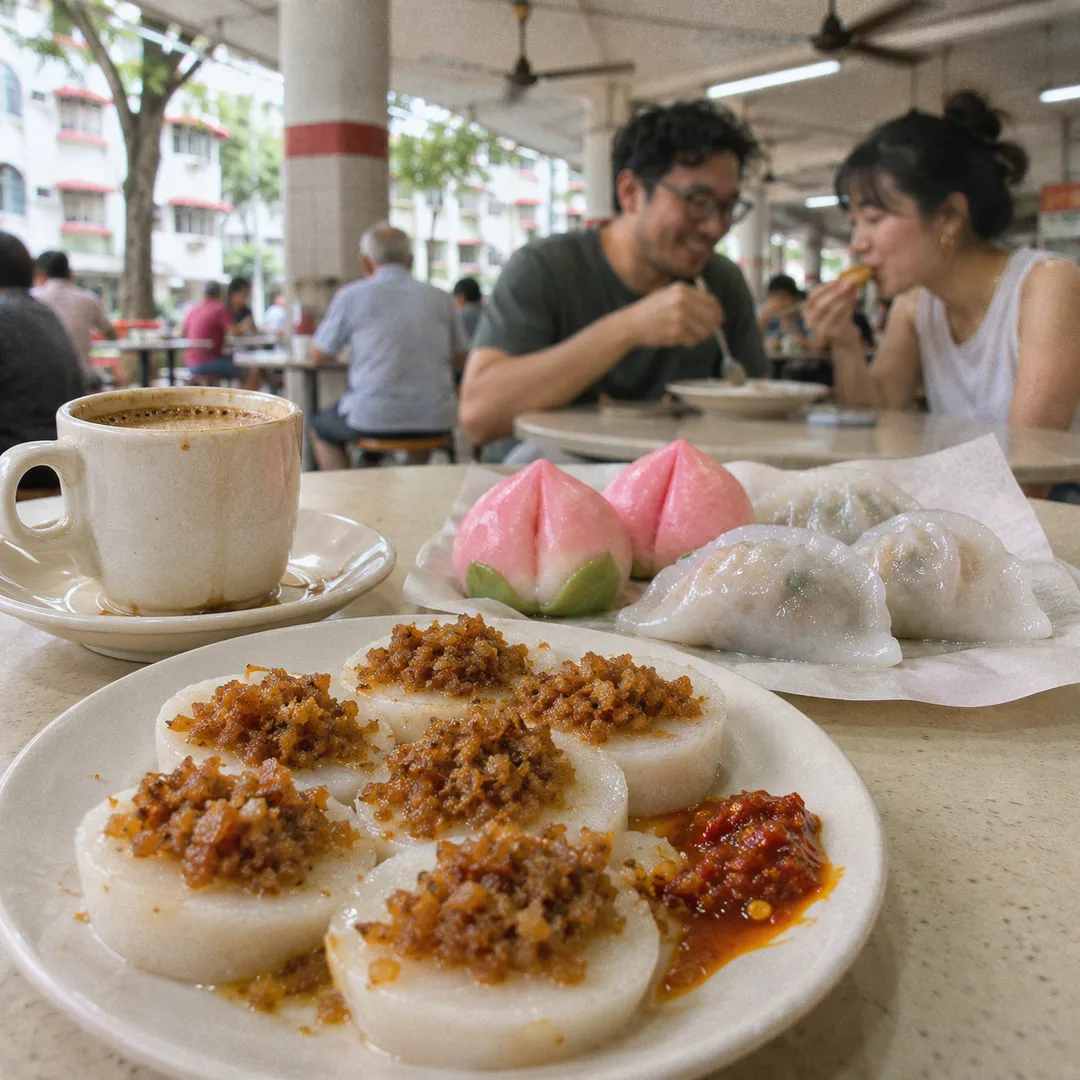
Learning these is a good counterweight to the sweet trays. Chwee kueh is a small, soft bowl shaped rice cake steamed in a little tin cup and topped with chai poh, preserved radish fried until fragrant, often served with sambal. Png kueh is a pink, peach shaped dumpling with a chewy skin wrapped around glutinous rice, mushroom and peanuts. Soon kueh is a half moon dumpling filled with shredded turnip and dried shrimp. Each tastes of home cooking rather than celebration.
Why Tiong Bahru Suits a Dawn Breakfast
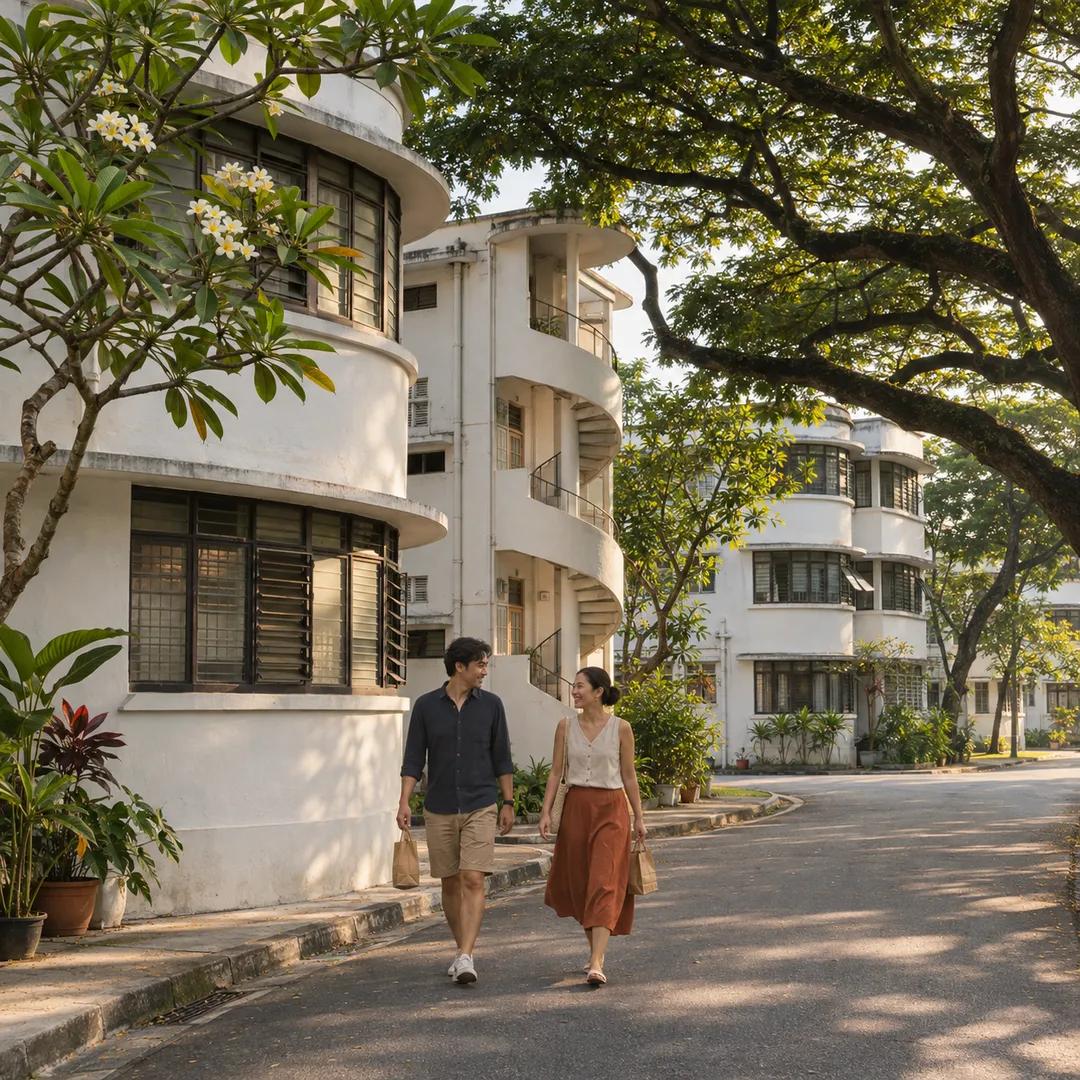
Tiong Bahru is one of Singapore's oldest public housing estates. In the 1930s the Singapore Improvement Trust built rows of low rise flats here in a streamlined Art Deco style, with rounded corners, horizontal ledges, glass block windows and spiral staircases at the back. The estate was later conserved, and today it mixes long time residents, young families and independent shops. The heart of daily life is Tiong Bahru Market, a wet market downstairs with a busy food centre upstairs.
Mornings are when the neighbourhood is most itself. Elderly residents carry shopping baskets, regulars read newspapers over kopi, and hawkers have been working since before sunrise. Chwee kueh has long been a Tiong Bahru breakfast favourite, and locals often have a firm opinion about which stall makes the softest cakes and the most fragrant chai poh. Arriving early means you eat with these regulars, enjoy cooler air and see the estate before the weekend visitors arrive.
How to Order and Eat Savoury Kueh
At a food centre, savoury kueh is usually ordered by number of pieces, so watch what the person in front of you asks for and follow their lead. Chwee kueh comes in small portions that look modest but are filling, so start with a few and return for more if you are still hungry. Ask whether you want chilli on the side, as the sambal can be fierce. Png kueh and soon kueh may be steamed or pan fried, and both are worth trying.
Many food centres in Singapore work on a simple routine: find a seat first, mark it as locals do, then order from the stalls. Bring a little patience at the most popular counters, because they make each plate as it is ordered. Eat the kueh while it is warm, using the small spoon or fork provided. Drink a local kopi or teh alongside, and if you are sharing with a friend, order a mix so you can compare textures and fillings.
Being a Good Guest in a Working Market
Tiong Bahru Market is a working place for residents, not an attraction built for tourists, so move politely. Keep to one side of narrow aisles, avoid blocking stalls while you take photographs, and ask before photographing hawkers at work. If someone has placed a packet of tissues on a seat, that seat is taken. When you finish, return your tray to the collection points, which Singapore expects of every diner, and keep the table tidy for the next person.
Downstairs in the wet market you may see fresh produce, fish and flowers being sold to early shoppers. It is a good place to look but not to linger in crowded spots. Some stalls also sell packed kueh to take home, and if you want a box for later, ask how long it keeps. Savoury rice cakes are at their best freshly steamed, so plan to eat most of them at the market and save only a few for the afternoon.
A Walk Through the Art Deco Estate
After breakfast, walk slowly through the flats. Seng Poh Road, Eng Hoon Street, Yong Siak Street and Moh Guan Terrace give good views of the curved blocks, the spiral staircases and the tidy back lanes. Look out for the way the buildings follow the curves of the streets, and the open ground floor spaces that once suited shophouses and today hold cafes and small businesses. The scale is low and human, which makes it easy to walk even on a warm morning.
Tiong Bahru also has stories hidden in plain sight. One of the pre war blocks includes an air raid shelter built into its design, one of the few residential examples in Singapore, and the estate once had a famous bird singing corner where owners hung cages of songbirds. Nearby Qi Tian Gong temple honours the Monkey God, a figure from the classic Journey to the West. Ending your walk there brings the morning back to the Chinese traditions that shaped the food you just ate.
Comparing Sweet and Savoury on One Plate
If you want to understand kueh as a whole, buy a few sweet pieces too and compare them with the savoury ones. Ang ku kueh, the red tortoise shaped cake with a sweet mung bean or peanut filling, belongs to the same Chinese family as png kueh and shares its chewy glutinous rice skin. Placing them side by side shows how one technique can carry very different flavours, and how a single skin can hold breakfast, dessert or an offering for a temple.
This comparison is especially rewarding for anyone who loves cooking. Notice the thickness of the skins, the moisture of the fillings and the way the cakes are shaped by moulds or by hand. Some people photograph each piece and write short tasting notes, then use them later when trying recipes at home. Others simply enjoy discovering that a cake they thought was sweet turns out to be filled with savoury rice and peanuts, which is part of the fun of eating in Singapore.
Planning Your Tiong Bahru Morning With the Karpo APP
To plan your own visit, open the Karpo APP and describe what you want in plain words, for example a kueh snack shop or hawker stall in Tiong Bahru for savoury chwee kueh and png kueh at breakfast, with a quiet walk among the Art Deco flats afterwards. Treat the suggestions as a shortlist, then ask follow-up questions about the atmosphere, which places suit an early start and how to combine a market breakfast with a slow walk.
Arrive early, bring a small pack of tissues, and come hungry but curious. Order a few pieces at a time, share with friends, return your tray, and leave time to wander. By the end of the morning you will know that kueh is far more than a colourful sweet, and that Tiong Bahru tells that story with every steamed plate.
Ask Karpo for more information.
Keep reading
- Geylang Serai Chendol Dessert Crawl: Market Bowls to Pick
 Katong Chendol Dessert Crawl: Peranakan Bowls Worth a Walk
 Chinatown Chendol Dessert Crawl: Hawker Rows and Tea Lanes