 Geylang Serai Chendol Dessert Crawl: Market Bowls to Pick
Coffee & Dessert
Katong Kueh Snack Shop Finder for a Newly Arrived Family
New in Singapore and curious about kueh? Katong is a gentle first stop: learn a few names, let children pick by colour, and finish with a walk to the sea.
The first weeks in a new country are full of small puzzles, and for many families who move to Singapore one of the sweetest puzzles sits behind a glass counter: rows of soft, glossy kueh in green, blue, pink and gold, each with a name nobody at home has heard before. Katong is a kind place to start solving it. The neighbourhood has long been a centre of Peranakan life, and kueh here still feels like everyday food rather than a museum piece. This kueh snack shop finder is written for newly arrived parents who want their children to taste something local, learn a few words, and enjoy the morning.
Why Katong Is a Friendly First Taste
Katong grew up as a seaside district on the east of the island, and many Peranakan families, descendants of Chinese traders who married into the Malay world, made their homes here. Their kitchens gave Singapore much of its kueh tradition: steamed, layered and coloured cakes built from rice flour, glutinous rice, coconut milk, pandan and palm sugar. Walk along East Coast Road and the old shophouses, clan signs and small family businesses make it clear that this is a lived-in place, not a theme street.
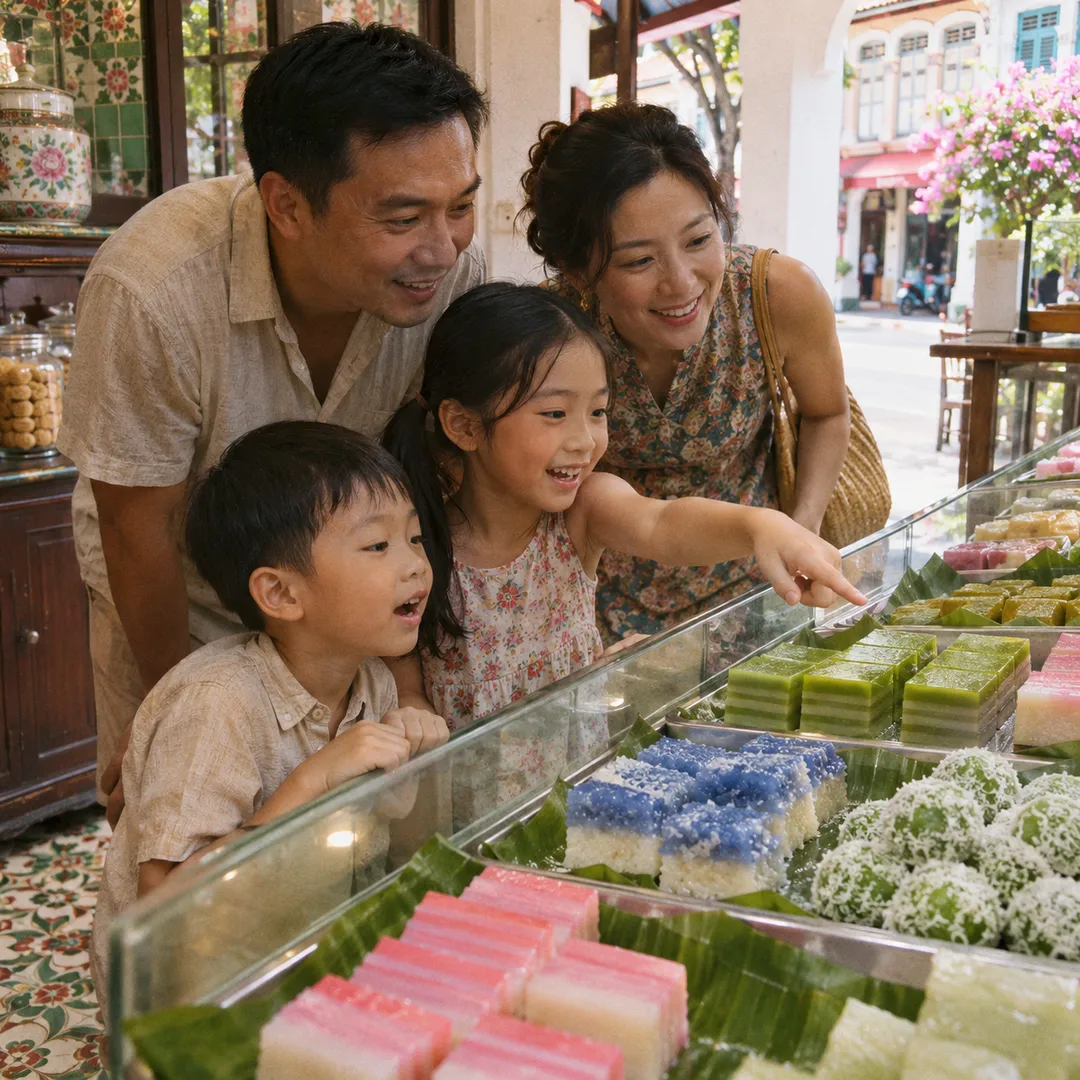
For a family that has just arrived, that everyday quality matters. Kueh shops here are used to aunties buying a box for tea, office workers grabbing two pieces on the way home and children pressing their noses to the glass. Nobody expects you to know what you are doing. You can point, ask, and take your time, and the people behind the counter are usually happy to explain the name of a cake to a curious seven year old who wants to know why one of them is blue.
Learning Kueh by Colour
Children remember food by colour long before they remember names, so let the counter become a little lesson. The green and white square with a custard top and a sticky rice base is usually kueh salat, and the blue streaks in some glutinous rice cakes come from butterfly pea flowers rather than food dye. The round green balls rolled in grated coconut are ondeh-ondeh, which hide a pocket of liquid palm sugar that bursts when you bite. Warn the children before the first bite, or plan on sticky shirts.
The striped cakes with many thin layers are kueh lapis, and peeling them apart one layer at a time is a ritual many Singaporean adults admit they still enjoy. A rolled green crepe filled with sweet coconut is kueh dadar. You will also see the red, tortoise shaped ang ku kueh, which comes from Chinese tradition and is often linked with birthdays and a new baby. Saying each name out loud as you buy it turns the snack into the family's first local vocabulary list.
How to Choose a Shop Without Overthinking It
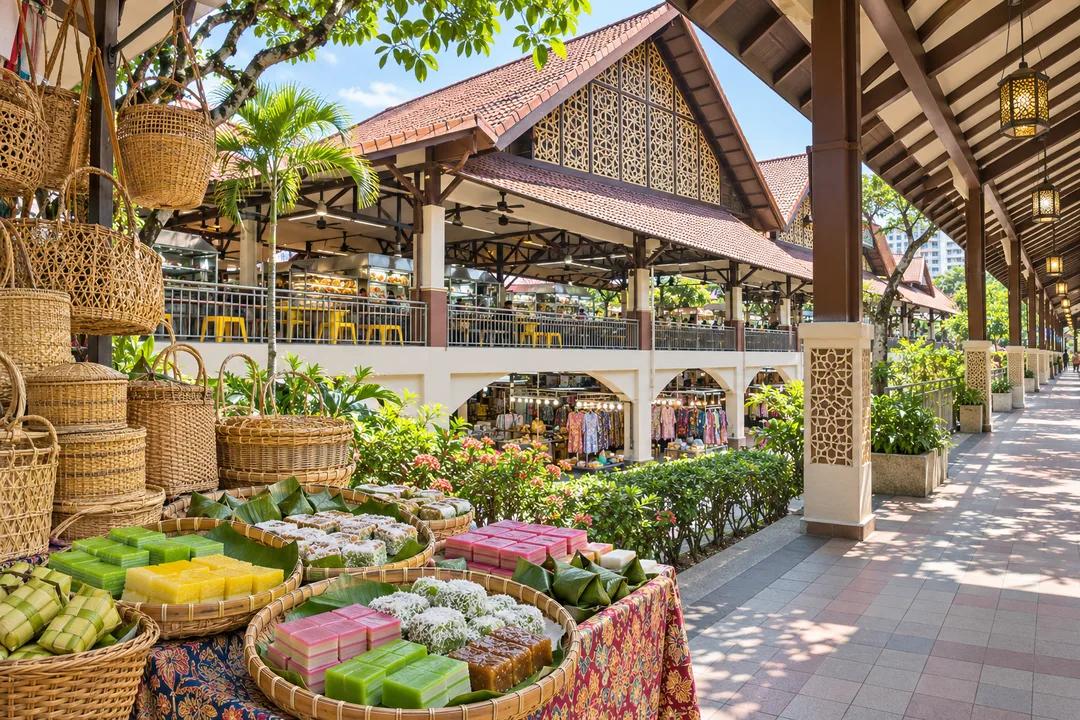
Katong has several kinds of places selling kueh. There are older family shops where cakes are made in the back and laid out on trays in the morning, bakeries that mix kueh with buns and pastries, and stalls in nearby food centres where a few favourites sit beside breakfast dishes. For a first visit, look for a counter where the cakes look freshly cut, the edges are neat, and the banana leaf or paper liners are not dry or curling. A steady stream of local regulars is a reassuring sign.
Go in the morning if you can. Kueh is made to be eaten fresh, and many shops prepare a batch early so that the most popular kinds are there for breakfast and tea. By late afternoon some trays may be empty, which is part of the charm but disappointing for a child who has been promised the blue one. Buy a mixed box of six or eight small pieces rather than one large slab, so everyone can try a little of everything and nobody is stuck with a flavour they dislike.
Gentle Etiquette for Newcomers
Shops in Katong are often small, so keep the family together near the counter and let regulars who know exactly what they want go first. Point with an open hand rather than a finger, smile, and ask what something is called if you are unsure. Many staff speak English as well as Malay, Hokkien or Mandarin, and a simple question about which kueh is less sweet, or which one children usually like, is a friendly way to start a conversation and learn something you would not find on a label.
Kueh is soft and sticky, so ask for a small box rather than a bag if you plan to carry it for a while. Most pieces are meant to be eaten at room temperature on the same day, and coconut based cakes do not like a long afternoon in a hot car. If anyone in the family has a nut, egg or coconut allergy, ask directly about ingredients, because recipes vary between kitchens and some cakes look alike but are made very differently.
From the Old Shoreline to the Sea
One of Katong's quiet stories is that the sea used to be much closer. East Coast Road once ran near the shore, with seaside bungalows and kampong houses facing the water. Large land reclamation works in the second half of the twentieth century pushed the coastline out, creating Marine Parade and the long strip of East Coast Park. When you stand among the shophouses, it is fun to tell children that people here once heard waves from their windows, and then go and find where the sea is now.
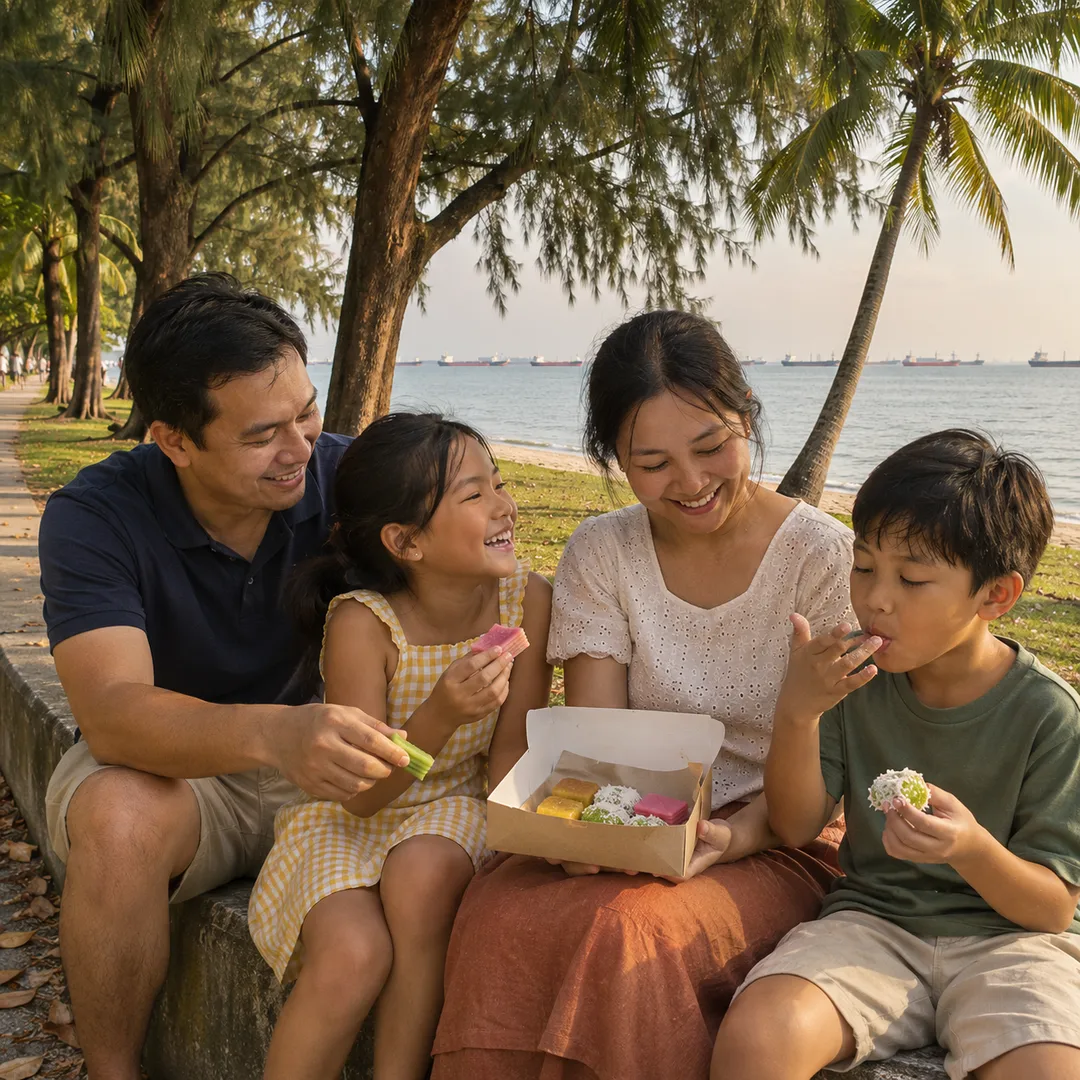
From Katong, follow the paths south through Marine Parade and use one of the pedestrian underpasses beneath the expressway to reach East Coast Park. There are shady trees, low walls and benches by the beach, and on a clear day you can watch ships waiting at anchor far out in the strait. This is the best place to open the kueh box, because crumbs and grated coconut are no trouble on the sand and the breeze makes the humidity easier to bear for small walkers.
Making It a Weekend Habit
Families who settle in well often find a few small rituals that make a new city feel like home. A Saturday kueh run in Katong, followed by a scooter ride or a cycle along the park connector, is an easy one to keep. Give each child the job of choosing one new kueh per visit and adding its name to a list on the fridge. After a month or two they will be explaining the difference between kueh salat and kueh lapis to visiting grandparents with real authority.
It also helps the adults. Learning the names of local foods gives you something to talk about with neighbours, colleagues and the parents at school pick up, and Singaporeans tend to have strong, happy opinions about their favourite kueh. Ask them where they buy theirs and why. You will often get a recommendation, a family story about a grandmother's kitchen, or an invitation to try a home-made version during a festival, which is exactly how a new place starts to feel like yours.
Planning Your Katong Morning With the Karpo APP
When you are ready to try a new corner of the neighbourhood, open the Karpo APP and describe what you want in plain words, for example a kueh snack shop in Katong that suits a family with young children, with plenty of colourful choices and an easy walk to East Coast Park afterwards. Treat the suggestions as a shortlist, then ask follow-up questions about the atmosphere, whether the shop is good for a quick takeaway, and what else is nearby for small legs.
Keep the day simple. Arrive in the morning, buy a mixed box, stroll past the shophouses, and save the eating for the shade by the sea. Bring wet wipes, water and a small bag for rubbish, and let the children lead the choosing. The aim is not to find a perfect cake on the first try, but to start a family habit of tasting, asking and remembering, one colourful square at a time.
Ask Karpo for more information.
Keep reading
- Geylang Serai Chendol Dessert Crawl: Market Bowls to Pick
 Katong Chendol Dessert Crawl: Peranakan Bowls Worth a Walk
 Chinatown Chendol Dessert Crawl: Hawker Rows and Tea Lanes