 Geylang Serai Chendol Dessert Crawl: Market Bowls to Pick
Coffee & Dessert
Geylang Serai Kueh Snack Shop Finder for a Neighbours' Tea
Hosting tea for new neighbours? Geylang Serai's kuih counters give you sweet and savoury halal-friendly bites, plus a market walk full of Malay heritage.
Moving into a new block in Singapore comes with an unspoken invitation: sooner or later, you meet the neighbours. One of the warmest ways to do it is to invite them for tea, and few things make a table feel generous faster than a spread of kuih. Geylang Serai, the historic heart of the Malay community, is the ideal place to gather it. Its market and family counters offer sweet and savoury bites with deep roots, many of them prepared with halal kitchens in mind. This kueh snack shop finder is for hosts who want a welcoming tea table that everyone can share.
Why Geylang Serai Is the Place for Kuih
Geylang Serai has been a centre of Malay life in Singapore for well over a century. The name is often linked to the lemongrass, serai in Malay, once grown in the area, and the neighbourhood became home to Malay and Indonesian families who moved east as the city grew. Over time it developed into a cultural hub, with the bustling Geylang Serai Market and the Wisma Geylang Serai civic and cultural centre nearby celebrating Malay heritage, arts and community events.
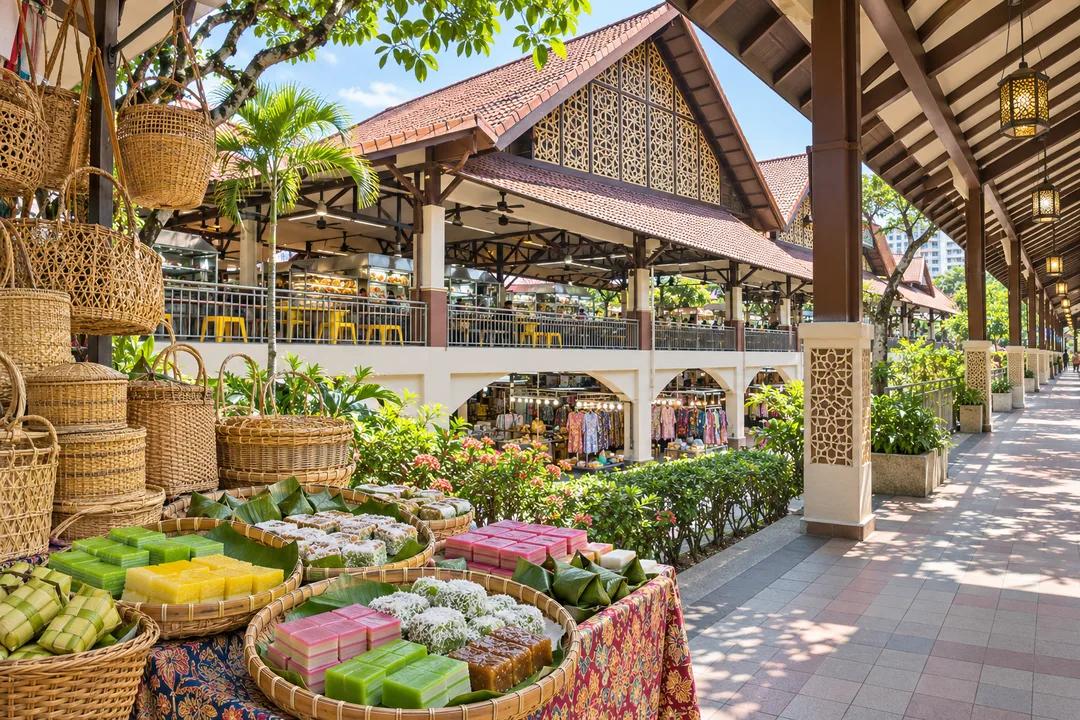
Kuih, as the word is usually spelled in Malay, sits right at the centre of that heritage. It is the food of morning breakfasts, afternoon tea, prayer gatherings, weddings and festive open houses, when families welcome friends of every background into their homes. Buying kuih in Geylang Serai connects your own small tea party to that tradition of hospitality. You will also find a range that goes beyond the Peranakan trays of Katong, with more coconut, more palm sugar and more savoury pastry.
Building a Spread Everyone Can Enjoy
A neighbours' tea in Singapore may bring together Malay, Chinese, Indian and expatriate households, so it is thoughtful to choose food that suits many diets. Malay kuih is often a natural fit because it is commonly prepared with halal ingredients, but always look for halal certification or ask the stall directly if any of your guests keep halal. For vegetarian guests, ask which items avoid meat, egg or dried shrimp, as some savoury kuih contain small amounts of seafood.
Aim for balance on the table. Include something chewy and sweet, such as kuih koci wrapped in banana leaf with a coconut and palm sugar filling, or kuih lopes, a triangle of glutinous rice rolled in coconut and served with palm sugar syrup. Add something baked like kuih bingka, made from tapioca or coconut. Then bring savoury crunch with curry puffs or epok-epok, flaky crescents filled with spiced potato. A mix of colours, textures and flavours keeps the conversation going around the plates.
How to Shop the Market Counters
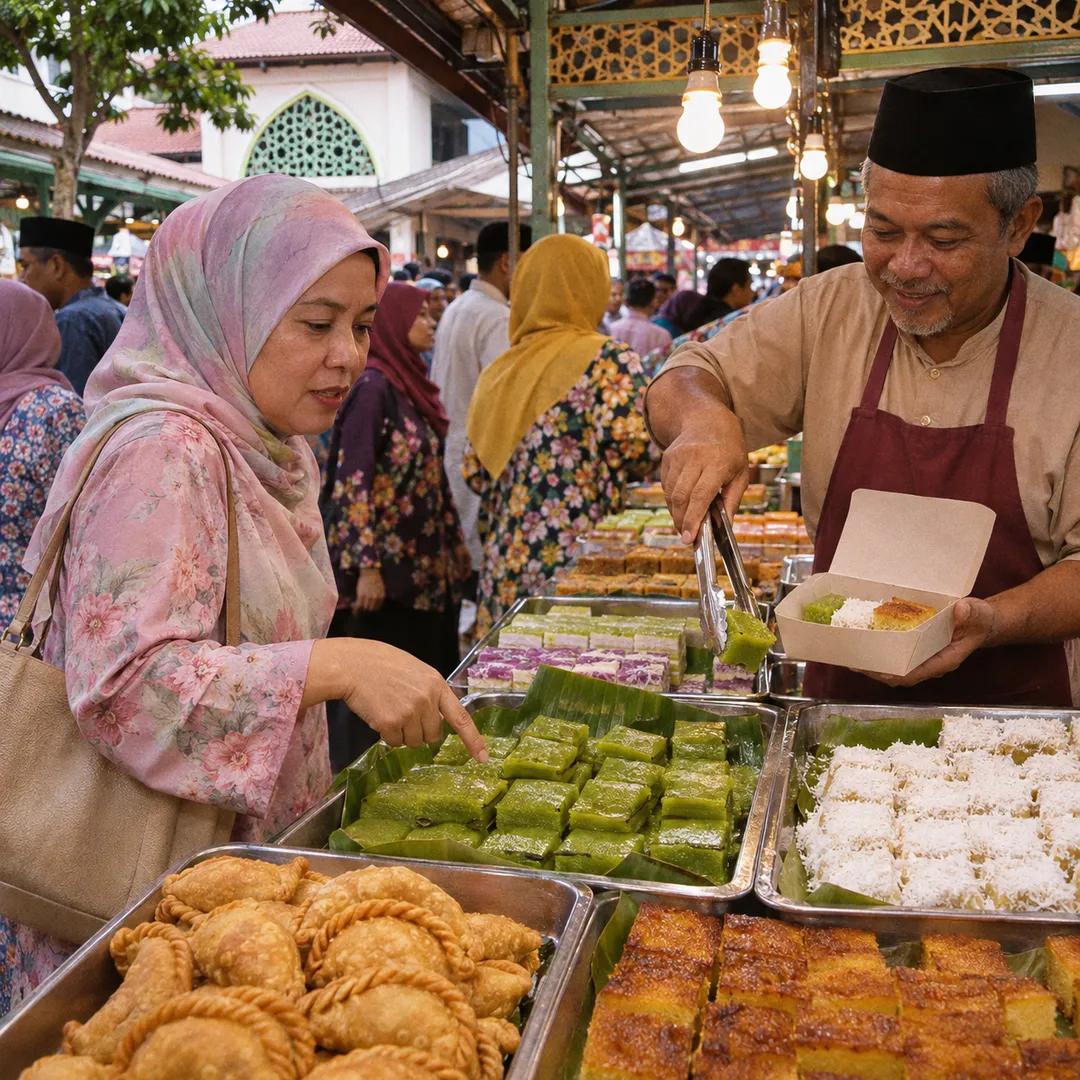
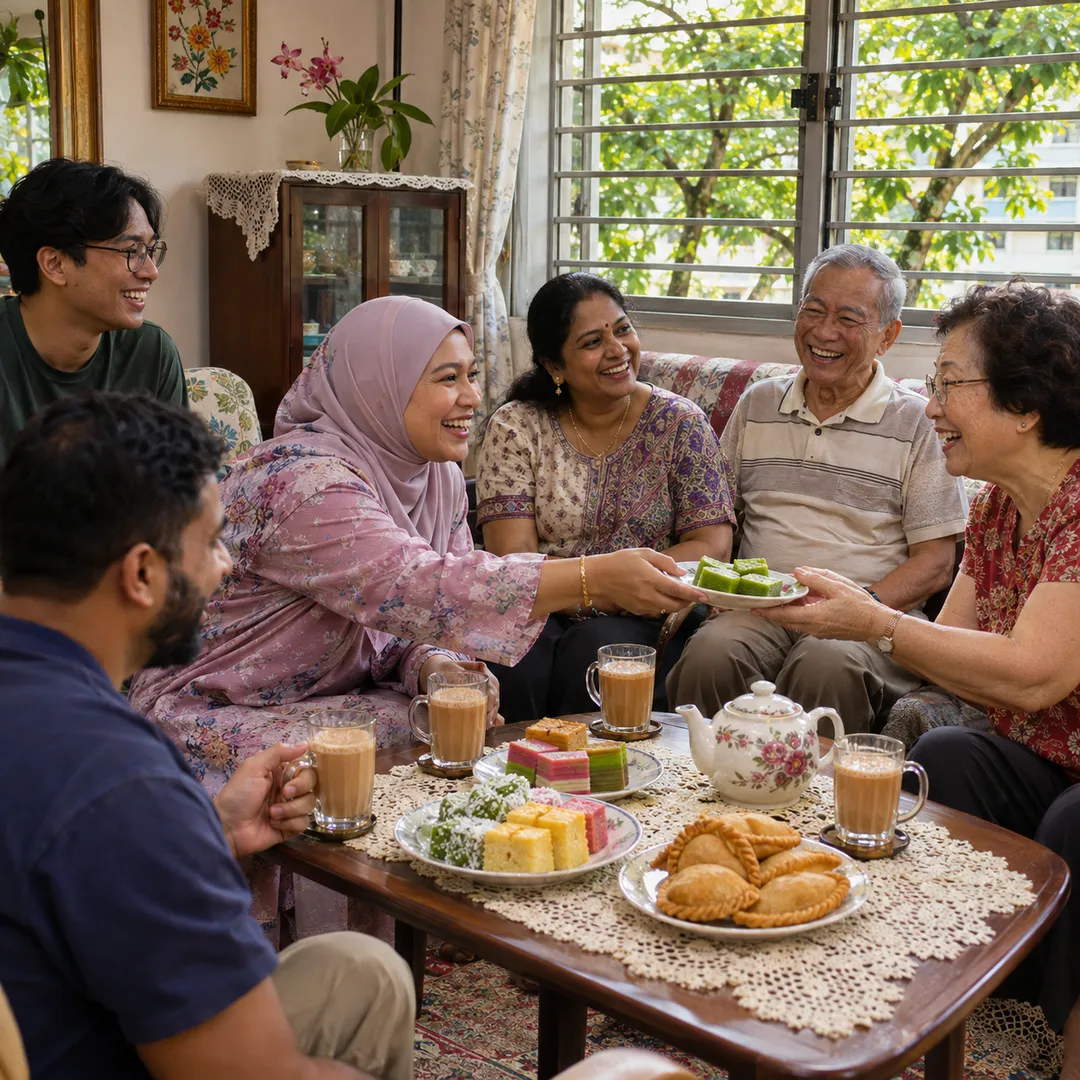
Go in the morning, when the trays are full and the market hums with families buying for the day. Walk once around the kuih stalls before buying, noting which ones look freshly made, which display neat, glossy pieces and which have regular customers queuing. Many stalls sell by the piece, so you can mix and match, and vendors will usually pack a box for you if you explain that you are hosting guests. Ask which items keep well until the afternoon.
Plan quantity sensibly. Kuih is rich and filling, and two or three pieces per guest alongside drinks is usually plenty. Buy a few extra curry puffs, because they tend to disappear first. If you are buying several boxes, keep the sweet coconut based kuih separate from the oily fried pastries so the textures stay right. Carry everything flat, out of direct sun, and avoid leaving the boxes in a hot car while you run other errands.
Courtesy in a Community Market
Geylang Serai Market is a lively place used by residents every day, so shop with patience and good humour. Keep the aisles clear, let regulars place their orders, and ask before photographing vendors or their trays. A few words of Malay go a long way: terima kasih for thank you, or simply a smile and a nod. Dress comfortably and modestly, which is respectful in a neighbourhood where many people are heading to or from the mosque.
During Ramadan the area transforms, with a famous night bazaar and stalls selling festive foods before the evening breaking of the fast. Outside that month, the market is calmer but no less welcoming. If you are curious about a kuih you do not recognise, ask what it is and what it is usually eaten with. Many vendors are happy to share the name and a suggestion, and those little conversations often reveal family stories behind recipes.
Setting the Tea Table at Home
Back at home, lay the kuih on plain plates or banana leaves rather than leaving them in boxes, which immediately makes the table feel generous. Group them by type and add small labels with their names, which helps guests who are new to kuih and starts conversation among those who grew up with it. Offer hot drinks such as teh tarik or kopi, along with cold water or a jug of iced lime juice for warm afternoons.
Set out napkins and small forks, because coconut and syrup can be messy. If guests bring dishes of their own, as Singapore neighbours often do, make space for them and invite everyone to share. Do not worry about formality. The point is to give people a reason to sit together, swap stories about where they grew up and learn something about the community they now share. The kuih is the bridge, and it tends to work beautifully.
A Short Heritage Walk Before You Head Home
If you have time after shopping, walk around the area to see how the neighbourhood holds its history. Wisma Geylang Serai is a modern cultural centre with exhibitions and community programmes celebrating Malay heritage, and its design draws on traditional Malay architecture. Nearby streets mix old shophouses, mosques, bridal shops and fabric stores, with bright colours and busy pavements. Look out for shops selling traditional clothing and textiles, which often take centre stage during festive seasons.
A walk helps you understand that kuih is not an isolated treat but part of a wider culture of dress, music, faith and gathering. It also gives you stories to share at your tea table. Telling your neighbours that the curry puffs came from the same market where families have shopped for generations adds meaning to the plate. If any of your guests are Malay, they may well add their own memories of the area, which makes the afternoon richer.
Planning Your Kuih Run With the Karpo APP
Before your next gathering, open the Karpo APP and describe what you want in plain words, for example a kueh snack shop or market stall in Geylang Serai with halal Malay kuih and curry puffs for a neighbours' tea party at home, with a short heritage walk nearby. Treat the suggestions as a shortlist, then ask follow-up questions about the atmosphere, which stalls suit buying in quantity and what pairs well with tea.
Shop in the morning, choose a varied spread, ask about diets, and carry everything carefully. Then set the table, put the kettle on and open the door. In a city where many people live close together but rarely speak, a plate of kuih from Geylang Serai is one of the easiest ways to turn neighbours into friends.
Ask Karpo for more information.
Keep reading
- Geylang Serai Chendol Dessert Crawl: Market Bowls to Pick
 Katong Chendol Dessert Crawl: Peranakan Bowls Worth a Walk
 Chinatown Chendol Dessert Crawl: Hawker Rows and Tea Lanes