 Geylang Serai Chendol Dessert Crawl: Market Bowls to Pick
Coffee & Dessert
Tiong Bahru Kopitiam Morning Route Planner for Dawn Cyclists
A Tiong Bahru kopitiam morning route planner for weekend cyclists: where to park the bikes, how to order kopi after a ride, and a slow loop past the flats.
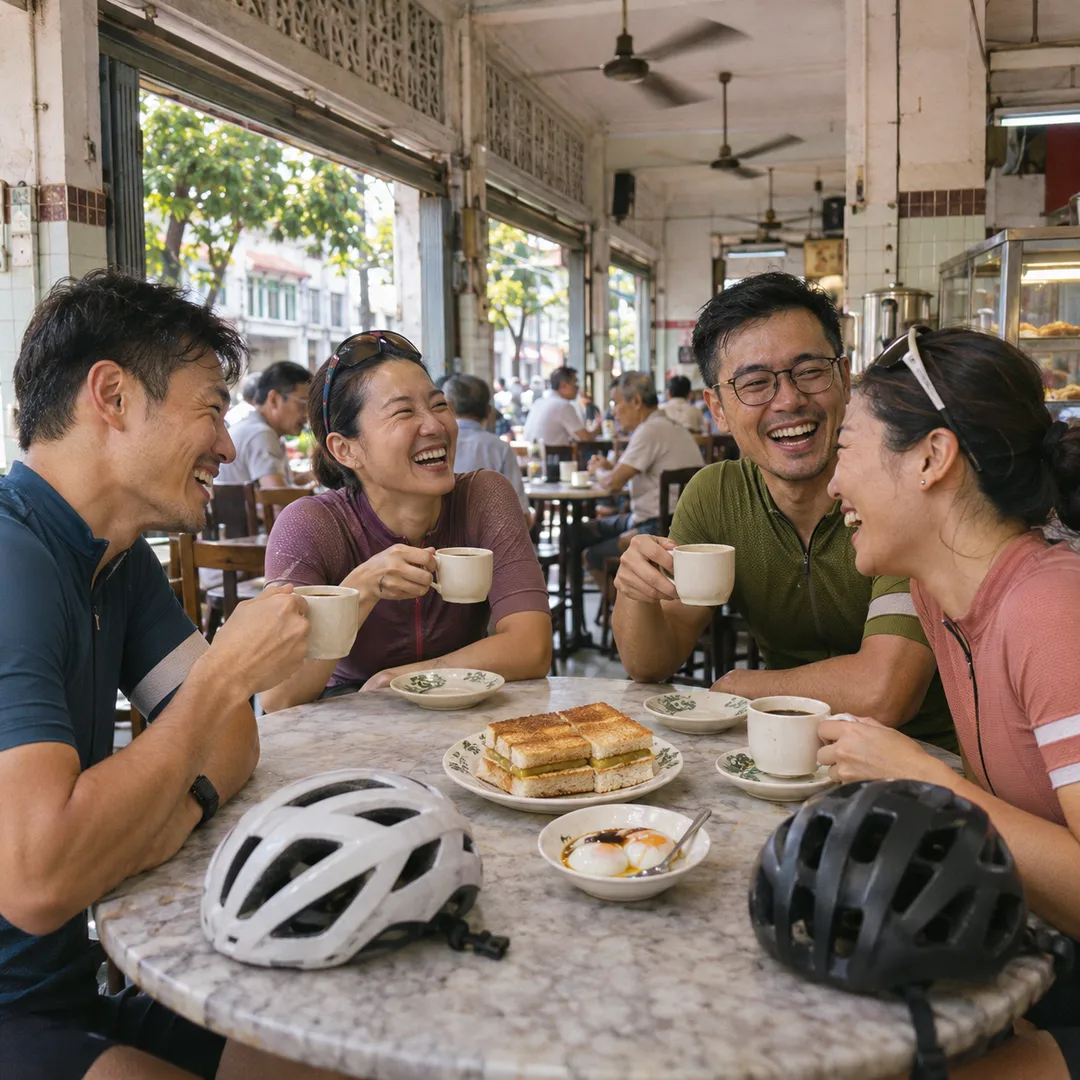
A kopitiam morning route planner earns its keep on the days you arrive hungry and sweaty. Every second Sunday, Daniel, Farah, Wei Jie and Sandra ride the park connector in the cool before sunrise and roll into Tiong Bahru just as the shutters lift. They do not want one café. They want a slow morning that moves from kopi to market to a shaded bench, with the bikes safe and nobody rushing. Here is the loop they have refined.
Why Cyclists End the Ride in Tiong Bahru
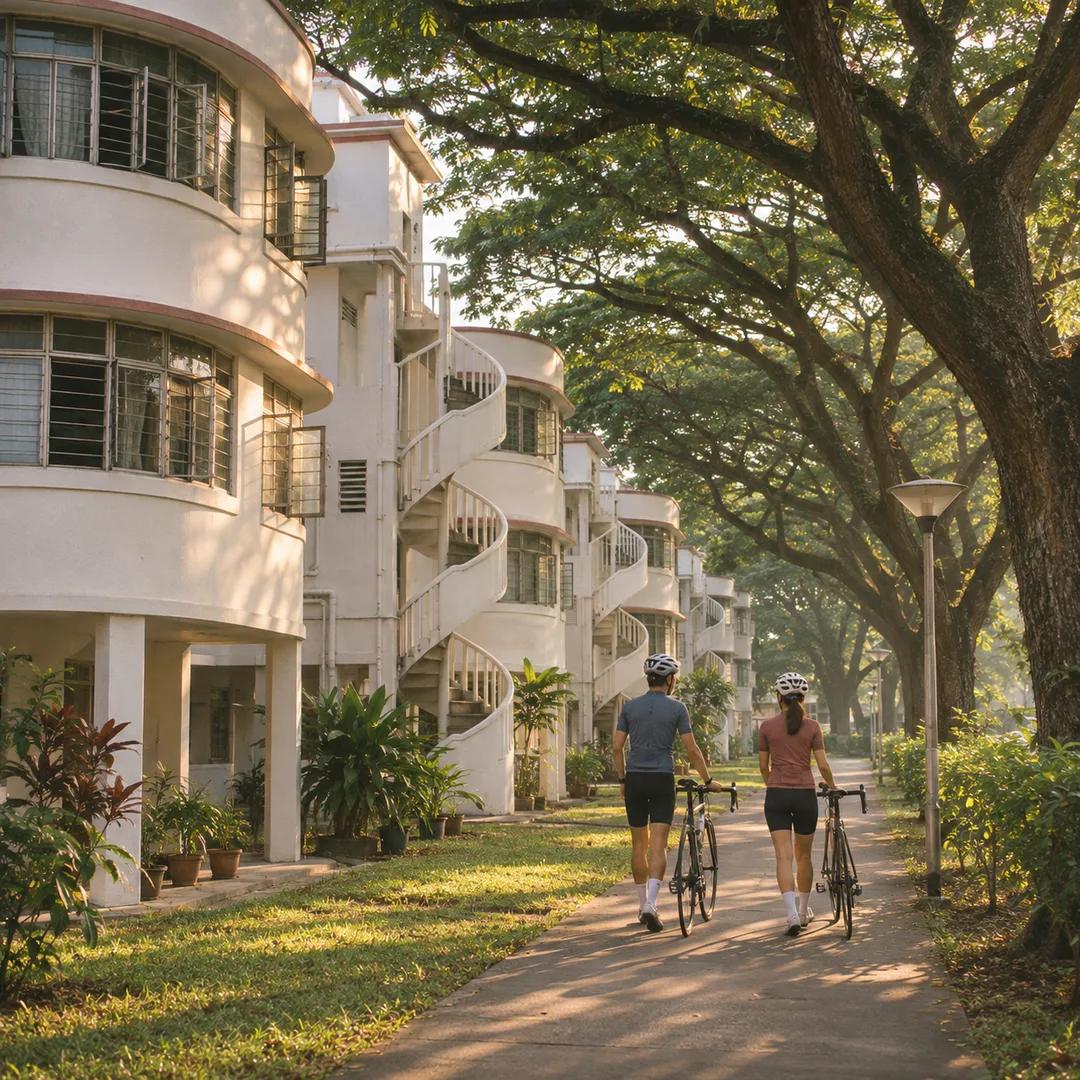
Tiong Bahru sits close to the canal paths that wind towards the river and the southern ridges, so it is a natural finishing line for a dawn ride. The estate was one of the first public housing projects on the island, built before the war by the Singapore Improvement Trust. Its low, curved blocks with rounded balconies and spiral back staircases still look like ocean liners parked among the rain trees. Cyclists like it because the streets are short, shaded and quiet early on.
The name mixes Hokkien and Malay and is usually read as new cemetery, since the land was once a burial ground before the flats went up. Today it is one of the most loved neighbourhoods in the city, but before the brunch crowd arrives it still belongs to older residents, dog walkers and uncles reading the paper over their first kopi. That calm hour is exactly what the group comes for.
Park the Bikes Before You Order
The first rule of the route is simple: lock up before you sit down. Kopitiam tables spill onto the five-foot way, and a row of road bikes leaning on chairs blocks the walkway for everyone else. The group uses the public bicycle racks near the market and walks the last stretch in cleats, which also gives their legs a moment to settle. Helmets go on the table or under the chair, never on a stool someone else might need.
Sandra carries a light cable lock and a small cloth for wiping sweat off the bar tape, and the others bring a spare T-shirt in a saddle bag. Nobody minds cycling kit at a kopitiam, but changing into something dry makes the second and third stops more comfortable. If it has rained overnight, choose a table under the fans and away from the open front, where the wet breeze will chill you quickly.
How to Order Kopi After a Long Ride
After an hour or two in the saddle, the body wants water first and sugar second. Order a glass of iced water or barley with the first round, then decide on coffee. Kopi comes with condensed milk unless you say otherwise; kopi o is black with sugar, kopi c uses evaporated milk, and adding kosong means no sugar at all. Daniel asks for kopi c siew dai, less sweet, because the full version hits hard on an empty stomach.
Farah prefers teh peng, iced milk tea, while she cools down, and switches to hot kopi later. Wei Jie always orders two soft-boiled eggs, cracked into a saucer with a splash of dark soy and white pepper, plus a plate of kaya toast to share. The eggs give protein, the toast gives quick energy, and the whole thing arrives fast enough that nobody gets cranky waiting at the table.
Second Stop: The Market Upstairs
Once the first round is done, the route moves to the wet market and its hawker floor above. Walking through the market level is part of the pleasure: fishmongers hosing down the counters, aunties choosing greens, the smell of flowers and fresh tofu. Upstairs, the hawker centre is busy but friendly, and it is the place to eat something heartier than toast after a long ride.
The group splits up here. One person queues for chwee kueh, steamed rice cakes topped with preserved radish, while another finds a plate of fried carrot cake or a bowl of fish soup. They meet back at one table and share everything. Sandra calls this the refuel round, and she insists on one bowl of something with broth, because salty soup helps after sweating through a humid morning.
A Slow Loop Through the Art Deco Blocks
With full stomachs, the four walk their bikes through the estate rather than riding. The rounded corners of the flats, the long ribbon windows and the back lanes with their spiral stairs reward a walking pace. Look for the small courtyards between blocks, where residents keep potted plants, birdcages and folding chairs. Mornings here feel almost village-like, with neighbours calling across the lanes.
For many years the estate was known for a bird singing corner, where owners hung their cages of songbirds from poles while they drank kopi below. The tradition has faded, but you will still hear caged birds from some balconies and see older men comparing notes on their birds. It is a reminder that the kopitiam here was never only about coffee; it was the neighbourhood's living room.
The Monkey God Temple and a Shaded Bench
A short walk from the market is the Qi Tian Gong temple, dedicated to the Monkey God from the classic tale Journey to the West. It is small, colourful and usually quiet in the morning, with the scent of joss sticks drifting out to the street. Step in respectfully if you wish, keep voices low, and remember that cleats are loud on tiled floors, so walk gently or wait outside with the bikes.
Afterwards the group finds a bench under the rain trees for the last kopi of the morning, usually a takeaway in a plastic bag with a straw, the classic kopitiam way of carrying drinks. This is where they plan the next ride, check the weather and decide whether anyone has the energy for a detour to the river. Most weeks, the answer is no, and that is fine.
Plan the Next Morning with Karpo
Rides start from different places, so the group keeps a shortlist of kopitiam mornings across the island instead of one fixed favourite. Open the Karpo APP, search for kopitiam spots around Tiong Bahru or wherever your route ends, and save the places that suit a slow, sweaty arrival. Karpo can suggest nearby hawker stops or quiet benches to round off the loop, which saves a lot of discussion in a group chat.
Next month Farah wants to finish a ride in Katong and compare its kopi with the Tiong Bahru cups. Whatever the destination, the pattern stays the same: lock the bikes, drink water first, order a kopi that suits your stomach, eat something with broth, then walk slowly through the neighbourhood. That rhythm turns a hard ride into a morning worth remembering.
Ask Karpo for more information.
Keep reading
- Geylang Serai Chendol Dessert Crawl: Market Bowls to Pick
 Katong Chendol Dessert Crawl: Peranakan Bowls Worth a Walk
 Chinatown Chendol Dessert Crawl: Hawker Rows and Tea Lanes