 Geylang Serai Chendol Dessert Crawl: Market Bowls to Pick
Coffee & Dessert
Katong Kopitiam Morning Route Planner With a Peranakan Aunt
A Katong kopitiam morning route planner led by a Peranakan aunt: kopi and kueh the family way, the painted terraces of Joo Chiat and a breezy walk to the sea.
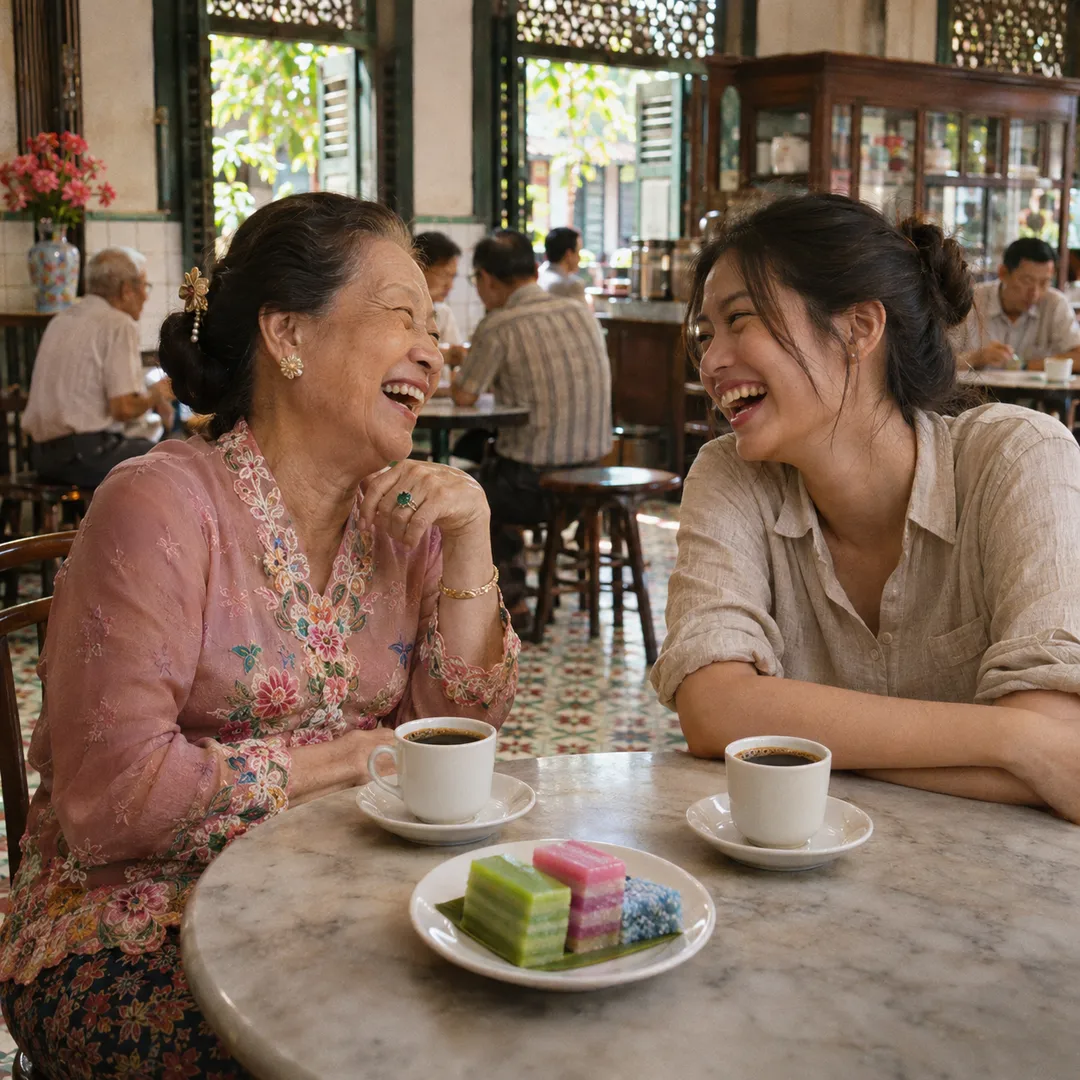
Chloe grew up in Melbourne hearing about her grandmother's Katong mornings, and on her first long visit home her aunt Rosalind offered to show her the real thing. This kopitiam morning route planner follows the two of them through a Peranakan family routine: kopi at a corner coffee shop, kueh chosen with care, a slow look at the painted terrace houses and a breezy walk towards the sea before the sun gets fierce.
Katong and the Peranakan Morning
Katong and the neighbouring Joo Chiat grew up as a seaside area where wealthy families once built weekend villas facing the water. Over time it became a home for many Peranakan families, descendants of early Chinese traders who married into the Malay world and created their own cuisine, dress and language. Their mornings mixed Chinese coffee shop habits with Malay flavours, and that blend still shapes breakfast here.
Rosalind explains that her mother never ate a big breakfast. She drank kopi, chose two or three pieces of kueh and talked for an hour. Food was something you discussed as much as ate. The coastline has since moved far out because of land reclamation, but the old streets, the terrace houses and the slow kopitiam rhythm remain, especially before the weekend crowds roll in.
Ordering Kopi the Family Way
At the coffee shop, Rosalind orders for both of them without looking at the board. Her own cup is kopi, the standard version with condensed milk, thick and sweet. For Chloe she asks for kopi c siew dai, with evaporated milk and less sugar, after warning her that the full sweetness can be a shock to anyone used to flat whites. Chloe tries both and admits the sweeter one fits the food better.
The family habit is to pour a little coffee into the saucer to cool it, then sip from the saucer. Younger Singaporeans rarely do this now, and Rosalind does it partly to make her niece laugh. She also insists on ordering a glass of iced water to share. Katong mornings can be humid even early, and a kopitiam table by the open front catches a sea breeze on lucky days.
Choosing Kueh Like a Nonya
Kueh are the small sweet and savoury cakes at the heart of a Peranakan breakfast. Rosalind teaches Chloe to read them by colour and texture: first the blue-tinged pulut tai tai, coloured with butterfly pea flowers and eaten with kaya, then the layered kueh lapis that children peel apart one strip at a time. Next comes the green kueh salat with its pandan custard on a base of glutinous rice, and finally the soft ondeh ondeh that bursts with warm palm sugar the moment you bite into it.
Her rule is to buy three different textures, never three sweet ones in a row. One sticky, one soft, one with coconut, and if possible one savoury piece such as a little rice cake with dried shrimp sambal. Chloe photographs each one, and Rosalind tells her which her grandmother loved. The tasting turns into a family story, which is exactly what a Katong morning is meant to be.
A Bowl of Laksa if You Are Hungry
Katong is famous across the island for its laksa, a rich coconut curry noodle soup with prawns, cockles and short-cut noodles that can be eaten with only a spoon. It is a common morning dish here, not just a lunch, and several stalls in the area compete for loyal customers. Rosalind suggests sharing one bowl between two after the kueh, so neither of them feels too full to walk.
Ask for the cockles to be left out if you are unsure about them, and request less chilli if you are sensitive to heat. The broth is rich, so a cold drink such as lime juice or barley balances it. Chloe tries her first spoonful and understands why the dish is often called the taste of Katong. Rosalind nods and says that is enough, because the walk comes next and nobody enjoys the terraces on a heavy stomach.
The Painted Terraces of Joo Chiat
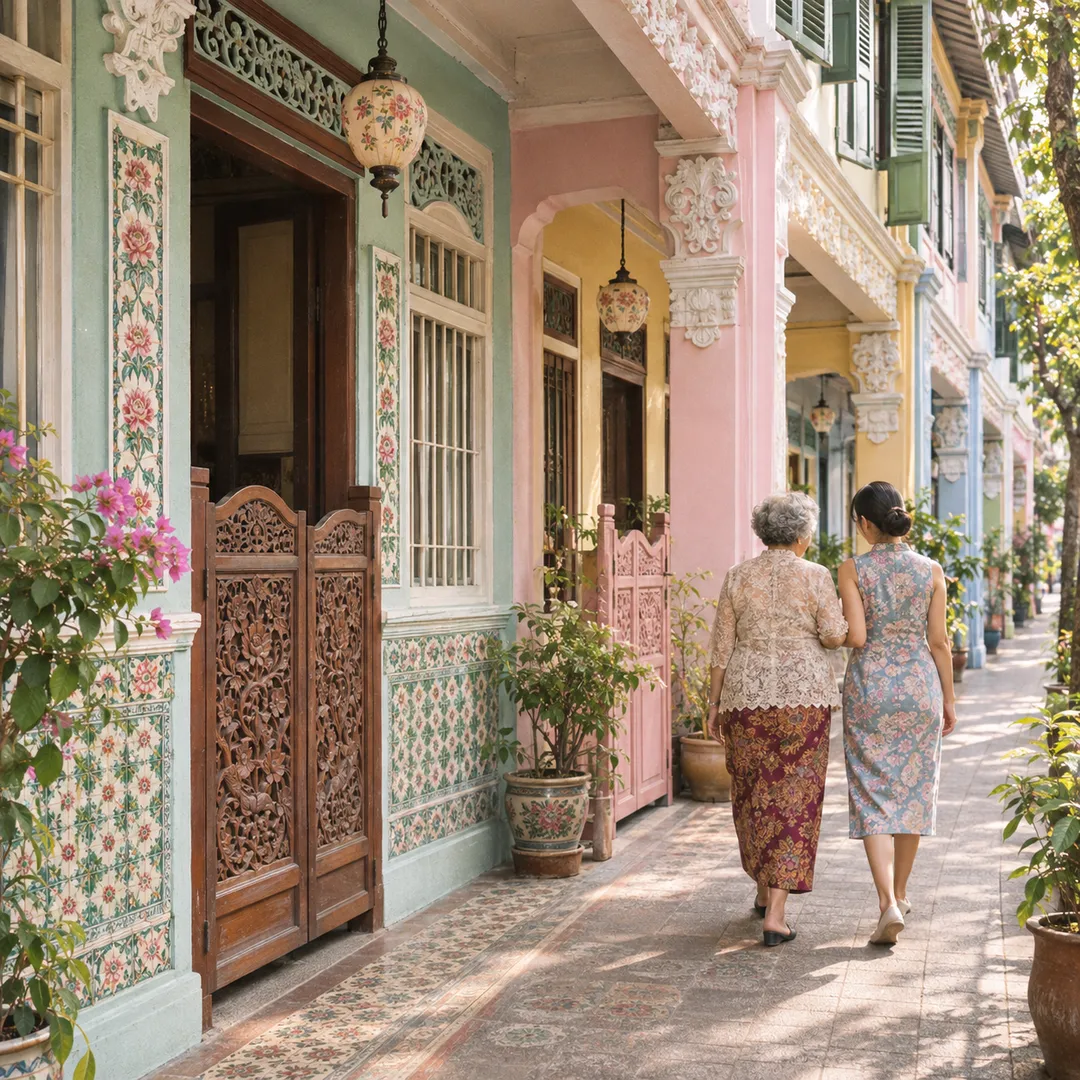
After breakfast, aunt and niece walk through the side roads off Joo Chiat, where rows of two-storey terrace houses wear pastel paint, carved timber, half doors called pintu pagar and glazed ceramic tiles with flowers and birds. Koon Seng Road holds the most photographed row, but the quieter lanes nearby are just as charming, with fewer people posing in front of them.
Rosalind points out the details her mother taught her to notice: the small decorative air vents, the stucco on the pilasters, the tiles that were often imported from Europe and Japan. Remember these are private homes, so keep voices low, do not climb the steps and avoid lingering at gates. A few minutes of quiet admiration is far more respectful than a long photoshoot on someone's doorstep.
Temples, Shophouses and the Road to the Sea
On the way back, the two stop briefly at a small Chinese temple on a corner, where older residents light incense before starting their day. Katong also has a Peranakan heritage house and several shops selling beaded slippers, embroidered kebaya and nyonya ware, which Rosalind visits mostly to touch the fabrics and remember her mother's wardrobe.
To finish, they walk south through the estates towards East Coast Park, crossing under the expressway to reach the shoreline. The sea is further out than it was in her grandmother's day, but there are benches, shade and plenty of breeze. Chloe sits with the last of her kopi while Rosalind tells one more story about Sunday mornings, when the whole family walked down to the water after breakfast and the children paddled while the adults argued about recipes. The route feels complete without anyone needing to plan more.
Keep the Route Going with Karpo
Before flying home, Chloe saves the morning so she can return with friends. In the Karpo APP she searches for kopitiam and kueh spots around Katong and Joo Chiat, saves the ones Rosalind liked and adds a few new names for next time. Karpo can also point out nearby places to rest or a quieter coffee shop if the popular ones look packed on a weekend morning.
The route works for anyone with roots here or simply a curiosity about Peranakan life. Order kopi slowly, choose kueh by texture, share a bowl of laksa if you are hungry, walk the painted terraces gently and end by the sea. Most of all, bring someone who can tell you stories, because in Katong breakfast has always been about who you eat with.
Ask Karpo for more information.
Keep reading
- Geylang Serai Chendol Dessert Crawl: Market Bowls to Pick
 Katong Chendol Dessert Crawl: Peranakan Bowls Worth a Walk
 Chinatown Chendol Dessert Crawl: Hawker Rows and Tea Lanes