 Geylang Serai Chendol Dessert Crawl: Market Bowls to Pick
Coffee & Dessert
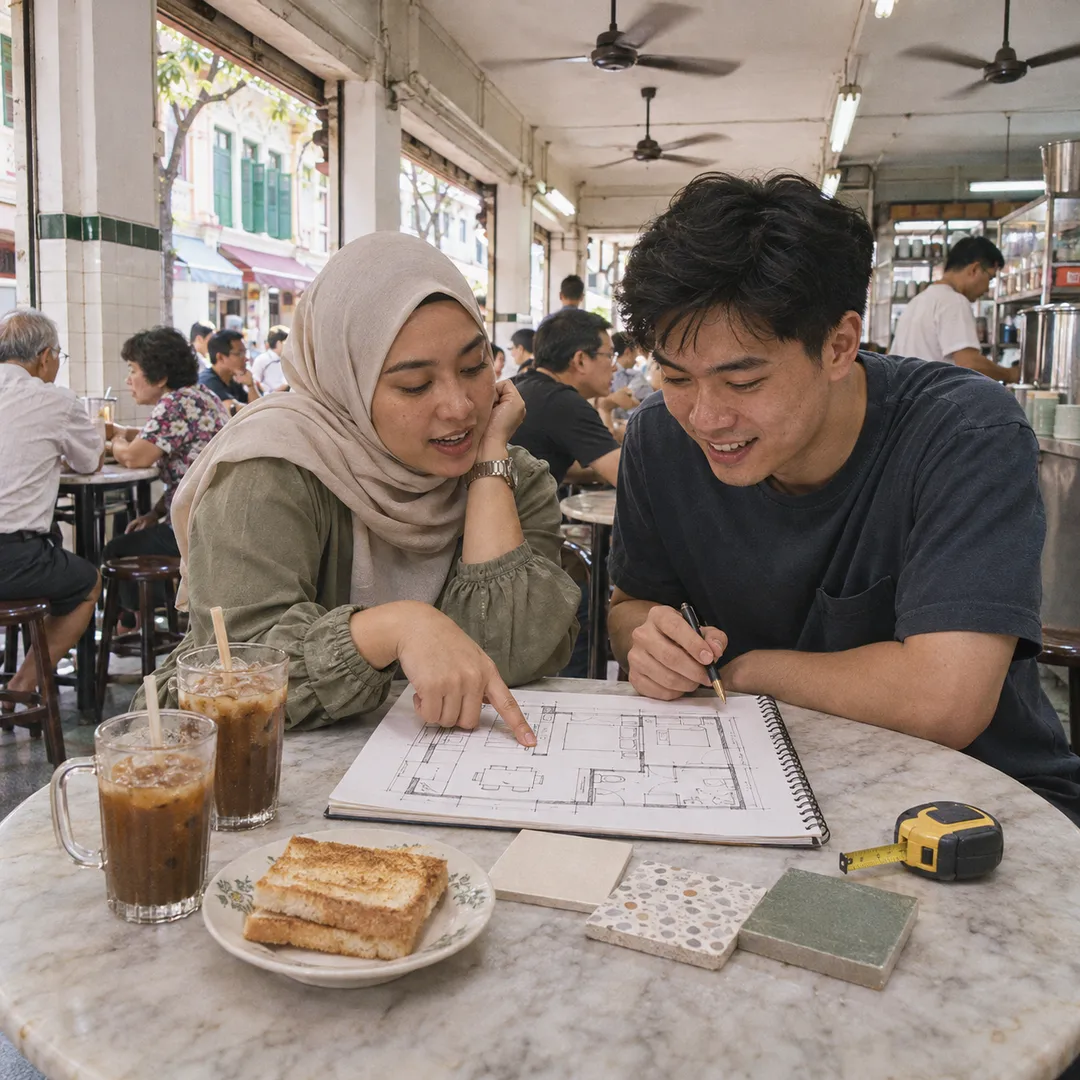
Jalan Besar Kopitiam Morning Route Planner for Renovators
A Jalan Besar kopitiam morning route planner for a couple renovating a first flat: kopi as a planning desk, hardware runs and old shophouse lanes in between.
Aisyah and Marcus collected the keys to their first flat in spring, and since then every Saturday has followed the same plan: kopi in Jalan Besar, then a round of hardware, lighting and tile shops. This kopitiam morning route planner shows how they turned a corner coffee shop into a weekend office, where to walk between errands and how to stop a renovation morning from becoming a stressful one.
Why Renovators Start in Jalan Besar
Jalan Besar has long been the place where Singapore goes to fix things. The streets around it are lined with shops selling taps, pipes, light fittings, door handles, paint, tiles and every screw you could imagine, many run by the same families for decades. Contractors start their day here, and the kopitiam tables fill early with men in work boots discussing jobs over coffee and toast.
For a young couple on a budget, the appeal is obvious. They can compare real fittings in person, touch the tiles, ask questions and carry small items home on the train. Marcus admits that the first visit felt intimidating, because shopkeepers speak quickly and expect you to know what you want. A kopitiam breakfast beforehand gives them time to decide exactly that.
The Kopitiam as a Morning Office
Their routine is to find a corner table near a fan, spread out the floor plan and order two drinks before talking about anything else. Aisyah takes kopi peng, iced coffee with condensed milk, while Marcus has teh c, milk tea with evaporated milk. A shared plate of kaya toast and two soft-boiled eggs follows. Nobody in a kopitiam minds a couple sitting with a planning pad for an hour, as long as the table is not needed at the busiest moment.
The spiral pad is the heart of the method. One page lists what they need that day, one lists measurements, and one holds a running budget. They decide on priorities over the first kopi, so they do not end up buying three lamps on impulse. If the tables start to fill, they move to a smaller stool table or order a second round, which is the polite way to keep your seat.

Listen to the Next Table
One unexpected benefit of the kopitiam is the free advice. Contractors, plumbers and electricians often eat breakfast nearby, and their conversations about grout, waterproofing and wiring are surprisingly useful. Aisyah once overheard a heated debate about bathroom tiles and changed her mind about glossy finishes before spending any money.
If you feel brave, ask a question politely, perhaps after they have finished eating. Many tradespeople are happy to share an opinion, especially if you start with a compliment about their work or simply ask which shops they trust for a certain item. Keep it short, thank them and let them get on with their day. It is a very Singaporean exchange, built on kopi and courtesy.
Pacing the Shop Run
After breakfast, the couple splits the street into small loops rather than marching up and down for hours. First loop: lighting shops, since they need to see bulbs and colours in person. Second loop: taps and sanitary fittings. Third loop: small hardware such as hooks, hinges and cabinet handles. Between each loop they return to the five-foot way shade and drink water.
Their tip is to photograph every item with its label and the shop front, so they can compare later without relying on memory. They also carry a tape measure, a small bag for samples and a few reusable bags for anything bought. Shopkeepers tend to be more relaxed in the morning, before the afternoon rush, so ask your trickiest questions early. Do not be shy about saying you are still comparing; most will happily let you take a card, a sample or a photo and come back another weekend once you have decided.
Old Shophouses and Hidden History
Between errands it is worth looking up. Jalan Besar holds some of the most ornate shophouse facades in the city, with plaster flowers, coloured tiles and arched windows. Petain Road has a famous row with elaborate decoration, and the side streets show different styles, from early simple fronts to later art deco shapes. Aisyah keeps a list of door colours and tile patterns she would like to copy at home. Marcus is less sentimental, but even he stops to admire the hand-painted floor tiles glimpsed through an open doorway, and he has started sketching the patterns on the back pages of the pad for a future kitchen splashback.
The area also carries layered history. It was once swampy land with plantations and kilns, and later a busy hub of small industry. Nearby, the old Sungei Road was known for decades as a flea market where people sold second-hand goods on the pavement. That market is gone now, but the spirit of fixing, reusing and bargaining still shapes the neighbourhood.
A Mid-Morning Snack and a Calmer Lane
By late morning, energy dips. The couple returns to a kopitiam or a nearby food centre for a second, lighter round. Marcus likes a bowl of fish ball noodles, while Aisyah orders a plate of roti prata with dhal from a stall run by an Indian Muslim family. This mix of food styles is typical of Jalan Besar, where Chinese, Malay and Indian businesses have always worked side by side.
After eating, they take a slow walk along one of the calmer lanes towards the edge of Kampong Glam, where shophouse cafés, craft studios and old mosques add a different texture. It is a good place to sit for ten minutes, look over the notes and decide whether anything still needs to be bought that day, or whether it can wait until next weekend.
Organising the Renovation with Karpo
Renovations take months, so Aisyah keeps a running list in the Karpo APP. She searches for kopitiam spots in Jalan Besar and nearby areas to use as a base on different Saturdays, saves the ones with good tables for spreading out plans, and asks Karpo for ideas on what else is nearby. It keeps the weekend routine fresh without hours of planning at home.
The couple's flat is not finished yet, but the mornings have become something they look forward to. A good kopi, a clear list, short loops through the shops, advice from strangers and a calm walk among beautiful old shophouses: that is their recipe. For anyone facing a renovation, starting the day at a kopitiam turns a chore into a small adventure.
Ask Karpo for more information.
Keep reading
- Geylang Serai Chendol Dessert Crawl: Market Bowls to Pick
 Katong Chendol Dessert Crawl: Peranakan Bowls Worth a Walk
 Chinatown Chendol Dessert Crawl: Hawker Rows and Tea Lanes