 Geylang Serai Chendol Dessert Crawl: Market Bowls to Pick
Coffee & Dessert
Chinatown Kopitiam Morning Route Planner After Tai Chi Class
A Chinatown kopitiam morning route planner for a retired couple after tai chi: gentle kopi orders, a market breakfast, temple courtyards and shaded hill lanes.
Mr and Mrs Lim have practised tai chi in Chinatown for years, and the class ends the same way every time: someone says kopi, and the whole group drifts downhill. This kopitiam morning route planner follows the couple on the days they skip the group table and make a slow morning of it, with a gentle drink, a market breakfast, a quiet temple courtyard and a walk up an old lane before the heat arrives.
Tai Chi First, Kopi Second
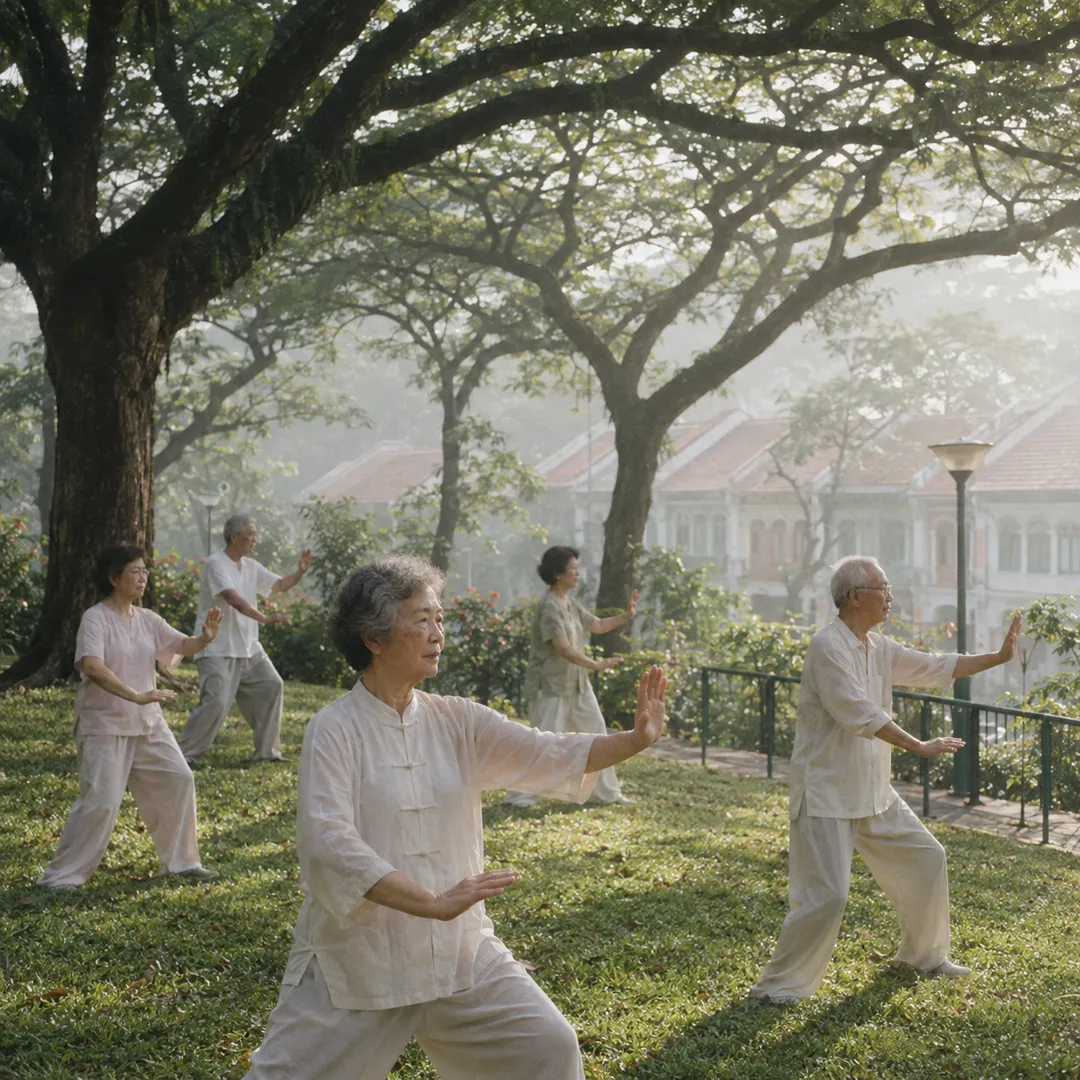
Early mornings in Chinatown belong to the movers. Small groups gather in the parks and open squares for tai chi, qigong, line dancing and fan routines, some with a speaker playing old Mandarin songs. Pearl's Hill and the green spaces around the hill lanes are popular because the trees keep the air a little cooler. The Lims stand at the back of their class, follow the teacher slowly, and finish relaxed rather than tired.
Moving before eating matters to them. Mrs Lim says the body wakes up properly only after the slow turning and stretching, and that kopi tastes better when you have earned it. If you are joining a class as a visitor, arrive quietly, follow from the back row and ask the teacher afterwards whether newcomers are welcome. Most groups are friendly, and many end with the same question: where shall we drink?
Gentle Orders for Older Stomachs
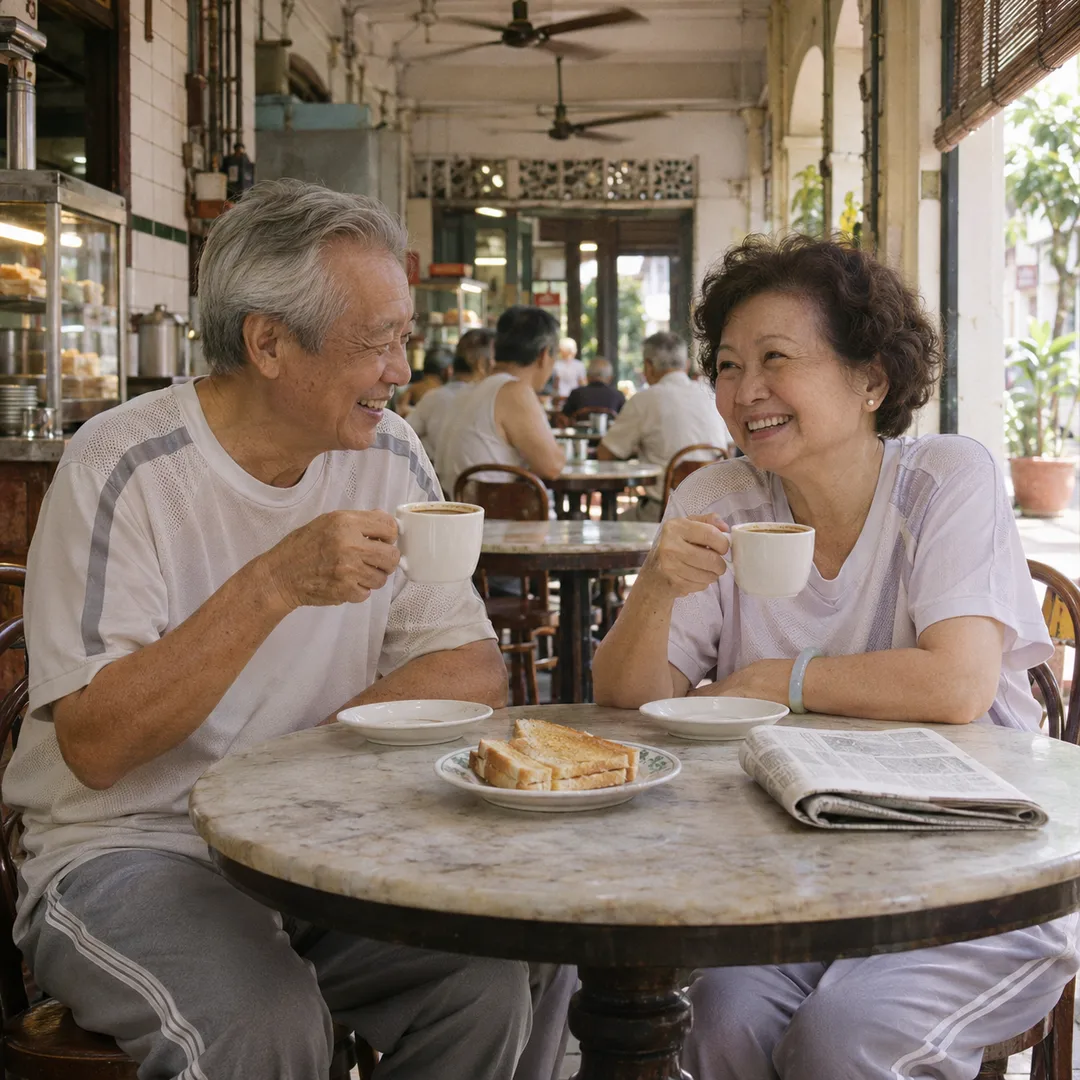
Kopitiam coffee is brewed strong through a long cloth filter, then sweetened with condensed milk unless you ask for a variation. For a gentler cup, Mr Lim orders kopi c siew dai, made with evaporated milk and less sugar. Mrs Lim drinks teh o kosong, plain tea without milk or sugar, because her doctor asked her to cut down. Both are standard requests, and nobody behind the counter will blink.
If coffee keeps you awake, ask for a weaker cup with the word po, or switch to a hot barley drink. Many older regulars also add a glass of warm water. Breakfast for the couple is simple: a plate of kaya toast to share and two soft-boiled eggs with a splash of dark soy and white pepper. Light, warm food after exercise sets a calm pace for the rest of the morning.
Why Chinatown Mornings Taste Different
Chinatown grew from the early settlement set aside for Chinese immigrants along the river, and many streets still carry the memory of clans and trades. The Malay name Kreta Ayer means water cart, after the bullock carts that once brought fresh water into the district. Cantonese, Hokkien and Teochew families each left their own food habits here, which is why the morning choices spread far beyond coffee and toast.
Kopitiam in the area were never only places to drink. They were where men from the same village read letters from home, found work and settled disputes, and where women met after the market. Mr Lim remembers his father taking him to a coffee shop near the river where the uncles argued loudly over horse racing tips. The noise is softer now, but the habit of lingering over a second cup remains.
Second Stop: The Market Hawker Floor
After kopi, the couple walk to one of the large market and hawker complexes in the district. The wet market downstairs is a show in itself: live frogs and fish, stacks of greens, dried mushrooms, sweet-smelling joss paper. Upstairs, stalls serve congee, chee cheong fun, soya bean milk and soft tau huay in sugar syrup. Mrs Lim always buys a bowl of plain porridge with century egg, warm and easy to digest.
Mr Lim prefers to share a plate of steamed rice rolls with sweet sauce and sesame. They split it between them and take it slowly, because the point is the company, not the food count. If you are visiting, bring a pack of tissues: in hawker centres people leave one on a seat to show the table is taken. It is called choping, and it is accepted everywhere.
Temple Courtyards in the Quiet Hour
Chinatown is unusual because temples of several faiths sit within a short walk of each other. In the morning, the incense coils at the older Chinese temples are freshly lit, and the courtyards are calm before tour groups arrive. The Sri Mariamman Temple, with its tall gopuram covered in painted figures, and the Jamae Mosque stand near each other along the same road, a reminder of how mixed the area has always been.
The Lims usually step into Thian Hock Keng on Telok Ayer Street, one of the oldest Hokkien temples, built where sailors once gave thanks after a safe voyage. They walk slowly, sit for a moment on a bench and talk about nothing in particular. Visitors are welcome as long as they move quietly, avoid stepping on the raised thresholds and keep cameras down during prayers.
Up the Lanes to Ann Siang Hill
From the temple, a short climb leads to Ann Siang Hill and Club Street, where restored shophouses line a gently curving lane. Once a nutmeg and clove plantation, the hill later held clan associations and guild halls, several of which still operate behind their old doors. In the morning, before the bars and cafés open, it is one of the most peaceful corners of the district.
There is a small park at the top with benches, shade and a view over the rooftops. Mrs Lim brings a fan, and Mr Lim brings the second kopi of the day in a plastic bag with a straw, the way it has been carried for decades. They sit there for half an hour, wave at familiar faces from the tai chi class and decide whether to head home or wander further.
Planning Next Week with Karpo
The Lims' grandson set up the Karpo APP on their phone so they could find new kopitiam stops without asking him every time. They search for kopitiam spots near Chinatown or near a park where their group might meet next, save the ones with easy seating and look up quiet nearby walks. Karpo suggests places to try, and the couple then talks it over during the next class.
The route rarely changes much, and that is part of its charm. Tai chi among the trees, a gentle kopi, a warm market breakfast, a quiet temple courtyard and a shaded bench on a hill lane: none of it is rushed, and all of it fits into a morning. For anyone planning a slow Chinatown start, that unhurried rhythm is the real thing to copy.
Ask Karpo for more information.
Keep reading
- Geylang Serai Chendol Dessert Crawl: Market Bowls to Pick
 Katong Chendol Dessert Crawl: Peranakan Bowls Worth a Walk
 Chinatown Chendol Dessert Crawl: Hawker Rows and Tea Lanes