 Geylang Serai Chendol Dessert Crawl: Market Bowls to Pick
Coffee & Dessert
Cozy Coffee Roastery Cafe Stops Along Duxton Hill
Discover a welcoming cozy coffee roastery cafe tucked along Duxton Hill in Tanjong Pagar. Enjoy delicate pour-overs and serene shophouse architecture.
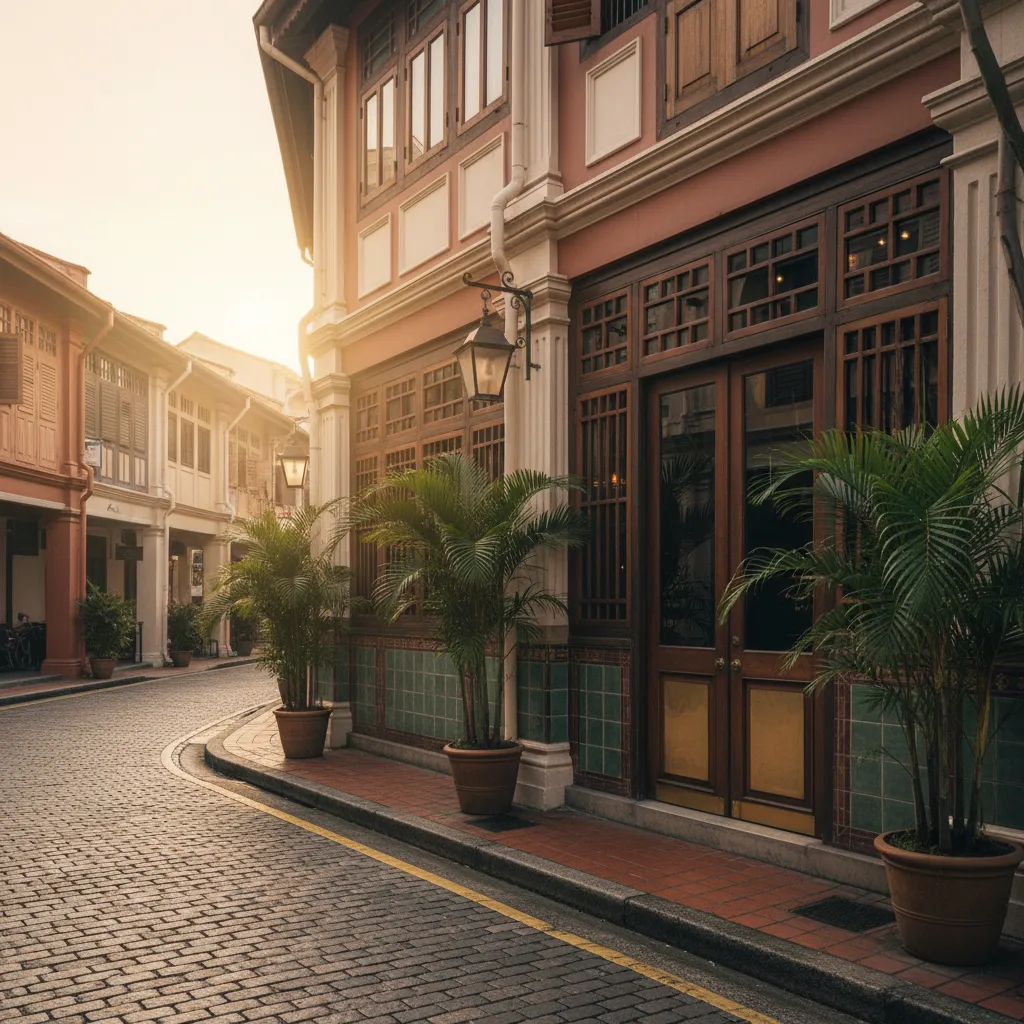
Duxton Hill rises gently above the energetic thoroughfares of Tanjong Pagar, creating an intimate sanctuary defined by towering banyan canopies, cobblestone pavements, and meticulously preserved nineteenth-century shophouse architecture. Seeking out an inviting cozy coffee roastery cafe along these elevated lanes offers immediate sanctuary from the midday tropical humidity, welcoming visitors with the comforting fragrance of freshly cracked specialty beans and toasted hazelnuts drifting past open timber shutters. Early morning light filters through the heritage streetscape, illuminating pastel plaster mouldings and five-foot-way corridors where independent roasters celebrate patient manual brewing craft.
Conserved Shophouse Ridges and Plantation Origins
The distinctive physical topography of Duxton Hill distinguishes it from the surrounding downtown grid. Originally a nutmeg and pepper plantation cultivated by Dr. J. William Montgomerie in the 1830s, the promontory was later developed into ornate residences for prominent merchant families before its architectural fabric was formally gazetted for conservation by the Urban Redevelopment Authority in 1989. Walking along the curving gradient reveals how these deep-plan shophouses naturally foster intimate hospitality, featuring narrow frontages that open into serene central lightwells and secluded rear salons.
Inside these heritage envelopes, specialty coffee roasters prioritize gentle temperature curves that complement Singapore's warm equatorial climate. Rather than pushing heavy, dark-roasted espresso blends that overpower the palate, roasting philosophy along Duxton favors lighter roast development designed to retain the inherent sweetness, sparkling malic acidity, and delicate floral aromatics of high-elevation harvests. Lightly roasted single-origin coffees allow the nuanced terroir of East African and Central American producing regions to shine with pristine clarity.
Single-Origin Roast Nuances and Tasting Transitions
Manual pour-over brewing forms the centerpiece of the local coffee experience, transforming simple morning hydration into an engaging sensory study. Baristas measure whole-bean micro-lots on digital precision scales, grinding each dose immediately prior to saturation so volatile floral compounds remain completely uncompromised. Using precision gooseneck kettles, they initiate extraction with a deliberate blooming phase, allowing trapped carbon dioxide to disperse before completing gentle concentric pours through conical paper filters.
Tasting filter coffee as it gradually cools reveals fascinating flavor transitions that reward unhurried sipping. At peak drinking temperature, delicate washed Ethiopian lots exhibit sparkling bergamot, sweet jasmine, and lively Meyer lemon aromatics that feel bright and invigorating. As ambient air gently lowers the liquid's temperature over fifteen to twenty minutes, the cup's texture rounds out noticeably, unlocking deeper undertones of dried apricot, raw honey, and sweet black tea that linger pleasantly on the finish.
Slow Extraction and Cold Percolation Craft
Chilled extraction options offer equally thoughtful refreshment during hotter afternoon hours. Slow-drip cold brew towers, mounted behind polished timber service counters, guide chilled mineral-balanced water through finely ground coffee over six to eight hours. This low-temperature percolation avoids extracting bitter tannins while concentrating delicate fruit esters and cacao notes, yielding a velvety, naturally sweet infusion served over dense crystal-clear ice.
Milk-based offerings showcase seasonal espresso blends formulated to cut cleanly through velvety microfoam without obscuring origin character. Skilled baristas texture dairy or oat milk into glossy microfoam, pouring balanced flat whites and piccolos that balance rich notes of toasted praline, milk chocolate, and baking spice. Savoring these warm beverages against the cool plaster walls of a conserved shophouse creates a deeply restorative ritual.

Acoustic Calm and Shophouse Interior Textures
The architectural layout of conserved shophouses provides natural acoustic insulation from the bustling city outside. High timber-beamed ceilings, exposed masonry partition walls, and textured limewash surfaces absorb ambient chatter, creating an unhurried atmosphere well suited to reading, journaling, or quiet conversation. Low-volume instrumental jazz and gentle acoustic rhythms complement the rhythmic purr of the grinder, ensuring the cafe environment remains restful throughout the day.
Finding an ideal seat depends on the time of day and the nature of your visit. Deep window banquettes fitted with solid oak benches offer lovely vantages for observing pedestrian life along the hillside, while deeper mezzanine corners provide quiet seclusion for focused work or notebook reflection. When visiting during peak mid-morning or post-lunch hours, guests typically show consideration by keeping personal belongings compact, allowing communal seating benches to welcome fellow neighborhood coffee enthusiasts comfortably.
Connecting With Duxton Plain Park and Craig Road
After finishing your morning brew, stepping outside into Duxton Plain Park connects your coffee experience with one of Singapore's most scenic historic corridors. This slender linear park occupies the former railway corridor that linked Tanjong Pagar to the northern reaches of the island in the early twentieth century. Today, mature angsana trees and sweeping rubber trees form a dense green canopy overhead, offering a peaceful pedestrian walkway where neighborhood residents walk their dogs away from vehicular traffic.
Strolling westward connects back toward Craig Road and Neil Road, where stunning examples of Late-style shophouses feature elaborate European-influenced Corinthian capitals, decorative floral ceramic tiles, and carved timber transom screens. Looking upward, the striking residential towers of Pinnacle@Duxton provide a dramatic contemporary counterpoint to the low-rise historic streetscape, illustrating how modern urban living thrives in close proximity to conserved architectural treasures.
Historic Jinrikisha Station and Transport Heritage
Continuing down Neil Road brings walkers past the historic Jinrikisha Station, constructed in 1903 at the junction of Tanjong Pagar Road to serve as the administrative center for hand-pulled rickshaws. The building's red-brick facade, octagonal cupola, and arched colonnades serve as a poignant reminder of Singapore's rich transport heritage, framing a complete morning walk that effortlessly combines architectural history with contemporary coffee appreciation.
The pedestrian scale of the Tanjong Pagar conservation precinct encourages spontaneous detours down quiet side alleys and paved lanes. Many of the restored rear service paths now host vibrant potted gardens and climbing bougainvillea, creating secluded vantage points for architectural photography. Taking time to notice the ornate fanlight windows and louvered jalousies highlights the enduring craftsmanship that defines this vibrant downtown enclave.
Transit Routes and Thoughtful Morning Planning
Duxton Hill is remarkably easy to reach via multiple downtown transit connections. Tanjong Pagar MRT Station on the East-West Line sits approximately seven minutes away on foot; exiting via Exit A leads past Peck Seah Street and up the sheltered pedestrian pathways of Craig Road. Maxwell MRT Station on the Thomson-East Coast Line offers an even shorter four-minute approach from Exit 2, bringing visitors directly past the Neil Road conservation corridor.
Planning an unhurried visit is simplest during the tranquil morning hours between eight and ten o'clock, before midday lunch crowds begin arriving from surrounding offices. Exploring the district on foot requires no specialized planning, though wearing comfortable walking shoes makes navigating the gentle brick incline and cobblestone alleyways effortless. Using the Karpo APP allows you to bookmark interesting shophouse facades and keep your favorite walking notes neatly organized while wandering through one of Singapore's most captivating historic neighborhoods.
Ask Karpo for more information.
Keep reading
- Geylang Serai Chendol Dessert Crawl: Market Bowls to Pick
 Katong Chendol Dessert Crawl: Peranakan Bowls Worth a Walk
 Chinatown Chendol Dessert Crawl: Hawker Rows and Tea Lanes