 Geylang Serai Chendol Dessert Crawl: Market Bowls to Pick
Coffee & Dessert
Tiong Bahru Chendol Dessert Crawl: Courtyards to Quiet Cafes
Plan a Tiong Bahru chendol dessert crawl from the open-air market courtyard to Art Deco cafes. Compare morning coconut milk, pandan jelly, and shaded walks.
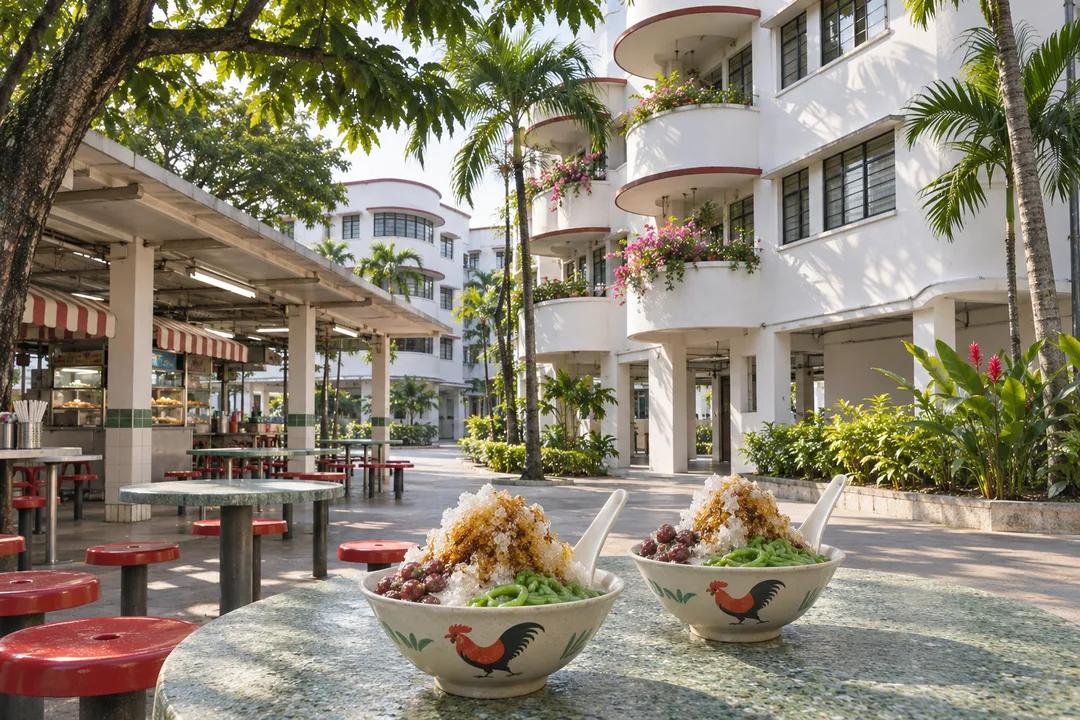
Once the early-morning chwee kueh steamers and floral-stall buckets quiet down around Seng Poh Road, the second-floor courtyard of Tiong Bahru Market enters its sweetest window of the day. Young parents Wei Ming and Clara, pushing a lightweight stroller past the rounded Streamline Moderne balconies of the pre-war estate, always time their Tiong Bahru chendol dessert crawl for this mid-morning calm before office lunch groups arrive from nearby Outram and Bukit Merah. Because the market's central garden courtyard pulls fresh air through all four wings of the hawker deck, eating shaved ice here feels unhurried and bright, with sunlight filtering across terrazzo tables and potted palms. Stepping downstairs afterward into the curved residential lanes around Yong Siak Street, Moh Guan Terrace, and Eng Hoon Street lets you contrast that classic hawker bowl with contemporary cafe reinterpretations that layer pandan, cold-pressed santan, and dark palm treacle into chilled glasses, cakes, and parfaits.
Timing the Upstairs Market Courtyard for Fresh Santan and Easy Seating
Begin your Tiong Bahru loop on the upper cooked-food deck by taking the wide passenger lift at the corner of Seng Poh Road and Lim Liak Street, which opens directly onto a level aisle with plenty of room for strollers or shopping totes. During the late-morning shoulder hour, the tables ringing the central open-air garden courtyard clear out rapidly after the breakfast kopi crowd departs, giving you unobstructed airflow and soft natural light without the midday clatter.
At the cold-dessert counter, watch how the morning batch of coconut milk is ladled over the shaved ice. Because morning hawkers work with freshly pressed santan that has not sat through a long afternoon service, the white cream tastes clean, grassy, and faintly saline against the deep caramel notes of dark palm sugar. When sharing a bowl with a young child or someone who prefers a lighter touch, ask the stallholder for half the usual ladle of syrup and an extra splash of coconut milk so the natural aroma of the pandan rice-flour strands comes forward.
Take a moment to examine the texture of the red beans and sweet corn tucked beneath the ice crown. In Tiong Bahru's morning stalls, whole red azuki beans are simmered until tender yet intact, adding a gentle earthiness that anchors the airy snow cone. Keep your dessert tray on the shaded side of the courtyard umbrella so direct sunlight does not melt the rim before you reach the bottom of the bowl.
Stepping Into Curved Art Deco Lanes for Modern Pandan and Gula Melaka Takes
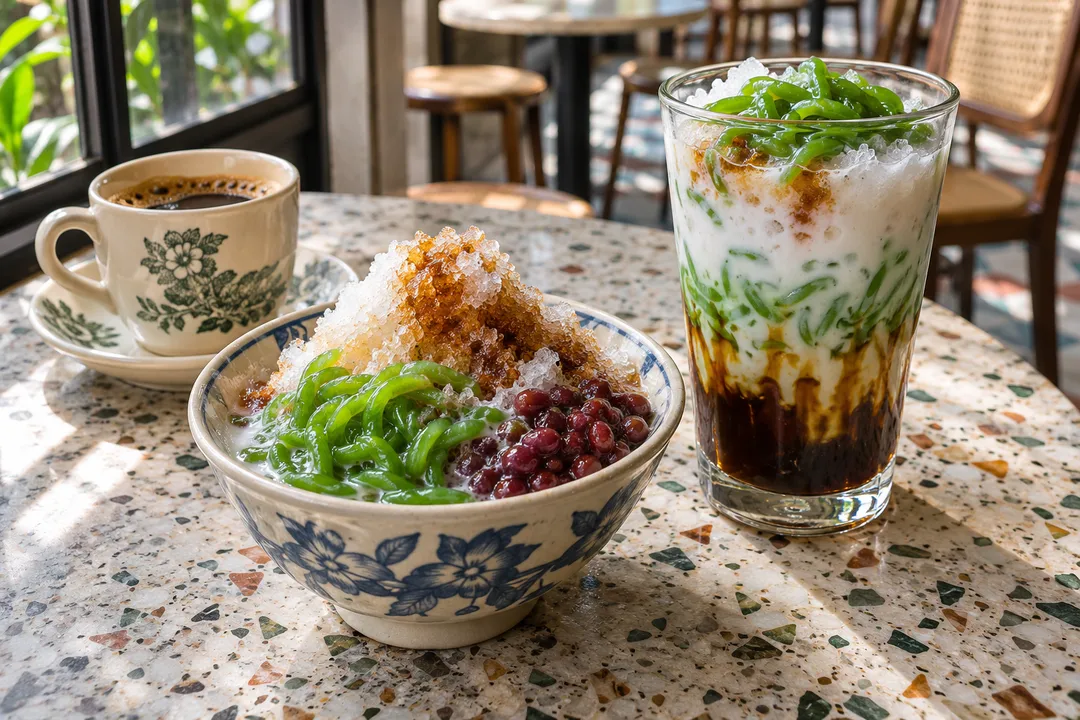
From the market exits, cross Seng Poh Road into the low-rise conservation blocks where ground-floor apartments with rounded corners, porthole windows, and spiral back-lane staircases house independent bakeries and quiet neighborhood cafes. For the second stop of your crawl, look for sit-down counters along Yong Siak Street, Chay Yan Street, and Eng Hoon Street that translate the classic chendol flavor trio—pandan leaf, salted coconut cream, and dark palm nectar—into plated afternoon desserts and iced specialty drinks.
Here you can compare how a traditional shaved-ice bowl stacks up against a chilled glass of iced pandan-coconut latte sweetened with thick gula melaka, a slice of airy pandan chiffon layered with coconut diplomat cream, or a modern coupe that pairs finely shaved coconut ice with house-made red-bean gel and toasted coconut ribbons. Having a second stop that shifts the format from pure shaved ice to a bakery or glass-tumbler presentation keeps the crawl exciting without overloading you on plain crushed ice.
When choosing a cafe table in the conservation estate, skip narrow bar counters with high backless stools if you are walking with family or carrying market bags. Instead, ask for a low corner banquette near the front casement windows or a shaded courtyard bench along the rear service lane, where the breeze between the whitewashed brick walls keeps the outdoor seating comfortable even at midday.
Looping Through Seng Poh Garden, Heritage Murals, and Tiong Bahru Park
Between your market bowl and your cafe stop, weave through the architectural details that make Tiong Bahru one of Singapore's most rewarding walking neighborhoods. Pause at Seng Poh Garden beside the market to admire the bronze Dancing Girl sculpture framed by fragrant frangipani trees, then follow the ground-floor alleyways behind Moh Guan Terrace and Guan Chuan Street to spot wall murals depicting bird-singing corners and heritage provision shops.
Continue east along Eng Hoon Street past the incense-scented courtyard of the Qi Tian Gong Temple before following Tiong Bahru Road toward Tiong Bahru Park. While children head straight for the iconic blue-and-white tilting train structure set in a wide sandpit, adults can relax under the mature angsana trees or stroll the shaded boardwalk along the canal greenway to walk off the richness of coconut cream and palm syrup.
If you want to extend your afternoon toward Kim Pong Park or the riverside paths at Havelock, open the Karpo APP to filter stroller-friendly cafes, traditional dessert stalls, and shaded garden benches across the Tiong Bahru estate. Checking nearby walking links in the app helps you string together wet-market snacks, quiet side-lane sweet stops, and leafy rest points without retracing the same pavement twice.
Practical Notes for Estate Etiquette, Wet-Market Timing, and Takeaway
Remember that the upper floors and five-foot ways of the curved walk-up blocks around Seng Poh Road, Yong Siak Street, and Moh Guan Terrace are quiet residential homes. Keep conversation low when walking beneath open ground-floor bedroom windows or photographing the external spiral staircases along the back lanes, and never block resident stairwell gates while waiting for a cafe table.
If you plan to pick up fresh tropical fruit, pandan leaves, or blocks of palm sugar from the ground-floor wet market to recreate chendol at home, do your produce shopping before heading upstairs for your first bowl. Market stalls begin washing down their tiled bays by late morning, whereas the upper hawker deck and surrounding neighborhood cafes stay lively well into the afternoon.
When moving between the humid open-air market courtyard and air-conditioned ground-floor bakeries along Yong Siak Street, carry a light cotton cardigan or muslin wrap for younger children. Having a small insulated bottle of warm water on hand also helps reset your palate between cold shaved-ice bowls and rich coconut-cream pastries before you stroll out toward the green lawns of Tiong Bahru Park.
For groups splitting both a traditional hawker chendol and a modern cafe dessert, take a quick mental note of how the coconut milk is prepared at each stop. Comparing the warm, freshly squeezed santan of an upstairs market stall against the chilled, dairy-blended coconut cream of a corner bakery turns a simple neighborhood walk into a memorable tasting lesson.
Ask Karpo for more information.
Keep reading
- Geylang Serai Chendol Dessert Crawl: Market Bowls to Pick
 Katong Chendol Dessert Crawl: Peranakan Bowls Worth a Walk
 Chinatown Chendol Dessert Crawl: Hawker Rows and Tea Lanes