 Geylang Serai Chendol Dessert Crawl: Market Bowls to Pick
Coffee & Dessert
Kampong Glam Chendol Dessert Crawl: Sultan Mosque to Lanes
Plan a Kampong Glam chendol dessert crawl from Kandahar Street kopitiams to Bussorah Street lanes. Compare jackfruit toppings, coconut bowls, and dusk walks.
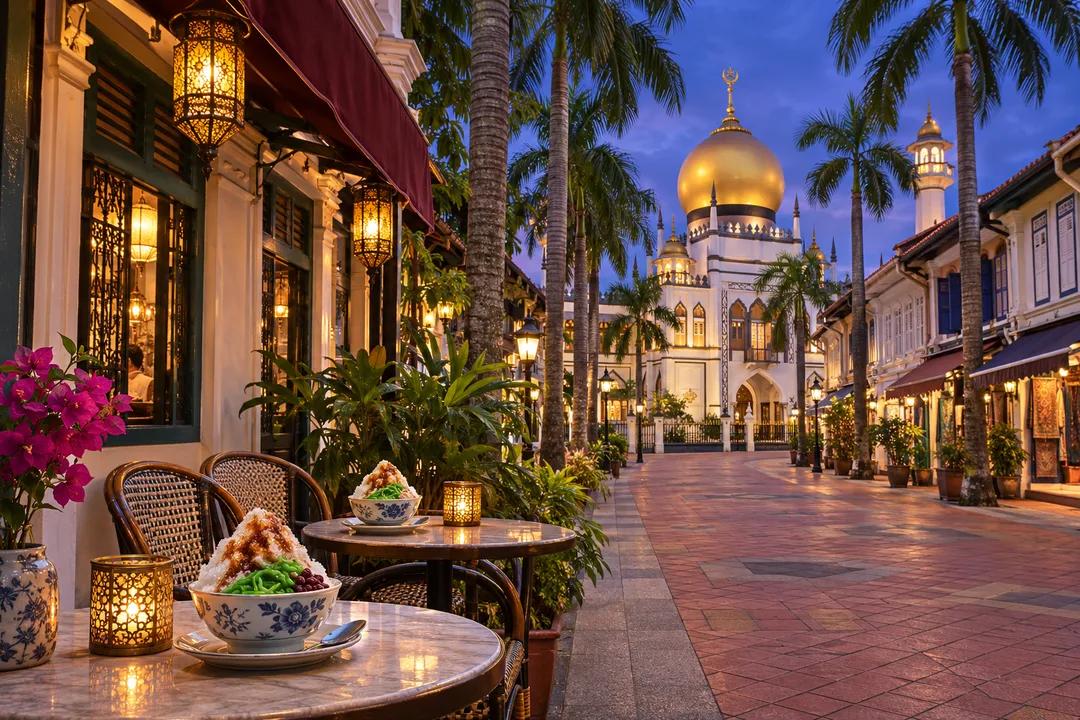
After an afternoon of inspecting hand-loomed batik and glass perfume vials along Arab Street, nothing resets a spice-warmed palate faster than cold coconut cream and dark palm treacle under the shadow of Sultan Mosque. Whenever industrial designer Farhan and his three studio colleagues wrap up a hearty nasi padang meal of beef rendang and sambal belacan around Kandahar Street, they trade their usual cups of pulled teh tarik for a two-stop Kampong Glam chendol dessert crawl across the historic royal quarter. Here in Singapore's Malay-Muslim cultural heartland, traditional corner kopitiams and contemporary halal dessert parlors approach the classic bowl from two distinct angles: old-school counters focus on salted santan, soft red beans, and fragrant strips of ripe jackfruit (nangka), while pedestrianized cafe lanes around Bussorah Street and Baghdad Street serve young-coconut-shell bowls, gula melaka soft-serve floats, and pandan-infused ice blends as the evening lanterns flicker on.
Resetting Your Palate at Corner Kopitiams Around Kandahar and Muscat Streets
Begin your Kampong Glam tasting route at a breezy corner kopitiam along the Kandahar Street or North Bridge Road periphery, where giant aluminum pots of curry and braised meats give way to glass-fronted cold-drink counters. After rich, chili-heavy dishes like ayam lemak or sambal goreng, your tongue craves cold fat rather than sharp citrus. Freshly pressed santan—lightly salted and poured generously over finely shaved ice—acts as a natural cooling balm that lifts lingering spice heat while letting the herbal fragrance of green pandan strands shine through.
When ordering at a traditional Kampong Glam stall, ask whether ripe yellow jackfruit (nangka) or fermented cassava (tapai) is available alongside the standard red beans and sweet corn. Ripe nangka adds a tropical, honeyed perfume and a firm, fibrous bite that pairs wonderfully with dark, caramelized palm sugar, whereas a small spoonful of tapai introduces a subtle, tangy sweetness that cuts through thick coconut milk. Watch the stallholder drizzle the dark gula melaka syrup around the shaved-ice peak so every spoonful catches both cold snow and warm-toned treacle.
Grab a marble-top table near the open sidewalk archways along Muscat Street, where carved stone arches and breezy five-foot ways channel air between the shophouse blocks. Sitting along the outer arcade keeps your bowl away from the indoor kitchen steam and gives you a clear view of the golden onion dome and minarets rising above the tiled roofs.
Exploring Coconut-Husk Bowls and Halal Dessert Cafes on Bussorah Street
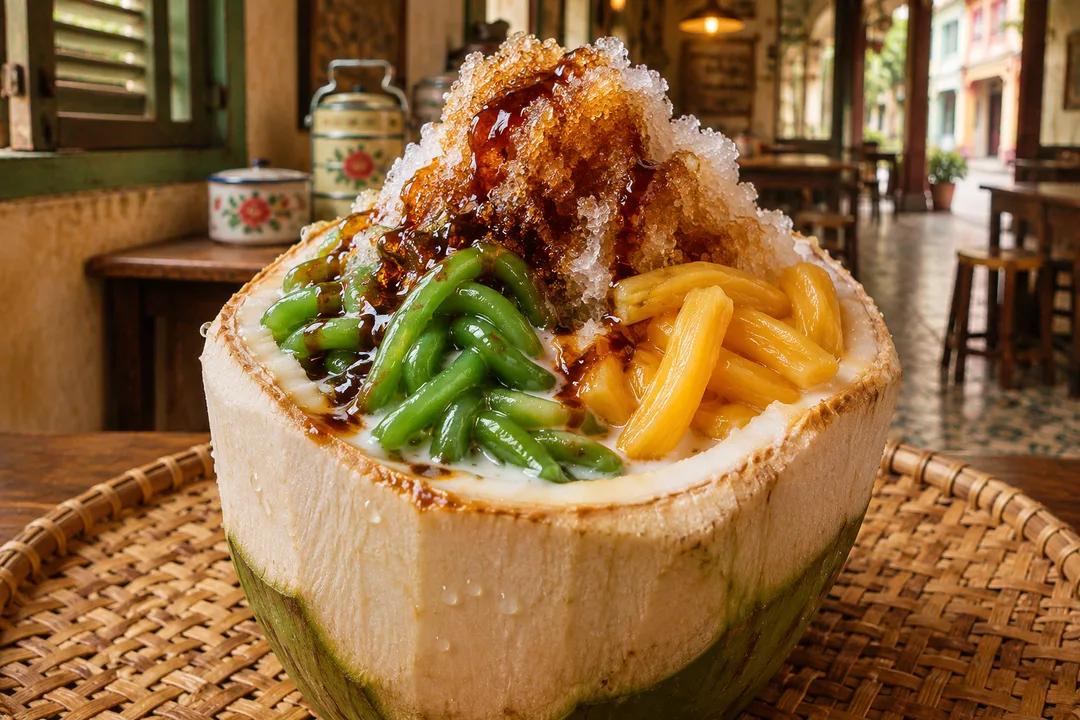
Once your first bowl is finished, stroll five minutes east onto the palm-lined pedestrian promenade of Bussorah Street and the intersecting lanes of Baghdad Street and Haji Lane for your second stop. As afternoon heat softens into early evening, halal-certified dessert cafes set out rattan chairs beneath canvas awnings and serve modernized chendol variations built for unhurried group sharing. One standout neighborhood format packs shaved ice, emerald pandan jelly worms, red beans, and toasted coconut chips directly inside a chilled young coconut husk lined with tender white coconut flesh.
Scraping streaks of young coconut meat off the inner shell with your spoon as you eat the pandan jelly and palm-sugar ice gives every bite a fresh, bouncy texture that standard ceramic bowls cannot match. Other parlors along Baghdad Street and Arab Street top a base of pandan-and-coconut shaved ice with a swirl of dark gula melaka soft serve or a shot of cold-brewed espresso for a bitter-sweet late-afternoon pick-me-up.
Be selective when browsing menus along the busier tourist strips: skip oversized freakshakes piled with store-bought marshmallows, rainbow sprinkles, or artificial green syrup. Stick to kitchens where you can smell real screwpine leaf and caramelized palm sugar at the counter, and split one coconut-husk bowl plus one tall glass of iced chendol bandung or sago gula melaka across your group of four.
Weaving Through Attar Perfumeries, Textile Rows, and Sultan Gate Park
Use the pause between your kopitiam bowl and your Bussorah Street cafe stop to explore the craft trades that have anchored Kampong Glam for generations. Step into the narrow shophouses on Arab Street to test non-alcoholic attar oils—distilled from oud, sandalwood, rose, and jasmine—dabbed onto glass applicator rods, or run your fingers across woven Persian carpets, Turkish mosaic brass lamps, and raw silk bolts stacked from floor to ceiling.
If the narrow mural alleys around Haji Lane and Bali Lane feel crowded with afternoon photographers, carry your conversation eastward past the yellow-washed compound walls of the former royal palace toward Sultan Gate Park. The open lawn, heritage gateposts, and shaded benches around Sultan Gate offer a tranquil pocket where you can finish a takeaway cup of chilled pandan-coconut dessert while watching the twilight sky deepen behind the shophouse gables.
To extend your evening walk toward Beach Road or the dramatic Art Deco courtyard of Parkview Square, open the Karpo APP to filter group-friendly halal dessert parlors, breezy outdoor tables, and heritage walking corridors across Kampong Glam and Bugis. Using the app lets your group compare nearby sweet stops and adjust your route on the spot without wandering into packed dinner queues.
Practical Notes for Evening Timing, Mosque Etiquette, and Group Sharing
Late afternoon through early dusk is the ideal window for a Kampong Glam chendol crawl: the stone pavers along Bussorah Street begin to cool, outdoor cafe tables fall into deep shade beneath the royal palms, and the call to prayer echoes softly across the neighborhood before the evening dinner rush fills the grill restaurants. Avoid the narrowest window right at midday on Fridays when congregational prayers draw large crowds around Muscat Street and North Bridge Road.
When walking past the entrances of Sultan Mosque and the surrounding heritage courtyards between dessert stops, keep dress and demeanor respectful of worshippers, and dispose of empty coconut shells, paper napkins, and plastic spoons in the street-corner bins before entering textile or perfume shops along Arab Street.
If your group is pairing a cold bowl of chendol with traditional Malay snacks from the corner stalls around Kandahar Street, order goreng pisang (crispy battered plantain fritters) or keropok lekor on a separate plate rather than setting hot fried items right against your plastic or porcelain dessert bowl. Keeping the warm savory snacks apart preserves the feathery texture of the shaved ice while giving you a salty, crunchy counterpoint between spoonfuls of sweet palm treacle.
Before wrapping up your evening near Bugis or Beach Road, take a slow final loop beneath the archways of Muscat Street to admire the carved stone calligraphy panels and lantern-lit shophouse shutters. A thoughtfully paced two-stop tasting lets you experience both the everyday kopitiam heritage and the playful modern cafe energy that make Kampong Glam a standout destination for coconut-and-pandan desserts.
Ask Karpo for more information.
Keep reading
- Geylang Serai Chendol Dessert Crawl: Market Bowls to Pick
 Katong Chendol Dessert Crawl: Peranakan Bowls Worth a Walk
 Chinatown Chendol Dessert Crawl: Hawker Rows and Tea Lanes