 Haaland Has Seven Goals and Norway Runs Entirely Through Him
⚽️2026 FIFA WORLD CUP
Sharing Screens for Two Kinds of Knockout Rounds in Belltown
Bars split projectors between World Cup penalty shootouts and UFC Freedom 250 prelims, crowds negotiating volume and claiming their half of the room.
The Geometry of Divided Attention
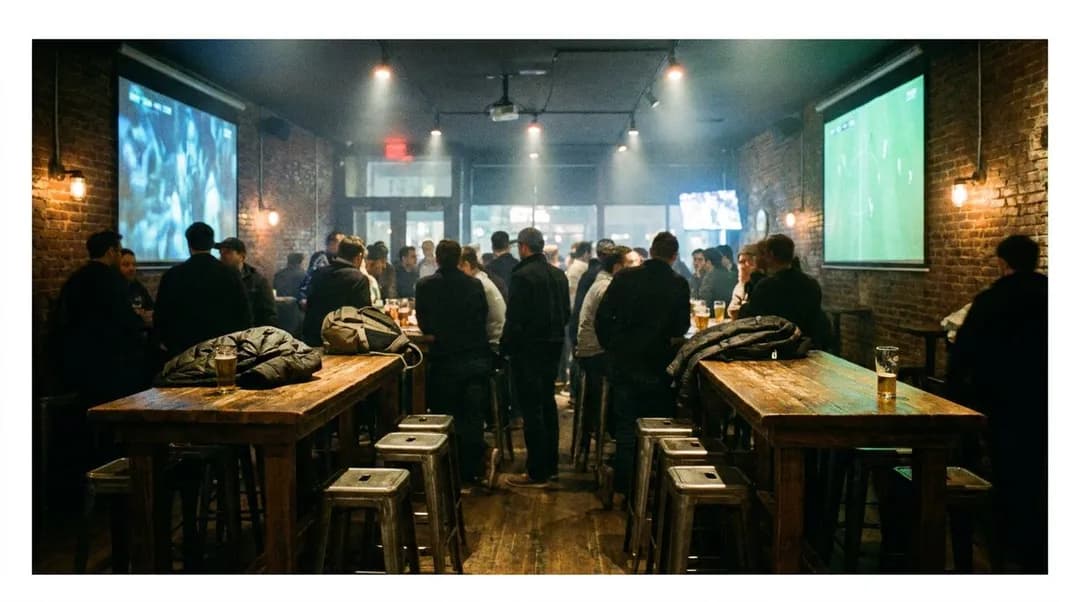
You walk into a Belltown sports bar on a Saturday afternoon in June 2026 and the room has already split itself in half. Left side: jerseys in national colors, scarves draped over chair backs, the low murmur of Portuguese and Spanish mixing with Seattle English. Right side: Tapout shirts, backwards caps, that particular energy of people who've been talking about reach advantage since breakfast. Two projectors throw competing light across opposite walls. The bartender's already learned to read the room by which direction people's shoulders face when they order.
This isn't a one-off. Across Belltown, bars are running dual programming all month, and the crowds have developed an unspoken etiquette about it. You claim your territory early, you keep your celebration volume proportional to your numbers, and you absolutely do not walk through someone else's sight line during a crucial moment. The penalty shootout people and the knockout round people have more in common than either group wants to admit.
The Sound Wars Start Before Kickoff
The negotiation happens the same way every time. Someone from the football side catches the bartender's eye, makes a turning-up gesture. Five minutes later, someone from the MMA side does the same thing. The volume creeps up on both sides until you're sitting in the middle of the room with two competing waves of noise washing over you, and somehow your brain learns to filter. You can track a counterattack and a takedown attempt simultaneously if you've had enough practice and enough beer.
The trick is the bartender's mixing board under the counter. Each projector runs its own audio zone, and the staff adjust the balance every twenty minutes based on what's actually happening in each match. Penalty kicks get a temporary boost. A title fight's final round commands the room. You watch the bartender's hand move to the dial without anyone asking, reading the crowd's lean and posture like a conductor. The best ones never let either side feel cheated, never let the balance tip so far that people start shouting over each other instead of at their screens.
The Regulars Who've Picked Their Corners
By the second week, you recognize faces. There's the guy in the faded Mexico jersey who always takes the same high-top near the left speaker, orders micheladas with extra Tajín, watches every match like he's got money on it even when he doesn't. Three tables over, a group of women in fight-camp hoodies claim their spot two hours early for the prelims, ordering wings and settling in with the comfort of people who know exactly how long a fight card runs.
The groups don't mix much, but they're not hostile. You see nods of recognition when someone's team scores or someone's fighter lands clean. Occasionally someone from one side drifts to the bathroom during a lull and pauses behind the other crowd's section, watches thirty seconds of a sport they don't follow, shrugs, keeps walking. The room smells like fryer oil and spilled lager and too many people in a space designed for fewer, that specific density of bodies that only happens when something worth watching is happening.
When Both Sides Erupt Simultaneously
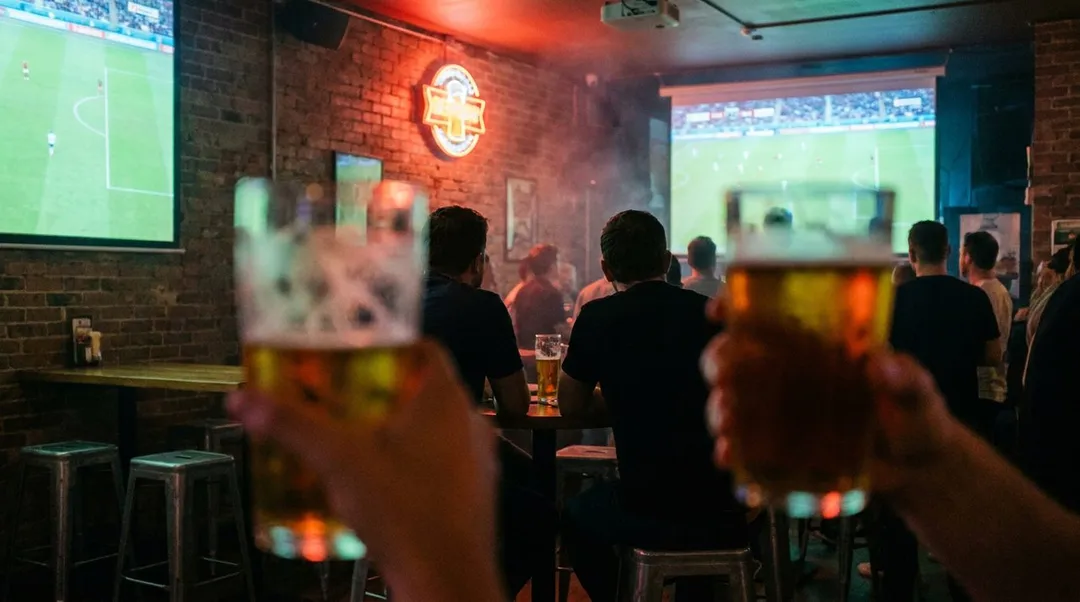
It happens at least once per session. A goal in extra time syncs up with a submission attempt, and suddenly the entire bar is on its feet screaming for completely different reasons. The sound becomes this wall of noise where you can't distinguish words or even which direction the celebration is coming from. For about fifteen seconds, the bar is just pure volume and movement, and then it separates again into its two distinct currents of joy or disappointment.
The bartenders move faster during these moments, anticipating the rush of people ordering in the immediate aftermath. You learn to order two drinks at once if you're planning to stay through both events. The bathroom line becomes a temporary neutral zone where people from both sides wait together, still buzzing with adrenaline, occasionally making awkward small talk about the other sport they're not watching. Someone always asks what happened on the other screen, and someone always tries to explain, and it never quite translates.
The Food That Bridges the Divide
The kitchen doesn't care which screen you're watching. The same baskets of fries and plates of nachos travel to both sides of the room, and the menu skews toward things you can eat with one hand while keeping your eyes up. Loaded tots arrive piled high enough that they're structural engineering problems. The burger situation involves enough napkins that tables start looking like paper storms by the third round or the second half.
You notice the kitchen timing. They push food hard during halftime and between prelim fights, knowing that's when people remember they're hungry. The smell of griddled onions and melting cheese cuts through the beer-and-bodies atmosphere around seven in the evening, when both crowds have been there for hours and need something to soak up the afternoon's drinking. The servers navigate the divided room with practiced efficiency, never blocking a screen, somehow knowing which tables are ready to order without being asked.
The Late Shift Becomes One Crowd
By the time the main card starts or the knockout rounds reach their final matches, something shifts. People who came for one sport have been passively absorbing the other for hours. You hear football fans asking questions about weight classes. You catch MMA regulars checking their phones for match scores. The room doesn't exactly unite, but the wall between the two sides gets more permeable.
Someone changes seats to get a better angle on the screen they weren't originally watching. A group that came for the fights stays for the penalty shootout because they're already invested in the energy of the room. The bartender stops adjusting the volume balance as carefully because both crowds have thinned enough that the sound mix doesn't matter as much. The people who remain are the ones who came to watch sports, plural, who are here for the atmosphere of collective attention as much as for their specific event.
Finding Your Bar in the Split-Screen Summer
Not every Belltown bar is running this dual-screen setup, but the ones that are have figured out their rhythm by now. You want a spot that's big enough to actually divide the room, with decent projectors and a staff that understands crowd management. The places that work are the ones where the bartenders have been there long enough to know when to intervene and when to let the crowds self-regulate.
Show up earlier than you think you need to if you care about getting a specific seat. The serious fans claim their territory when doors open, and they're not moving until the last match ends. Bring cash for tips because the servers are working twice as hard navigating a divided room. And if you're there for one sport but find yourself getting pulled into the other, just go with it. The summer's long, the tournament's got weeks left, and there's something about watching two completely different kinds of competition in the same room that makes both more interesting than they'd be alone.
Practical Notes
Most Belltown sports bars open late morning on match days, with the dual-screen setup running through evening. Getting there an hour before your preferred event starts gives you actual seating choices. Street parking is nearly impossible during peak hours, but you're a short walk from multiple bus lines along Third Avenue. Most places don't take reservations for sports events, so it's first-come seating. Expect crowds to peak during evening matches and main card fights. The bars running this setup are clustered in the blocks between the waterfront and Fifth Avenue, close enough to walk between if your first choice is packed.
Tags: #2026FIFAWorldCup #BelltownSeattle #SportsBarCulture #WorldCupInSeattle #UFCViewing #SeattleNightlife #DualScreenSports #BelltownBars #SoccerAndMMA #SeattleFoodScene #WorldCupAtmosphere #PNWSportsBars #SeattleSummerVibes #MultiSportViewing #BelltownEats
Sources consulted: fifa.com · espn.com · timeout.com
Please drink responsibly. Must be of legal drinking age.
All trademarks are the property of their respective owners.
Ask Karpo for more information.
Keep reading
- Haaland Has Seven Goals and Norway Runs Entirely Through Him
 World Cup Trophy Ceremony Timing Medals and Postmatch Celebrations
 Olise and France's Attack: The Semifinal Tactical Question