 Haaland Has Seven Goals and Norway Runs Entirely Through Him
⚽️2026 FIFA WORLD CUP
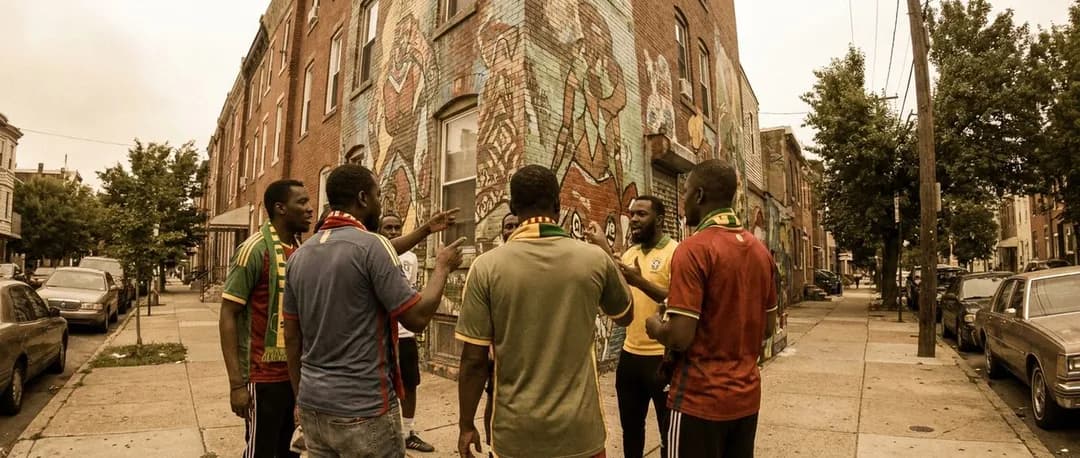
Senegal Fans Find Their Match Day Rhythm in Philadelphia
Philadelphia's West African community, anchored around the Kingsessing and Cobbs Creek corridors of West Philly, has quietly built one of the most connected Senegal supporter networks in North America, and the World Cup summer is turning those neighborhood ties into a visible match day culture.
The Kingsessing corridor fills with green, yellow, and red hours before kickoff. Senegalese flags drape from rowhouse porches along Woodland Avenue, and storefront windows display hand-painted Lions of Teranga banners that have appeared overnight. Philadelphia's West African community, concentrated in the neighborhoods stretching from Cobbs Creek to Kingsessing, has spent years building social networks that remain largely invisible to outsiders—until World Cup season arrives. Then the drumming starts at dawn, the cafes overflow with supporters in national team jerseys, and a match day culture rooted in deep neighborhood ties becomes impossible to ignore.
Woodland Avenue transforms into supporter central
The stretch of Woodland Avenue between 60th and 67th Streets becomes the beating heart of Senegal match day culture. Café Dakar, tucked into a converted corner store at 63rd Street, opens its doors at 6 a.m. when matches air during European tournament windows. Owner Mamadou Diop installed three flat-screens last year, positioning them so patrons spilling onto the sidewalk can still catch every touch. The café fills two hours before kickoff with supporters ordering café Touba—the clove-spiced Senegalese coffee that arrives in small glasses—and debating lineup choices in Wolof.
Down the block, Teranga Market expands its seating area on match days, pushing tables onto the sidewalk and setting up a projection screen visible from across the street. The market's owner sources bissap concentrate and tamarind juice specifically for tournament season, knowing the demand will triple. By 8 a.m. on a match morning, the sidewalk resembles a street festival, with supporters greeting neighbors, comparing jersey collections, and coordinating post-match celebrations that will stretch into evening.
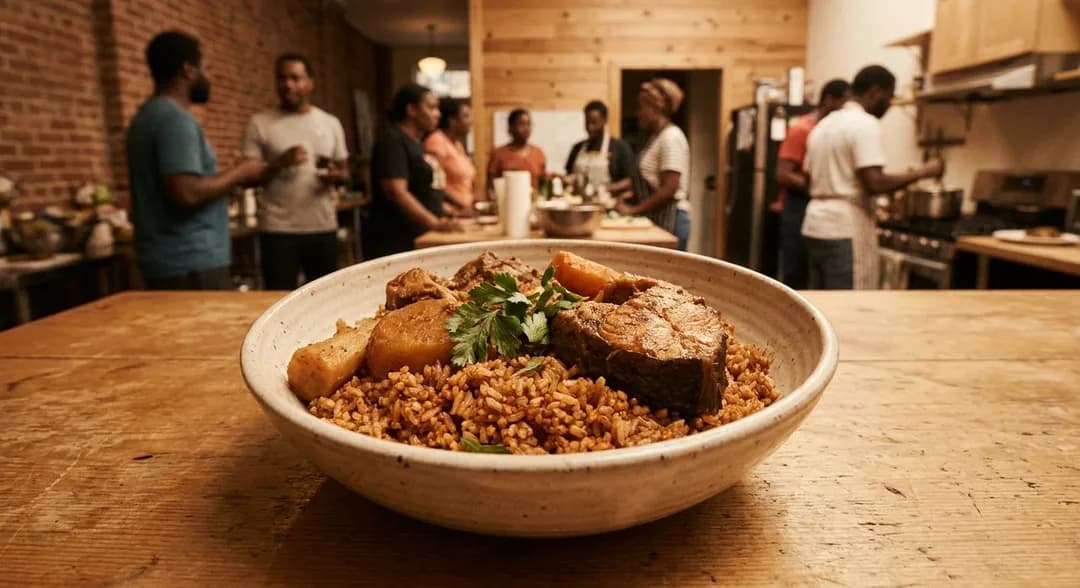
Rowhouse porches become spontaneous viewing galleries
West Philadelphia's residential blocks develop their own match day ecosystem. Families on Cedarhurst Street and Kingsessing Avenue set up viewing stations on covered porches, angling televisions toward the street and arranging folding chairs in tight semicircles. The practice started during the 2018 World Cup, when one family invited neighbors to watch Senegal's opening match, and has evolved into an informal network of porch viewing parties that now spans multiple blocks.
These porch gatherings operate on neighborhood trust and long-standing relationships. Supporters move between houses throughout a match, checking different viewing angles and reuniting with friends who live three blocks over. Children wear miniature national team kits and kick balls in the narrow spaces between parked cars, mimicking moves they've just watched on screen. The atmosphere shifts with each goal or near-miss—collective groans echo down the block, and successful attacks trigger drumming that starts on one porch and spreads to others within seconds.
Attaya tea circles anchor pre-match ritual
The Senegalese tea ceremony becomes a pre-match anchor point across West Philadelphia's supporter community. Small groups gather in backyards and on stoops hours before kickoff, preparing attaya—the sweet, strong green tea served in three progressively sweeter rounds. The ritual, which takes 90 minutes to complete properly, creates a natural countdown to match time. Supporters sit on plastic chairs arranged in circles, passing small glasses and discussing everything from player form to family news in Dakar.
These tea circles represent something deeper than pre-game socializing. They're spaces where recent immigrants connect with established community members, where match predictions mix with job leads and housing advice, where the rhythms of West Philadelphia life intersect with sustained connections to Senegal. The tea ceremony's deliberate pace—waiting for water to boil on portable burners, carefully measuring sugar, serving in strict order—provides structure to match day anticipation while reinforcing social bonds that extend far beyond football.
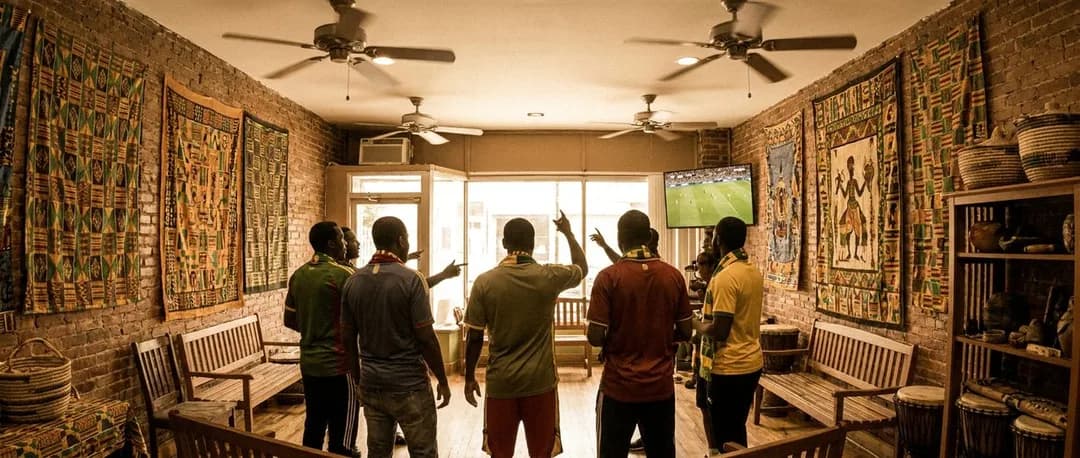
Food vendors read the match schedule like a business calendar
West African food vendors throughout Kingsessing adjust their operations around Senegal's fixture list. Mobile thieboudienne sellers—offering Senegal's national dish of fish, rice, and vegetables—position trucks along Woodland Avenue on match mornings, knowing the post-match crowd will seek comfort food regardless of the result. Fatou's Kitchen, a takeout spot on 60th Street, prepares triple batches of yassa poulet and mafe on match days, with owner Fatou Sow arriving at 4 a.m. to start cooking.
The food economy around match days reveals how deeply football is woven into community commerce. Bakeries along the corridor stock extra batches of tapalapa bread, anticipating sandwich orders from supporters who'll spend entire afternoons at viewing venues. Street vendors selling grilled meat and plantains set up earlier than usual, claiming prime spots near the busiest cafes. The smell of grilling lamb and onions mingles with incense and café Touba, creating a sensory landscape that marks match days as distinct from ordinary weekend mornings.
Post-match processions follow victory patterns established over years
When Senegal wins, the celebration follows routes and rhythms refined over multiple tournament cycles. Car processions form spontaneously on Woodland Avenue, with drivers honking in patterns that echo traditional Senegalese drumming. Supporters lean from windows waving flags, and the procession typically loops through Kingsessing, down to Cobbs Creek Parkway, and back up through the neighborhood's commercial corridor. Police officers familiar with the pattern position themselves at key intersections, managing traffic while allowing the celebration to flow.
These processions draw participants beyond the core West African community. Neighbors from surrounding blocks join the sidewalk celebrations, and local businesses stay open late, understanding the economic opportunity. The post-match energy can sustain for hours, with drumming circles forming in parking lots and supporters gathering outside cafes to replay key moments. Even defeats generate gatherings, though the mood shifts to analysis and forward-looking discussion, with supporters already calculating paths through upcoming fixtures.
Practical notes for match day observers
• Transit access: SEPTA's Route 11 trolley runs along Woodland Avenue directly through the supporter corridor; the 34 bus provides north-south connections from University City. Street parking becomes scarce two hours before kickoff.
• Timing: Café viewing venues open 90-120 minutes before kickoff for major matches; arrive early for seating. Post-match celebrations peak 30-45 minutes after final whistle and can continue for three hours after victories.
• Weather considerations: Summer matches mean outdoor viewing setups dominate; afternoon heat drives larger crowds to indoor venues with air conditioning. Evening matches in spring and fall generate the largest street-level gatherings.
• Community respect: These are neighborhood spaces built on long-standing relationships; visitors observing match day culture should recognize they're entering established community territory, not tourist attractions.
Tags: #SenegalSoccer #WestPhiladelphia #Kingsessing #WorldCupCulture #PhillySoccer #WestAfricanPhilly #LionsOfTeranga #MatchDayPhilly #PhillyNeighborhoods #SenegaleseCommunity #WoodlandAvenue #PhillyCulture #SoccerCulture #CommunityGathering
Sources consulted: fifa.com (https://www.fifa.com) · visitphilly.com (https://www.visitphilly.com) · timeout.com/philadelphia (https://www.timeout.com/philadelphia)
All trademarks are the property of their respective owners.
Ask Karpo first
Wondering where Philadelphia's Senegal fan community is gathering for World Cup viewing this summer?
Ask Karpo for the latest on West Philly viewing spots, Senegalese community event updates, and the neighborhood stops worth knowing before match day.
Ask Karpo for more information.
Keep reading
- Haaland Has Seven Goals and Norway Runs Entirely Through Him
 World Cup Trophy Ceremony Timing Medals and Postmatch Celebrations
 Olise and France's Attack: The Semifinal Tactical Question