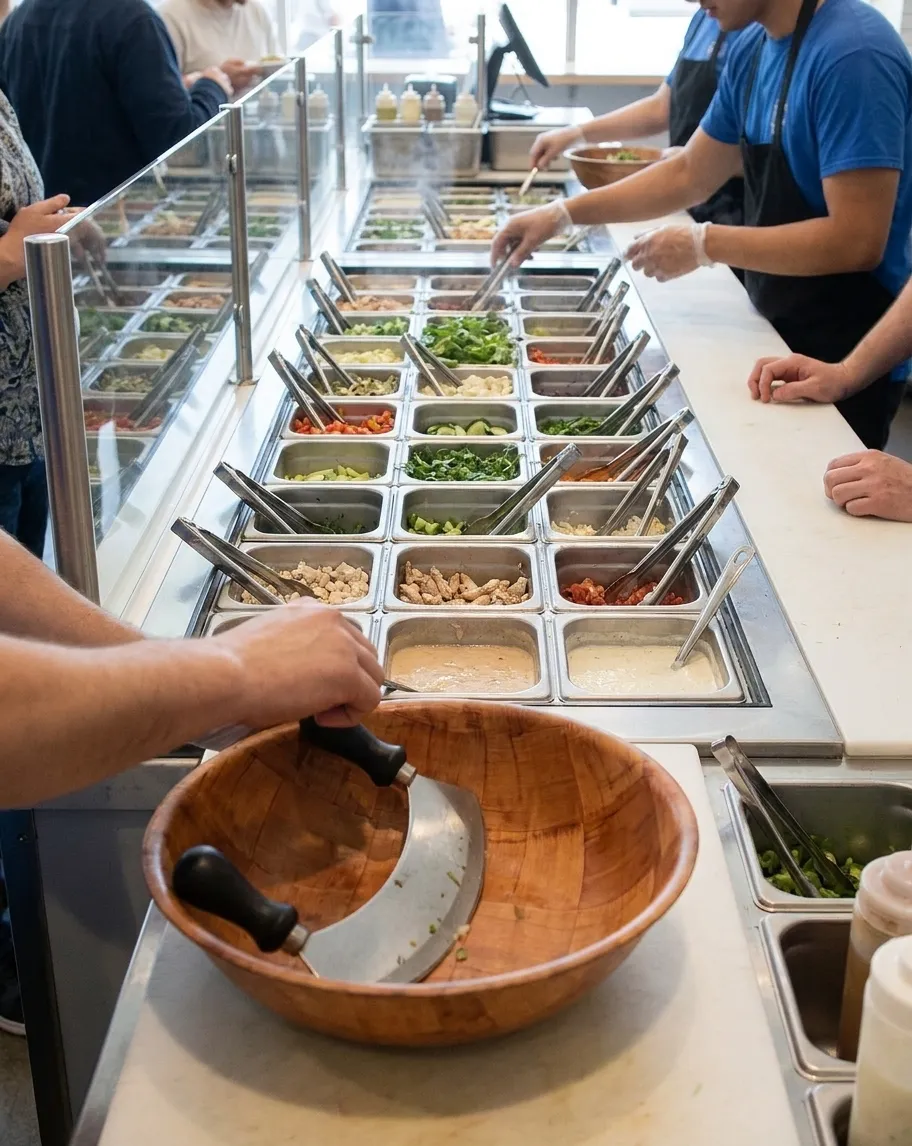
The chopped salad is a New York invention in the same way the slice is, and it is subject to the same enormous quality range. At one end of the scale is a counter where someone builds your bowl from bins filled that morning and chops it in front of you with a mezzaluna; at the other is a place that assembles pre-portioned components into a container and calls it the same thing. Both cost roughly fifteen dollars. Telling them apart takes about thirty seconds from the queue, and it is worth learning, because the salad counter is the single most-used lunch format in office New York and most people never think about it at all.
Karpo can find salad counters near you that chop to order rather than assemble, and tell you which ones have a queue right now.
What separates a good counter from a bad one
Three signals, visible before you order. Whether there is a cutting board and a mezzaluna in use, because a genuine chopped salad is chopped after assembly and it changes the texture completely. Whether the bins are being topped up from below or refilled from fresh containers, since a counter that runs down its bins and refills them is turning over stock rather than holding it. And whether the greens look cut rather than torn and browning at the edges.
The fourth signal is the queue itself. A salad counter with a line at half past twelve is turning over enough stock that everything in the bins was prepared that morning. An empty one at the same hour is not, and the ingredients have been sitting under refrigeration since eleven.
The pricing tiers, and where the money goes
Almost every counter uses the same structure: a base price for greens and a set number of standard toppings, then premium add-ons priced individually. The premiums are almost always the proteins, the cheeses, avocado and anything with nuts, and they are where a twelve-dollar salad becomes a nineteen-dollar one.
The efficient order is to take the base with all the included toppings you actually want, add exactly one premium protein, and stop. Two premiums plus avocado is where the price crosses the point at which a hot lunch would have been better value. Signature or house salads are usually priced at or slightly below the equivalent build-your-own, so if one of them is close to what you would have chosen, take it.
The 12:15 problem
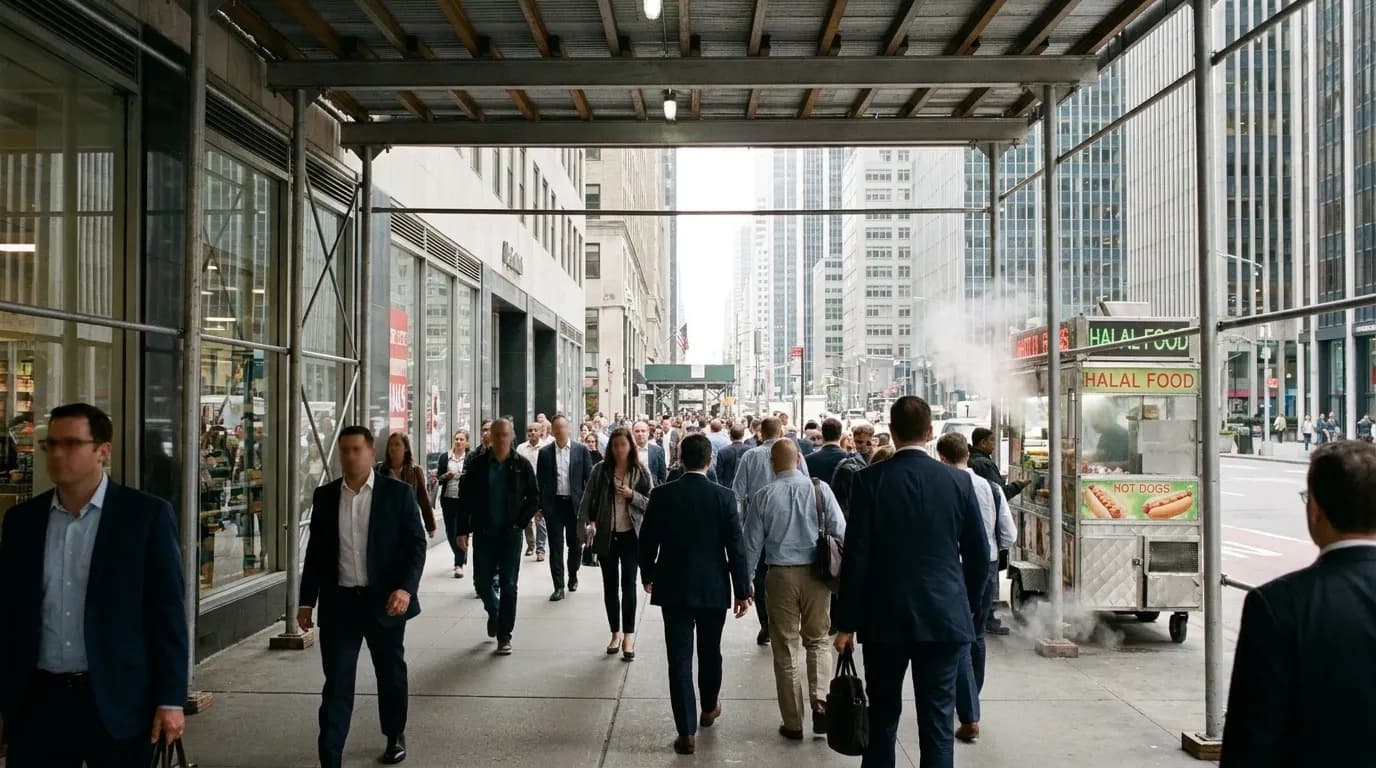
Office New York eats between about twelve and one, and the crush concentrates around a quarter past twelve. At a busy counter that is a fifteen-to-twenty-minute queue and a production line running at maximum, which is when quality control slips — less careful chopping, over-dressing, and a bowl thrown together at speed.
Going at 11:45 or after 1:15 is a materially different experience for the same money. Earlier is better than later, because the bins are freshest at opening and most depleted by the end of service. If your schedule allows only the peak, ordering ahead is the workaround.
Portion consistency is the other thing worth watching. At a counter that scoops by hand rather than weighing, the amount of protein you get varies considerably by who is on shift, and the difference across a week is substantial. Counters that use a scale or a portion scoop are more predictable, which matters if you are eating there regularly and relying on it.
Order-ahead versus standing in line
Most counters now run app or web ordering with a pickup shelf, and it genuinely skips the queue. The trade-off is real though: a salad built for a pickup shelf is assembled to a ticket rather than to a conversation, and the small adjustments you would make in person — light on the dressing, extra of one thing, no onion — either get lost or are not offered.
The pattern that works is to order ahead when you are pressed and to queue when you actually want a good salad. If you order ahead regularly, use the notes field, because at most counters somebody does read it.
Dressing is where most salads are ruined
The single most common failure in a New York chopped salad is over-dressing, and it happens because dressing is ladled by volume at speed. A bowl that is swimming at the bottom was over-dressed before it was chopped, and the chopping distributes it everywhere.
Ask for it light, or ask for it on the side and add it yourself. Every counter will do either without comment. This one request improves the median New York salad more than any change of venue, and it also means a salad survives an hour in a bag if you are taking it back to a desk.
What to actually order
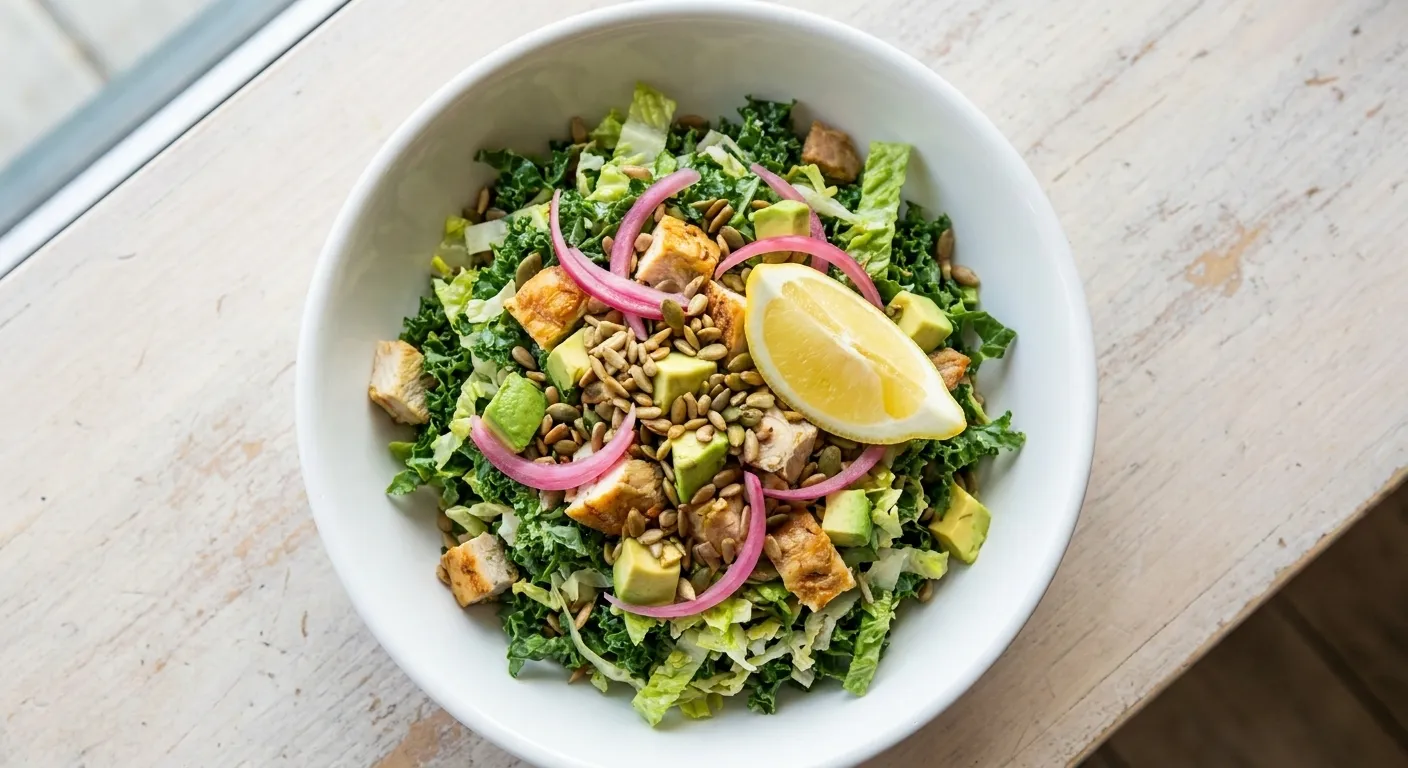
Order for structure rather than for variety. A good chopped salad needs one crunchy element, one soft or fatty element, one acidic element and one substantial protein, and beyond four or five components the whole thing turns into a uniform mass. The bowls with eleven toppings photograph well and eat badly.
And pay attention to what the counter is obviously good at. A place with an enormous, well-tended bin of roast chicken is telling you what to order. A place with a sad tray of grilled chicken and a beautiful spread of roasted vegetables is telling you something else. Ordering what the counter is proud of is the simplest rule in eating and it works particularly well here.
One closing point on ordering: build the same salad every time at a counter you use regularly. It takes three or four visits before the person building it knows what you want, and from then on it is faster, more accurate and usually more generous. In a category where the difference between counters is small and the difference between a good build and a bad one is large, that consistency is worth more than variety.
Tags: #NYCSalad #SaladNearMe #ChoppedSalad #NYCLunch #NewYorkFood #DeskLunch #Midtown #NYCEats #LunchBreak #HealthyEating #FoodGuide #Manhattan #OfficeLunch #CityLiving
Please drink responsibly. Must be of legal drinking age.
All trademarks are the property of their respective owners.
Ask Karpo first
Want to know which salad counters near you chop to order, which have a queue right now, and what the base price actually covers? Ask Karpo before you join the line.