 Midwood Rugelach Bakery Crawl: Avenue J to Avenue M
Restaurants
Upper East Side Rugelach Bakery Crawl: Lexington to Park
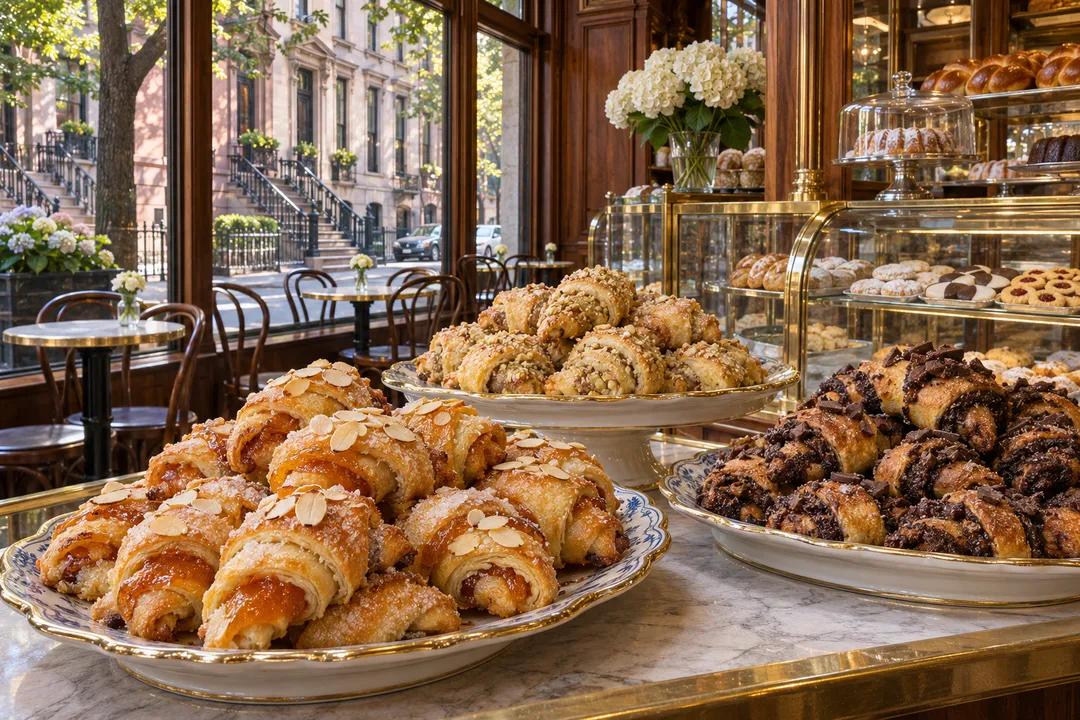
Take an Upper East Side rugelach bakery crawl from Lexington and First Avenue bake shops to Central Park benches. Compare marzipan, cocoa, and fruit horns.
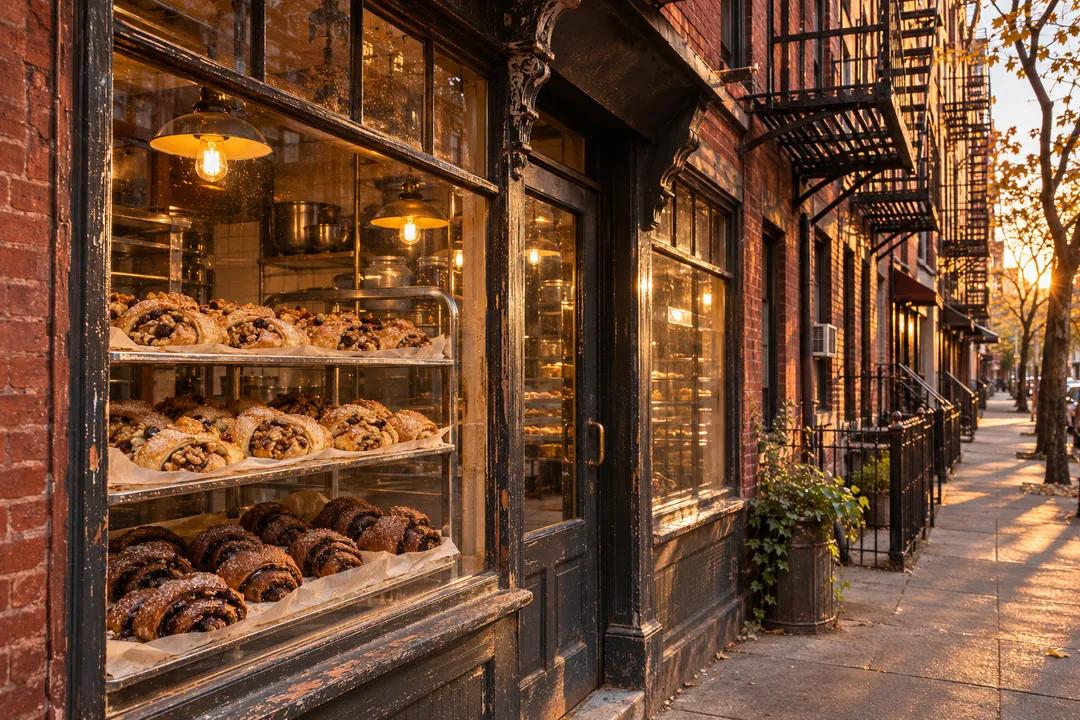
After two hours looking at drawings in the galleries along Fifth Avenue, my mother and I always reach the same point of mid-afternoon museum fatigue: our feet ache from marble floors, and we want a proper pastry walk before heading home. An Upper East Side rugelach bakery crawl turns the avenues east of Central Park into an effortless recovery route. By zig-zagging from Madison and Lexington Avenues over to the old Yorkville tenement blocks along Second and First Avenues, you can trace two distinct chapters of East Side baking in a single hour. One stop connects you to the neighborhood's Central European café heritage—where butter-rich, crescent-shaped horns are dusted with powdered vanilla sugar and filled with ground hazelnuts or apricot preserve—while the next counter pulls steaming trays of citrus-glazed, dark-chocolate spirals straight from a deck oven.
Yorkville Café Heritage Meets Modern Israeli Ovens on East Side Avenues
To understand why the Upper East Side rewards a side-by-side rugelach tasting, it helps to look at the neighborhood's geography between Lexington and First Avenues. For generations, Yorkville was famous for German, Hungarian, and Viennese konditorei counters where walnut Kipferl and sour-cream crescents were served on porcelain plates alongside afternoon coffee with whipped cream. That Central European DNA still lingers in the neighborhood's classic neighborhood bake shops, where the rugelach dough leans buttery, delicately salted, and crisp at the pointed horns rather than sticky or drenched in syrup.
Walk a few blocks south or east toward First and Second Avenues, however, and you step into sleek boutique bakeries founded by pastry chefs trained in Jerusalem and Tel Aviv. Here, the rugelach dough is yeasted, laminated with cold butter, and rolled around generous slabs of dark Belgian chocolate, almond marzipan, or cinnamon-hazelnut paste before getting brushed with orange-blossom simple syrup. Putting both styles into your tote bag gives you a masterclass in how Vienna and Tel Aviv interpret the exact same crescent shape.
Plotting a Cross-Avenue Walk From Lexington to First Avenue
The cleanest way to organize an Upper East Side crawl is to start near the Lexington Avenue subway line in the Upper Seventies or Eighties and work your way east toward Yorkville before looping back toward Central Park. Starting in the early afternoon—right after the lunch rush clears out of the Madison and Lexington cafés—means you avoid the morning school-drop-off line and catch the second afternoon bake coming out of the ovens. At your first stop near Lexington or Third Avenue, order a quarter-pound of the classic cream-cheese dough rugelach in raspberry-walnut and apricot, asking the clerk to fold them into a crisp wax-paper sleeve.
From there, stroll east down a quiet tree-lined cross street past brick carriage houses, wrought-iron gates, and planted townhouse gardens toward Second and First Avenues. The commercial pace relaxes noticeably once you pass Third Avenue, making it easy to linger at the glass counter and ask the baker which sheet pan is still warm on the speed rack. Pick up two or three oversized laminated chocolate, cinnamon-pecan, and marzipan spirals here, then grab a paper cup of Earl Grey tea or a dry cappuccino for the unhurried walk west toward Fifth Avenue.
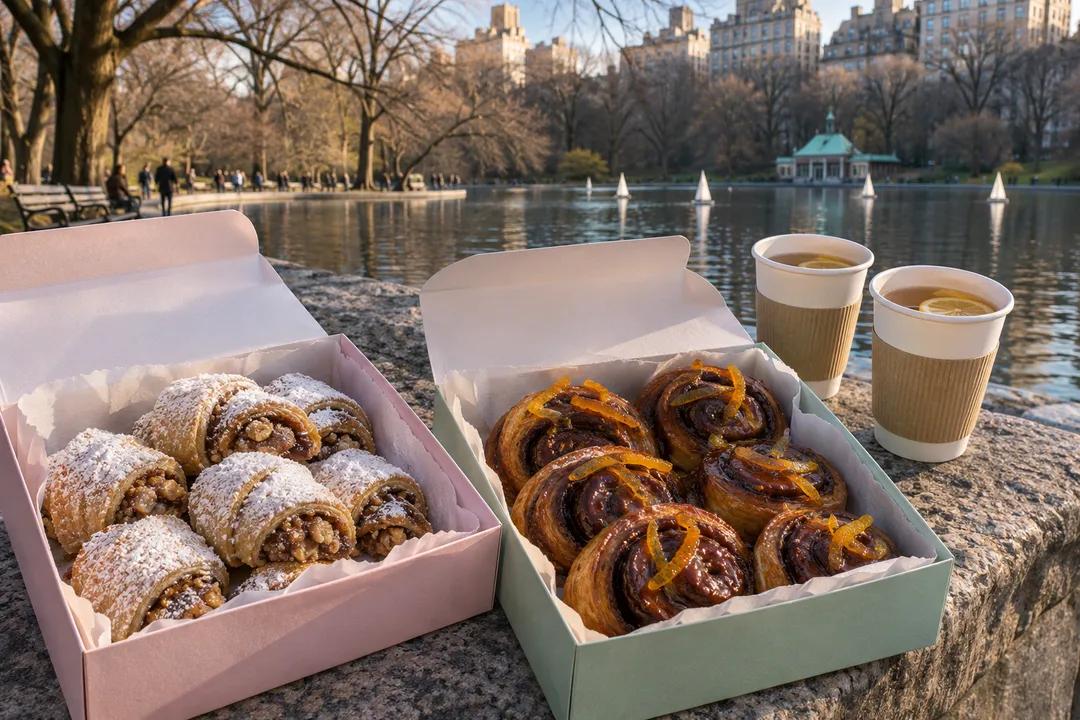
Tasting Notes: Almond Marzipan, Espresso Cocoa, and Apricot Jam
Upper East Side pastry counters excel at refined, aromatic fillings that pair naturally with afternoon tea. While you should certainly include each shop's signature bittersweet chocolate rugelach as your baseline, keep an eye out for almond marzipan and hazelnut-cinnamon variations. When real almond paste is rolled inside thin laminated dough, the edges toast to a deep golden brown with a subtle bitter-almond perfume that keeps the pastry from tasting overly sugary.
Another standout across the East Side is the espresso-cocoa or mocha swirl, where finely ground dark roast coffee beans are blended directly into the melted chocolate filling to sharpen the finish. For fruit lovers, compare a powdered-sugar Viennese apricot horn—where the jam is cooked down with a splash of lemon juice until taut and glossy—against a jammy raspberry-currant roll studded with chopped pecans. Eating the lighter fruit and marzipan pieces first ensures that the intense dark cocoa and espresso notes do not coat your palate too early.
Where to Unpack Your Bakery Boxes Along Central Park's East Edge
Few neighborhoods offer more civilized outdoor seating for a bakery crawl than the blocks bordering Fifth Avenue. Once your boxes are tied with baker's twine, walk west past Madison Avenue and enter Central Park through one of the East Seventies or East Eighties pedestrian gates. The shaded benches circling Conservatory Water—where model sailboats tack across the pond in fair weather and bronze storybook statues draw neighborhood families—provide a calm, scenic spot to untie your ribbons and lay out a comparative tasting on wax paper.
If you prefer a quieter nook away from stroller traffic, climb the low stone steps toward the cedar-shaded benches near the Metropolitan Museum's northern perimeter or sit along the low limestone perimeter wall facing Fifth Avenue. On brisk or rainy afternoons when park benches feel too chilly, several East Side bakeries and nearby espresso bars keep small marble café tables along the window where you can linger over a ceramic mug of black coffee or herbal tea. You can also open the Karpo APP while walking down Lexington or Madison Avenue to check nearby pastry shops, quiet park entrances, and coffee counters that fit your afternoon museum schedule.
Box Presentation and Storing Pastries for Dinner Hosts
Upper East Side bake shops take pride in presentation, often packing even a modest half-pound order into sturdy pastel or kraft boxes lined with pleated parchment cups and tied with cotton ribbon. If you are assembling an assortment to bring to an uptown dinner party or gallery opening, ask the clerk to place the syrup-glazed chocolate and cinnamon spirals inside individual paper flute cups so they do not smudge the delicate powdered-sugar coating on the Viennese walnut and apricot horns.
When storing leftovers at home, keep the powdered-sugar and fruit-filled cream-cheese rugelach in a cool pantry tin separated by sheets of wax paper, where they will stay tender and fragrant for up to three days. The yeasted, butter-laminated chocolate and marzipan spirals from First and Second Avenue counters are at their peak on the afternoon they are baked, though five minutes in a gentle oven will revive their flaky layers and bring the melted chocolate center right back to life before you pour after-dinner espresso.
Ask Karpo for more information.
Keep reading
- Midwood Rugelach Bakery Crawl: Avenue J to Avenue M
 Upper West Side Rugelach Bakery Crawl: Sunday Pastry Boxes
 Lower East Side Rugelach Bakery Crawl: Grand to Essex