 Upper East Side Rugelach Bakery Crawl: Lexington to Park
Restaurants
Upper West Side Rugelach Bakery Crawl: Sunday Pastry Boxes
Walk Broadway and Amsterdam Avenue on the Upper West Side for cream-cheese and sour-cream rugelach. Compare sticky chocolate spirals with walnut-raisin bites.
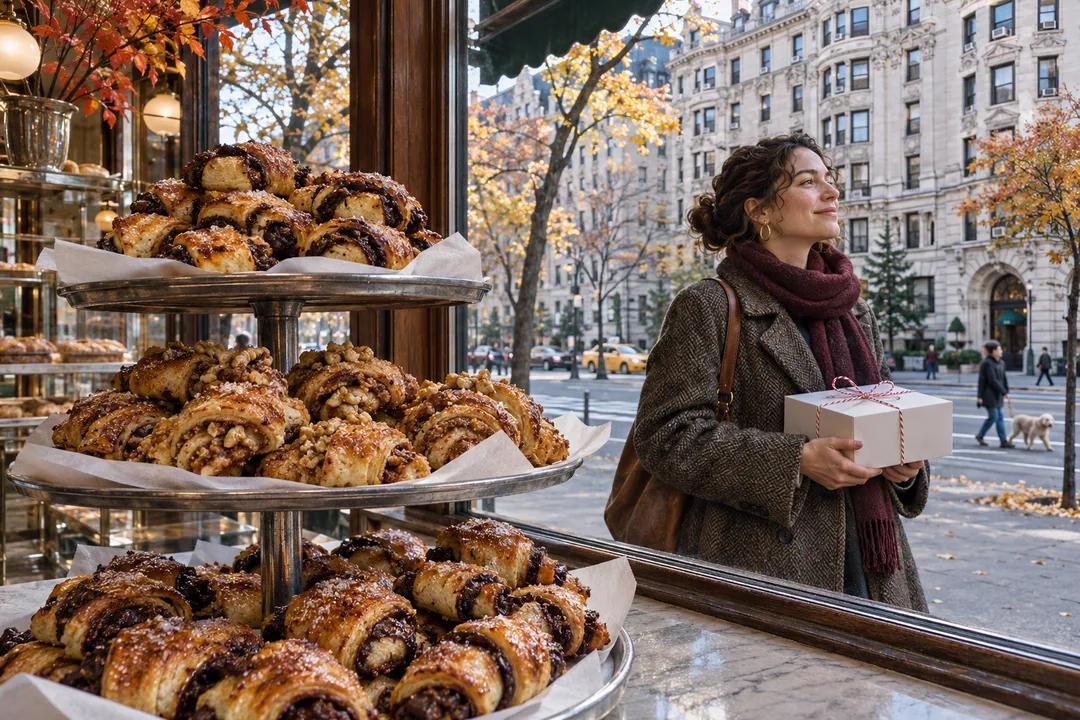
On a brisk Sunday morning along Broadway, my sister and her husband met me outside the subway kiosk with a canvas tote and a simple mission: assemble a two-tier dessert platter for an afternoon family gathering without settling for a single bakery's house style. Planning an Upper West Side rugelach bakery crawl turns a routine errand into a neighborhood tasting walk where dough chemistry takes center stage. Within a fifteen-minute stroll between Broadway and Amsterdam Avenue, you can compare dense, fudgy spirals rolled in tangy cream-cheese pastry against lighter, blistered crescents made from yeasted sour-cream dough. Instead of buying two pounds from the first glass case with a line out the door, splitting your order into quarter-pound wax-paper bags lets you taste how each baker balances butterfat, dark cocoa, cinnamon sugar, and tart fruit preserves while the pastries are still slightly warm from the morning oven pull.
Cream-Cheese Tang Versus Yeasted Sour-Cream Flake on Broadway
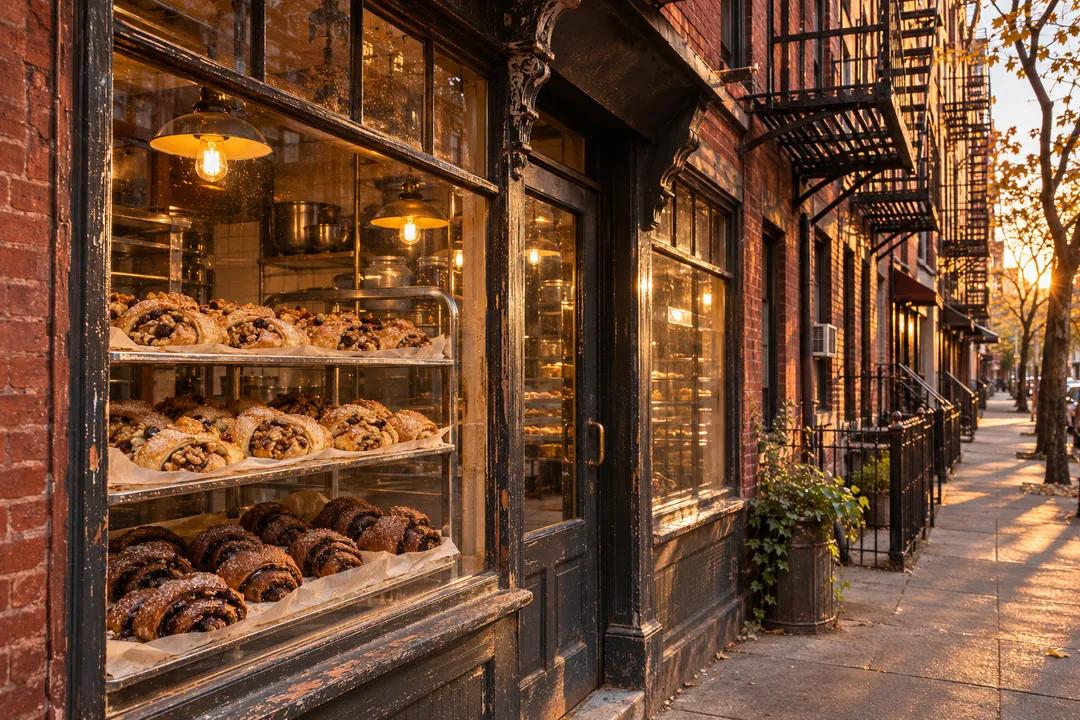
The foundational decision on any Upper West Side pastry walk is understanding the two competing dough traditions that anchor the neighborhood's appetizing counters and old-line bake shops. American-style rugelach rely on an equal-parts marriage of unsalted butter and block cream cheese worked into the flour without yeast. When baked on heavy sheet pans, that dairy-rich dough puffs into tender, almost shortbread-like layers with a subtle lactic tang that cuts right through a heavy schmear of bittersweet chocolate or cinnamon-laced brown sugar. You can spot these pieces immediately in the display case by their compact, tightly wound pinwheel silhouette and the caramelized puddle of filling that pools at both open ends.
Walk three blocks east toward Amsterdam Avenue or duck into a side-street artisanal bread shop, and you will encounter a very different structure rooted in Central European home baking. Here, bakers fold cultured sour cream and a whisper of yeast into laminated or cold-sheeted dough, then cut wide triangles that are rolled into distinct curved horns rather than stubby cylinders. The exterior bakes up drier and more shattering, often finished with an egg-wash shine and coarse sanding sugar, while the interior stays feathery around a thin ribbon of plum lekvar, toasted walnuts, or golden raisins. Tasting both side by side on the sidewalk reveals why regulars rarely agree on a single favorite: one satisfies a craving for dense fudge, while the other eats like a miniature Viennese croissant.
How to Pace a Three-Stop Morning Loop Between the Avenues
Timing matters on the Upper West Side because Sunday brunch traffic and weekend grocery shoppers converge on the main avenues by late morning. Starting your walk while dog walkers still have the Broadway median islands to themselves guarantees that you reach the heritage appetizing counters right as fresh sheet pans slide onto the cooling racks. At your first stop, take a paper number ticket the second you step past the threshold, before you even lean over the glass case to inspect the trays. Counter clerks move with practiced speed, and knowing whether you want dark chocolate, raspberry-walnut, or cinnamon-currant keeps the queue flowing smoothly behind you.
Ask the clerk to pack your first selection—ideally four to six pieces of the dense, syrup-glazed chocolate variety—into a flat wax-paper sleeve rather than a deep plastic tub, which traps steam and softens the outer crust. From there, cut across a tree-lined residential side street lined with brownstone stoops toward your second stop on Amsterdam Avenue, where smaller neighborhood ovens turn out fruit-forward apricot and poppy-seed crescents. Finish the loop back toward West End Avenue with a quick coffee pickup, keeping the savory bagel and smoked-fish bags in a separate tote so the aroma of onion and garlic never mingles with delicate vanilla and cinnamon pastry.
Decoding Fillings: Dark Cocoa, Apricot Lekvar, and Halva Swirls
While chocolate rugelach dominate the front row of nearly every Upper West Side display case, a proper crawl rewards anyone willing to look toward the upper shelves where fruit, nut, and sesame fillings live. In traditional chocolate pieces, pay attention to the seam: standout trays show a dark, glossy ridge where cocoa powder, melted chocolate, and butter have bubbled out and hardened into a chewy candy edge against the pan. If a pastry looks pale and dry at the tips, skip that batch and ask what came out of the oven most recently. For a cleaner palate cleanser between rich cocoa stops, order two apricot-walnut or raspberry-currant pieces; the high acidity of cooked stone-fruit jam brightens the heavy cream-cheese pastry and prevents sugar fatigue.
More contemporary Upper West Side counters—often run by bakers trained in Tel Aviv or modern sourdough kitchens—have expanded the repertoire with flaky laminated rugelach stuffed with crushed halva, toasted pistachio paste, or cardamom-scented marzipan. These versions tend to be twice the size of classic bite-sized deli cookies and are brushed generously with orange-blossom or vanilla simple syrup the moment they leave the oven. Because they are so rich and sticky, one oversized laminated horn shared between two people is plenty before you move on, whereas the classic thumb-sized deli rugelach are built for eating three or four over the course of a long park stroll.
Connecting the Crawl to Riverside Park and Museum Blocks
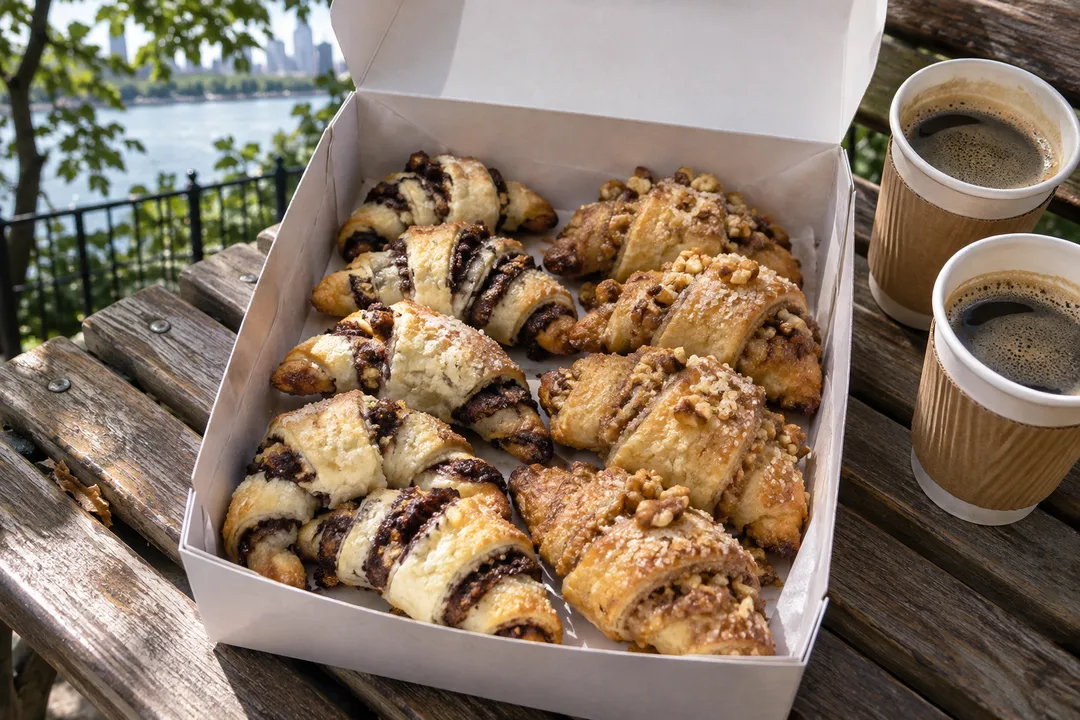
Once your wax bags and string-tied cardboard boxes are secure, resist the urge to eat everything huddled next to a crowded avenue bus shelter. The Upper West Side offers two classic outdoor tasting rooms within a five-minute walk of the bakery corridor. Heading west down a gentle slope past West End Avenue brings you straight into Riverside Park, where slatted wood benches under London plane trees look out over the Hudson River greenway. The breeze off the water and the wide promenade give you plenty of elbow room to lay out wax paper, pour hot black coffee from a thermos, and compare the crumb of three different bakeries without jostling elbows.
If the river wind feels too sharp or your afternoon plans pull you east, carry your pastry box across Columbus Avenue toward the benches flanking the American Museum of Natural History or the sunny granite ledges just inside Central Park's West Drive gates. Families with strollers and couples meeting before a matinee at Lincoln Center often use this exact east-west corridor as a casual picnic route. You can also open the Karpo APP while walking along Broadway to filter nearby bakeries, coffee counters, and quiet park entrances that match your pace, making it easy to pivot if a weekend street fair blocks your usual avenue crossing.
Practical Packing and Hosting Tips for Your Pastry Haul
If you are building a host box to bring to a dinner party or keeping a stash for weekday breakfasts, how you handle the pastries during the walk makes a noticeable difference by evening. Keep syrup-drenched laminated rugelach and jammy raspberry pieces in their own compartment; when stacked directly on top of sugar-dusted cinnamon-walnut horns, the moisture migrates and dissolves the crisp top crust. Always ask for an extra sheet of deli tissue to lay between layers inside a half-pound or pound box, and carry the box flat against the bottom of a wide-gusset tote rather than dangling it sideways by its cotton string.
Back at home, cream-cheese dough rugelach hold their tender bite remarkably well in an airtight tin at room temperature, and they freeze cleanly when wrapped in foil first. Before setting out a tasting platter for guests, warm the chocolate and nut pieces on a bare baking sheet in a low oven for just three or four minutes until the butter in the dough relaxes and the cocoa center softens again, while serving the apricot and raspberry pieces at cool room temperature so the fruit preserves stay bright and structured.
Ask Karpo for more information.
Keep reading
- Upper East Side Rugelach Bakery Crawl: Lexington to Park
 Midwood Rugelach Bakery Crawl: Avenue J to Avenue M
 Lower East Side Rugelach Bakery Crawl: Grand to Essex