 Haaland Has Seven Goals and Norway Runs Entirely Through Him
⚽️2026 FIFA WORLD CUP
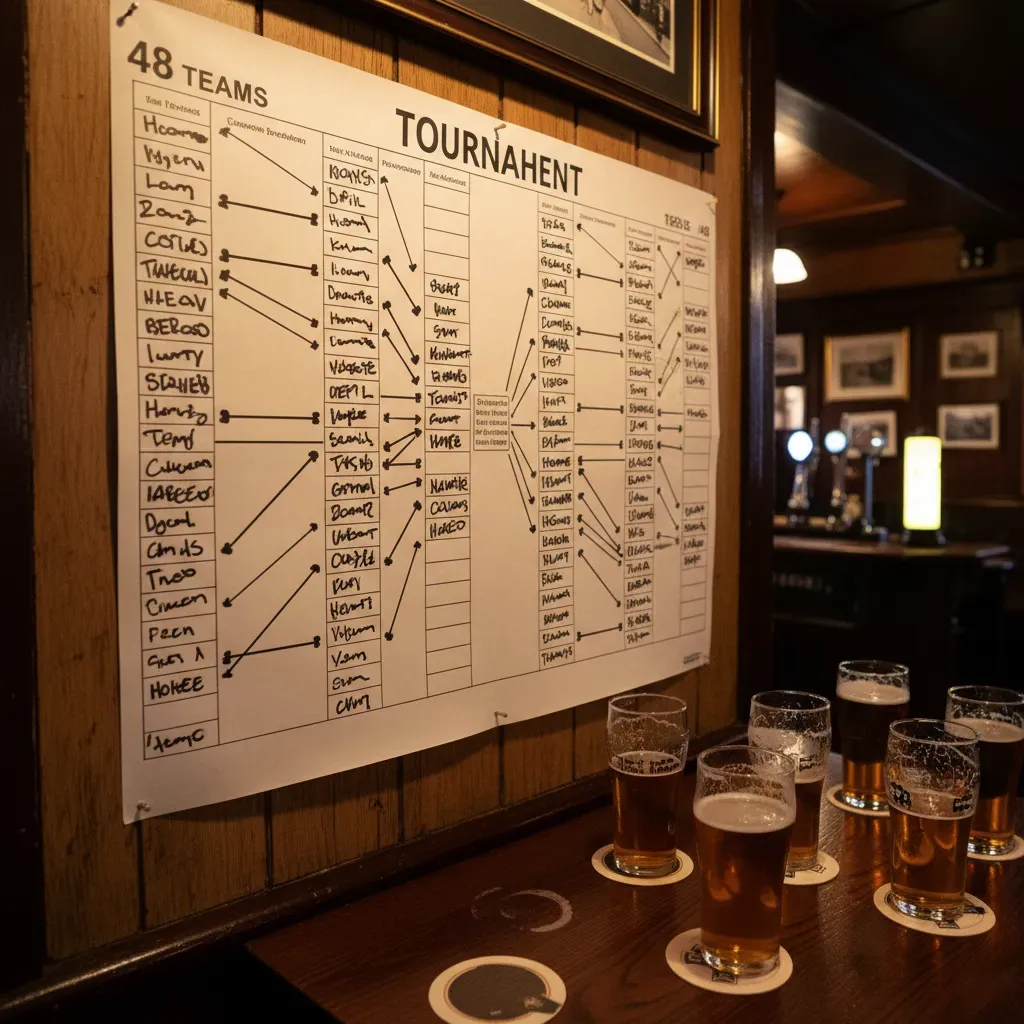
The Round of 32 Bracket Had 495 Possible Third-Place Combinations and the Result Was Beautiful Chaos
The 48-team World Cup format created a knockout bracket where third-place qualifiers could land in any of 495 different configurations — and the actual draw produced matchups that nobody's prediction model had anticipated.
495 Ways to Draw a Bracket, and We Got the Weirdest One
The 48-team World Cup format introduced a mathematical complexity to the knockout bracket that previous tournaments never approached. With 16 third-place teams competing for 16 available Round of 32 spots, the possible configurations of the bracket numbered exactly 495 — each producing a different set of matchups that would shape the entire knockout stage.
FIFA's bracket allocation rules — designed to prevent teams from the same group meeting in the Round of 32 and to balance the bracket geographically — reduced the randomness somewhat. But the sheer number of variables meant that the final bracket, when it was confirmed after the last group matches, produced matchups that no pre-tournament simulation had ranked as likely. The result was a Round of 32 that felt genuinely unpredictable.
The Matchups Nobody Predicted
USA vs Bosnia-Herzegovina. Australia vs a third-place European team. Norway against a South American qualifier. These are the kinds of matchups that bracket prediction models had ranked in the bottom quartile of probability — yet here they are, defining the knockout stage of the biggest World Cup in history.
The unpredictability is a feature, not a bug. The expanded format's complexity means that group stage results cascade through the bracket in ways that are difficult to anticipate. A single goal in a late group match can change not just the fortunes of the two teams playing, but the entire landscape of the knockout stage. This interconnectedness makes every group stage match feel consequential, even when the teams involved are not directly competing for the same qualification spot.
Fans Tried to Track It. Math Won.
The bracket chaos produced its own subculture of content. Spreadsheet enthusiasts published real-time bracket probability calculators that updated after every group match. Data visualization specialists created interactive tools that showed all 495 possible brackets simultaneously. Football analytics accounts ran Monte Carlo simulations that produced probability distributions for every possible matchup. The content was nerdy, obsessive, and wildly popular.
The irony was that for all the mathematical sophistication applied to the problem, the actual bracket that emerged was one that most models had assigned a probability of less than 0.5%. The beautiful chaos of football — where a goalkeeper scores from 97 yards and eliminated teams beat tournament favorites in dead rubbers — makes probabilistic prediction a humbling exercise.
The Bracket Favors No One
One of the format's strengths is that the bracket is genuinely balanced. Unlike previous World Cups, where one half of the draw was visibly stronger than the other — the so-called "group of death" producing an imbalanced knockout stage — the 48-team format distributes quality more evenly. Every quarter of the bracket contains at least one genuine contender and at least one dark horse capable of causing an upset.
This balance means that the path to the final is approximately equal in difficulty regardless of which side of the bracket a team occupies. The traditional complaint that "the real final is the semifinal" — a product of bracket imbalances that pitted the two best teams against each other before the final — is less applicable in 2026.

The Third-Place Qualifiers Made It Work
The most controversial aspect of the 48-team format was always the third-place qualification pathway. Critics argued that allowing the best third-place teams to advance would incentivize negative football — teams playing for draws, managing goal difference, and generally prioritizing not losing over trying to win. The evidence from the 2026 group stage contradicts this prediction.
Third-place qualifiers, by and large, have been teams that played attacking football and earned their spot through genuine competitive performances. The goal difference tiebreakers that determine which third-place teams advance have been decided by fine margins, creating drama in the final round of group matches that exceeded anything the previous format produced. The system is working.
Embrace the Chaos
The 48-team knockout bracket is complicated, unpredictable, and occasionally confusing. It requires fans to track multiple simultaneous scenarios, understand tiebreaker rules that are not immediately intuitive, and accept that the path from group stage to final involves more steps than previous tournaments. But complexity is not the same as dysfunction, and the 2026 World Cup's bracket chaos has produced something valuable: genuine uncertainty about who will win.
Tags: World Cup 2026, bracket, round of 32, 48-team format, World Cup bracket, knockout stage, third-place qualifiers, tournament format, World Cup standings
Sources consulted: ESPN · FIFA.com · The Ranker
All trademarks, team names, and player likenesses mentioned in this article are the property of their respective owners and are used here for informational and editorial purposes only.
Ask Karpo First
Want to understand the bracket and figure out when your team plays next? Ask Karpo for the latest knockout round matchups, match times, and a simplified guide to how the 48-team bracket works.
Ask Karpo for more information.
Keep reading
- Haaland Has Seven Goals and Norway Runs Entirely Through Him
 World Cup Trophy Ceremony Timing Medals and Postmatch Celebrations
 Olise and France's Attack: The Semifinal Tactical Question