 Haaland Has Seven Goals and Norway Runs Entirely Through Him
⚽️2026 FIFA WORLD CUP
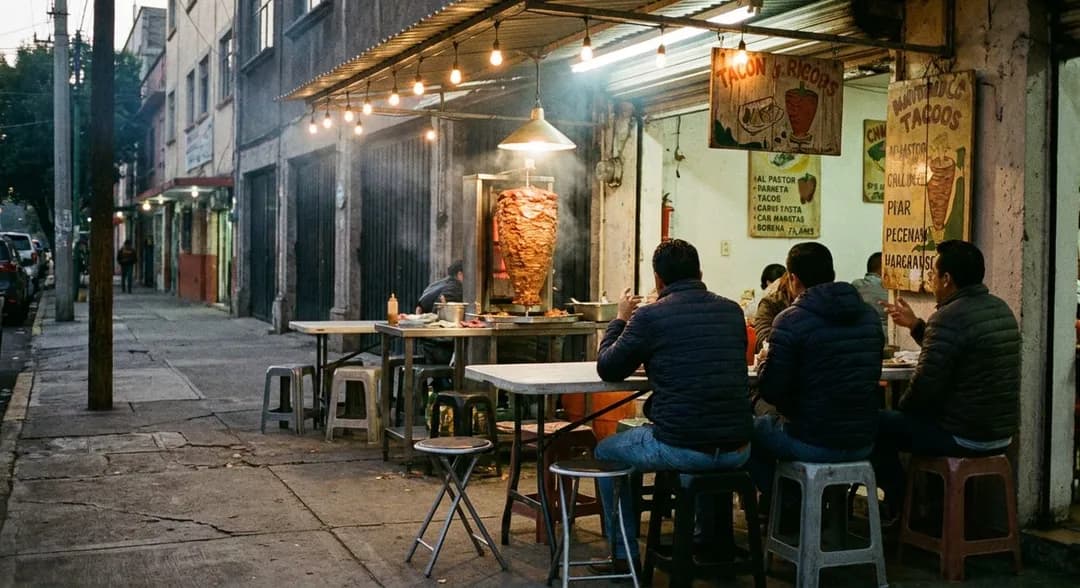
Roma Norte Tacos al Pastor While America's Got Talent auditions Air Overhead
Roma Norte taco stands mount televisions for talent-show auditions and World Cup pregame coverage, feeding crowds moving between both spectacles.
You're standing at a trompo on Avenida Álvaro Obregón, watching marinated pork spin under a gas flame while a mounted television overhead cuts between a mariachi trio from Guadalajara and a nervous breakdancer from São Paulo. The taquero doesn't look up—he's carved ten thousand al pastor tacos to the rhythm of fútbol commentary, and talent-show auditions are just another soundtrack. Roma Norte has always fed crowds moving between spectacles, and this summer the neighborhood's taco stands have become accidental viewing lounges where you can eat your way through both the World Cup pregame coverage and whatever variety programming fills the gaps.
The Trompo Never Stops Spinning, Even During Commercial Breaks
The vertical spit starts turning around four in the afternoon, right when the first round of international broadcasts begins. You'll find these setups on nearly every other block in Roma Norte—a cart or semi-permanent stand, a propane tank, a television bracketed to a pole or propped on an upturned crate. The meat glistens under its own fat, pineapple crown on top slowly caramelizing. What's unusual this year is the programming mix. Between match previews and post-game analysis, the screens flip to audition episodes where hopeful performers face celebrity judges in cities you've maybe heard of. The taquero keeps his knife moving through both. He'll glance up when a goal replay runs, but his hands never stop—tortilla to plancha, meat shaved thin, onion and cilantro by muscle memory. You order three tacos and they arrive in under ninety seconds, wrapped in paper that's already translucent with grease. The television flickers from a penalty kick discussion to a woman singing opera in broken Spanish. Nobody changes the channel.
Folding Chairs Appear When the Crowd Thickens
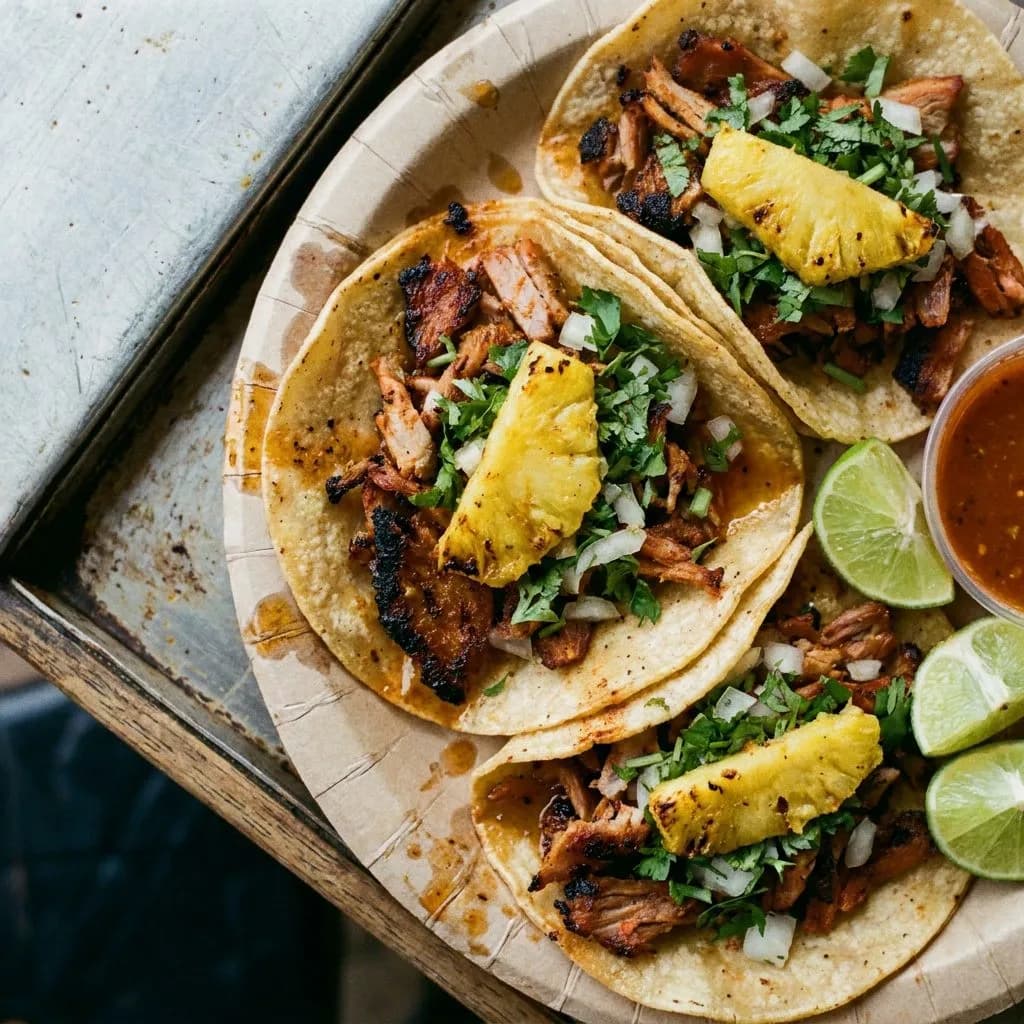
By six-thirty the sidewalk setup expands. Plastic chairs emerge from somewhere—a nearby apartment, a back room, the taquero's cousin's trunk. They form a loose semicircle facing the screen, close enough to the stand that you can order without standing. The regulars know to arrive early if they want a seat. You'll recognize them by the way they don't ask for menus or prices, just hold up two fingers or nod toward the trompo. They're here for the long haul, the full evening of programming that stretches from talent-show eliminations through kickoff and into second-half stoppage time. The air smells like charred pineapple and achiote, with occasional diesel clouds when a pesero bus rumbles past. Someone's always arguing about a call that happened three days ago in a different stadium. Someone else is laughing at a ventriloquist act that's dying on stage in front of millions. The conversations overlap, and the taquero navigates both without breaking rhythm.
The Salsa Bar Becomes a Negotiation Point
Every stand runs its own salsa lineup, and you'll learn quickly that this matters more than the television channel. The standard trio sits in plastic squeeze bottles or small plastic tubs—roja, verde, and something darker that might be morita or might be the taquero's personal invention. You add your own after the taco arrives, which means you're standing at the small metal counter, elbow-to-elbow with someone debating whether the blonde judge is too harsh or the midfielder's form has declined since March. The salsa bar is where you overhear everything. A couple discusses their dinner plans in English while dousing their tacos in verde. A group of teenagers argues about whether the singing competition is rigged, then immediately pivots to whether their team's defense can hold against a counterattack. You're trying to decide if you want the extra heat, and the woman next to you just says "go for the dark one" without looking up from her phone. She's right. It's smoky and sharp and makes the pork taste even better.
The Pregame Show Runs Long, Nobody Minds
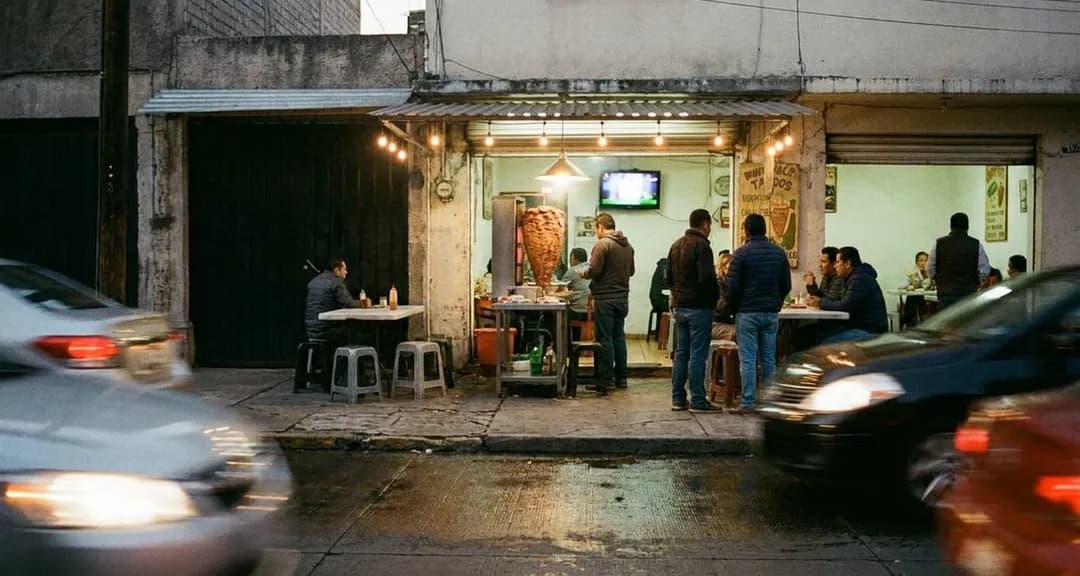
The match doesn't start until nine, but the coverage begins two hours earlier with studio analysis, player interviews, and montages set to music that sounds like it was composed specifically to make you feel things about athletic achievement. The taco stand crowd settles in. You watch the taquero work through the extended programming—he's probably served two hundred tacos by now, and the trompo has been shaved down to a smaller cylinder, re-stacked once already with fresh marinated meat. The television cuts to an audition segment, a twelve-year-old kid doing card tricks that genuinely seem impossible. Half the crowd watches. The other half is on their phones, checking scores from earlier matches or texting friends about where to watch the game. You're on your fourth taco, which wasn't the plan, but the night has a momentum that makes leaving feel wrong. The tortillas are still warm. The pineapple chunks are still sweet against the chili-rubbed pork. A man in a replica jersey stands up to take a call, and someone immediately claims his chair.
When the Match Starts, the Volume Goes Up
Kickoff brings a shift in attention. The conversations don't stop, but they redirect toward the screen. Every touch gets a reaction—a sharp inhale, a shouted instruction to players who can't hear, a groan when a pass goes astray. The taquero keeps working, but now he's watching too, knife pausing for corner kicks and free kicks in dangerous positions. You notice the rhythm of the crowd matches the rhythm of the game. When play is in midfield, people order more tacos, refresh their drinks, step away to smoke. When the ball pushes into the attacking third, everyone freezes. The talent show has been forgotten entirely, though it's probably still airing on other channels in other neighborhoods. Here, there's only the match and the tacos and the specific alchemy of watching something unfold while eating something that tastes exactly like it should. A shot goes wide and twenty people exhale at once. The taquero shakes his head and goes back to carving.
The Walk Home Smells Like Lime and Diesel
After the final whistle, the crowd disperses slowly. Some people linger to discuss what just happened, others are already walking toward bars or back toward their apartments. You're somewhere in the middle, full of al pastor and the particular satisfaction of having witnessed something—not just the match, but the whole evening, the way a neighborhood feeds itself while watching the world perform. Roma Norte's streets are never quite empty, but right now they're especially alive, people streaming in different directions, some still wearing jerseys, others carrying plastic bags of takeout from the next stand down the block. The televisions will stay on for the post-game coverage, then switch back to whatever variety programming fills the late-night slots. The trompos will keep spinning until the meat runs out or the crowd thins to nothing. You'll be back tomorrow, probably around the same time, ready to do it all again.
Practical Notes
Most taco stands in Roma Norte operate from late afternoon until midnight or later, especially during major sporting events and tournament seasons. Three to four tacos typically runs you less than what you'd pay for a single drink at a sit-down restaurant—bring cash in small bills. The neighborhood is easily accessible via Metro Insurgentes on Line 1, and you can walk to most taco clusters within ten minutes of the station. No reservations, no phone numbers, no websites. Just show up, find a stand with a crowd and a television, and join the rotation. If you're planning to stay for a full match, arrive at least thirty minutes before kickoff to secure a spot with a view. The salsa is always self-serve, and you're expected to know your own heat tolerance.
Tags: #RomaNorte #MexicoCityFood #TacosAlPastor #WorldCup2026 #StreetFood #CDMX #FIFAWorldCup #TacoStands #MexicoCity #NeighborhoodEats #FoodAndFootball #LocalCulture #TravelMexico #AuthenticEats #CityLife
Sources consulted: fifa.com · espn.com · timeout.com
All trademarks are the property of their respective owners.
Ask Karpo for more information.
Keep reading
- Haaland Has Seven Goals and Norway Runs Entirely Through Him
 World Cup Trophy Ceremony Timing Medals and Postmatch Celebrations
 Olise and France's Attack: The Semifinal Tactical Question