The question is rarely which restaurant in New York is good. There are several thousand, and any list of twenty is somebody's opinion. The harder question is which of them you can actually sit in this month, and that turns out to be a solvable problem with rules — release windows, cancellation patterns, bar seating policies — that are consistent across most of the city and that almost nobody explains.
Tables appear and vanish in minutes in this city, and the good ones rarely sit on a platform. Ask Karpo what has opened up near you tonight and where the walk-in seats are.
How the release windows work
Most New York restaurants release reservations on a rolling window — commonly thirty days ahead, sometimes fourteen, occasionally sixty — at a fixed time of day, usually between nine and eleven in the morning. If a restaurant has a thirty-day window and you want a Saturday, you are booking thirty days before that Saturday at the release hour, not browsing casually the week before. This single fact explains most of the frustration people have with the city's harder rooms.
The second mechanism is the cancellation window. Restaurants that charge a no-show fee typically set a cancellation deadline of twenty-four or forty-eight hours, which means a wave of tables returns to the platform at exactly that point. For a Friday dinner at a room with a forty-eight-hour policy, Wednesday evening is when the seats reappear. Checking at that moment is dramatically more effective than checking randomly.
Bar seats, and why they are the real answer
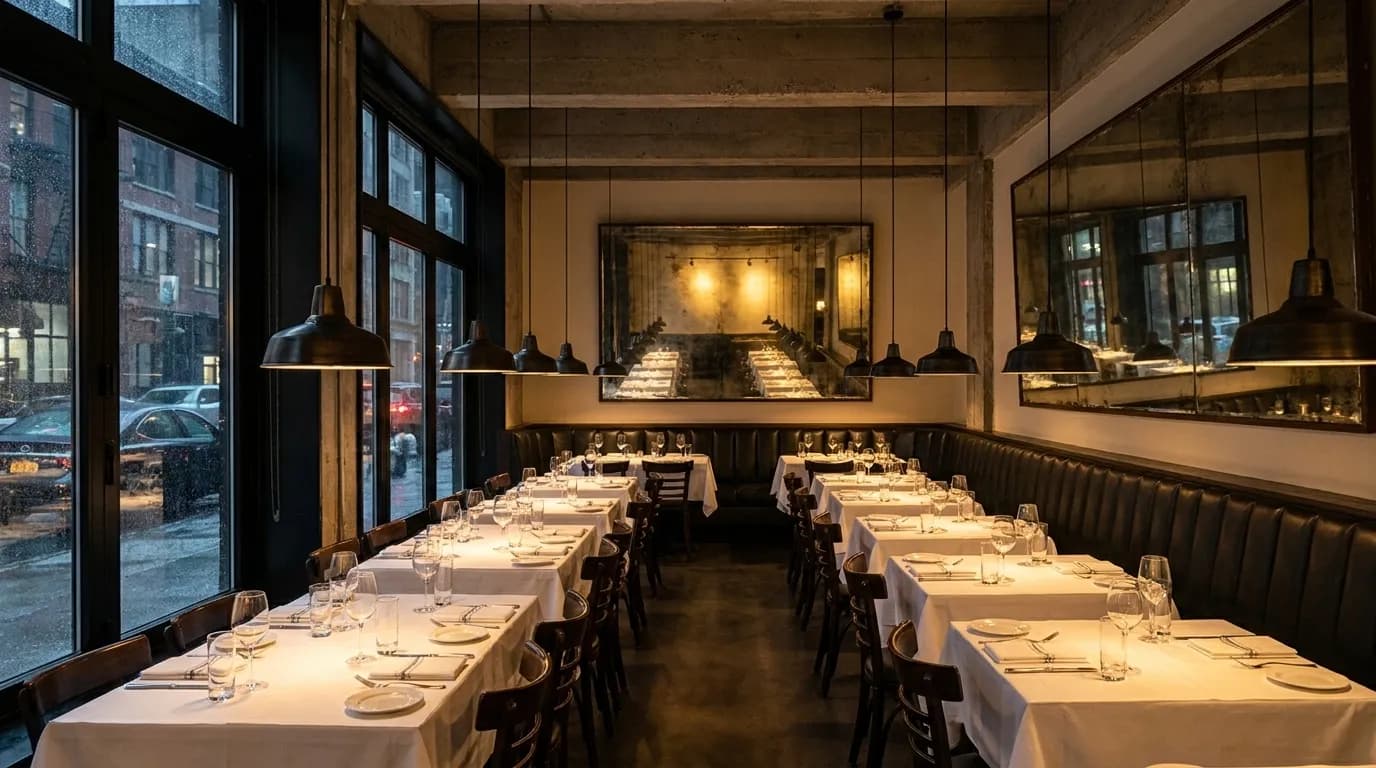
A very large number of the city's most difficult restaurants keep their bar and counter seats for walk-ins. The full menu is usually available, the room is the same room, and the only cost is arriving at an unfashionable hour. Turning up at five-thirty or after nine-thirty at a place with a walk-in bar is the single most reliable way to eat somewhere you could not book, and it works at a surprising proportion of the rooms people complain about.
The related trick is the solo diner advantage. One seat is far easier to place than two, and two are far easier than four. If you are flexible about splitting a group across a bar, the availability picture changes completely. Restaurants will rarely offer this; they will almost always accommodate it if asked at the door.
The twenty tables, by category
Rather than a list of names that will be half wrong within a year, the durable version is a list of categories, each of which has several good examples in every borough. The old-guard steakhouse. The Cantonese banquet room. The Italian-American red-sauce institution. The tasting-menu room with a counter. The Japanese sushi bar with a fixed omakase. The Korean barbecue room in Midtown. The Ukrainian or Polish diner in the East Village. The Greek fish taverna in Astoria. The Trinidadian or Guyanese roti shop in Richmond Hill. The Uzbek room in Rego Park.
Add: the wood-fired pizzeria with a two-hour wait. The natural wine bar with a short food menu. The Michelin-starred room that does a bar menu. The neighbourhood French bistro that has been there thirty years. The Sichuan restaurant in Flushing. The Dominican comedor in Washington Heights. The Senegalese room in Harlem. The Filipino kamayan spot in Woodside. The Georgian bakery in Brighton Beach. And the deli that predates everyone reading this. Any twenty specific restaurants drawn one from each of those categories is a better year of eating than any published top-twenty list.
The platforms, and what they hide
The major booking platforms do not show every table. Restaurants hold back inventory for phone bookings, for regulars and for walk-ins, and a room showing nothing online frequently has space. Calling between three and five in the afternoon, when the phone is answered by someone not in the middle of service, is the highest-yield ten minutes you can spend on this problem.
Be aware of the resale market that has grown around hard-to-get tables. Reservations are increasingly bought and sold through third-party accounts, which is why some rooms now require a credit card, a deposit or a phone confirmation. Restaurants dislike it, several have taken active steps against it, and paying for a table you could get by calling is an avoidable expense.
Timing the week
The other lever is the calendar. Tuesday and Wednesday are the easiest nights to eat well in New York and, in most kitchens, the sharpest — the produce delivery has landed, the head chef is on, and the room is not turning tables against a queue. Friday and Saturday are the hardest and the most rushed. Many of the best rooms close Sunday or Monday, so a midweek dinner is not a consolation prize, it is the better version of the same meal. If your schedule is flexible at all, moving one night earlier is worth more than any booking trick.
One more platform habit worth breaking: searching only for tonight. Most of the good availability in this city sits four to six days out, and a search set to today will make the whole city look booked when it is not. Widen the window before you conclude there is nothing.
Practical notes
Book the earliest or latest slot you can tolerate; the six-fifteen and the nine-forty-five are almost always available at rooms that look full. Join the waitlist even when it looks hopeless, because cancellations resolve to it automatically. Confirm large parties by phone on the day. Note that many of the city's best rooms are closed on Sunday or Monday, so a Tuesday is genuinely easier than a Saturday and the kitchen is often sharper. And if a restaurant charges a no-show fee, put the cancellation deadline in your calendar rather than trusting yourself to remember it.
Tags: #NYC #NewYorkCity #NYCRestaurants #Reservations #WhereToEatNYC #FoodNearMe #NYCEats #Manhattan #Brooklyn #Queens #Astoria #Flushing #WalkIn #DinnerNYC #BookATable
All trademarks are the property of their respective owners.
Ask Karpo first
Want to know which rooms near you have just released tables, which ones keep bar seats for walk-ins, and what the wait actually is at the door tonight? Ask Karpo before you refresh another booking app.