 Haaland Has Seven Goals and Norway Runs Entirely Through Him
⚽️2026 FIFA WORLD CUP
Rego Park's Central Asian Watch House: Uzbek Plov and Big Screens for Every AFC Match
A Queens restaurant on 63rd Drive draws Uzbek, Tajik, and Kyrgyz fans for Asian Confederation fixtures, with communal plov platters and green tea served throughout.
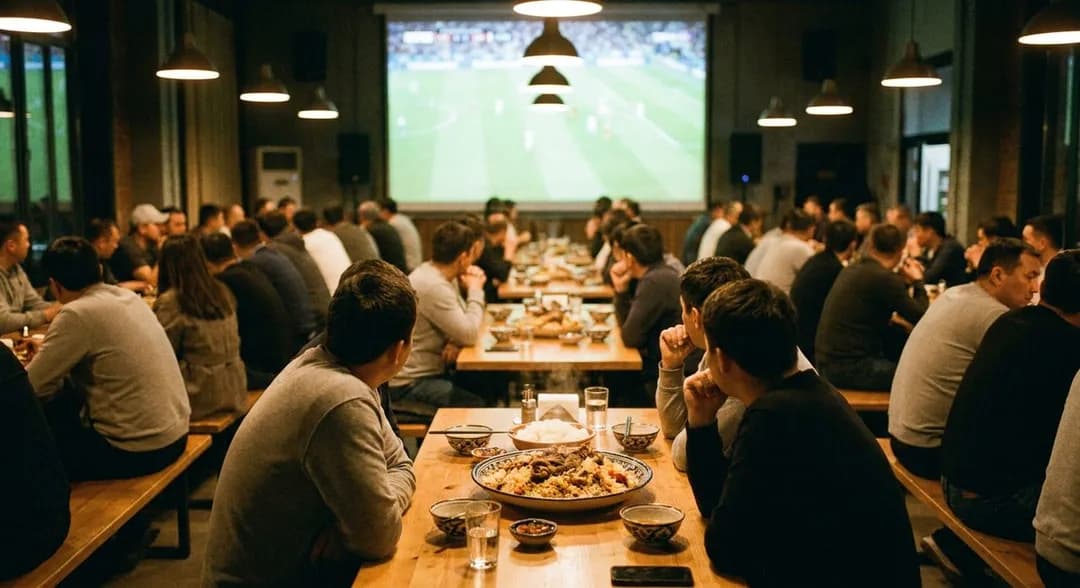
You walk into a low-ceilinged dining room on 63rd Drive in Rego Park just as the pre-match commentary starts, and the first thing that hits you is the scent of caramelized onions and lamb fat mingling with cardamom-laced green tea. Three massive screens glow along the walls, all tuned to the same AFC qualifier, and every table is already claimed by families speaking rapid-fire Russian, Uzbek, and Tajik. This isn't a sports bar in the American sense—no neon beer signs, no wings menu—but when the Asian Confederation fixtures air, this becomes the living room for half of Central Asia's New York diaspora.
The Geography of the Room Changes with Kickoff
Before the match starts, the space feels like any neighborhood Uzbek restaurant: older men nursing pots of green tea at corner tables, a few solo diners working through lagman noodles, the kitchen door swinging open to release bursts of cumin-scented steam. But twenty minutes before kickoff, the energy shifts. Chairs scrape across tile as tables get pushed together. Extended families arrive in waves—grandmothers in floral headscarves, teenagers in knockoff jerseys, fathers carrying folded prayer rugs they'll stash under benches. By the time the anthems play, every seat is spoken for, and latecomers stand along the back wall, arms crossed, eyes locked on the screens.
Plov Arrives in Waves, Not Courses
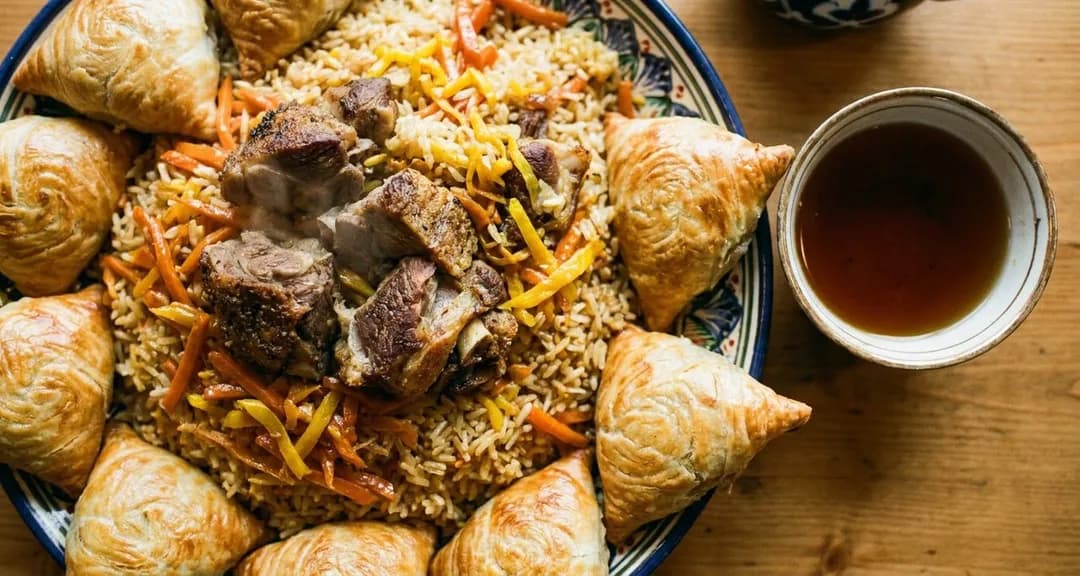
The kitchen doesn't do individual plates during match days. Instead, servers emerge carrying oval platters piled high with saffron-tinted rice, shredded carrots, chunks of lamb still glistening with fat, and whole heads of garlic that have turned sweet and soft in the pot. One platter lands in the center of each table, and everyone eats family-style, using their right hand or a communal spoon. The rice is sticky enough to clump but not mushy, each grain coated in lamb drippings and the faint bitterness of cumin seed. You eat standing up if you have to, balancing your portion on a folded napkin, because no one's leaving once the ball starts moving.
Green Tea Functions as Social Punctuation
Small ceramic pots of green tea circulate constantly, refilled without asking. It's never scalding—always drinkable immediately—and it's served in handleless bowls that force you to cradle them with both hands. Between halves, the tea drinking intensifies. Men step outside to smoke, then return to drain another bowl before the whistle blows. The tea here isn't a beverage so much as a ritual anchor, the thing that keeps you planted at your table through ninety minutes and injury time, the reason you don't drift toward the door even when the match turns into a slog.
The Crowd Knows Every Referee's Reputation
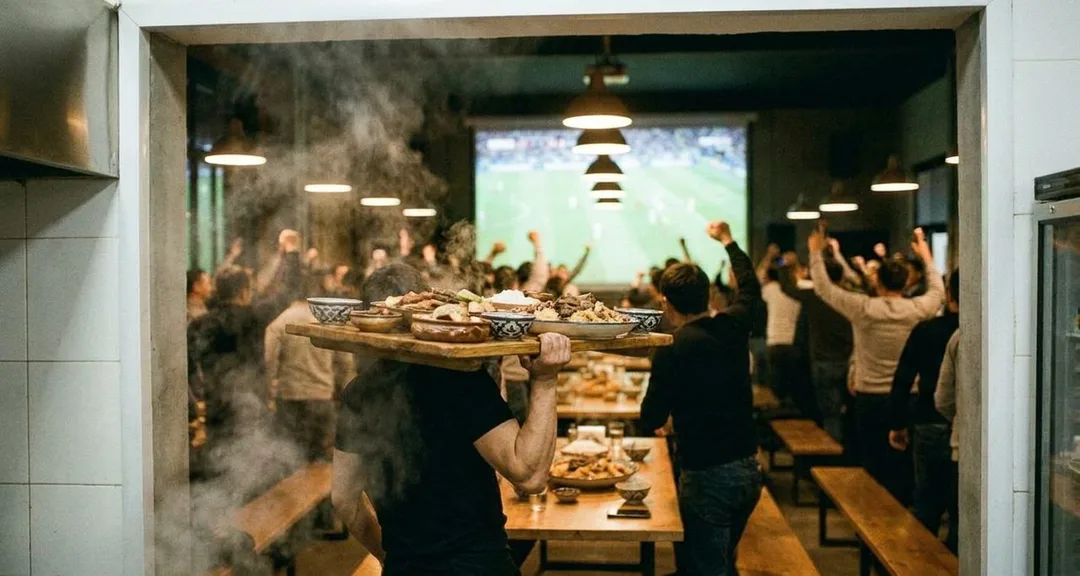
You learn quickly that this audience watches the Asian Confederation circuit with the obsessive attention most Americans reserve for playoff basketball. When a ref makes a questionable call, the room erupts in a chorus of groans that blend three languages but share the same exasperated cadence. Someone at the next table will mutter a ref's name like a curse, and two strangers across the room will nod in grim recognition. These aren't casual fans checking scores on their phones—they've watched every qualifier, every controversial penalty, every last-minute collapse. The collective memory here runs deep, and if you're sitting close enough, someone will eventually explain exactly why a particular referee shouldn't be working AFC matches at all.
Halftime Means Sambusa and Gossip
When the whistle blows for halftime, the kitchen pushes out trays of sambusa—triangular pastries filled with spiced meat or pumpkin, fried until the pastry shatters at first bite. They're still too hot to hold comfortably, but people grab them anyway, juggling them between hands while debating the first half's tactical decisions. This is when the social fabric of the room becomes visible: cousins who haven't seen each other in months compare notes on construction jobs in Staten Island, aunties interrogate younger women about upcoming weddings, someone's uncle holds court about the correct way to make proper Tashkent-style plov. The screens still glow, replaying highlights no one's really watching, but for fifteen minutes the match takes a back seat to the harder work of maintaining a community in a city that doesn't always make space for it.
The Volume Peaks in Moments You Can't Predict
The room doesn't roar for every goal—only the ones that matter to the specific mix of people present that day. A last-minute equalizer for Uzbekistan will send half the room to its feet, while a goal for a rival sends a ripple of grim silence through certain tables. But the loudest eruptions come from moments of pure skill: an impossible save, a through-ball that splits three defenders, a tackle that looks reckless until the replay shows it was perfectly timed. In those seconds, the room forgets its internal divisions—Uzbek, Tajik, Kyrgyz, Russian-speaking, English-speaking—and becomes a single organism reacting to beauty under pressure.
Practical Notes
The restaurant sits on 63rd Drive in the heart of Rego Park, a short walk from the 63rd Drive-Rego Park station on the M and R trains. It's open throughout the day, but match-day energy peaks when Asian Confederation qualifiers and tournament fixtures air, typically during daytime hours in New York due to time zone differences. Arrive at least thirty minutes before kickoff if you want a seat, or resign yourself to standing room. Expect to spend modestly—plov platters are meant for sharing and priced accordingly, sambusa and tea add only a few dollars more. No reservations, cash preferred though cards usually work. The menu is mostly in Russian and Uzbek, but pointing works fine, and if it's a match day, just say "plov" and you'll get what you came for.
Tags: #RegoPark #QueensEats #UzbekFood #CentralAsianCuisine #AFCQualifiers #2026FIFAWorldCup #MatchDayEats #DiasporaDining #PlovAndFootball #QueensWorldCup #AuthenticUzbek #NYCHiddenGems #SoccerCulture #WorldCupNYC #CommunalDining
Sources consulted: fifa.com · espn.com · timeout.com
All trademarks are the property of their respective owners.
Ask Karpo for more information.
Keep reading
- Haaland Has Seven Goals and Norway Runs Entirely Through Him
 World Cup Trophy Ceremony Timing Medals and Postmatch Celebrations
 Olise and France's Attack: The Semifinal Tactical Question