 Haaland Has Seven Goals and Norway Runs Entirely Through Him
⚽️2026 FIFA WORLD CUP
Poland Supporters Follow the World Cup From Chicago's Avondale Triangle
Chicago's Avondale neighborhood along Milwaukee Avenue hosts one of the most concentrated Polish-American communities in the world, and with Poland in the World Cup, the local supporter culture is emerging from community halls and deli counters onto the streets, bringing decades-old fan traditions into contact with a newer generation of soccer supporters.
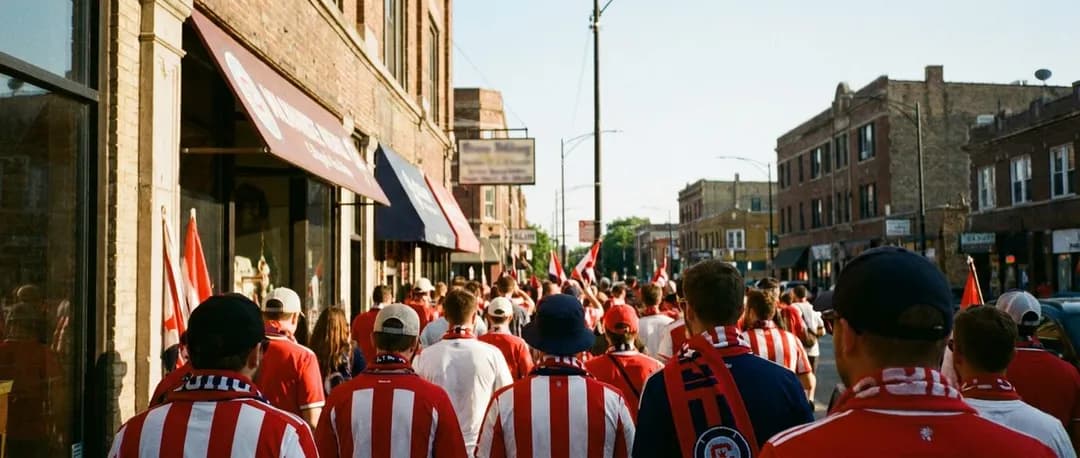
When Poland takes the pitch, the Milwaukee Avenue corridor transforms. Flags appear in storefront windows from Belmont Crest to Central Park, red-and-white scarves drape over car mirrors, and the sound of "Mazurek Dąbrowskiego" echoes from open doorways along the stretch locals still call the Polish Triangle. This pocket of Avondale, where Polish remains the primary language on sidewalks and in checkout lines, becomes a concentrated nerve center of World Cup emotion—a place where supporter culture runs three generations deep and where the tournament draws families who've followed the national team through decades of qualification heartbreaks and unexpected tournament runs.
Café Luncheonettes Become Matchday Command Centers
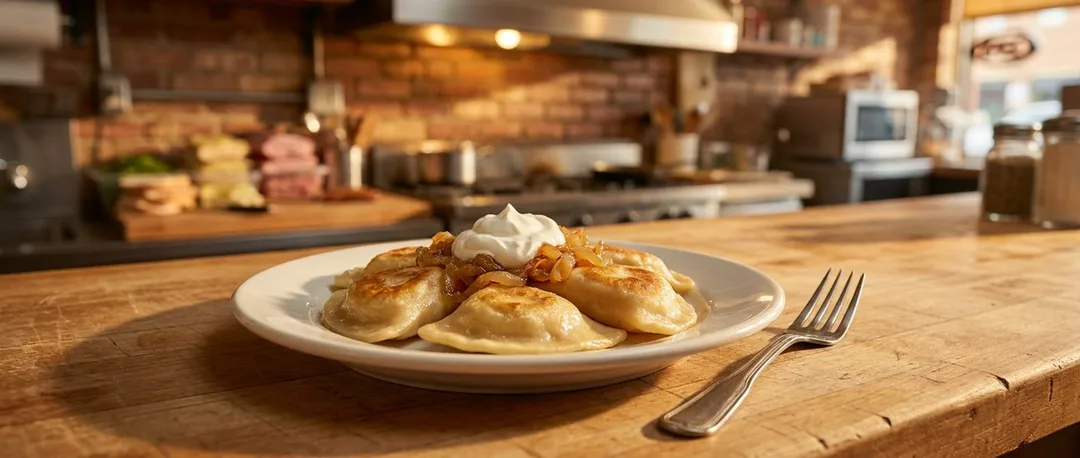
The viewing culture here differs from downtown sports bars. At places like Podhalanka on Milwaukee, supporters arrive two hours before kickoff, claiming tables near the mounted screens while ordering pierogi and żurek from a menu that hasn't changed in twenty years. The staff props open the front door regardless of temperature, creating a threshold where sidewalk crowds gather to watch through the windows when interior space fills. Grandmothers in team jerseys sit beside teenagers streaming commentary on phones, creating a generational cross-section rarely seen in Chicago's more fragmented fan communities.
Across the street, Smak-Tak converts its deli counter area into standing-room viewing space, pushing aside the display cases of kielbasa and oscypek cheese to accommodate the overflow. The owner keeps a running tally of pastries sold per match—pączki sales triple during tournament games, a metric that tracks precisely with Poland's advancement through group stages. Between halves, supporters spill onto the sidewalk, debating tactics in rapid Polish while cars honk in solidarity, creating a street theater that stops traffic along Milwaukee for minutes at a time.
The Copernicus Center Anchors Tournament Watch Parties
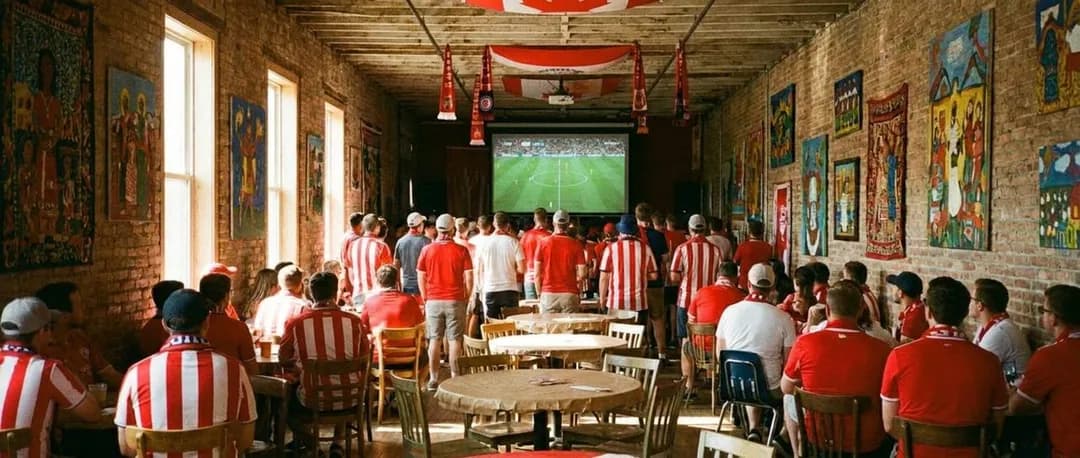
When Poland faces elimination matches or high-stakes group finales, the viewing parties migrate to the Copernicus Center, the cultural anchor institution where wedding receptions and folk dance performances give way to projection-screen soccer. The 1,800-seat theater fills with a cross-section of the neighborhood—families who emigrated in the 1980s alongside recent arrivals and third-generation Polish-Americans whose grandparents settled Avondale in the postwar wave.
The atmosphere inside carries the intensity of European supporter sections but filtered through a community-hall sensibility. Children wave miniature flags in the balcony while their parents lead coordinated chants from the orchestra section. The center's staff sets up a cash bar serving Tyskie and Żubr, and the intermission concession stand offers gołąbki and bigos kept warm in industrial serving trays. After victories, the celebration continues in the parking lot for an hour or more, car horns creating rhythmic patterns that carry across the residential blocks surrounding the venue.
Milwaukee Avenue's Retail Strip Displays Tournament Allegiance
The commercial corridor becomes a gallery of improvised World Cup displays. The Polish bookstore near Diversey arranges national team biographies and tactical analysis volumes in its front window, flanked by vintage photographs of Poland's 1974 and 1982 World Cup squads. The European deli two blocks south hangs a hand-painted banner tracking Poland's tournament progress, updating scores and goal-scorers in chalk after each match.
At the pharmacy, the owner positions a small television behind the prescription counter, angling it so customers waiting for prescriptions can track match action. The bakery prints edible images of the Polish eagle onto sheet cakes, which sell out within hours of tournament victories. Even the laundromat posts match schedules on its bulletin board, and regulars time their washing cycles around kickoff, creating an unspoken community schedule that governs the neighborhood's rhythm during tournament weeks.
Supporter Traditions Cross Generational Lines
The tournament reveals how fan culture transmits across decades. Older supporters bring transistor radios to supplement television broadcasts, tuning to Polish-language commentary that provides context and emotion the English feeds miss. They teach younger fans the traditional songs—"Jeszcze Polska nie zginęła" sung at specific match moments, the call-and-response chants that date to supporter culture in Kraków and Warsaw stadiums.
Teenagers who grew up watching Premier League soccer on streaming services find themselves learning these older rituals, creating a hybrid fan culture that blends modern soccer analytics with inherited national pride. Outside Andy's Deli after a Poland victory, a group of high schoolers films TikTok videos while their parents' generation forms a spontaneous conga line down the sidewalk, the two modes of celebration coexisting without tension. The younger supporters wear Lewandowski jerseys purchased online; their grandparents sport faded replica kits from tournaments past, the fabric thin from decades of washing.
Evening Streets Fill With Post-Match Processing
After matches end, the neighborhood doesn't empty—it redistributes. Supporters move from viewing venues to the stretch of Milwaukee between Belmont and Central Park, where they walk in clusters, processing the match's emotional arc. The pierogi restaurants stay open late during tournament weeks, and tables fill with groups conducting post-match analysis over plates of ruskie and kapusta, debates growing heated over tactical decisions and referee calls.
The taverns along the corridor—traditional Polish drinking establishments distinct from craft cocktail bars in trendier neighborhoods—see their busiest nights during World Cup runs. At places like Staropolska, supporters stand three-deep at the bar, replaying key moments on phones while the television screens loop match highlights. The conversations blend Polish and English, sometimes mid-sentence, as supporters struggle to find words adequate to the moment's emotion. Outside, car horns continue sporadically, individual drivers expressing what the collective already feels.
Practical Notes
Transit access: The Blue Line stops at Belmont-Milwaukee (Logan Square station) place visitors at the southern edge of the Triangle; the Diversey bus provides east-west access along the neighborhood's northern boundary.
Timing considerations: Venues fill 90-120 minutes before kickoff for crucial matches; supporters recommend arriving before noon for afternoon games to secure viewing positions at popular spots.
Weather planning: Milwaukee Avenue's outdoor viewing culture continues regardless of conditions—November tournament dates mean layered clothing and the possibility of snow during outdoor celebrations.
Evening logistics: Post-match crowds peak 30-45 minutes after final whistle; the neighborhood remains active until midnight or later following Poland victories, with restaurants and taverns extending hours during tournament runs.
Tags: #ChicagoSoccer #AvondaleChicago #PolishChicago #WorldCupViewing #MilwaukeeAvenue #PolishTriangle #ChicagoNeighborhoods #SupporterCulture #CopernicusCenter #ChicagoPolonia #WorldCupChi #SoccerCommunity #ChicagoEthnic #AvondaleEats
Sources consulted: fifa.com (https://www.fifa.com) · choosechicago.com (https://www.choosechicago.com) · timeout.com/chicago (https://www.timeout.com/chicago)
All trademarks are the property of their respective owners.
Ask Karpo first
Wondering where Chicago's Polish community is setting up to watch Poland's World Cup matches this summer?
Ask Karpo for the latest on Avondale viewing venues, Polish community sports events, and the Milwaukee Avenue neighborhood scene around Poland match days.
Ask Karpo for more information.
Keep reading
- Haaland Has Seven Goals and Norway Runs Entirely Through Him
 World Cup Trophy Ceremony Timing Medals and Postmatch Celebrations
 Olise and France's Attack: The Semifinal Tactical Question