 Haaland Has Seven Goals and Norway Runs Entirely Through Him
⚽️2026 FIFA WORLD CUP
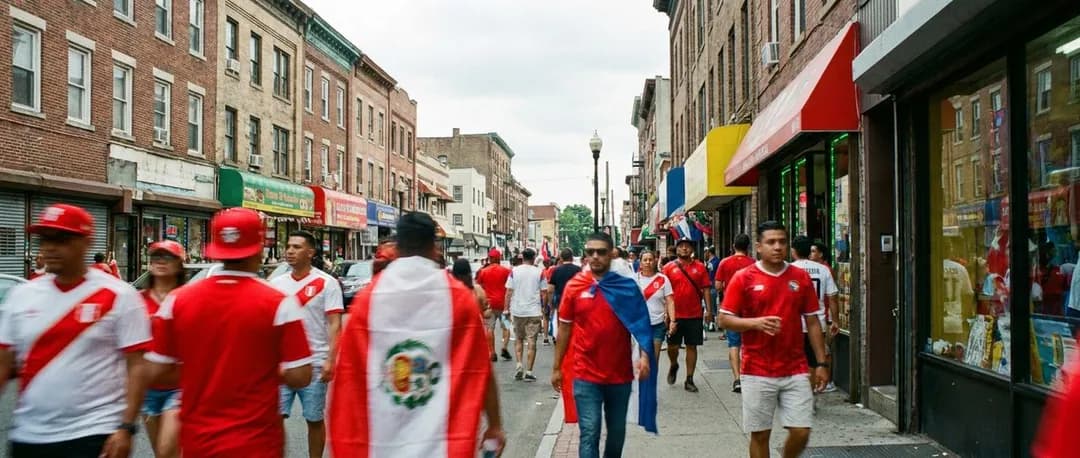
Peru's World Cup Fans Build a Scene in Paterson, New Jersey
Paterson, New Jersey has one of the most concentrated Peruvian populations in the United States, and the World Cup is transforming the city's Main Street commercial corridor into a full-scale La Blanquirroja fan zone, with community restaurants, bakeries, and viewing setups that make the match day feel like an extension of Lima's soccer culture transplanted to the northeastern US.
The red-and-white banners stretch across Main Street in Paterson like a second set of traffic signals, each one marking another restaurant, bakery, or corner market where Peru's national team colors hang with the kind of permanence that suggests they never really come down. When La Blanquirroja takes the pitch for World Cup matches, this mile-long corridor in northern New Jersey transforms into something that feels less like suburban America and more like a transplanted section of Lima's Miraflores district, complete with the percussion of car horns, the smell of anticuchos grilling on sidewalk setups, and the collective anxiety of tens of thousands of fans watching their national team compete on the world's biggest stage.
Main Street becomes Lima's living room every match day
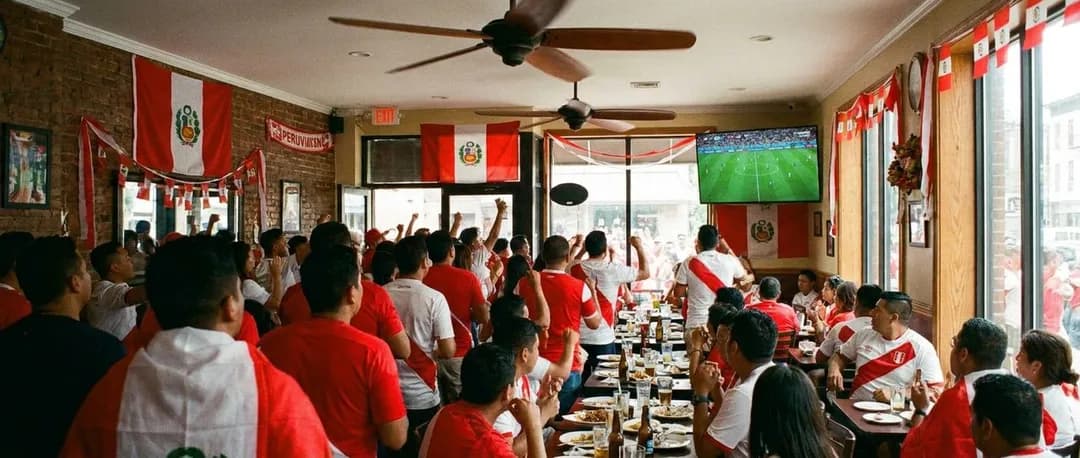
The concentration of viewing parties along Paterson's Peruvian Mile creates a cascading effect on match days. Fans begin arriving at restaurants and cafes three hours before kickoff, claiming tables at El Anzuelo Fino and Inti Raymi as if securing seats for a sold-out concert. Television screens multiply—proprietors wheel out additional monitors onto sidewalks, and by the time national anthems play, virtually every storefront between Park Avenue and 21st Avenue has become an impromptu theater. The restaurant Pardo's Chicken positions screens at angles visible from the street, and pedestrians gather in clusters on the sidewalk, creating a standing-room section that stretches half a block. During Peru's qualifying matches, police close portions of Main Street not by official decree but by necessity—the crowd simply overtakes the pavement. The scene carries the intensity of Lima's Estadio Nacional compressed into a commercial district where the rent is cheaper and the community tighter-knit.
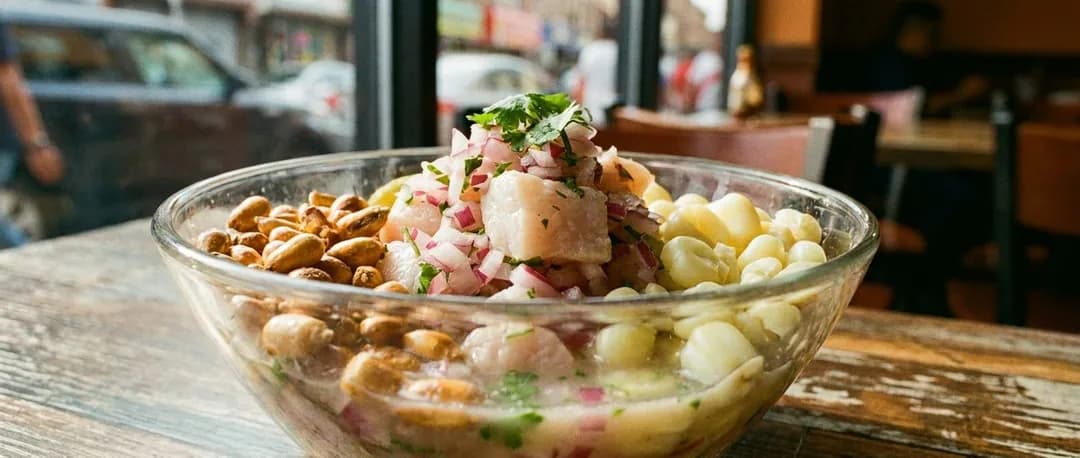
Bakeries serve match-day fuel with Lima timing
The panaderías along this stretch operate on a World Cup schedule that mirrors Peru's time zone more than New Jersey's. San Jorge Bakery opens at 4:30 a.m. on match days, its ovens already turning out fresh pan con chicharrón and picarones for fans heading to early viewing parties. The display cases fill with empanadas de carne and alfajores, and by mid-morning the line extends out the door—regulars ordering in rapid-fire Spanish, pointing at trays, calculating how many pastries their viewing party will require. La Delicia Bakery two blocks south follows a similar pattern, its staff doubling production the night before big matches. The owners learned years ago that Peruvian fans treat match days like family holidays, and the food requirements scale accordingly. Between games, these bakeries function as community bulletin boards where fans debate lineup choices and referee decisions, the conversations spilling from the counter to the sidewalk tables outside.
Pollería row delivers the comfort food of national pride
The concentration of Peruvian rotisserie chicken restaurants—pollerías—creates its own micro-economy on match days. At Don Pollo, the rotisseries spin at capacity from late morning through evening, whole chickens emerging with the mahogany char that signals proper preparation. Families order multiple birds, plus sides of papas fritas and salsa criolla, packing everything into takeout containers for home viewing parties. But many stay, filling the dining room's long communal tables where strangers become temporary family through shared nervous energy. Pio Pio Pollos a Brasa follows the same pattern, its tables packed two hours before kickoff, the air thick with garlic, cumin, and ají amarillo. The restaurants function as more than food service—they're gathering infrastructure, places where the Peruvian diaspora reconstitutes itself into something resembling the neighborhood social fabric left behind in Lima, Arequipa, or Trujillo. The staff knows the regulars by name and order, and during tense match moments, servers abandon pretense and watch the screens alongside customers.
Post-match Main Street becomes a victory lap or wake
The neighborhood's emotional temperature shifts dramatically with match outcomes. When Peru scores, car horns erupt in sustained celebration, drivers leaning out windows waving flags the size of bedsheets. The sound carries for blocks, drawing people from residential side streets onto Main Street where impromptu processions form—vehicles crawling at walking pace, flags dragging on pavement, passengers beating drums and chanting. Restaurants empty onto sidewalks, and the celebration stretches late into the evening, with street vendors materializing to sell flags, scarves, and glow sticks in red and white. The scene resembles Lima's Avenida Arequipa after a major victory, compressed and relocated but emotionally identical. Conversely, losses bring a different kind of gathering—fans lingering in restaurants long after matches end, conducting post-mortems over Cusqueña beer and pisco sours, the mood somber but communal. The neighborhood processes disappointment collectively, no one rushing home to grieve alone.
Residential blocks extend the fan zone atmosphere
The World Cup energy radiates beyond the commercial corridor into Paterson's residential streets where Peruvian families have settled in concentrated numbers. Walking through neighborhoods east of Main Street during matches reveals living rooms visible through windows, each one glowing with television light, groups of ten or fifteen people crowded onto furniture. Front porches become auxiliary viewing areas, with folding chairs arranged to face screens positioned in doorways. Kids wear miniature national team jerseys and kick soccer balls in driveways during halftime, replicating plays they just watched. The community's density means that a goal triggers reactions that ripple block by block—shouts from one house answered by shouts from the next, creating a wave of sound that marks the score before anyone checks their phone. These residential gatherings carry a different character than the restaurant scene—more intimate, often multigenerational, with grandmothers who emigrated decades ago watching alongside grandchildren born in New Jersey.
Practical notes for experiencing Peru's World Cup neighborhood
• Transit access: NJ Transit bus routes 722 and 746 serve Main Street from Manhattan's Port Authority Bus Terminal, with increased frequency on match days; driving requires patience as street parking fills early and traffic congestion peaks near kickoff
• Timing strategy: Restaurants reach capacity 90 minutes before kickoff; fans seeking guaranteed seating arrive two to three hours early, treating the pre-match buildup as part of the experience
• Weather considerations: Summer matches mean outdoor viewing setups and sidewalk crowds; restaurants with open-air sections like El Inca fill first, while winter qualifiers push everyone indoors and increase crowding
• Evening rhythm: Victory celebrations continue three to four hours post-match with street activity peaking around 9 p.m.; losses see crowds disperse more quickly but restaurants remain gathering spots for extended analysis
Tags: #PatersonNJ #PeruvianCommunity #WorldCupCulture #LaBlanquirroja #PeruvianMile #MainStreetPaterson #DiasporaSoccer #NewJerseyFood #SoccerCulture #ImmigrantCommunities #PeruvianFood #WorldCupViewing #PatersonEats #CommunityGathering
Sources consulted: fifa.com (https://www.fifa.com) · visitnj.org (https://www.visitnj.org) · timeout.com/new-york (https://www.timeout.com/new-york)
All trademarks are the property of their respective owners.
Ask Karpo first
Looking for where New Jersey's Peruvian community and La Blanquirroja fans are gathering for World Cup viewing this summer?
Ask Karpo for the latest on Paterson Main Street viewing spots, Peruvian community event schedules, and the best New Jersey places to follow Peru's World Cup campaign.
Ask Karpo for more information.
Keep reading
- Haaland Has Seven Goals and Norway Runs Entirely Through Him
 World Cup Trophy Ceremony Timing Medals and Postmatch Celebrations
 Olise and France's Attack: The Semifinal Tactical Question