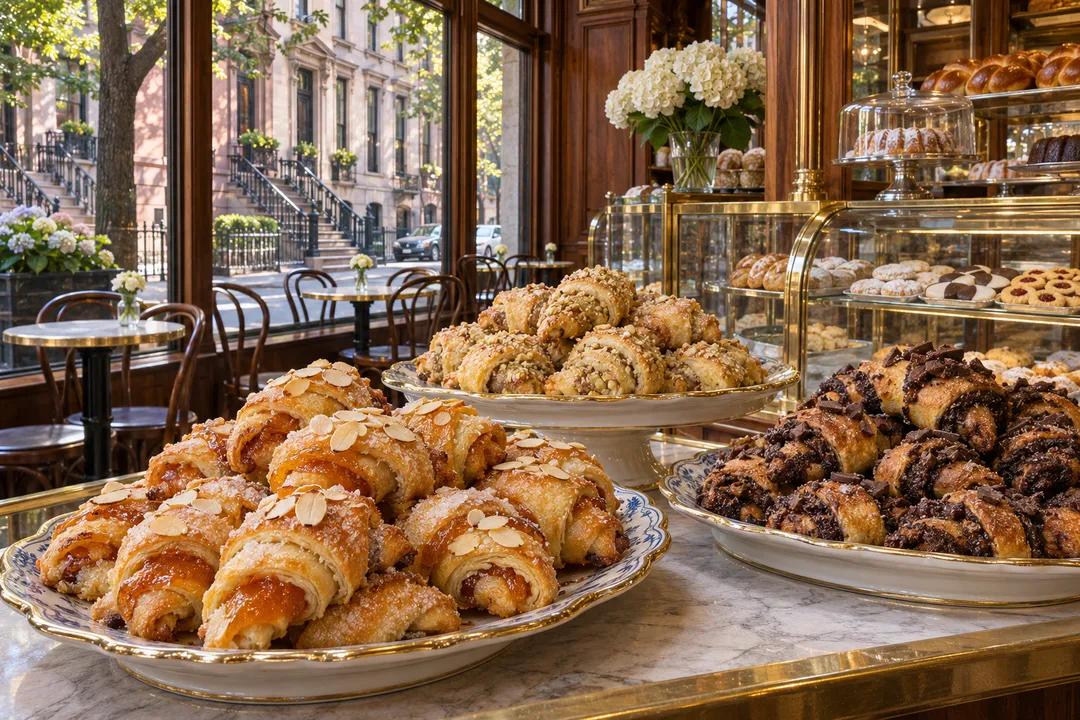
 Upper East Side Rugelach Bakery Crawl: Lexington to Park
Restaurants
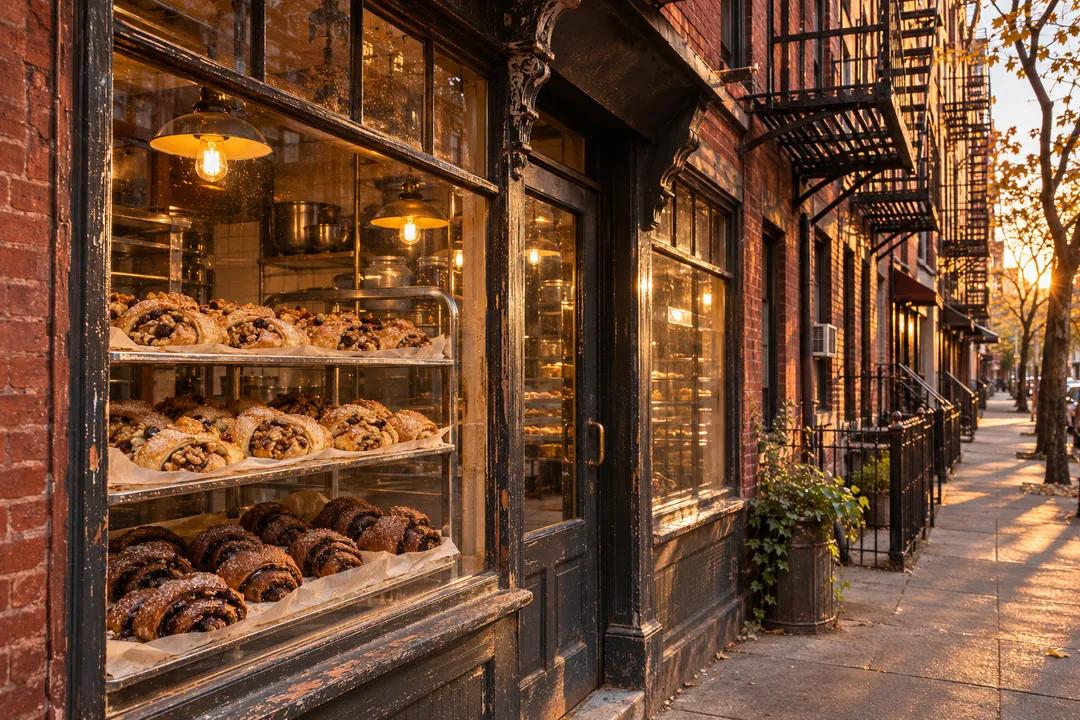
Lower East Side Rugelach Bakery Crawl: Grand to Essex
Follow a Lower East Side rugelach bakery crawl from Grand Street bialy counters to Essex and Orchard shops. Taste plum lekvar, walnut, and cocoa crescents.
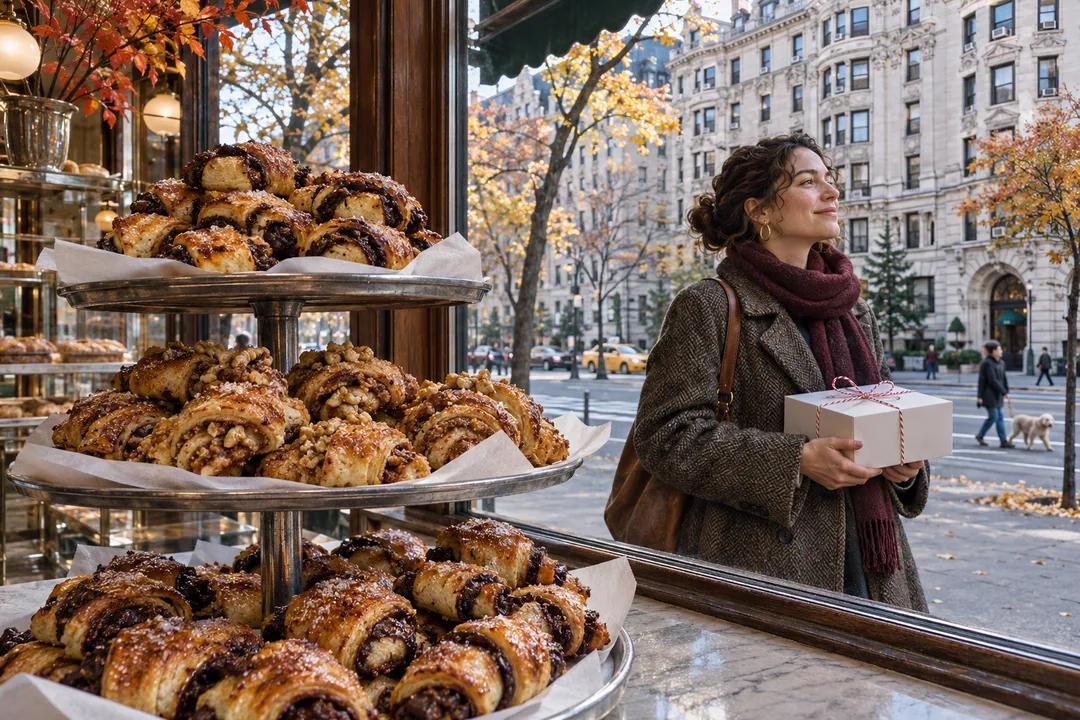
When my cousin visited from Chicago with a request for old-world Jewish baking that had not been softened for tourist sweet teeth, we started our afternoon at the corner of Grand and Essex Streets with empty coat pockets and two hot americanos. A Lower East Side rugelach bakery crawl moves through the historic tenement grid where Eastern European immigrant ovens first shaped New York's pastry vocabulary. Unlike uptown counters where massive, syrup-soaked spirals dominate the display, the shops clustered around Grand, East Broadway, and Orchard Streets preserve a leaner, more textural approach. Walking these blocks lets you compare crisp, parve oil-and-margarine crescents designed to follow a corned-beef meal against deeply caramelized, butter-laminated horns baked in tiny storefront kitchens tucked beneath cast-iron fire escapes.
Old-World Tenement Sheet Pans Along Grand and East Broadway
Begin your route on the wide southern stretch of the neighborhood near Grand Street and East Broadway, where low-ceilinged bake shops still treat rugelach as an everyday companion to onion bialys and braided challah rather than a stunt dessert. In these no-frills counters, the dough is rolled remarkably thin before receiving a dry, aromatic dusting of cinnamon, crushed walnuts, cocoa nibs, or currants. Because many traditional Lower East Side ovens bake pareve to keep their pastries dairy-free, the crust develops a distinctly crisp, cracker-like snap around the outer edge while staying chewy at the center coil.
When you step up to the glass counter, skip the pre-wrapped plastic clam-shells near the register and point directly to the aluminum sheet pans stacked on the rolling baker's rack behind the clerk. Ask for two pieces of the cinnamon-walnut and two of the dark chocolate, requested from the middle of the pan where the bottoms have caramelized without scorching. The clerk will flip a square of stiff wax paper over a digital scale, fold the corners into a neat packet, and hand it across before your coffee lid has even cooled.
Crossing Toward Essex Market and Orchard Street Pastry Windows
From the Grand Street corridor, angle northwest past the brick plaza of Seward Park and cross Delancey toward the market stalls and boutique ovens lining Essex, Ludlow, and Orchard Streets. Over the past decade, a younger wave of pastry cooks has set up shop alongside the neighborhood's century-old appetizing merchants, bringing cultured European butter, stone-ground rye flour, and Middle Eastern pantry staples into the rugelach conversation. Walking north on Orchard Street, you can watch bakers through street-level plate glass as they brush hot trays of rugelach with cardamom-infused honey or scatter toasted black and white sesame seeds across tahini-chocolate swirls.
The contrast between your first wax packet and these second-stop pastries is immediate. Where the old-school Grand Street crescent is light, dry, and whisper-thin, the Orchard Street versions lean into flaky butter lamination that shatters into golden shards when you bite down. Ordering a single apricot-pistachio or halva-chocolate horn here gives you a vivid sense of how the neighborhood's baking traditions keep evolving without losing their devotion to tight hand-rolling and deeply browned bottoms.
Why Plum Lekvar and Poppy Seed Deserve a Spot in Your Bag
Most first-time crawlers load up exclusively on chocolate, only to find their palates overwhelmed after the fourth piece. On the Lower East Side, the smartest move is dedicating half your bag to the dark, tangy fruit and seed fillings that Eastern European grandmothers prized. Look for trays labeled lekvar—a slow-simmered reduction of dark plums or prunes that cooks down into a thick, mahogany paste with zero cloying sweetness. Wrapped inside a tender pastry triangle, plum lekvar delivers a smoky, wine-like tartness that makes you reach immediately for another bite.
Equally rewarding is the classic mohn, or ground poppy-seed filling, which has become increasingly rare outside heritage Jewish neighborhoods. Properly prepared poppy seed is steamed and ground with honey, lemon zest, and a pinch of vanilla so it stays moist and nutty rather than gritty. Pairing one poppy-seed crescent and one lekvar horn alongside your chocolate standard turns an ordinary snack walk into a genuine tasting flight across Ashkenazi baking history.
Benches, Pickles, and Coffee Stops Around Seward Park
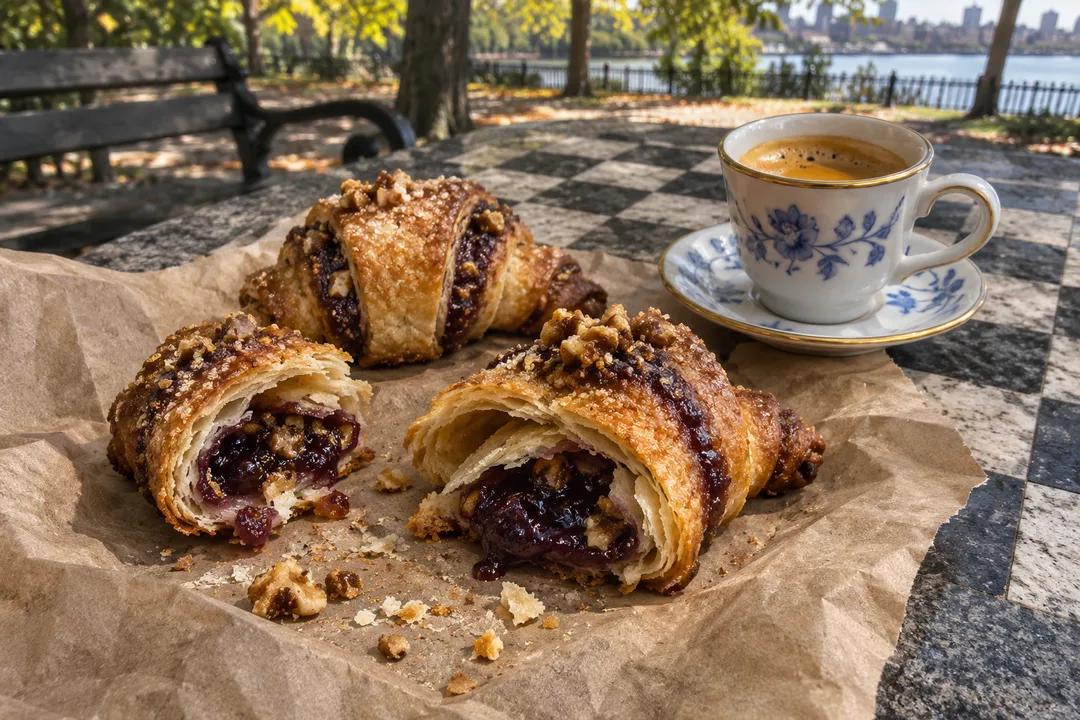
Because many Lower East Side bakeries operate as compact takeout counters without indoor tables, planning where you will pause to eat is half the fun of the crawl. On a dry afternoon, double back to the historic wrought-iron perimeter of Seward Park or claim one of the concrete chess tables along Canal and Hester Streets, right across from the handsome stone facade of the neighborhood public library. Unwrapping your wax-paper bundles in the open air lets you lay the pastries side by side and inspect the cross-sections—counting the tight spiral layers of a traditional roll versus the airy honeycomb of a yeasted dough while pigeons and afternoon readers drift past.
To keep your taste buds sharp between sweet stops, weave a savory detour into the middle of the route. Grabbing a half-sour garlic pickle from a barrel stand, ordering a cup of tangy borscht, or sharing a warm square potato knish near Houston Street resets your palate completely before the final bakery leg. If a chilly drizzle rolls in off the East River, duck into Essex Market's mezzanine seating area where you can pair your bakery bag with hot mint tea or a cortado without rushing. You can also pull up the Karpo APP as you wander between Allen and Clinton Streets to spot nearby espresso bars, historic tenement courtyards, and bakery counters along your exact walking line.
Carrying Lower East Side Rugelach Home on the Subway
If you plan to carry a pound or two of Lower East Side rugelach uptown or across the river on the F, J, or M train, ask the counter staff to pack your haul in a rigid cardboard bakery box rather than flat paper bags. Dry, thin-crusted pareve rugelach are surprisingly fragile and will snap at the pointed tips if jostled inside a crowded backpack or canvas tote during rush hour. Have the clerk place heavier chocolate logs on the bottom layer, separated by a double sheet of butcher paper, with delicate sugar-topped walnut, poppy-seed, and apricot pieces resting safely on top.
Once you get home, store the pareve and butter-rich sour-cream styles in separate metal tins so the moisture levels do not equalize overnight. The crisp Grand Street pieces stay flaky for several days at cool room temperature and never need reheating, making them effortless to set out alongside afternoon black coffee or lemon tea. Meanwhile, the butter-heavy Orchard Street horns reward a brief two-minute warm-up on a dry cast-iron skillet over low heat just before serving, which coaxes the cardamom honey and dark cocoa filling back into a glossy, aromatic ribbon.
Ask Karpo for more information.
Keep reading
- Upper East Side Rugelach Bakery Crawl: Lexington to Park
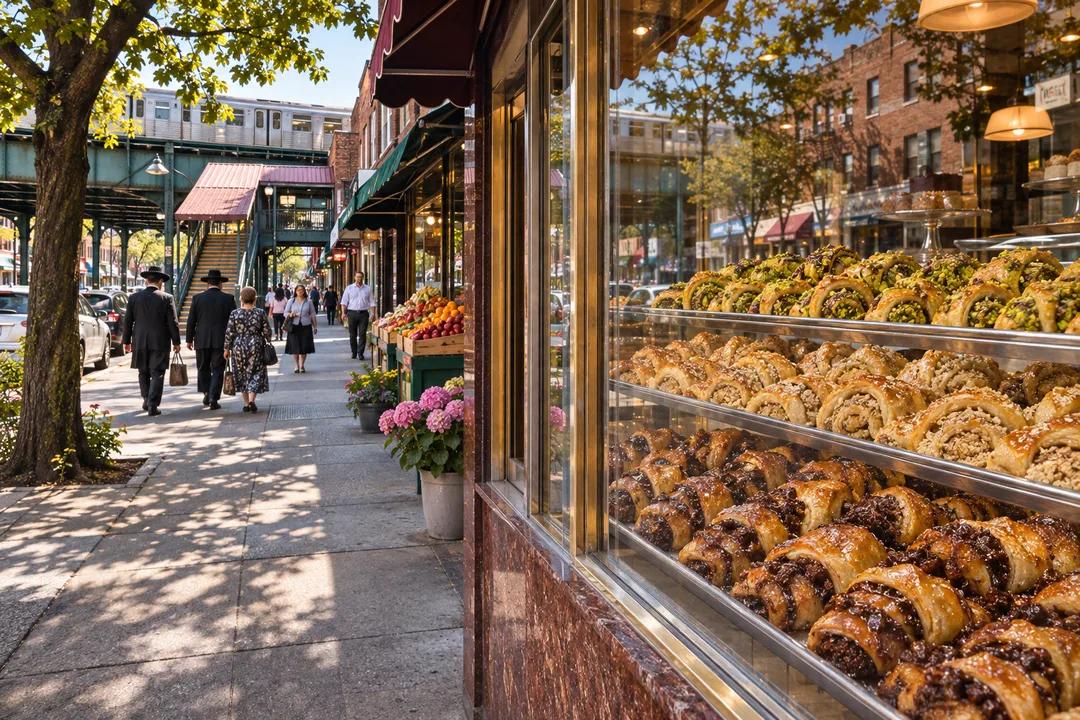 Midwood Rugelach Bakery Crawl: Avenue J to Avenue M
 Upper West Side Rugelach Bakery Crawl: Sunday Pastry Boxes