 Haaland Has Seven Goals and Norway Runs Entirely Through Him
⚽️2026 FIFA WORLD CUP
The MetLife Tailgate Playbook: Grills, Gate Maps, and the Meadowlands Walk
Three hours before kickoff, 82,500 strangers become a temporary city. Between the NJ Transit platform and your seat, there's an entire ecosystem worth understanding—especially when World Cup 2026 arrives.
The train walk: fifteen minutes that separate tourists from initiates
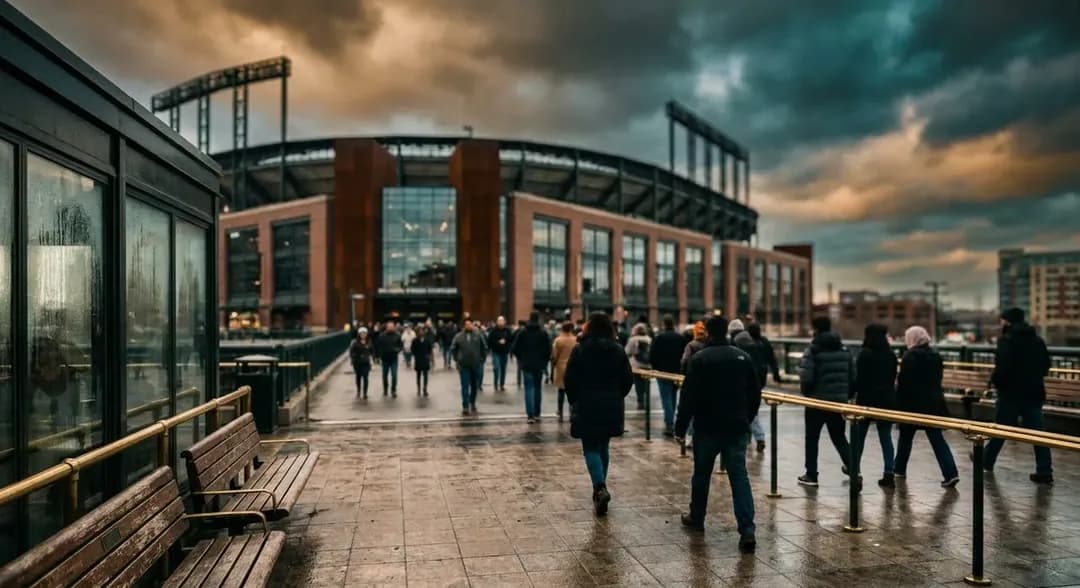
You step off the NJ Transit train at Meadowlands Station, and the first thing you notice isn't the stadium—it's the river of people moving with collective purpose. The walk to MetLife Stadium takes twelve to seventeen minutes depending on your pace and how often you stop to absorb the scene. Locals know to stay right on the pedestrian bridge; the left lane clogs with first-timers taking photos. By the time World Cup 2026 kicks off, this route will carry delegations from nations across the globe, but the choreography remains the same: follow the current, keep your ticket on your phone, and save your energy for what's ahead. The real secret is the bathroom trailer cluster exactly halfway—clean, rarely mentioned in official materials, and positioned where the bridge meets solid ground. Mark it mentally.
The stadium emerges gradually, not dramatically. One moment you're surrounded by infrastructure, the next you're facing the largest stadium in the NFL, reconfigured to hold 82,500 for football matches. The approach lacks the urban texture of European grounds, but that's precisely the point. MetLife exists in a landscape of parking lots and highway overpasses, which means the pre-match atmosphere doesn't radiate from neighborhood pubs—it concentrates in the tailgate zone, a temporary city that materializes hours before kickoff and vanishes after the final whistle.
Parking lot geography: where the real pre-match unfolds
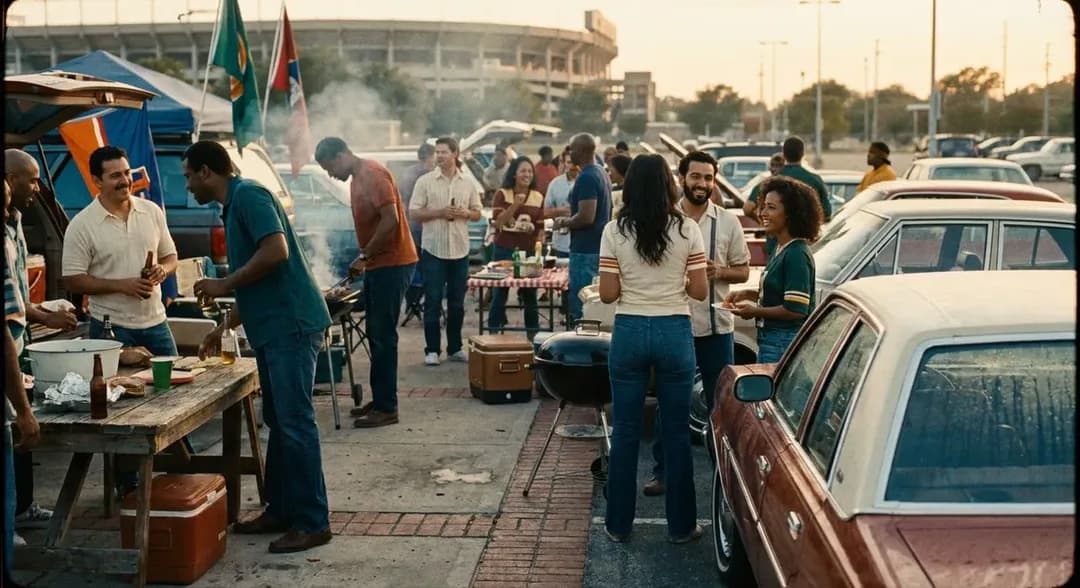
The lots closest to the train platform offer convenience—families park here, people who arrive ninety minutes early. The grills are smaller, the setups more modest. The lots on the stadium's western flank are where the serious operations unfold. You'll find canopy tents large enough to shelter twenty people, custom-built grill trailers, and sound systems that test the limits of good neighborliness. The walk from the far lots to the gates takes several minutes, which means you can nurse a beer until well before kickoff and still make the anthems.
Certain lots attract the jersey swap crowd—collectors who bring duplicates and trade like currency traders. Look for the clusters that form before major matches. During World Cup 2026, this will become a United Nations of kit exchanges, but even now, you'll see rare shirts from CONCACAF qualifiers and vintage designs that predate current crests. Other lots host buses and organized supporter groups. Unless you're with a crew, the energy there is insular, the chants rehearsed, the welcome conditional.
The universal tailgate rule: bring something to share. A six-pack. A bag of chips. Your presence at someone's grill setup is currency, and empty hands read as presumptuous. The beer prices inside the stadium—premium stadium pricing—make the parking lot cooler a strategic asset, not just a social amenity.
Gate strategy: why your entry point matters
MetLife Stadium has multiple gates, and your section number determines your assigned entry. But the locals know certain gates move faster during peak arrival windows for evening matches—the security staffing varies, the scanner lines differ in organization. Some gates, despite serving fewer sections, consistently back up because they funnel both train arrivals and parking lot traffic into the same choke point. If your ticket assigns you to a congested gate and you have time flexibility, walking the perimeter to an alternate entry can save you significant time in the security line.
Inside, the concourse layout follows a logic that takes one visit to internalize. The main concession stands cluster at midfield, which means they're slammed until well into the first half. The secondary stands near the corners have identical menus but half the wait. For bathrooms, go up—the upper-level facilities see far less traffic than the lower bowl, and the sightlines from the upper sections at MetLife are better than many lower sidelines anyway. Seats in the 200-level offer the tactical overview that football demands; you'll see formations develop, not just react to the ball.
The stadium's sight-line geometry was optimized for American football, which means the corners sit farther from the pitch than in purpose-built football stadiums. Avoid the extreme corner sections unless you're getting tickets at a significant discount. The best value seats are in the elevated central sections—high enough for perspective, close enough to hear the goalkeeper's instructions during goal kicks.
The tailgate grill hierarchy
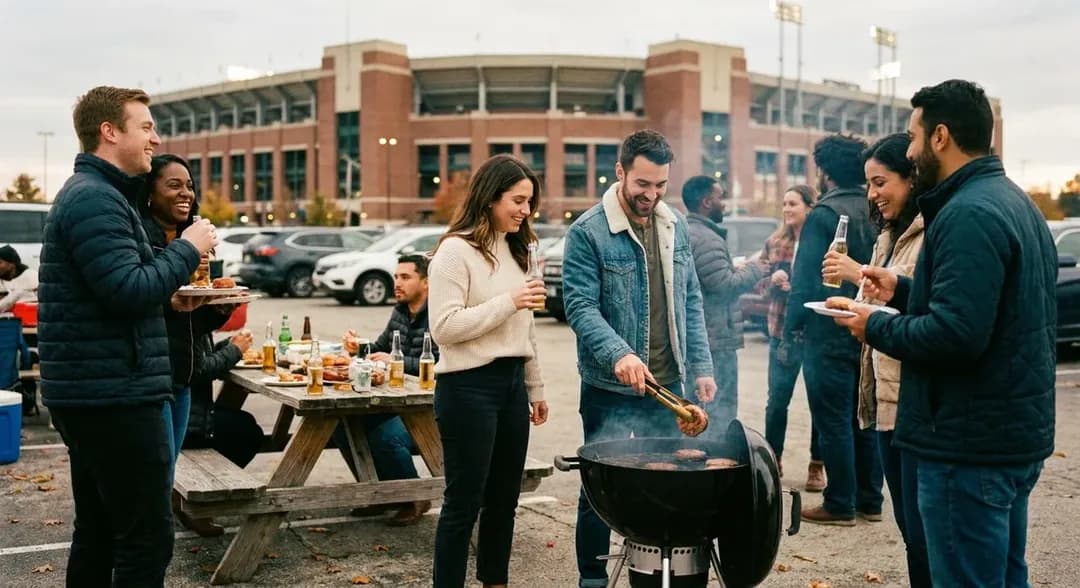
Not all parking lot grills are equal. The propane portables are for efficiency—burgers and dogs, fast turnaround, minimal setup. The charcoal kettle grills signal commitment; someone arrived early, brought real wood, planned a menu. Then there are the custom rigs: offset smokers on trailer hitches, flat-top griddles running off RV generators, whole rotisserie setups with spits that turn for hours. These aren't grills—they're statements.
The unwritten protocol: if you smell something exceptional, you can approach and compliment the technique. More often than not, you'll be offered a sample. The parking lot operates on abundance logic; everyone made too much food, and sharing is both generous and practical. The tailgaters who've been doing this for years—through Giants games, Jets games, major tournaments—they know the stadium's commercial food is expensive and mediocre. The parking lot meal is the real pre-match ritual.
Bring a proper cooler, not a soft-sided bag. Ice melts fast in summer sun, and a watery beer late in the afternoon is a failure of planning. The veterans use those wheeled coolers that double as seats—mobility and utility combined. And if you're driving, pack out everything you pack in. The post-match parking lot is a minefield of abandoned chairs and half-empty charcoal bags. Don't be that person.
Timing: the arrival window, broken down
Three hours before kickoff is when the lots open and the core tailgaters arrive. This is setup time—canopies rising, grills heating, the first beers cracked. If you arrive at this point, you're early enough to claim a good spot in someone's orbit but not so early that you're standing around watching people unload trucks. Two hours before kickoff, the lots reach critical mass. This is peak tailgate—the grills are hot, the food is coming off, the crowd has density but not chaos.
Ninety minutes before kickoff, the energy shifts. People start packing up the peripherals, securing valuables in cars, making the mental transition from parking lot to stadium. This is when you want to start your walk to the gates, especially for high-demand matches. When World Cup 2026 brings marquee matchups to MetLife, the security lines will stretch in ways regular-season NFL games don't approach. Sixty minutes before kickoff, you should be through security, on the concourse, making your bathroom stop before finding your seat.
Forty-five minutes before kickoff, the stadium bowl starts to fill. The early arrivals claim their spots, the anthems crew does sound checks, the broadcast cameras pan across the crowd for color shots. This is when you feel the 82,500 capacity as potential energy—not yet released, but building. By thirty minutes before kickoff, if you're still in the parking lot, you're cutting it close. The walk, the security, the concourse navigation—it all compounds. And there's no worse feeling than hearing the opening whistle from a bathroom line.
Practical notes
MetLife Stadium sits at 1 MetLife Stadium Drive, East Rutherford, NJ 07073, in the Meadowlands Sports Complex. NJ Transit runs the Meadowlands Rail Line to Meadowlands Station on event days, connecting via Secaucus Junction—trains run frequently starting hours before kickoff. There is a walk from the station to the stadium gates. Parking is available with advance purchase recommended. Gates typically open two hours before kickoff for most matches; World Cup 2026 matches may adjust this window. Beer inside runs at premium stadium pricing. Outside food is generally prohibited, though policies vary by event. MetLife has a long-standing tailgating tradition in stadium parking lots—grilling is allowed within a single parking space with contained grills, subject to event-specific rules. World Cup 2026 tailgate policies may differ from standard operations; check official sources closer to match dates. The stadium is fully accessible with ADA accommodations available. For World Cup 2026 matches, expect increased security screening times—add buffer time to your normal arrival window. MetLife Stadium will host 8 World Cup matches including the Final on July 19, 2026. Check metlifestadium.com and fifa.com for match-specific updates.
Tags: #MetLifeStadium #WorldCup2026 #TailgateGuide #NJTransit #EastRutherford #SoccerCulture #USMNT #MatchDayExperience #ParkingLotGrills #StadiumGuide #NYC #NewJersey #FIFAWorldCup #MeadowlandsStation #GameDayPrep
Sources consulted: fifa.com · metlifestadium.com · njtransit.com
Please drink responsibly. Must be of legal drinking age.
All trademarks are the property of their respective owners.
Ask Karpo for more information.
Keep reading
- Haaland Has Seven Goals and Norway Runs Entirely Through Him
 World Cup Trophy Ceremony Timing Medals and Postmatch Celebrations
 Olise and France's Attack: The Semifinal Tactical Question