 Haaland Has Seven Goals and Norway Runs Entirely Through Him
⚽️2026 FIFA WORLD CUP
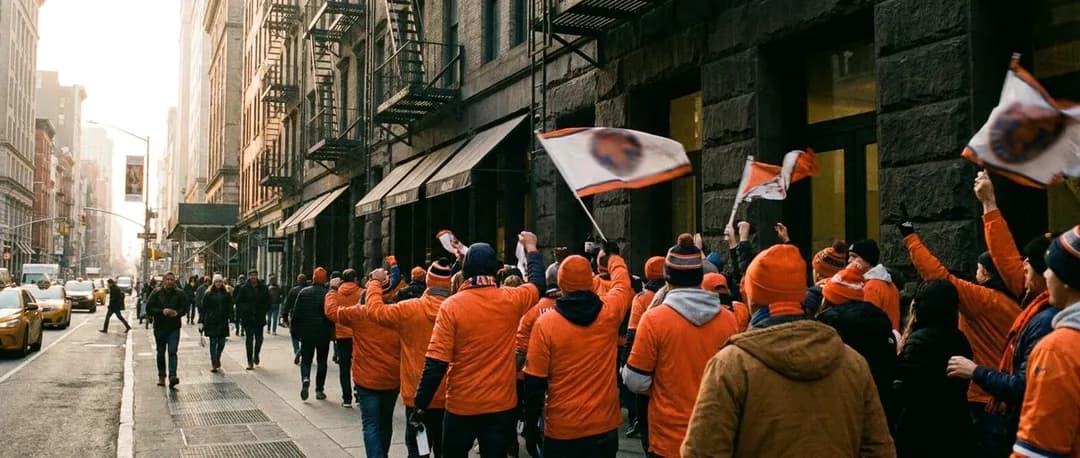
Netherlands Fans Find New York Still Carries the Orange
New York City has a longer Dutch history than most residents acknowledge, and with the Netherlands competing in the World Cup, the city's Dutch expat and Dutch-American community is activating viewing setups in Lower Manhattan and the Financial District that blend the precision of Oranje fan culture with New York's characteristic approach to watching sports anywhere it fits.
The Dutch settled Manhattan four centuries ago, and when the Netherlands takes the pitch in a World Cup match, Lower Manhattan remembers. Orange floods back into the Financial District's stone canyons and cobblestone corners, carried by expats who've made New York home and Dutch-Americans who never quite let the connection fade. The neighborhoods where New Amsterdam once stood now host viewing parties that blend European football precision with New York's ability to turn any corner into a celebration. Stone Street fills with supporters in orange jerseys at 9 a.m. kickoffs. Battery Park's benches become outdoor living rooms. The old Dutch footprint, buried under centuries of American commerce, surfaces every four years in chants and scarves.
Stone Street Becomes a Tilted Amsterdam Terrace
Stone Street, the Financial District's preserved cobblestone block lined with outdoor tables, transforms into an improvised Dutch terrace when the Oranje play. Bars along the narrow street—Adriaenne's Pizzabar, Ulysses Folk House, and the Stone Street Tavern—set up projectors and outdoor screens by 8 a.m. for European kickoff times. Supporters arrive an hour early, claiming tables under the morning light that angles between the surrounding towers. The scene carries a peculiar New York quality: Dutch fans in replica kits sitting alongside Wall Street analysts still wearing their work badges, everyone drinking Heineken before lunch. The street's pedestrian-only status creates a contained atmosphere where chants echo off nineteenth-century facades. When the Netherlands scores, the noise bounces between buildings and travels down Pearl Street. Waitstaff navigate the cobblestones carrying trays of bitterballen and fries with mayonnaise, Dutch bar snacks that have become Stone Street staples during tournament months. The outdoor setup means weather dictates everything—rain sends crowds scrambling under awnings, but clear mornings create something rare in Manhattan: a European-style public viewing space where strangers share tables and the match becomes communal property.
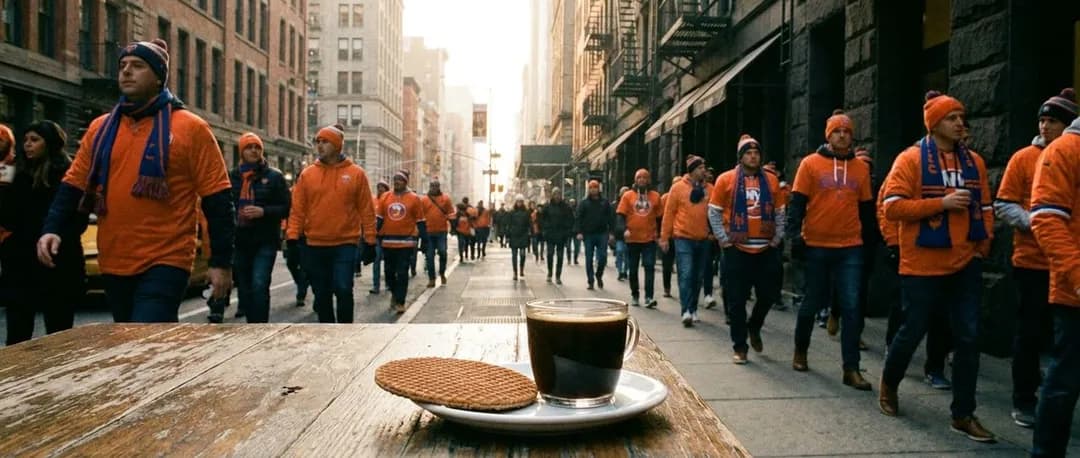
The Battery Park Overflow Watches on Phones and Tablets
When Stone Street reaches capacity, Dutch supporters drift south to Battery Park, where the harbor views provide an unlikely backdrop for World Cup viewing. Groups gather on the lawns near Castle Clinton, tablets and phones propped on backpacks, earbuds shared between friends. The scene looks distinctly twenty-first century: fans streaming matches on international apps, commentary in Dutch filtering through smartphone speakers, the Statue of Liberty visible in the distance. The park's benches fill with supporters who've given up on finding bar space, creating impromptu viewing clusters under the plane trees. Ferry commuters from Staten Island pause to check scores on the SeaGlass Carousel plaza. The waterfront promenade becomes a slow-moving parade of orange during halftime, fans stretching legs and checking phones for updates from other matches. Food vendors near the park entrance stock stroopwafels during tournament weeks, a small concession to the Dutch presence. The informal atmosphere contrasts with the structured bar viewings—no reserved tables, no cover charges, just fans finding space wherever the Wi-Fi signal holds. When the final whistle blows, the park empties in waves, supporters heading back toward the subway or lingering near the water, the tournament tension dissolving into harbor wind.
Financiers and Expats Share the Same Orange
The Dutch community in New York splits between finance professionals working in the towers above and longtime expats who've built lives in Brooklyn and Queens but return to Lower Manhattan for matches. The Financial District bars become neutral ground where both groups converge. Investment bankers who moved to New York for postings at Dutch firms sit beside second-generation Dutch-Americans whose grandparents arrived in the 1950s. The shared language is English, mostly, though Dutch phrases surface during tense moments—"Kom op!" echoes through Stone Street when the Netherlands pushes forward. The financial crowd tends toward newer replica jerseys and craft beer; the expat regulars wear faded shirts from previous tournaments and stick to Heineken. Both groups know the chants, the rhythms ingrained from different decades of supporting the same team. Between matches, conversations drift toward the old Dutch presence in Manhattan—street names that survived (Pearl Street, Maiden Lane), the spots where the original settlement stood, the question of whether any authentic Dutch culture remains beyond tulip festivals and Sinterklaas celebrations in Brooklyn. The World Cup provides temporary answer: the culture lives in the gathered crowds, the collective tension during penalty kicks, the way Lower Manhattan briefly remembers its founding language.
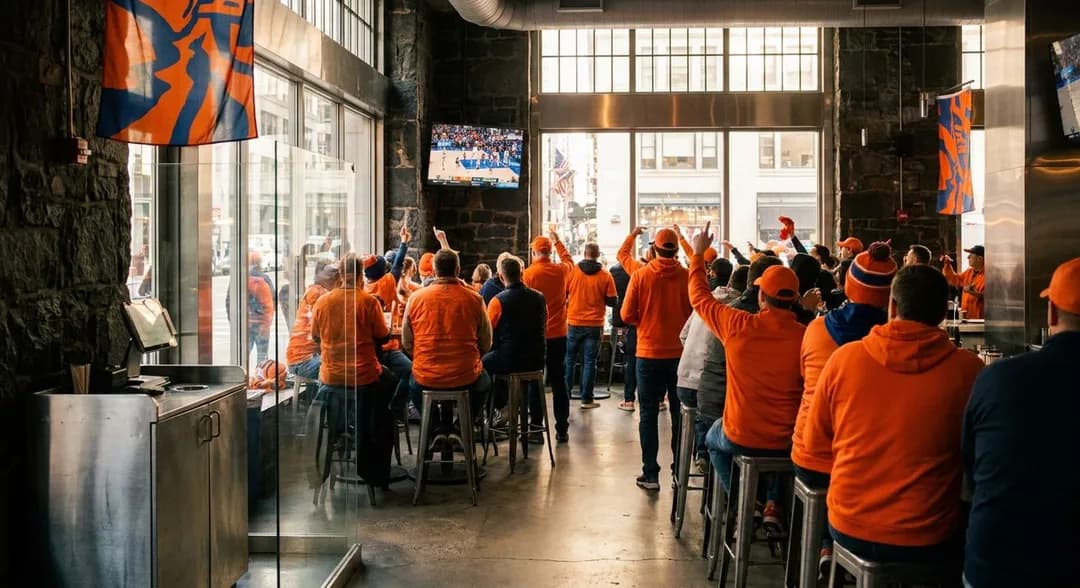
Lunch Hour Kickoffs Reshape the Financial District
When matches fall during New York lunch hours, the Financial District's rhythm shifts. Noon kickoffs empty office buildings. Workers flood bars that opened early, standing three-deep at counters, eyes fixed on screens. The usual midday restaurant rush gets absorbed into the viewing parties—lunch becomes secondary to the match. Stone Street's outdoor tables fill with people eating burgers while watching through bar windows. The Delmonico's crowd mingles with supporters in orange face paint. Law firms and banks unofficially acknowledge the disruption; emails go unanswered for ninety minutes. The post-match return to offices carries visible mood shifts—Dutch employees in good spirits after wins, subdued after losses. Some bars stay packed through the afternoon, supporters extending lunch into impromptu half-days, the Financial District's usual efficiency yielding to tournament time. The neighborhood's typical precision—the scheduled meetings, the timed coffee runs—loosens during World Cup weeks. Lower Manhattan becomes briefly European in its willingness to let football interrupt everything else.
Fraunces Tavern Holds the Historic Dutch Anchor
Fraunces Tavern, the Revolutionary War-era landmark at Pearl and Broad, serves as unofficial headquarters for Dutch supporters seeking something beyond Stone Street's party atmosphere. The tavern's colonial dining rooms provide quieter viewing spaces, the historical weight of the building adding gravity to the gatherings. Supporters reserve tables in the upstairs rooms, where the match plays on smaller screens and conversations can happen without shouting. The tavern's Dutch connection runs through New Amsterdam history—the building sits blocks from where the original Dutch fort stood. Staff set up stroopwafels and Dutch cheese plates during tournament matches, small gestures that acknowledge the returning community. The crowd skews older, longtime New York residents who remember when Dutch viewing parties were harder to find, before streaming and before the Financial District's bars recognized the orange-clad audience. After matches, supporters linger over coffee, discussing tactics and tournament brackets in the same rooms where Washington bid farewell to his officers. The historical layers matter here—Dutch fans watching in a building that predates the United States, in a neighborhood that was Dutch before it was anything else.
Post-Match Crowds Fade Into the Evening Ferry Routes
After final whistles, the orange disperses through Lower Manhattan's transit nodes. Supporters flow toward the Fulton Street subway complex, the Whitehall ferry terminal, the PATH trains to New Jersey. The evening commute absorbs the Dutch crowds, jerseys mixing with business suits on packed trains. Some groups extend celebrations north to the East Village or west to Brooklyn, following the energy to neighborhoods with later bar hours. Others catch ferries to Staten Island, the harbor crossing providing decompression time after tense matches. The Financial District itself quiets quickly—the neighborhood's residential population remains small, and bars that opened at 8 a.m. close by early evening. Stone Street empties, the cobblestones littered with orange napkins and empty cups. By sunset, little visible evidence remains of the morning's gathering, the Dutch presence folded back into the city's constant motion. The cycle repeats with each match: early arrivals, concentrated energy, rapid dispersal. Lower Manhattan handles the pattern efficiently, the way it handles everything—absorbing the crowd, providing the space, returning to its regular programming once the moment passes.
Practical Notes
• Transit access: Multiple subway lines converge at Fulton Street (2/3/4/5/A/C/J/Z); Wall Street station (4/5) serves the southern Financial District; ferries run from Whitehall Terminal to Staten Island and Governors Island
• Early kickoffs: European match times mean 9 a.m. to noon starts; Stone Street bars open by 8 a.m. on match days, but seating fills quickly for important games
• Weather contingency: Stone Street's outdoor setup depends on conditions; rainy days push crowds into indoor bars like Ulysses or toward covered spaces near the Oculus
• Post-match timing: The Financial District empties fast after 6 p.m.; fans planning evening extensions should head toward the East Village or Brooklyn before bars close
Tags: #NetherlandsWorldCup #OranjeNYC #LowerManhattan #FinancialDistrict #StoneStreetNYC #DutchExpats #WorldCupViewing #NewAmsterdamHistory #NYCFootball #BatteryPark #FrauncesTavern #NYCSoccerCul
Sources consulted: fifa.com (https://www.fifa.com) · nycgo.com (https://www.nycgo.com) · timeout.com/newyork (https://www.timeout.com/newyork)
All trademarks are the property of their respective owners.
Ask Karpo first
Wondering where New York City's Dutch community and Oranje supporters are gathering to watch Netherlands matches this World Cup summer?
Ask Karpo for the latest on Lower Manhattan and Financial District viewing venues, Dutch community events, and the best NYC spots for following the Netherlands in the World Cup.
Ask Karpo for more information.
Keep reading
- Haaland Has Seven Goals and Norway Runs Entirely Through Him
 World Cup Trophy Ceremony Timing Medals and Postmatch Celebrations
 Olise and France's Attack: The Semifinal Tactical Question