 Haaland Has Seven Goals and Norway Runs Entirely Through Him
⚽️2026 FIFA WORLD CUP
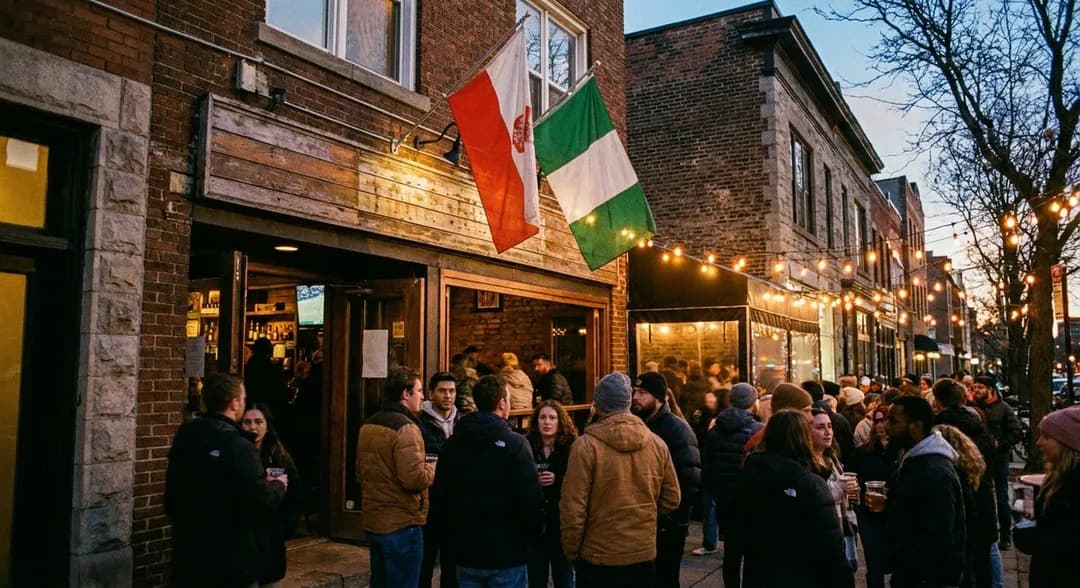
White and Green: Mott Haven's Polish and Nigerian Watch House for a Fixture That Fills the Block
A dual-community bar on Alexander Avenue hosts Poland vs Nigeria with pierogi and jollof rice served side by side and the sidewalk turned standing-room fan zone.
Two Flags, One Roar
You walk into the watch house on Alexander Avenue and the air splits down the middle—literally. Left side draped in white and red, right side in green and white, and the bar running between them like a negotiated border. This is Mott Haven during a World Cup match that pulls two diasporas into the same room, and the tension hums pleasant and electric. You can smell the onions caramelizing for pierogi before you see the kitchen, and the jollof rice arrives in waves that turn every head toward the pass. The game hasn't started but the block outside is already three-deep, speakers wired to the windows, someone's uncle setting up a folding table for paper plates.
The Geography of Cheering
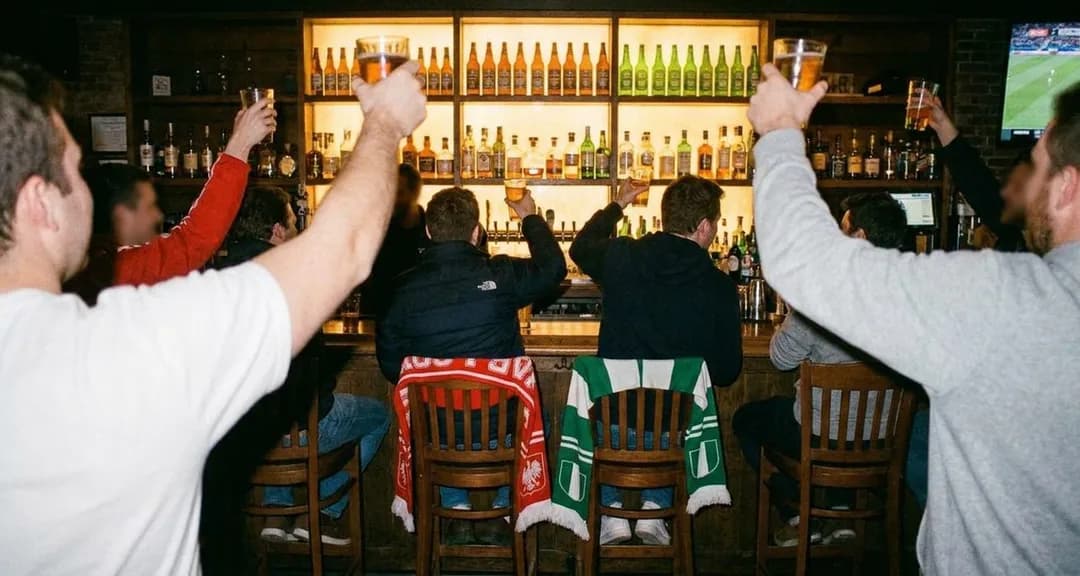
The room arranges itself without instruction. Polish families claim the booths near the front windows where the light comes in sharp and unfiltered in the afternoon. Nigerian regulars take the high-tops along the exposed brick wall where the acoustics bounce chants back louder. But the bar itself stays neutral territory—you sit there and you're fair game for banter from both sides, and the bartender switches languages mid-sentence without breaking rhythm. By the time kickoff approaches, the divisions blur. A kid in a Poland scarf shares a bench with someone's grandmother in Nigerian print, both leaning toward the same screen. The standing-room section outside grows denser, and you catch the smell of grilled meat from a cart that wasn't there an hour ago, run by someone who knows exactly when crowds get hungry.
What Arrives on Plates
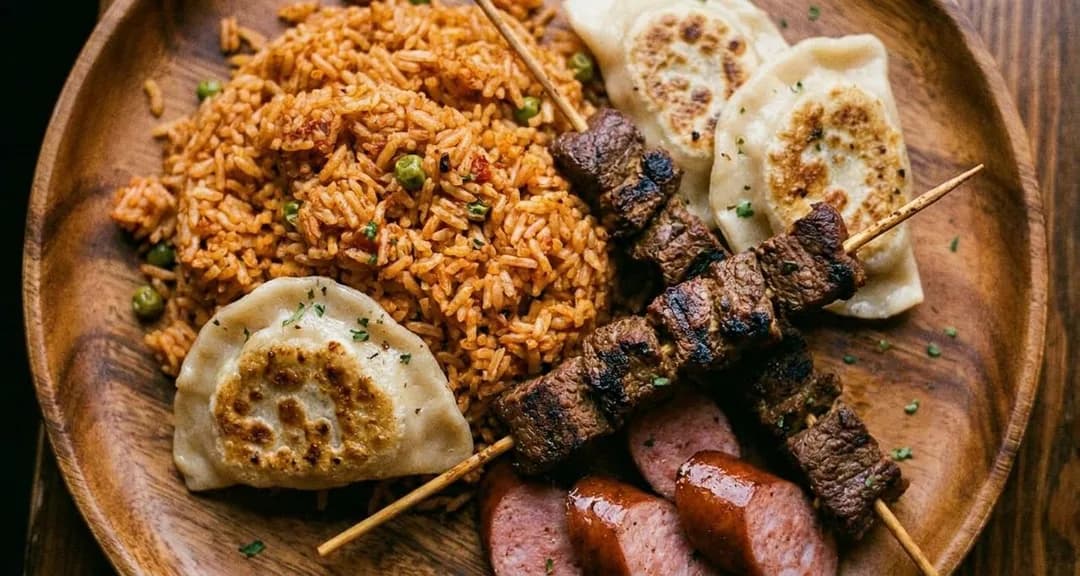
The kitchen works two lines and neither compromises. Pierogi come out with that perfect weight—heavy enough to feel like a meal, light enough that you'll reach for another. The potato and cheese filling holds heat longer than you expect, and the caramelized onions on top have that slow-cooked sweetness that only comes from patience. On the other side, jollof rice arrives bright and unapologetic, the tomato base rich and slightly smoky, each grain separate but cohesive. You can order both, and most people do. The plates get passed, traded, split between strangers who came in alone and leave knowing names. Someone's aunt brought homemade bigos in a Tupperware and it circulates like contraband. The Nigerian pepper soup appears in small bowls during halftime, and the heat builds slow then stays.
The Soundtrack Beneath the Game
Before the whistle, before the commentators, there's a playlist that runs low but insistent. Polish folk vocals blend into Afrobeat percussion, and nobody complains about the transitions because they work. The DJ—not a hired professional, just someone's cousin with a laptop—reads the room better than any algorithm. When the game starts, the music drops but doesn't disappear entirely; it fills the gaps between plays, keeps energy from sagging during slow stretches. You hear the crowd outside before you see them on the screen—their roar arrives a half-second early, a spoiler you don't mind. During tense moments, the room goes silent except for the creak of barstools and the hiss of something frying in the back. Then a near-miss or a great save breaks the dam and both sides erupt, sometimes in unison, sometimes in opposing waves that crash into each other and somehow don't cancel out.
The Sidewalk Becomes the Stadium
By the time the match is underway, Alexander Avenue transforms. The bar's front windows open fully, screens angled so the overflow crowd outside can watch without pressing faces to glass. Someone brings folding chairs that get claimed immediately. Others stand for ninety minutes without complaint, shifting weight from foot to foot, arms crossed or raised depending on the play. The sidewalk smells like summer even if it's not—hot asphalt, spilled beer, the char from street meat, and that specific funk of too many people in too small a space all breathing the same air. Kids weave through the crowd selling water bottles from coolers, and nobody haggles. The energy peaks and valleys with the game's rhythm, but never fully drops. During halftime, the crowd doesn't disperse; they rearrange, form new clusters, debate calls and tactics in three languages, and the smokers finally get their moment without missing action.
When Strangers Become Witnesses
You don't come here to watch quietly. The bar operates on the assumption that everyone has opinions and everyone will share them, whether invited or not. A man in a vintage Poland jersey explains a defensive strategy to a teenager in Nigerian colors who nods seriously, then counters with observations about midfield possession. An argument about a penalty call escalates until both parties are standing, gesturing wildly, and then they're laughing and buying each other drinks. The bartender moves with the efficiency of someone who's done this before—pours without looking, makes change without counting, remembers who's drinking what even when the room is packed shoulder to shoulder. By the final whistle, win or lose, the room exhales together. The tension that felt competitive two hours ago now feels communal, like everyone survived something together and came out better for it.
Practical Notes
The watch house operates as a neighborhood bar most days, transforming for major matches with advance notice spread through community networks and word of mouth rather than formal advertising. Arrive early if you want a seat inside—an hour before kickoff usually works, though big matches draw crowds earlier. The standing-room section outside is first-come, no reservations, and the vibe stays welcoming as long as you're respectful. Transit-wise, you're looking at subway lines that serve the South Bronx, then a short walk into Mott Haven proper. Parking exists but fills fast. Cash helps but cards work. The kitchen runs continuously during matches, and both food lines move surprisingly quick despite the volume. If you're bringing family, kids are welcome until evening when the energy shifts more adult. Check community boards or local social media for match schedules and any special menu additions that appear for tournament play.
Tags: #2026FIFAWorldCup #MottHaven #TheBronx #NewYorkCity #PolishDiaspora #NigerianDiaspora #WorldCupWatch #SoccerCulture #FootballCulture #DiasporaDining #NeighborhoodBars #BronxEats #CommunitySpaces #MultiCulturalNYC #KarposFinds
Sources consulted: fifa.com · espn.com · timeout.com
Please drink responsibly. Must be of legal drinking age.
All trademarks are the property of their respective owners.
Ask Karpo for more information.
Keep reading
- Haaland Has Seven Goals and Norway Runs Entirely Through Him
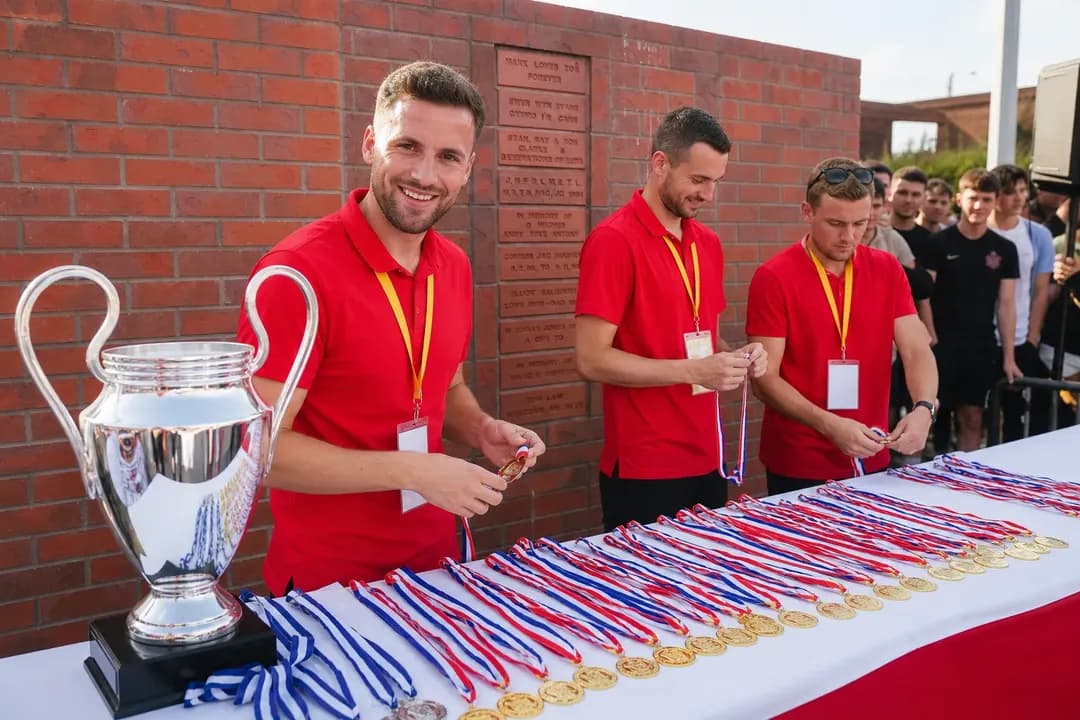 World Cup Trophy Ceremony Timing Medals and Postmatch Celebrations
 Olise and France's Attack: The Semifinal Tactical Question