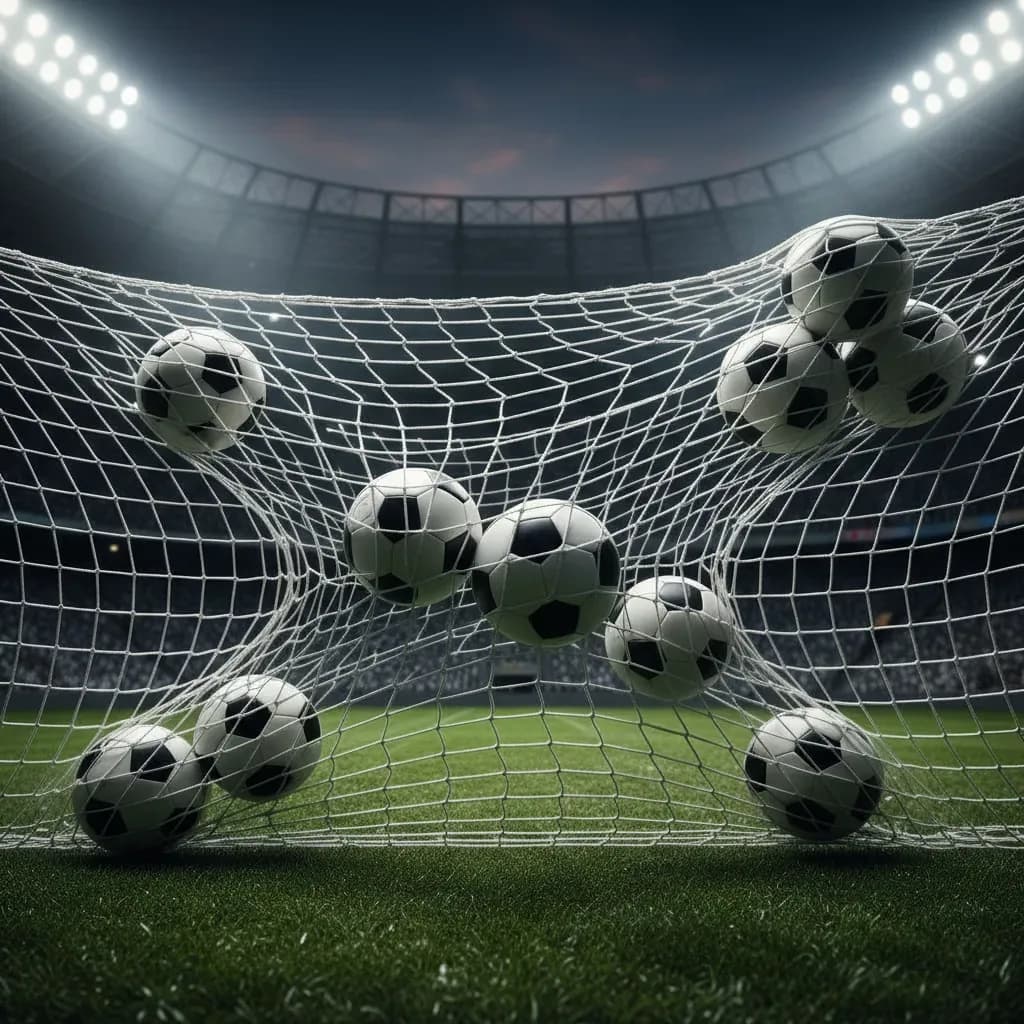
 Haaland Has Seven Goals and Norway Runs Entirely Through Him
⚽️2026 FIFA WORLD CUP
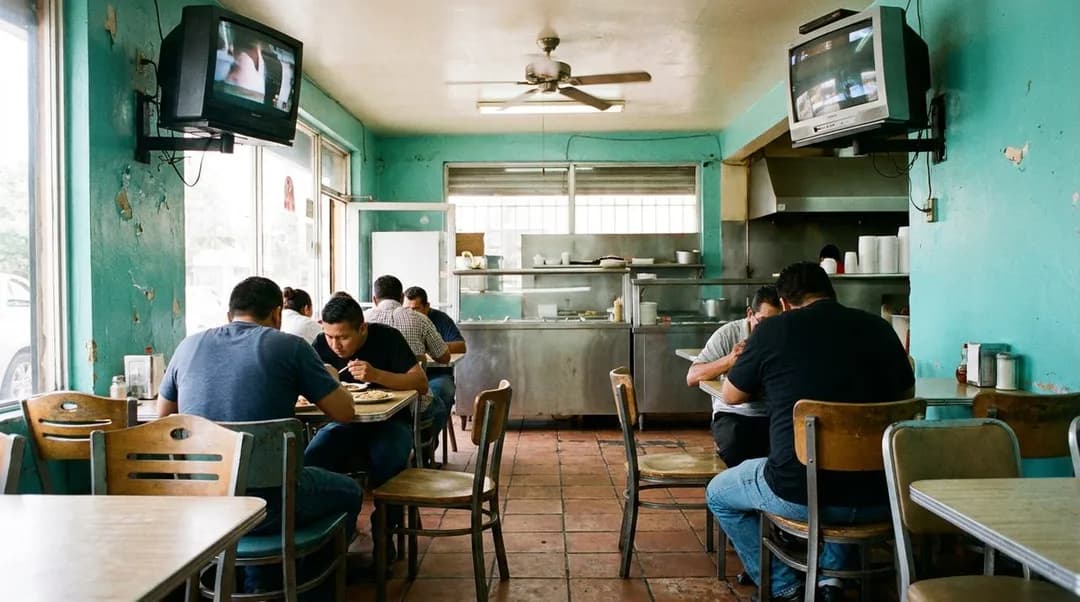
Mission Pupusas Before the Match While Cubs vs Rockies Plays Silent
Salvadoran cafes in the Mission keep baseball on mute and soccer audio live, feeding fans who arrive hours before stadium trains depart.
The Steam Rises Before You Even See the Griddle
You walk into a Salvadoran café on 24th Street around nine in the morning and the air already smells like masa and melting cheese. The TV mounted above the counter shows a Cubs-Rockies game from yesterday or last week, volume off, closed captions scrolling unread. Nobody watches. The woman at the griddle presses pupusas with her palms, flipping them in a rhythm that doesn't pause when the door opens. You're here because in three hours the BART trains toward the stadium will be packed, and you'd rather eat something real than whatever they're hawking outside the gates. The Mission has always fed people before they go somewhere else.
The Audio Belongs to Futbol, the Screen Doesn't Matter
Baseball plays silent on every screen in these places during World Cup season. The audio comes from a phone propped against the register or a laptop behind the counter, streaming whatever match matters that morning. You hear Spanish commentary layered over the hiss of the griddle, and when someone scores the kitchen erupts before the dining room does. The lag is half a second. The guy waiting for his order to go knows before you do, because he's watching the same stream on his phone. Nobody complains about the baseball game still flickering above. It's wallpaper. The real game is the one you hear, the one that makes the cook stop mid-flip and shout at the screen she isn't looking at. This is the unspoken deal in June and July when the tournament runs: your eyes can wander, but your ears stay loyal.
Curtido and the Customers Who Arrive in Waves
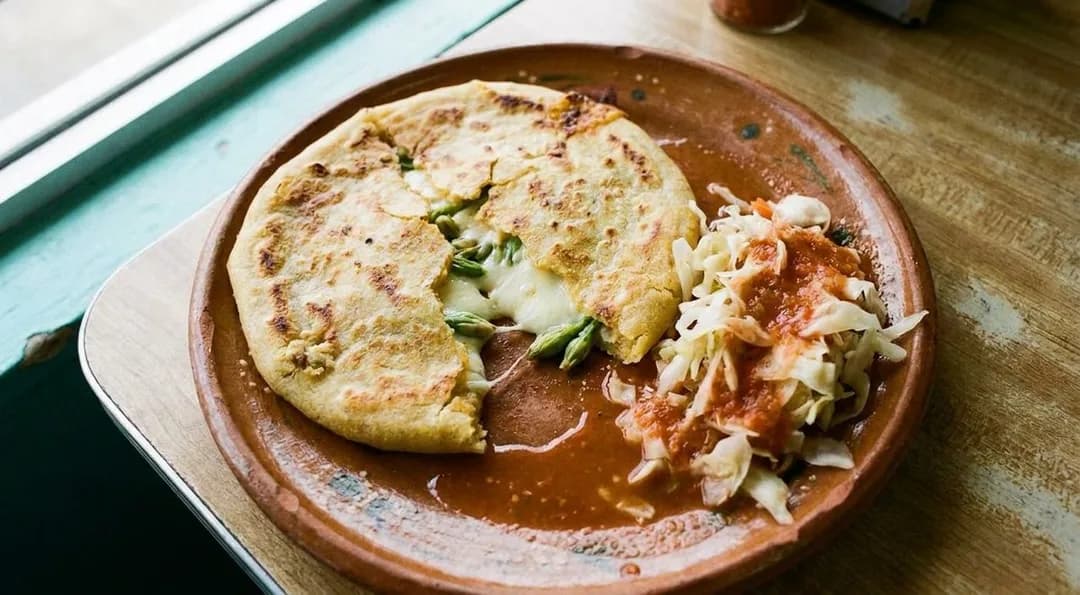
The first wave comes around eight, construction crews grabbing breakfast burritos and coffee in paper cups. They leave before the soccer crowds arrive. The second wave is yours—fans in jerseys from countries that aren't playing today but it doesn't matter, you wear what you own. You order pupusas because that's what you do here, and they come with a mound of curtido that's more vinegar-forward than you expect, cabbage and carrot shredded thin enough to see through. The woman who brings your plate doesn't ask if you need hot sauce. She just sets down three bottles, red and green and something darker, and walks away. You try the green first. It's cilantro-heavy and sharp enough to make you reach for water. The pupusa is hot enough that the cheese burns the roof of your mouth a little, and you don't care. You eat standing at the counter because the four tables are taken.
The Regulars Who Translate the Commentary Without Being Asked
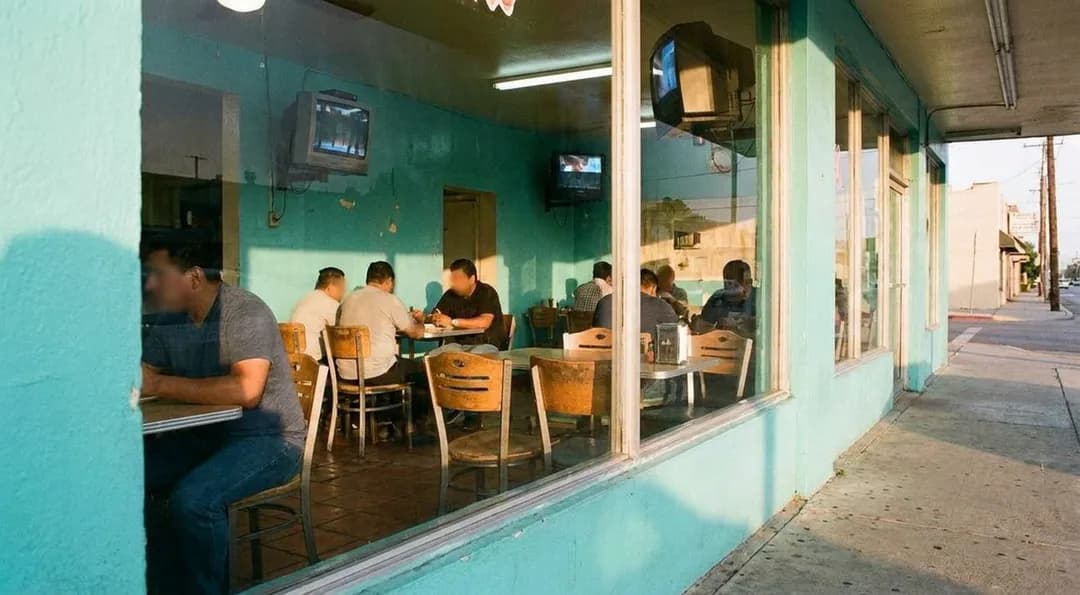
There's always one guy at the corner table who's been here since they opened, newspaper spread wide, coffee refilled twice. He doesn't look up when the place fills with fans, but when the commentator's voice spikes he mutters the translation to no one in particular. "Offside," he says, still reading. "Penalty, maybe." You don't know if he's talking to you or the room or himself. It doesn't matter. The information enters the space and people nod or groan accordingly. He's doing the work of subtitles without a screen, and nobody thanks him because this is just what happens here. Later, when someone's kid asks what the ref is arguing about, the guy folds his paper and explains in English that's slower and more careful than his Spanish. The kid nods. The game continues. The guy goes back to his crossword.
The Timing That Makes You Early Enough to Breathe
You finish eating by ten-thirty, and the match you're actually attending doesn't start until one. This is the point. You have time to walk, to digest, to sit in Dolores Park if the fog has burned off, to take the train without fighting for space. The people who wait until noon to eat will sprint for the platform and arrive sweating. You'll already be in your seat, watching warmups, feeling smug about your pupusas. The Mission has always rewarded people who understand that the hours before an event matter more than the event itself. You can't rush a good meal, and you can't enjoy a game if you're still catching your breath from the commute. The cafés here know this. They open early. They feed you properly. They let you leave when you're ready, not when the clock says you're late.
The Playlist That Never Matches the Mood But Somehow Works
Somewhere between the soccer commentary and the kitchen noise, there's a radio playing cumbia or reggaeton or sometimes just a guy with an acoustic guitar covering songs you half-recognize. It's never loud enough to drown out the game audio, but it fills the gaps between plays. You hear the slap of dough on the griddle, the scrape of a spatula, the DJ on the stream doing rapid-fire Spanish, and underneath it all, a bass line that makes you want to move your shoulders a little while you wait. The mix shouldn't work—sports and music and cooking sounds all competing—but it does. Maybe it's because nothing is trying to dominate. Everything shares the space. The woman making pupusas hums along to the radio. Someone's phone rings with a marimba tone. A toddler at the back table bangs a spoon on the high chair tray. It's chaos that feels like order, noise that sounds like home even if this isn't your home.
Practical Notes
Most Salvadoran cafés in the Mission open early, around seven or eight in the morning, and stay open until mid-evening. You'll find them clustered along 24th Street and the blocks just south, within easy walking distance of the 24th Street BART station. Expect to pay a few bucks per pupusa, less than ten for a filling breakfast. Cash is preferred at many spots, though some take cards now. During World Cup season, arrive before eleven if you want a seat—after that, it's standing room. The trains toward the stadium run frequently from Mission stations, but give yourself buffer time on match days. The crowds build fast, and the cafés fill even faster.
Tags: #MissionDistrict #SanFrancisco #PupusaLife #WorldCup2026 #SalvadoranFood #SoccerCulture #PreGameRituals #24thStreet #BayAreaEats #FIFAWorldCup #MissionEats #GameDayTraditions #NeighborhoodGems #AuthenticSF #FutbolFamily
Sources consulted: fifa.com · espn.com · timeout.com
All trademarks are the property of their respective owners.
Ask Karpo for more information.
Keep reading
- Haaland Has Seven Goals and Norway Runs Entirely Through Him
 World Cup Trophy Ceremony Timing Medals and Postmatch Celebrations
 Olise and France's Attack: The Semifinal Tactical Question