 Haaland Has Seven Goals and Norway Runs Entirely Through Him
⚽️2026 FIFA WORLD CUP
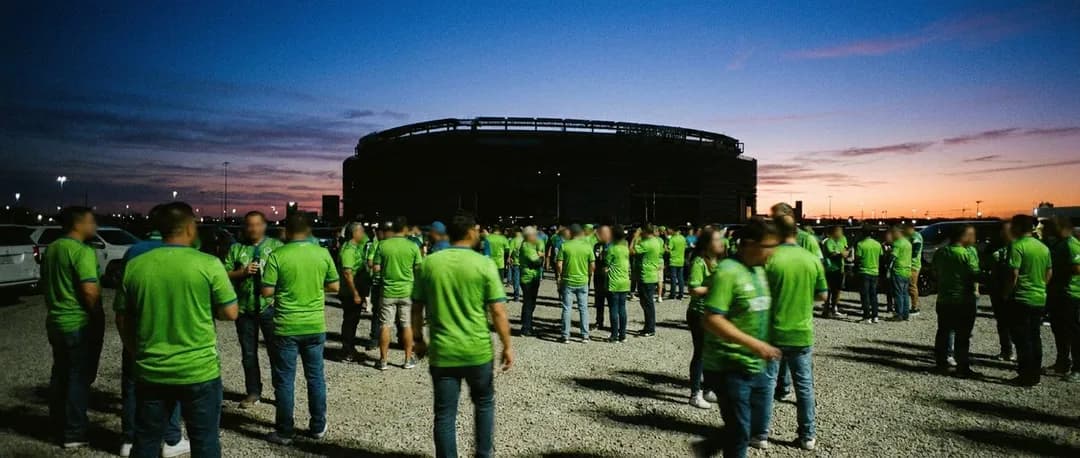
Mexico's Training at AT&T Stadium Pulls Fans Across Three States Before the World Cup
Mexico's open training sessions at AT&T Stadium draw fans from Texas, New Mexico, and California tracking the Tri's World Cup schedule, with Collins Street filling before dawn and the Grand Prairie strip becoming an unofficial base camp for supporters in green.
The Collins Street corridor lights up at 4:30 a.m., headlights streaming from three directions as fans in green jerseys converge on AT&T Stadium's north gate. License plates tell the story: Chihuahua, Jalisco, California, New Mexico. They've driven through the night to watch Mexico's national team run drills on the same field where the Cowboys play, and by the time the gates crack open at 6:15, the fence line is already four deep. Portable grills smoke on tailgates in the outer lots. Radios play Banda MS. The air smells like carne asada and diesel exhaust, and nobody's leaving until they've seen Memo Ochoa stretch and heard the crack of leather on leather echoing through the stadium bowl.
The Parking Equation
AT&T Stadium's Lot 10 and Lot 12—the north-side parcels closest to the training field access—fill by 5:45 a.m. on session days. Fans who arrive after 5:30 find themselves redirected to the Collins Street overflow lots, a quarter-mile walk that adds fifteen minutes but keeps sightlines intact. The stadium's event staff opens the north pedestrian gate at 6:00 sharp, and the first wave sprints to claim fence positions along the practice field perimeter. Regulars know the drill: park in Lot 10, hit the gate at 5:50, stake a spot on the east fence where the sun stays behind the stands and the sightlines run unobstructed to the goal line.
The Grand Prairie strip—a cluster of taquerías and convenience stores along State Highway 360—becomes an unofficial staging ground the night before. Fans roll in from Albuquerque and El Paso, sleep in their cars in the Walmart parking lot, then convoy over to the stadium at dawn. The traffic pulse is visible from the highway: a green-and-red river flowing south toward Collins Street, hazard lights blinking as trucks and SUVs merge into a single determined stream.
The Sightline Sweet Spot
The east fence line, running parallel to the 50-yard line, offers the clearest view of Mexico's full-field drills. Fans press against the chain-link, phones up, recording every sprint and pass. The north corner—where the practice field meets the stadium's service road—gives a tighter angle but puts watchers ten feet closer to the action. Regulars bring step stools. One father from Odessa arrives with a milk crate and a foldable camping chair, setting up a perch that lets his son see over the crowd.
The berm along the stadium's east side, a grassy slope that rises toward the parking structure, becomes a secondary vantage point for overflow crowds. Fans spread blankets and set up tripods, filming the session from an elevated angle. The trade-off: distance. From the berm, individual players blur into green jerseys, but the full tactical shape of the training—the passing triangles, the pressing drills—comes into focus. Families claim spots at 5:00 a.m., staking territory with coolers and folding tables, turning the slope into a makeshift amphitheater.
Taqueria El Paisano
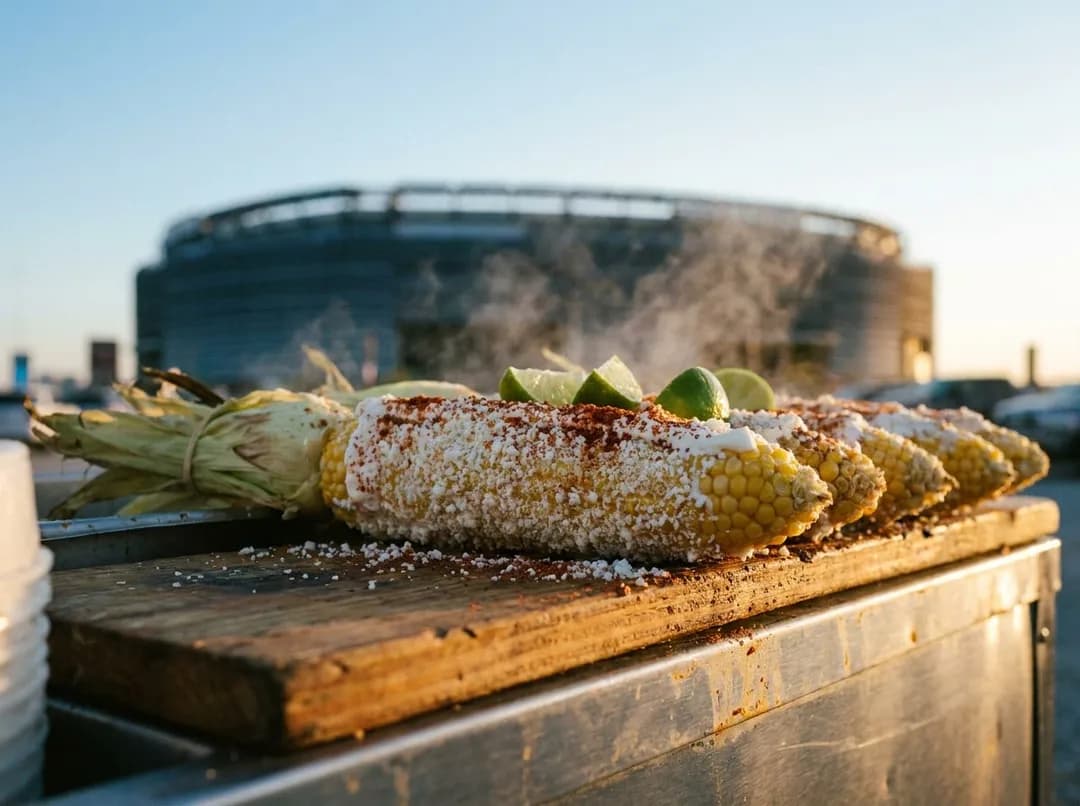
Three blocks east on Collins Street, Taqueria El Paisano opens at 5:00 a.m. on training days, and by 5:30 the parking lot is full. The kitchen pumps out breakfast tacos—chorizo, egg, potato—and the counter staff pours coffee into Styrofoam cups as fast as the machine will brew. Fans in Ochoa jerseys and Chicharito scarves pack the tables, phones out, refreshing Twitter for session updates. The walls are covered in framed Mexico jerseys—signatures from past friendlies, a faded Rafa Márquez print, a photo of Hugo Sánchez mid-bicycle-kick.
The owner, a man from Monterrey who's run the spot for twelve years, keeps the TV tuned to Univision and the volume high. When the first fans return from the stadium around 9:00, they bring stories: who looked sharp, who limped off, whether the coach ran the full squad or held back the starters. The taqueria becomes a debrief hub, a place to compare footage and argue over lineup predictions for the Mexico World Cup roster. By 10:00, the tables are littered with empty salsa cups and crumpled napkins, and the staff is already prepping for the lunch rush.
The Session Itself
The sound reaches the fence line first: the sharp whistle, the coach's voice barking instructions in Spanish, the rhythmic thud of balls striking crossbars. Mexico's training sessions run ninety minutes, starting at 7:00 a.m. sharp, and the intensity is visible even from the perimeter. Players sprint through cone drills, sweat already darkening their jerseys in the Texas humidity. The goalkeepers work separately, diving and leaping in a blur of green gloves, and every save draws cheers from the fence.
Memo Ochoa, the veteran keeper, favors the north goal during warm-ups, positioning himself where the fence line gets the best view. Fans scream his name. He waves once, then locks in, moving through his routine with mechanical precision. The outfield players run possession drills, quick one-twos that ping across the turf, and the sound of boots on ball creates a percussive rhythm that carries across the parking lot. When the coach blows the whistle for a scrimmage, the fence erupts. Every tackle, every near-goal, every shouted instruction becomes a moment worth filming.
The Player Window
The autograph window opens at 8:45, after the session wraps and before the team buses pull around. Players walk the fence line, Sharpies in hand, signing jerseys and hats and phone cases thrust through the chain-link. The younger squad members—the ones fighting for Mexico World Cup roster spots—linger longest, working the crowd with smiles and selfies. The veterans move faster, but they stop for kids. A girl from Lubbock, maybe eight years old, holds up a homemade sign: "Ochoa es mi héroe." He signs her jersey and taps the crest over his heart.
The window lasts twenty minutes, maybe thirty if the coach is in a good mood. Then the whistle blows again, the players jog toward the tunnel, and the crowd begins to disperse. Some fans linger, phones still recording, hoping for one more wave. Others sprint back to their cars, already planning the next session.
After the Session
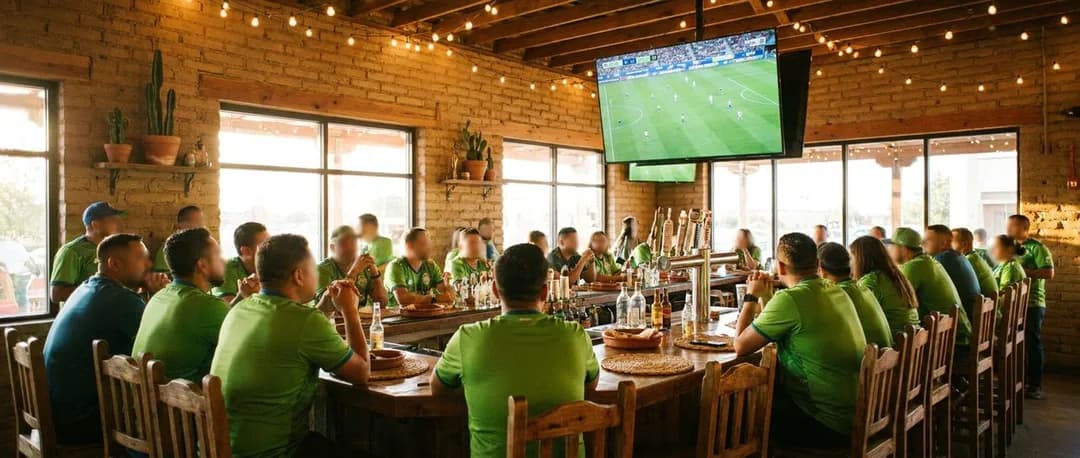
The post-training exodus flows back toward the Grand Prairie strip and the Collins Street corridor. Fans pack into El Paisano for late breakfast, swapping stories and showing off signed jerseys. Others head to the sports bar on Division Street, where the TV plays highlight reels and the bartender pours Modelos at 10:00 a.m. without judgment. The Walmart parking lot, which served as an overnight camp, empties slowly as fans from out of state load up and point their trucks west or south, already calculating drive times for the next open session.
Practical Notes
• Gates open at 6:00 a.m.; arrive by 5:30 for fence-line spots
• Lot 10 and Lot 12 fill fast; overflow parking on Collins Street adds a quarter-mile walk
• Bring water, sunscreen, and a step stool for better sightlines
• Taqueria El Paisano (Collins Street) opens at 5:00 a.m. for pre-session fuel
Tags: #MexicoWorldCup #ATTStadium #ArlingtonTX #ElTriFans #MexicoNationalTeam #WorldCupTraining #SoccerCulture #TexasSoccer #MemoOchoa #TrainingWatch #GrandPrairie #CollinsStreet #FanExperience #KarposFinds
Sources consulted: fifa.com (https://www.fifa.com) · arlingtontx.gov (https://www.arlingtontx.gov) · timeout.com/dallas (https://www.timeout.com/dallas)
All trademarks are the property of their respective owners.
Ask Karpo first
Trying to catch Mexico's open training at AT&T Stadium without arriving at the wrong gate or missing the pre-dawn positioning window?
Ask Karpo for the latest public training schedule, confirmed gate openings, and the best food stops around Collins Street before the session starts.
Ask Karpo for more information.
Keep reading
- Haaland Has Seven Goals and Norway Runs Entirely Through Him
 World Cup Trophy Ceremony Timing Medals and Postmatch Celebrations
 Olise and France's Attack: The Semifinal Tactical Question