 Haaland Has Seven Goals and Norway Runs Entirely Through Him
⚽️2026 FIFA WORLD CUP
A Lower East Side Café That Screens Neutral Fixtures and Serves Hummus Without Borders
An Orchard Street coffee shop becomes a rare shared space for Middle Eastern fans during World Cup matches that don't involve home teams, with falafel and strong coffee.
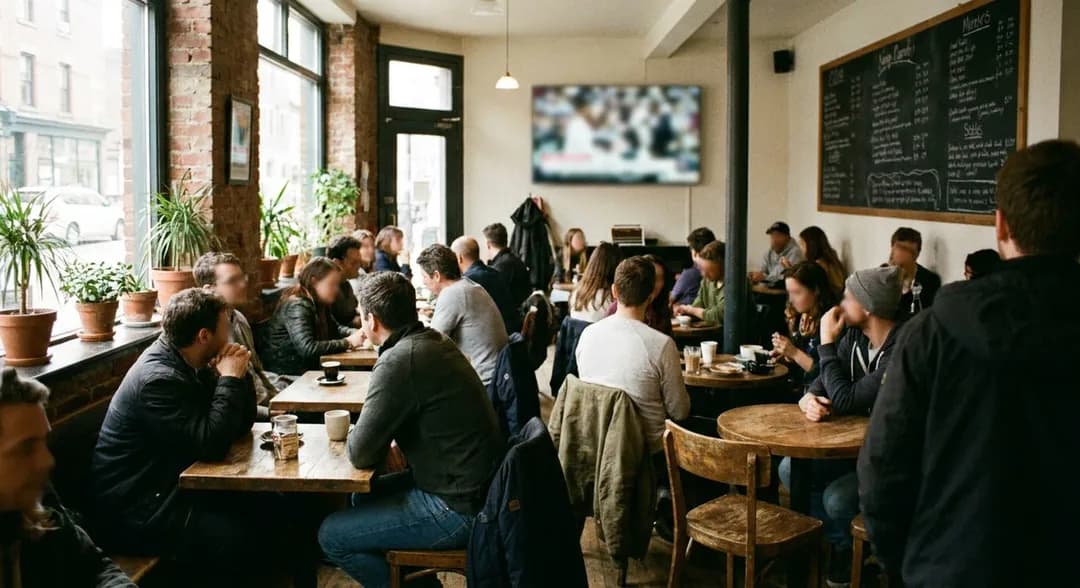
You walk past Orchard Street coffee shops every day without thinking twice, but come World Cup season, one unmarked storefront between Broome and Grand becomes something else entirely. When Morocco plays Croatia or Iran faces Mexico—matches where nobody's home team is playing but everyone's watching anyway—this is where the diaspora gathers over cardamom coffee and finds common ground in neutral fixtures.
The Accidental Congregation
The space started as a standard third-wave café, all exposed brick and reclaimed wood, but the owner's habit of streaming matches during slow afternoon shifts created something unplanned. You'll notice it first in the seating arrangement: tables pushed together without asking, strangers sharing outlets and opinions in equal measure. The coffee here is Turkish-style, grounds settled at the bottom of small glass cups, served alongside a glass of cold water that nobody from the region needs explained. By the second half of any match, the air smells like burnt sugar from multiple rounds of syrupy tea, cut with the green brightness of fresh mint that the barista keeps muddling in a mortar behind the counter. The regulars know to arrive early for window seats—not for the view of Orchard Street's tourist traffic, but because the afternoon light hits the screen at an angle that makes it unwatchable from anywhere else.
What the Menu Doesn't Mention
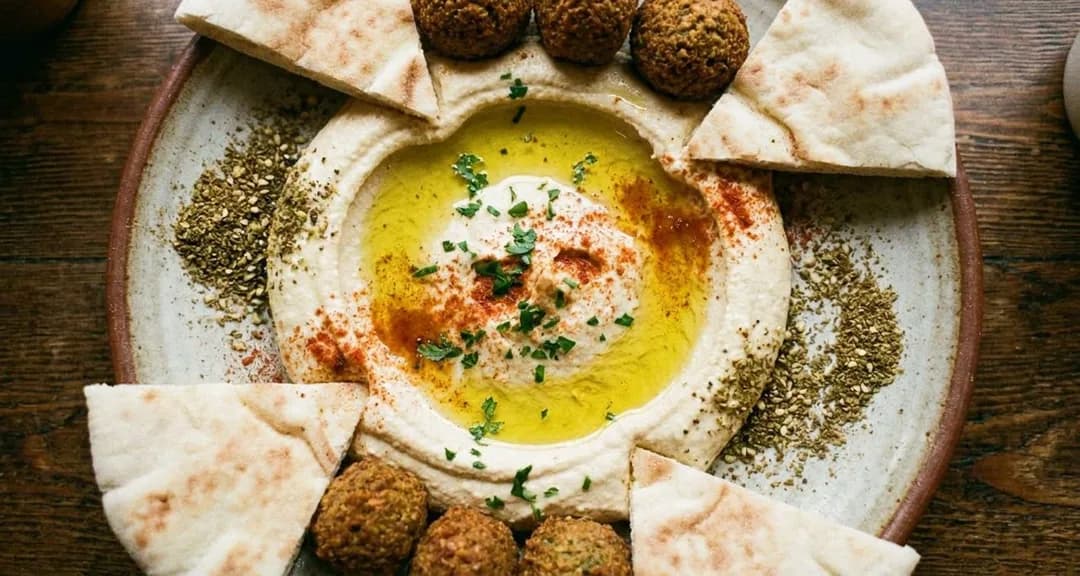
The hummus arrives in a wide shallow bowl, still warm, with a puddle of olive oil and a drift of paprika that stains your fingers orange. You're meant to tear the pita—baked somewhere nearby that same morning, still faintly warm in its paper wrapping—and drag it through in wide arcs. The falafel comes different depending on who's working: sometimes tight green spheres with serious crunch, sometimes looser and more herbed. There's no printed menu for the food, just a chalkboard that changes based on what showed up that morning. The labneh gets folded with za'atar or sumac depending on the day. During matches, they stop taking special orders—you get what's ready, served on mismatched plates that look like someone's grandmother's collection. The pricing stays deliberately low-key cheap, a few bucks for most items, the kind of place where you can nurse a coffee through ninety minutes without anyone checking on you.
The Geometry of Neutral Ground
What makes the space work is what it deliberately isn't. No flags, no scarves hung on walls, no jersey shrines to any particular squad. The walls stay bare except for a single framed photograph of a generic Middle Eastern marketplace that could be anywhere from Marrakech to Tehran. When Senegal plays Japan, you'll find Egyptian regulars sitting next to Lebanese students sitting next to Israeli expats, all united by the fact that nobody's got skin in this particular game. The conversations flow in Arabic and Hebrew and English, sometimes all three in the same sentence, everyone offering tactical analysis like they're the ones who should be coaching. You hear debates about formations and referee decisions that get heated but never cross certain lines—there's an unspoken agreement that this room exists outside the usual tensions. The owner keeps the volume just loud enough that you have to lean in to talk during play, loud enough to drown out during goals.
The Rhythm Between Halves
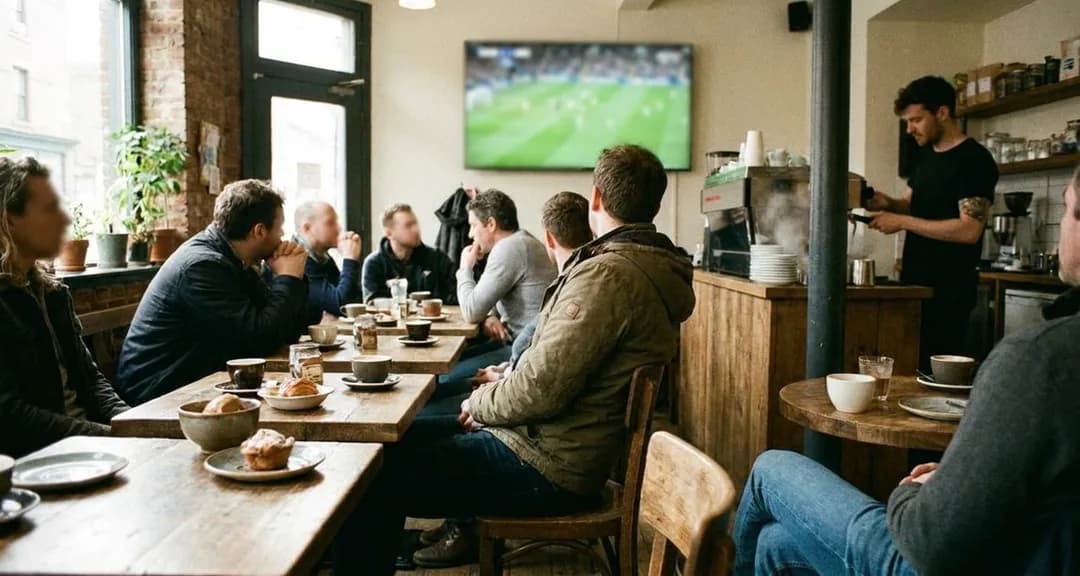
Halftime transforms the energy completely. The bathroom line snakes past the pastry case, everyone checking phones and calling friends to come down. The espresso machine screams constantly for fifteen minutes straight. Someone always steps outside to smoke, propping the door open so they can still see the screen, letting in the June humidity and the smell of the pickle brine from the shop next door. You'll see regulars greeting each other in that particularly Middle Eastern way—elaborate handshakes that turn into half-hugs, rapid-fire questions about family that don't necessarily wait for answers. New arrivals get caught up on what they missed, multiple people explaining the same controversial call with completely different interpretations. The barista uses this window to restock—you'll hear the clatter of plates, the rush of the sink, the refrigerator door opening and closing as they prep for the second-half rush of tea orders.
Who Shows Up and Why
The crowd skews older than typical Lower East Side coffee spots, lots of first-generation immigrants in their forties and fifties who remember watching World Cups in Cairo cafés or Beirut living rooms. But you'll also find younger people, second-gen kids who grew up in Jersey or Queens, coming here because their parents told them about it or because they're hungry for some version of a culture they only half-remember. During weekday afternoon matches, you get the restaurant workers on their break between lunch and dinner service, still in kitchen clogs and checked pants. The weekend morning fixtures bring families—kids doing homework at corner tables while their fathers dissect the game. There's usually one table of older men playing backgammon between matches, the clack of pieces on wood providing percussion under the sports commentary. They've been coming here since before the World Cup, back when it was just a quiet place to drink coffee and argue about nothing in particular.
The Technology of Togetherness
The screen itself is nothing special, maybe forty inches, mounted high enough that everyone can see but not so high you're craning your neck. The sound system is better than it needs to be—you catch every whistle, every thud of boot on ball, the crowd roar that tells you something's happening even before you see it. Someone always brings a radio to check other matches, keeping score updates flowing for games happening simultaneously. Phones come out constantly during play, not for social media but for frantic texting with people watching elsewhere, comparing reactions in real-time. The WiFi password is written in Arabic and English on a small card by the register, changed weekly but always some football reference that regulars find funnier than tourists do. When goals happen, the eruption is total—chairs scraping, hands in the air, that particular Middle Eastern ululation that you feel in your chest. Then everyone sits back down and pretends they weren't just losing their minds thirty seconds ago.
Practical Notes
The café opens late morning most days and stays open past evening prayer times during tournament season. Getting here is straightforward—take the F train and walk east, or the J/M/Z if you're coming from Brooklyn. No reservations, no table holds, just show up before kickoff if you want a seat. Matches with broader appeal fill up fast, but the beauty of neutral fixtures is they're usually less crowded. Bring cash—cards work but the system goes down with suspicious regularity during busy periods. The bathroom is single-occupancy and the line gets real during halftime, so plan accordingly. If you're coming for multiple matches, you're expected to keep ordering—another round of tea, some baklava, anything to justify the table. The space holds maybe forty people comfortably, sixty if everyone's willing to squeeze.
Tags: #2026FIFAWorldCup #LowerEastSide #OrchardStreet #NYCCoffeeShops #MiddleEasternFood #SoccerCulture #FootballCafes #DiasporaSpaces #ManhattanEats #WorldCupViewing #NYCHiddenGems #LESLife #NeutralGround #CulturalCrossroads #AuthenticNYC
Sources consulted: fifa.com · espn.com · timeout.com
All trademarks are the property of their respective owners.
Ask Karpo for more information.
Keep reading
- Haaland Has Seven Goals and Norway Runs Entirely Through Him
 World Cup Trophy Ceremony Timing Medals and Postmatch Celebrations
 Olise and France's Attack: The Semifinal Tactical Question