 Fuzzy Rug Studio Rug Tufting Studio: Pastel Workshop
Weekend Plans
Where to Spend a Tormenta Weekend in Los Angeles When the Forecast Turns
Heavy weather in LA changes the calculus: drive times double, outdoor plans collapse, and the usual backup venues fill fast.
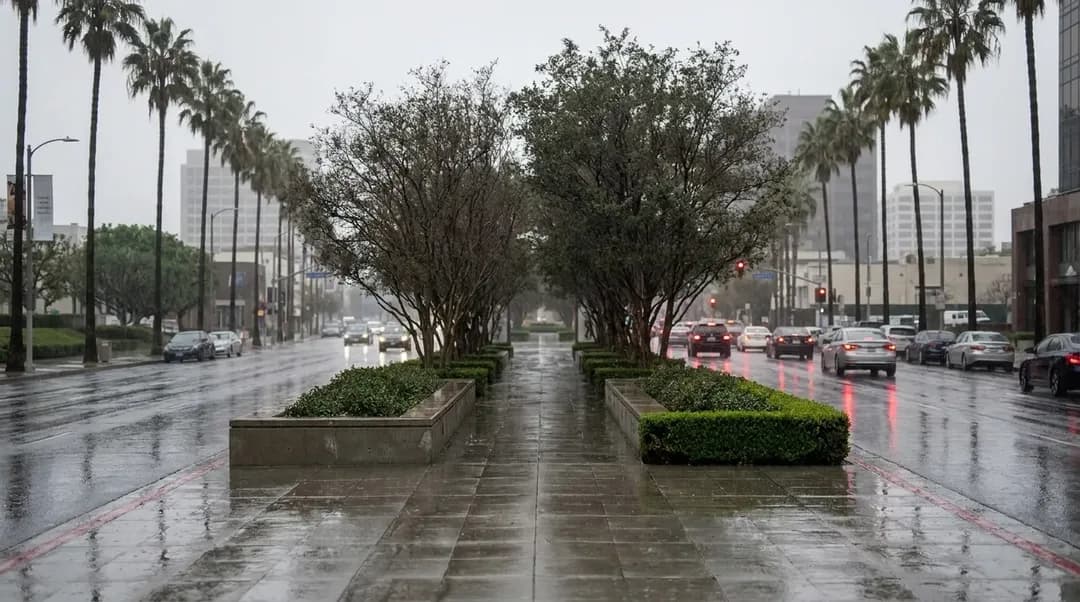
Los Angeles doesn't do rain well, and a proper tormenta—the kind that floods underpasses and turns the 110 into a parking lot—exposes every weakness in the city's weekend infrastructure. The usual calculus collapses: a twenty-minute drive to Silver Lake becomes fifty, street parking in Arts District turns into a hunt through lakes, and every indoor venue with a liquor license fills by noon. The keyword spiked this month because a string of atmospheric rivers hit harder than usual, and people who thought they'd picnic in Griffith Park or walk Grand Park suddenly needed a Plan B that didn't involve sitting in traffic for two hours.
Tormenta weekends mean real-time parking updates and which indoor spots still have room. Text Karpo now for live routes that account for flooding on the 101 and whether the museum annex opened early.
When the Sky Actually Opens Up
The friction is real. Downtown, where storm drains date to the 1920s, sees whole blocks underwater near Alameda. The Expo Line runs but slows between stations. Parking structures fill because no one wants to street-park in a downpour, and garages near Union Station or The Broad jump from eight dollars to twenty-five when demand spikes. If you're coming from the Westside, the 10 eastbound clogs at La Cienega, and surface streets through Culver City don't help. The question isn't whether to go out—it's how to pick a destination that won't punish you twice, once for the drive and again when you arrive soaked with nowhere to sit.
The Last Bookstore and Surrounding Cover

The Last Bookstore on Spring Street, a few blocks south of Pershing Square, is the obvious anchor because it's large, free to enter, genuinely interesting for an hour, and surrounded by other indoor fallbacks. The building is old bank infrastructure—marble floors, high ceilings—so even when it's crowded, it doesn't feel claustrophobic. The upstairs labyrinth and the horror-tunnel book arch give you something to do besides scroll your phone. On a tormenta Saturday, expect company: families with kids, couples killing time before a dinner reservation, and people who bailed on a hike in Runyon Canyon.
Parking is the trade-off. The Joe's Auto Parks structure on 5th and Spring is the closest bet, around twelve dollars for a few hours, but it fills by early afternoon when the weather turns. Street parking on Spring south of 6th exists in theory; in practice, every spot is taken or sitting in three inches of water. The advantage of anchoring here is density: if the bookstore is too packed, you can walk under awnings to Angel City Brewery one block over, or cut through to Grand Central Market on Broadway without getting drenched. The market itself is a tormenta magnet—warm, loud, full of food smells—but it's also where everyone else had the same idea, so seating is competitive after 1 p.m.
One useful detail: the northwest corner of the bookstore, near the science fiction section, has a row of benches that most people miss because they're half-hidden by stacks. If you need to sit and regroup, that's the spot. The staff doesn't mind if you camp there for twenty minutes with a book you're not buying, as long as you're not blocking traffic. The bathroom line, by contrast, snakes down the main aisle during storms, so plan accordingly.
LACMA and the Miracle Mile Bet
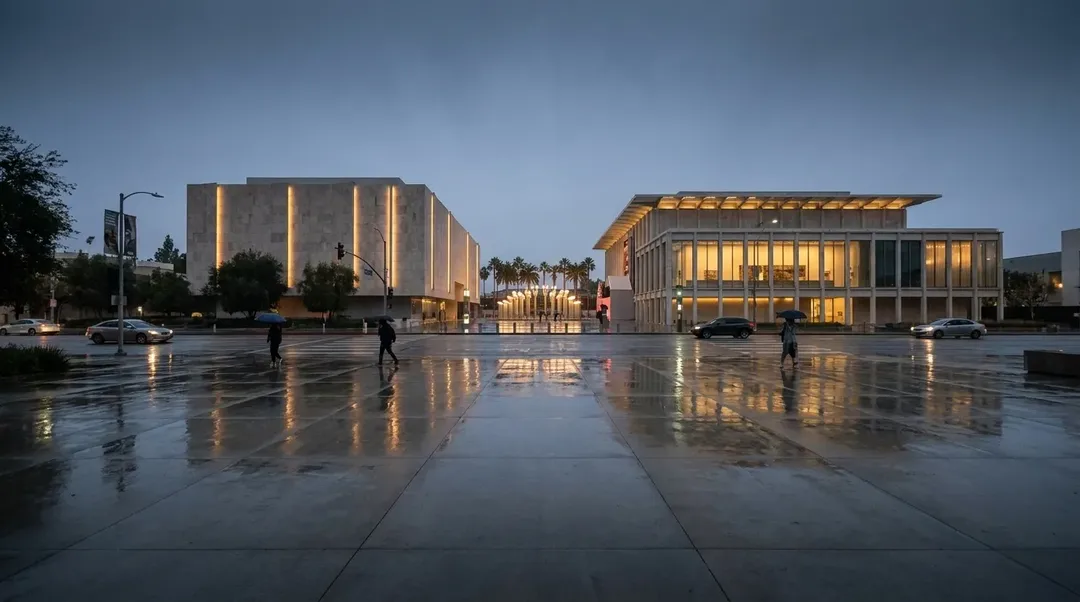
If you're willing to drive twenty minutes west on Wilshire—or take the Purple Line to Wilshire/Western and transfer to a bus—LACMA offers more square footage and, crucially, a built-in reason to spend three hours inside. The permanent collection is free for LA County residents and worth the schlep even if you're not; the Broad Contemporary Art building and the Resnick Pavilion give you room to wander without feeling like you're circling. On a tormenta weekend, the museum sees a bump in attendance but nothing like the crush Downtown, because most Westsiders have their own neighborhood fallbacks and don't cross the 405 in bad weather.
Parking is straightforward: the Pritzker garage at 6th and Ogden charges twenty-five dollars flat, but it's covered, well-lit, and you won't spend fifteen minutes hunting. If you're coming from the Eastside or South LA, Wilshire eastbound backs up near Fairfax, so give yourself an extra half hour. The advantage of LACMA over a bookstore or market is that it's designed for lingering—you can sit on a bench in front of a Rothko for as long as you want, and no one will ask you to move. The Ray's restaurant on the plaza is overpriced but has floor-to-ceiling windows facing Wilshire, which makes the rain feel like part of the experience instead of an inconvenience.
A practical observation: the east-facing galleries near the Ahmanson Building get darker earlier on overcast days because they rely partly on natural light. If you're planning to see specific works, start there before 3 p.m. The museum closes at 8 p.m. on weekends, but the cafe stops serving at 6:30, so if you're thinking about a late coffee, adjust. The real win here is the exit—you're already on Wilshire, so you can head east to Koreatown for dinner or west toward the beach if the storm breaks, without backtracking through Downtown.
Where to Eat Without Losing Momentum
If you anchored Downtown, Grand Central Market is the path of least resistance, but it's also where you'll wait in line at Eggslut or Sarita's Pupuseria while your clothes dry. A better move, especially if the rain lets up for twenty minutes, is to walk two blocks north to Otium on South Grand, across from The Broad. It's pricier—entrees around thirty dollars—but the dining room is warm, the service is competent, and you can get a table on short notice more often than you'd expect, because most people assume it's booked solid. The bar seats are first-come and good for two people who don't mind sitting close. Confirm the kitchen hours before you walk over; they've occasionally closed early on slow Sundays.
Near LACMA, the density thins out, but Wilshire between Fairfax and La Brea has a handful of options that don't require driving again. Merkato Ethiopian on Fairfax, about a ten-minute walk north, is warm and filling, and the injera soaks up a long afternoon better than a sandwich would. If you want something faster, the Whole Foods on Fairfax and 3rd has hot food and covered outdoor seating under a canopy that mostly works in light rain. It's not romantic, but it solves the problem of where to sit and eat without spending another forty minutes in the car.
Getting Out Before the Next Band Hits
The exit plan matters more in a tormenta weekend than on a normal Saturday, because storms in Los Angeles come in waves. If you're Downtown and the radar shows another cell moving in from the coast around 6 p.m., you want to be on the road or the train by 5:15, before everyone else has the same idea. The 101 north toward Echo Park and the 10 west toward Culver City both clog fast when rain picks up again, and surface streets don't save you—Sunset eastbound through Silver Lake turns into a crawl, and Washington Boulevard westbound is stop-and-go from Downtown to La Cienega.
If you took the Metro, the good news is that the Purple and Red Lines run on time even in heavy rain; the bad news is that the stations themselves—especially Pershing Square and Wilshire/Vermont—get crowded and damp, with puddles near the fare gates and not enough covered space on the platform. Bring a second layer, because the trains run cold and you'll be wet. If you drove and parked in a structure, budget fifteen minutes to get out; garage exits near Grand Central Market and LACMA both bottleneck when everyone leaves at once, and the attendants can't speed it up.
A small piece of local knowledge: if you're heading east on the 10 from LACMA, the onramp at La Brea northbound backs up worse than the one at Crenshaw, even though it looks faster on the map. The Crenshaw onramp is one light and a straight shot; La Brea makes you wait through two cycles and merge across three lanes immediately. The same logic applies Downtown—getting onto the 101 north from Alameda is slower than it looks, and you're better off taking surface streets to Echo Park or Los Feliz unless the freeway is genuinely clear.
Check Before You Commit
The single most useful thing you can do on a tormenta weekend is verify that your destination is actually open and accessible before you leave. LACMA occasionally closes galleries for private events, and while the museum website lists them, people forget to check. The Last Bookstore has never closed for weather in recent memory, but the parking structure on 5th has flooded badly enough in past storms that the lower levels were unusable, and no one updates that in real time except the attendant at the gate. Grand Central Market stays open, but individual vendors close when they run out of food or when foot traffic dies, and there's no central listing.
If you're planning to take the Metro, check the service alerts page the morning of—the Expo Line has a history of single-tracking between Expo/Crenshaw and Expo/Western during heavy rain, which adds ten minutes each way and isn't always announced in advance. The same applies to buses: the 720 Rapid on Wilshire slows to local-stop pace when the weather is bad, and the real-time arrival estimates on the app stop being reliable once traffic backs up past La Cienega.
The other thing worth confirming is whether your backup plan is still viable. If you're thinking about bailing from LACMA to a movie theater in Century City, check showtimes that morning, because AMC and Landmark both reduce their schedules on slow weekends, and the 4 p.m. showing you were counting on might not exist. If your fallback is a bar or cafe, call ahead or check their social media—places in Arts District and Los Feliz have a habit of closing early when the rain keeps customers away, and you don't want to drive twenty minutes only to find a dark storefront.
Practical notes
- Downtown parking structures fill by 1 p.m. in heavy rain; arrive before noon or plan for a longer walk from street parking.
- The Metro Purple and Red Lines run reliably, but stations near Pershing Square get crowded and damp; bring an extra layer.
- LACMA's Pritzker garage charges $25 flat; confirm museum hours and any private event closures before driving over.
- Wilshire eastbound clogs near Fairfax during storms; add 30 minutes to your drive time from the Westside.
- Grand Central Market stays open, but individual vendors close early when foot traffic drops; have a second food option ready.
- Check radar before you leave your second location—storms in LA come in waves, and the drive home doubles if you time it wrong.
Tags: #karpo #losangeles #tormenta #weekendplans #dtla #downtown #lacma #rainyweekend #lastbookstore #grandcentralmarket #larain #metrola #miraclemile #indoorplans #laweekend
Sources consulted: LACMA · Metro Los Angeles · Grand Central Market · The Last Bookstore
All trademarks are the property of their respective owners.
Ask Karpo first
Text Karpo the morning of to confirm which museum galleries are open, whether your parking structure is accessible, and the best route given current flooding. It'll also tell you if the Expo Line is single-tracking and suggest a backup venue if your first choice closes early.
Ask Karpo for more information.
Keep reading
- Fuzzy Rug Studio Rug Tufting Studio: Pastel Workshop
 Tufting Around LA Rug Tufting Studio: Arts District Workshop
 Rug Addiction Rug Tufting Studio: Downtown Texture Lab