 Fuzzy Rug Studio Rug Tufting Studio: Pastel Workshop
Weekend Plans
Tufting Around LA Rug Tufting Studio: Arts District Workshop
Tufting Around LA at 800 E 3rd St is an Arts District rug tufting studio for a colorful hands-on project. Here is how to choose a design and pace the work.
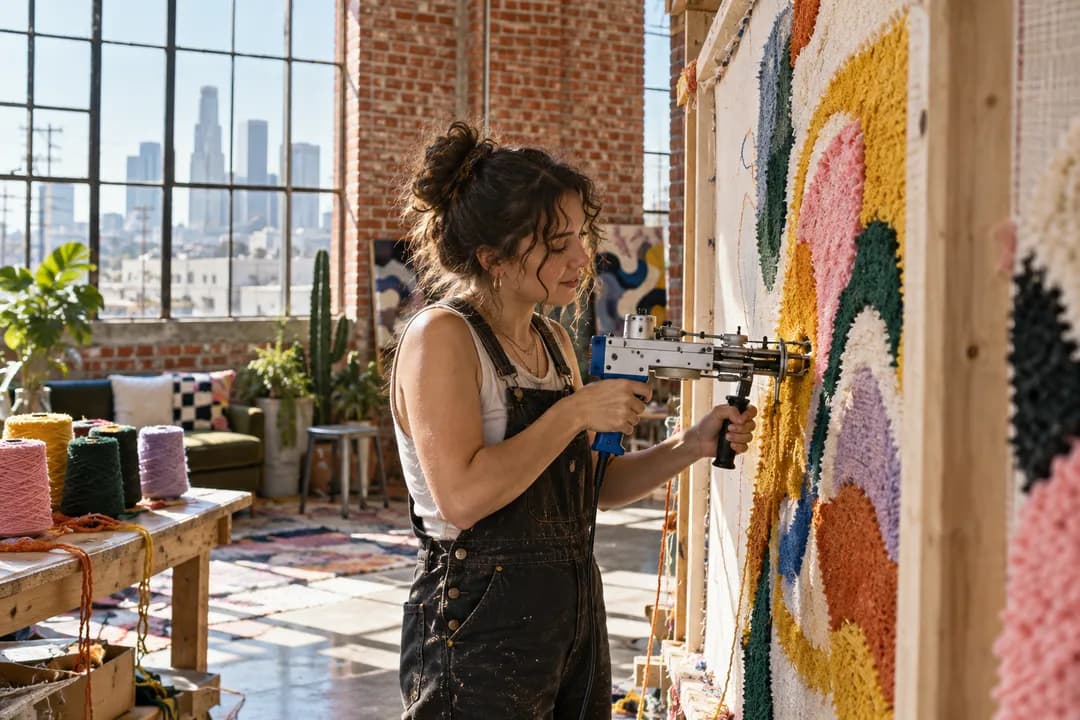
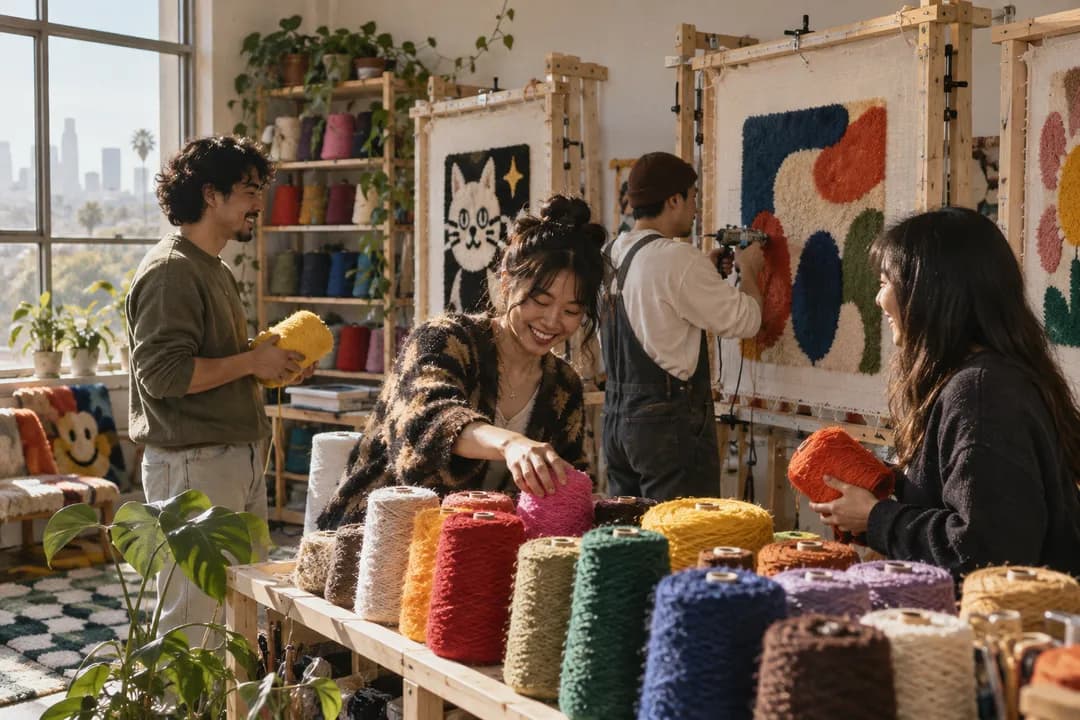
Tufting Around LA gives the Arts District a craft outing with a satisfying physical finish. At 800 E 3rd St, Los Angeles, CA 90013, the rug tufting studio format is straightforward: choose a motif, work yarn through a stretched backing, and shape the pile until a flat drawing becomes a soft object. It is a strong weekend plan for people who want to make something rather than simply photograph the neighborhood.
Why The Arts District Fits
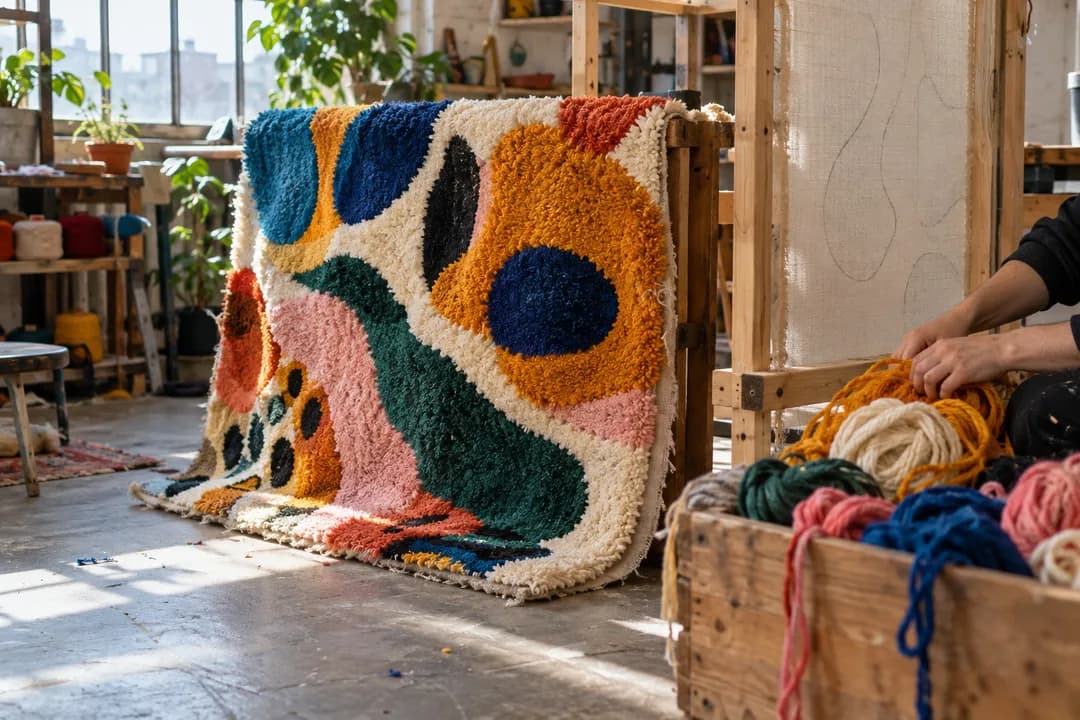
The Arts District setting rewards a design with clear visual rhythm. Think blocks, arcs, checker patterns, flowers, flames, or a simple abstract face. Repetition is helpful because it lets your hands learn one movement and then repeat it with more confidence. A design with too many unrelated details forces you to make a new technical decision every few seconds, which is tiring before the rug has even begun to look finished.
Choose A Strong Motif
Use the frame as a map. Identify the outer boundary, the largest color field, and the spots where lines cross. Then decide which elements should be completed first. Most beginners do better when they establish the outline and fill large shapes before touching small accents. If you cannot explain the order in one sentence, simplify the design. A good plan should reduce decisions once the tool is running.
The Frame Is Your Map
Pace matters more than speed. A short, steady pass keeps the yarn seated and makes the back of the canvas easier to read. Pause every few minutes to inspect the density and the direction of the stitches. When you see a thin gap, fill it before the surrounding area becomes crowded. Those pauses are not interruptions; they are the quality-control step that turns a first attempt into a usable piece.
A Good Pace For Beginners
The studio experience also has a social choreography. Keep your reference, scissors, and yarn within reach, but do not spread across another person’s table. Ask for help before changing the setup or moving a frame. If you are in a group, agree on a loose rhythm: compare color choices during breaks, then let each maker work without commentary while the gun is moving. That balance keeps the session friendly and focused.
Respect The Shared Tools
Tufting Around LA works for couples, creative friends, and solo visitors who enjoy learning by doing. It is less about producing an identical result and more about seeing each person make a different set of decisions. A bold red field can look energetic beside a muted landscape; a first-time maker can be just as compelling as someone who arrives with a polished mood board. The shared room makes those differences visible.
Walk The Neighborhood Afterward
Do not underestimate finishing. The rug may look rough when it comes off the frame because the pile is still uneven and the edge needs attention. Trim slowly, clear the loose fibers, and inspect the silhouette from farther away. A little irregularity gives the object character, but an unexamined edge makes it look unfinished. The final minutes are where the design starts to read as a rug instead of a canvas.
Practical Notes
Afterward, take a walk that lets your eyes reset. The Arts District offers murals, galleries, cafés, and industrial streetscapes, so you can turn the workshop into a longer afternoon without adding a second complicated reservation. Keep the route loose, carry the finished piece carefully, and resist stacking it under heavy shopping bags. A new rug deserves a little space while the maker is still learning how it behaves.
One honest skip: do not choose a design only because it is trendy online. A reference can be popular and still be poorly suited to your frame or skill level. Pick a shape you will enjoy seeing at home, then edit it for readability. The personal connection matters more than chasing a style that will feel dated by the time the rug reaches your floor.
A useful backup plan is to arrive with a second design that uses the same palette but fewer details. If the first concept proves too dense, you can keep the day moving without starting from zero. That is not giving up. It is good project management, and it lets you spend the session learning technique rather than fighting an image that was never scaled for tufting.
The strongest souvenir is the knowledge of how the surface was built. You will notice the difference between an outline that is too loose and one that holds its shape, between a dense fill and a thin one, and between a corner that was forced and one that was guided. Those observations make the next piece faster. The Arts District outing becomes a beginning, not a one-off craft trick.
A good workshop day leaves room for the object to surprise you. The color you thought would dominate may become an accent, while a simple outline may carry more energy than the original reference. Let those changes happen when they come from the material rather than from panic. If you keep the frame stable, the palette limited, and the design readable, the finished rug can become better than the sketch because it has acquired a surface and a story.
If you are visiting with friends, agree in advance that each person gets to keep their own design language. Matching rugs can be fun, but forced coordination often makes the activity feel like an assignment. A shared palette with different motifs gives the group a visual connection without flattening everyone’s idea. You will have more to talk about afterward because the differences are visible in the texture.
Practical Notes: Tufting Around LA is listed at 800 E 3rd St, Los Angeles, CA 90013. Its official website is tuftingaround.com, where the studio presents its project and booking information. Save the address in advance, wear practical clothes, and bring a simplified reference. The best result comes from giving the design enough negative space for the yarn and enough time for the finishing work.
Ask Karpo for more information.
Keep reading
- Fuzzy Rug Studio Rug Tufting Studio: Pastel Workshop
 Rug Addiction Rug Tufting Studio: Downtown Texture Lab
 Tuft Art Studio Rug Tufting Studio: Koreatown Color Lab