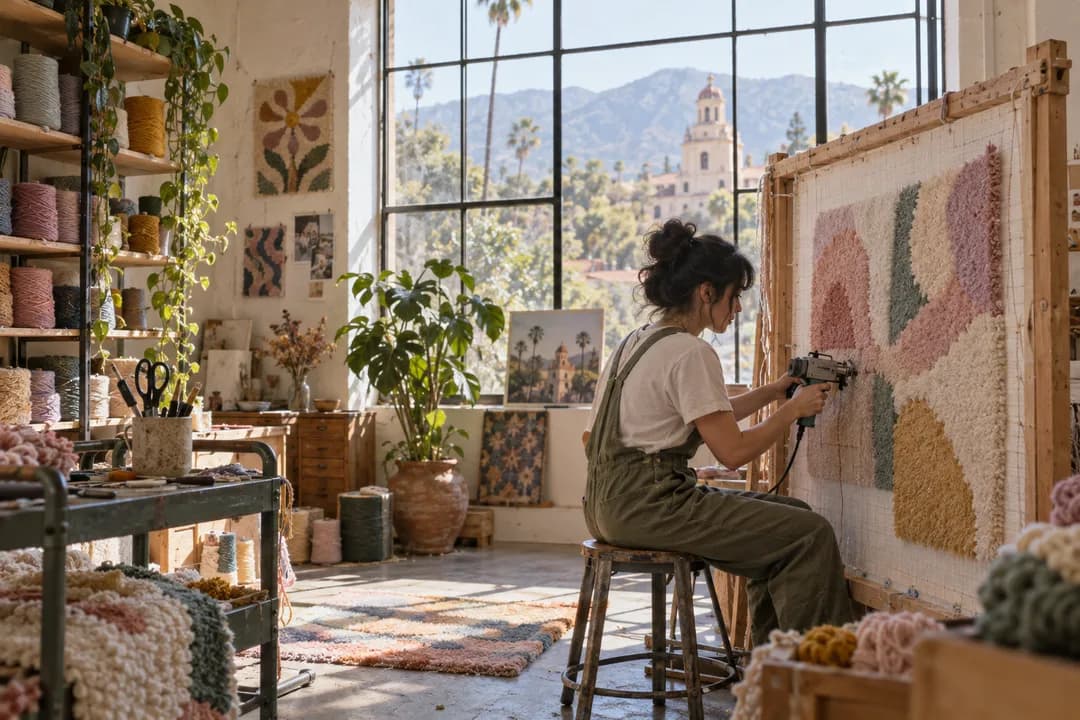
 Fuzzy Rug Studio Rug Tufting Studio: Pastel Workshop
Weekend Plans
Tuft Art Studio Rug Tufting Studio: Koreatown Color Lab
Tuft Art Studio at 3053 W 8th St brings rug tufting to Koreatown with a focused DIY setup. Use the design advice here to make your first session calmer.
Tuft Art Studio makes the rug tufting studio search feel concrete: there is a named room, a frame, a pile of yarn, and a design you have to make decisions about. The address is 3053 W 8th St in Koreatown, where the project works especially well as a planned creative break rather than an accidental drop-in. You are not just decorating a craft object; you are learning how a drawn shape behaves when it becomes a raised surface.
The Koreatown Setup
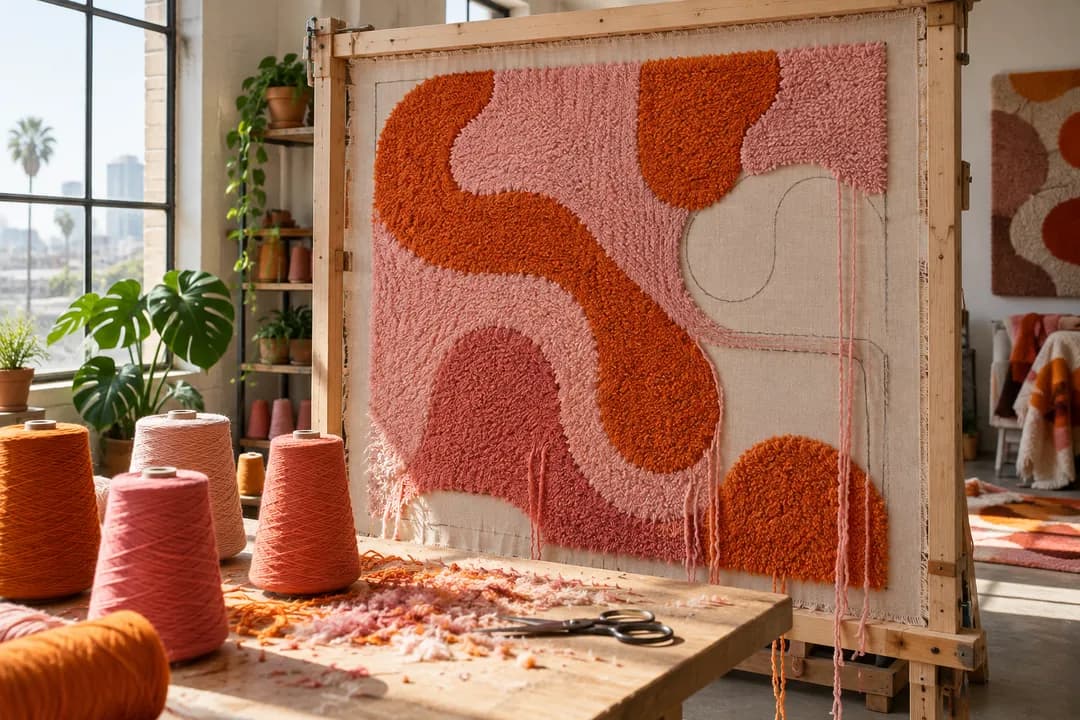
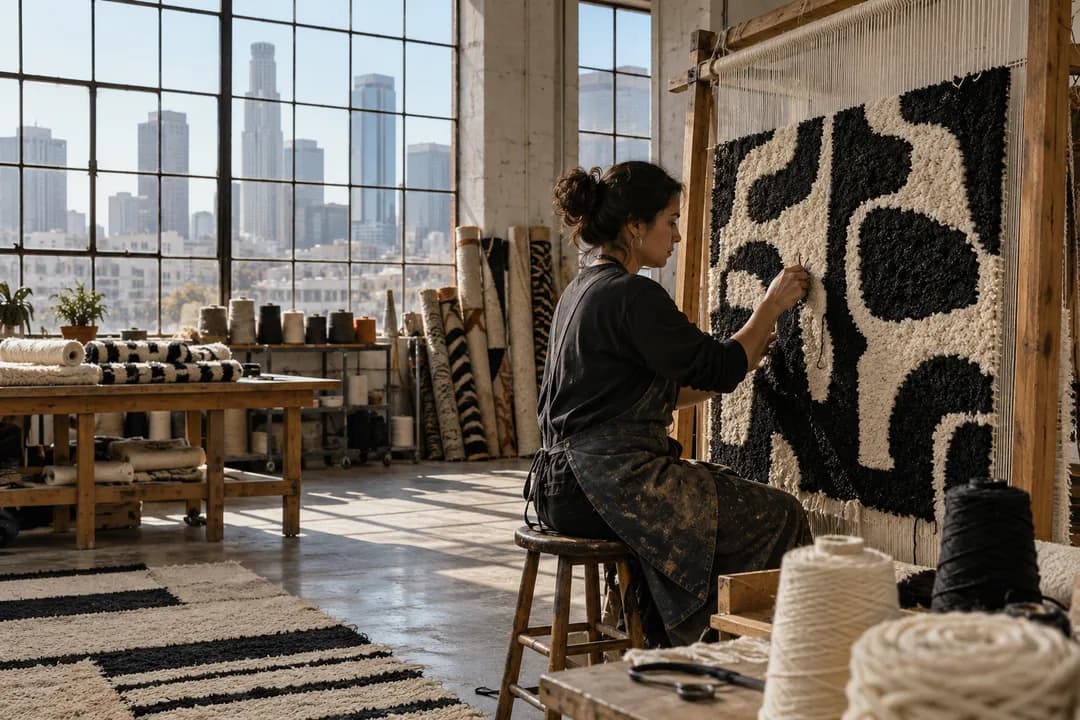
The best opening move is to look at the frame before you look at the yarn wall. Decide where your body will sit, how far your hands need to travel, and whether your reference can be seen upside down or from the side. Tufting rewards simple spatial thinking. If the outline is strong and the color fields are separated, the rug will read clearly even before it is trimmed.
Start With A Readable Shape
For Koreatown, a compact design is a smart choice. A rounded emblem, a thick stripe, a sunburst, or a single playful character can carry the whole piece. Avoid filling every inch of the reference with detail. When the image is reduced to the size of the canvas, the negative space becomes part of the design. Leaving breathing room is not unfinished; it gives the pile a cleaner visual edge.
How To Use Color
Work from the border inward and keep your first pass steady. A tufting gun can make a short line look dramatic, but the surface only becomes convincing when the stitches are close enough to create an even field. Pause after an outline, step back, and look at the shape from the doorway. That distance test catches lopsided corners sooner than staring at the backing cloth.
Studio Etiquette
The studio rule that saves the most time is to ask where a color begins and ends before you commit to it. Keep each cone in one place, cut generous but manageable lengths, and do not drag a strand across someone else’s frame. A tidy work area makes the session feel slower in the best way. You can see the design develop instead of searching under scraps for the next tool.
Make The Session Social
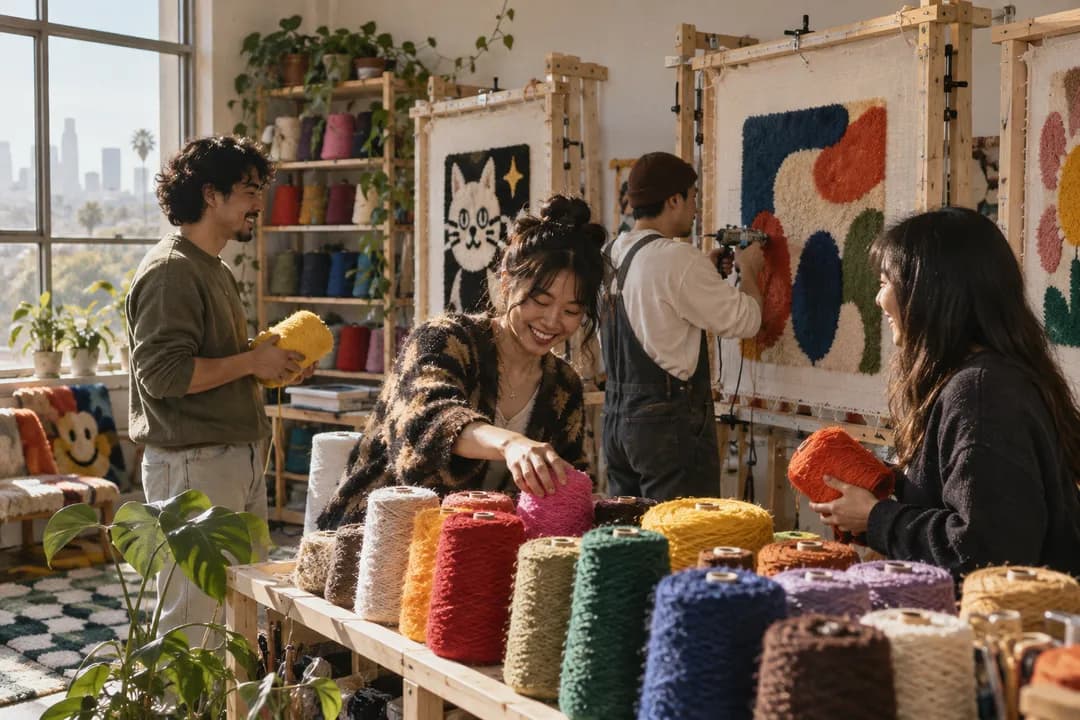
Tuft Art Studio is a natural fit for people who want conversation without a restaurant table between them. Friends can compare outlines, couples can trade color opinions, and solo makers can stay absorbed in the repetitive motion. The room gets more interesting as canvases become distinct: one person may be building a loud graphic, another a quiet neutral piece. The shared energy is useful, but the canvas remains personal.
A Better Neighborhood Plan
The finishing stage is where a first-time maker understands the difference between making a picture and making a rug. The pile needs an even haircut, the backing needs care, and the edge needs to feel intentional. Resist the urge to trim aggressively at the start. Reveal the shape gradually, because a little extra height can make a color field feel richer while a too-short patch is difficult to repair.
Practical Notes
Plan the surrounding outing around Koreatown’s strengths: eat before or after, allow time for a slow walk, and choose one additional stop instead of trying to conquer the neighborhood. A meal, a studio session, and a calm dessert or coffee break make a complete afternoon. The workshop is more enjoyable when you are not watching the clock for a second reservation on the other side of Los Angeles.
A practical design shortcut is to print or save two versions of your reference: one with the original colors and one reduced to a few blocks of contrast. The second version is your decision tool when the yarn choices become distracting. Pick a dominant color, a supporting color, and one accent. A limited palette makes the finished rug look deliberate and helps a beginner learn the tool instead of spending the whole session matching shades.
One honest skip: do not begin with tiny text. Lettering looks easy on paper and becomes unforgiving once the pile is trimmed. If words matter, use one large word with heavy strokes and generous spacing. Otherwise, turn the idea into a symbol. A graphic that can be recognized at a glance is more rewarding than a technically ambitious message that needs explaining.
The best takeaway is not a perfect square. It is a better sense of how pressure, speed, and direction alter texture. You will leave knowing why a corner needs a slower turn, why loose lines create weak spots, and why the back of the canvas tells the truth about density. Those observations transfer to the next project, whether that is another rug or a completely different fiber craft.
The project becomes more memorable when you keep one small record of the process. Photograph the original sketch, the first outline, and the nearly finished pile from the same angle. You will see the image move from idea to texture, and that sequence helps explain why the final rug can feel more personal than a polished store-bought object. It also gives you a practical reference for the next time you choose a frame and palette.
Give the finished piece a name if that helps you remember the design logic. It can be as simple as the palette, the neighborhood, or the day you made it. That small act is surprisingly useful when you later look at the rug and see more than its colors. You remember the decision to widen an outline, change an accent, or leave a patch slightly taller because it made the surface feel alive.
Practical Notes: Tuft Art Studio is listed at 3053 W 8th St, Los Angeles, CA 90005. Its official website is tuftartstudio.com, which should be your booking and project-information reference. Save the address before heading into Koreatown, bring a simple reference image, and leave room in the day for the trim-and-finish stage. The value is in making a personal object, not racing through a checklist.
Ask Karpo for more information.
Keep reading
- Fuzzy Rug Studio Rug Tufting Studio: Pastel Workshop
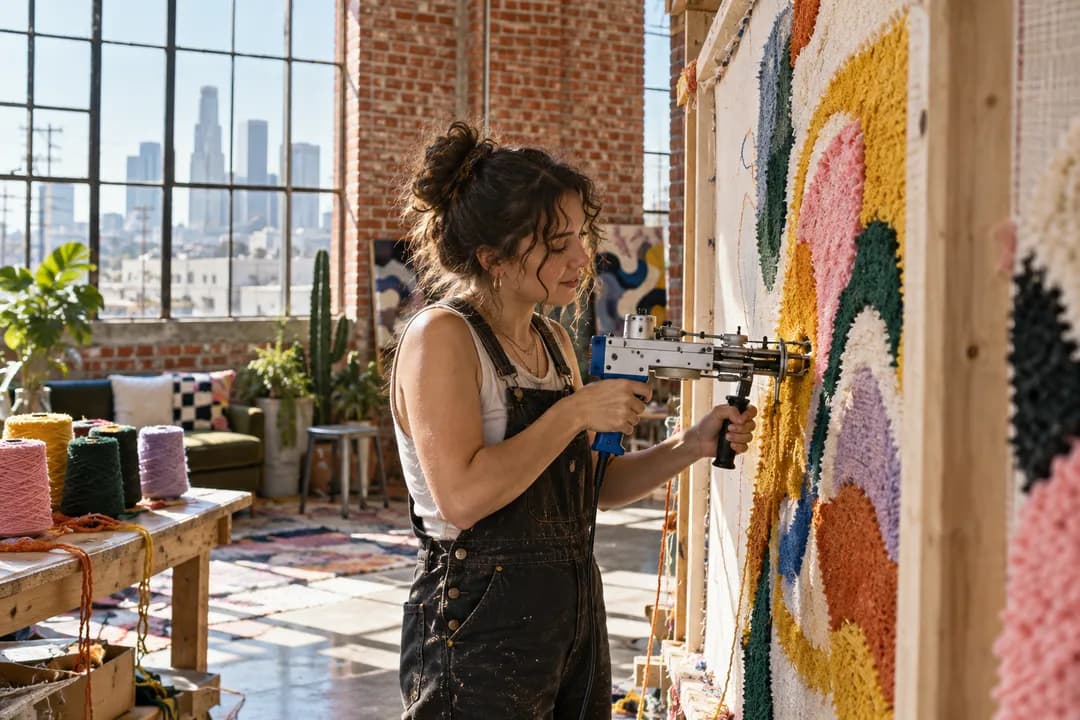 Tufting Around LA Rug Tufting Studio: Arts District Workshop
 Rug Addiction Rug Tufting Studio: Downtown Texture Lab