 Haaland Has Seven Goals and Norway Runs Entirely Through Him
⚽️2026 FIFA WORLD CUP
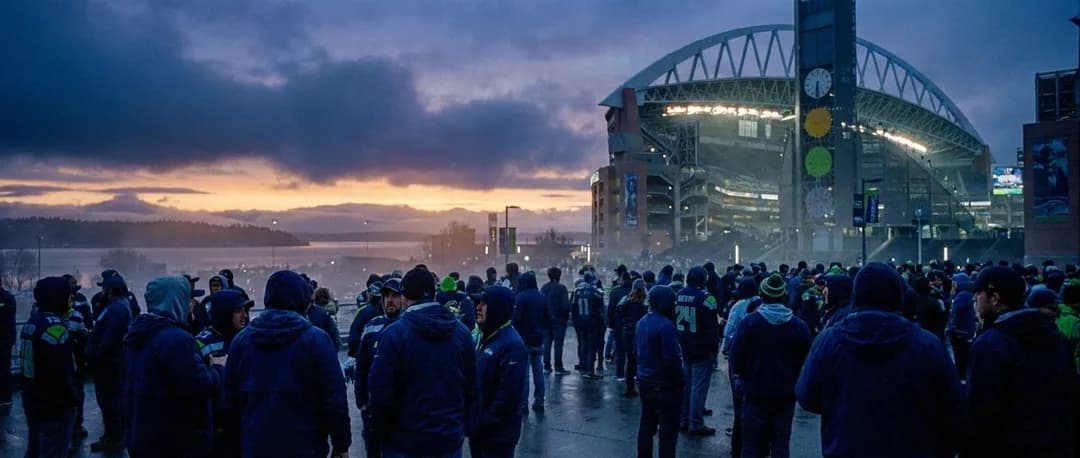
Japan's Training at Lumen Field Brings Seattle's International District to the Practice Fields Before Sunrise
Japan's World Cup training sessions at Lumen Field draw the Seattle International District's Japanese community and broader Asian-American supporters across the 4th Avenue bridge to the practice facility fence before the Puget Sound fog lifts, with the district's Japanese restaurants and convenience stores operating unofficial fan staging operations through the night before major sessions.
The 4th Avenue South bridge carries a stream of headlights toward Lumen Field at 5:15 a.m., an hour when most Seattle mornings belong to delivery trucks and ferry commuters. But on Japan training days, the procession includes sedans with Samurai Blue scarves pressed against rear windows and families carrying thermoses across the empty stadium plaza toward the practice complex fence line. The International District wakes early—Uwajimaya's parking lot already holds a dozen cars, Tsukushinbo's windows glow amber—and by the time the first whistle echoes across the artificial turf at 6:30 a.m., two hundred supporters line the chain-link perimeter where the practice fields meet the stadium's south shadow. The Puget Sound fog hangs low enough to obscure the Space Needle, but every face along the fence can pick out jersey numbers through the mist.
The Parking Equation
The official Lumen Field Event Center lot opens at 5:00 a.m. on training days, accessed via Occidental Avenue South with a $10 flat rate that most fans consider reasonable given the proximity—a two-minute walk to the practice fence's southwest corner. The lot fills by 5:45 a.m. for high-profile sessions, particularly when match preparation intensifies before fixtures like japan vs sweden or other tournament clashes. Overflow parking shifts to the garage at 1st Avenue South and South Royal Brougham Way, a five-story structure that adds three blocks to the walk but rarely reaches capacity before 6:15 a.m. Street parking along Occidental requires reading signs carefully—the stretch between South Massachusetts Street and South Atlantic Street permits two-hour stays starting at 7:00 a.m., which works for training sessions but not for fans hoping to linger afterward. Link Light Rail's Stadium station deposits riders one block from the practice complex, with the first northbound train from Angle Lake arriving at 5:23 a.m. and southbound from Northgate at 5:31 a.m., schedules that accommodate the earliest fence-line arrivals. King County Metro's Route 50 runs along 4th Avenue South starting at 5:00 a.m., connecting the International District directly to the stadium district for fans coming from Beacon Hill or Rainier Valley neighborhoods.

The Sightline Sweet Spot
The practice complex fence runs 180 yards along the south side of the facility, with the best sightlines concentrated at the southwest corner where Occidental Avenue meets the perimeter. Fans stake positions here by 5:30 a.m., pressed against chain-link that offers unobstructed views of the full pitch including both goals and the technical area where coaching staff gather. The fence height—eight feet with no visual barriers—allows clear photography and the ability to hear tactical instructions shouted in Japanese across the turf. A grass berm rises along the eastern fence line, a less crowded alternative that provides elevated perspective but positions watchers farther from the action, roughly forty yards from the nearest touchline. The berm fills with families and older supporters who bring folding chairs and blankets, turning the slope into an impromptu grandstand. The north fence, closest to the stadium's shadow, offers proximity to warm-up zones and stretching areas but poor angles once full-team drills begin. Serious watchers avoid this section. The premium spot—the southwest corner's first fifteen feet—goes to fans who arrive before 5:15 a.m. and maintain their position through the ninety-minute session, a commitment that means standing without bathroom breaks while the fog gradually burns off overhead.
Tsukushinbo Bakery
Tsukushinbo, the Japanese bakery on South Main Street, operates as the unofficial staging ground for training-day pilgrimages. The shop opens at 5:00 a.m., earlier than its posted 6:00 a.m. schedule, when staff recognize the pattern of Japan session days. Supporters crowd the narrow storefront for curry pan and melon pan still warm from the oven, filling the space with the yeast-and-sugar smell that competes with espresso from the corner machine. The bakery's location—three blocks from the practice fence—makes it the natural gathering point for fans arriving too early for lot access or waiting for friends. Conversations in Japanese and English overlap near the pastry case, discussing player form and lineup predictions while the register processes a steady stream of $8 and $12 orders. The shop's owner stocks extra inventory of onigiri and cold canned coffee on training mornings, items that travel well to fence-line positions. By 5:45 a.m., the bakery empties as supporters migrate toward Occidental Avenue, leaving behind only the smell of red bean paste and the hum of the refrigeration units. The space serves as the post-training reunion point as well, with fans returning around 8:15 a.m. for second rounds of coffee and animated recaps of what they witnessed through the fence.
The Session Itself
The team bus arrives at 6:10 a.m., pulling into the secure entrance on the stadium's east side while fence-line watchers crane for glimpses of players descending the steps. By 6:25 a.m., figures in training kits emerge onto the pitch, and the session's rhythm becomes audible—the percussion of balls against boots, the whistle's sharp commands, voices calling for passes in rapid Japanese. Warm-ups proceed in concentric circles, players jogging the perimeter close enough to the fence that supporters can identify individuals by gait and build before jersey numbers come into focus. Passing drills dominate the first thirty minutes, triangles and possession squares that shift across the pitch with metronomic precision. The sound carries clearly in the morning stillness: the thud of driven balls, the skitter of touches on turf, the occasional shout of encouragement. Technical work follows—shooting drills at both goals, set-piece rehearsals with mannequin walls—and the intensity ratchets upward, players sprinting between stations while coaching staff bark adjustments. The fence-line crowd falls silent during these sequences, watching the choreography of professional preparation. Small-sided games close the session, seven-versus-seven competitions that draw cheers from supporters when spectacular plays emerge. The fog lifts by 7:45 a.m., revealing the stadium's full profile and the downtown skyline beyond, but attention remains locked on the pitch until the final whistle at 8:00 a.m.
The Player Window
The autograph window opens unpredictably, dependent on coaching staff decisions and schedule pressures. On relaxed training days, players drift toward the southwest fence between 8:05 and 8:20 a.m., signing jerseys and posing for photographs with fans who've maintained their positions. Star players draw the deepest crowds, three and four rows pressing forward with Sharpies and replica kits extended overhead. The interaction lasts anywhere from eight to twenty minutes, a chaos of Japanese greetings and smartphone cameras held at arm's length. Some players bypass the fence entirely, heading directly to the bus, while others make deliberate stops at multiple sections, working the perimeter with the efficiency of politicians. Children get priority access, lifted to the front by parents and strangers alike, their small hands clutching programs and trading cards. The window closes abruptly when team staff signal departure, players jogging back toward the facility while supporters call final thanks across the diminishing distance. Not every session includes this ritual—morning fixtures or closed practices send the bus away without fence-line interaction—but when it happens, the energy shift is palpable, transforming watchers into participants.
After the Session
The exodus from the practice complex reverses the morning's route, supporters flowing back across 4th Avenue South toward the International District in clusters of two and five and ten. Tsukushinbo absorbs the first wave, but the broader neighborhood becomes the decompression zone. Uwajimaya Village's food court fills with families ordering breakfast plates, discussing what they observed through the fence while children chase each other between tables. Kobo at Higo sells out of Samurai Blue merchandise by 9:00 a.m., the small gift shop near Jackson Street overwhelmed by post-training shoppers seeking last-minute scarves and pins. Caffè Umbria on Occidental pours lattes for fans who prefer Italian espresso to Japanese convenience-store coffee, its sidewalk tables occupied by supporters scrolling through fence-line photos on their phones. The neighborhood's rhythm absorbs the training-day surge, then returns to its usual tempo by mid-morning, leaving only the occasional Samurai Blue jersey visible among the produce stalls and dim sum restaurants that define the district's daily life.
Practical Notes
• Gates open 5:00 a.m.; arrive by 5:15 a.m. for prime southwest corner fence positions
• Parking
Sources consulted: fifa.com (https://www.fifa.com) · timeout.com/seattle (https://www.timeout.com/seattle) · visitseattle.org (https://www.visitseattle.org)
All trademarks are the property of their respective owners.
Ask Karpo first
Trying to reach Lumen Field's practice complex from the International District before Japan's fence-line positions are gone — need the transit route, gate timing, and whether the south berm is accessible?
Ask Karpo for Japan's confirmed Lumen Field training schedule, the Link Light Rail stop and walk route, and the International District fan circuit that starts organizing at 4:00 a.m.
Ask Karpo for more information.
Keep reading
- Haaland Has Seven Goals and Norway Runs Entirely Through Him
 World Cup Trophy Ceremony Timing Medals and Postmatch Celebrations
 Olise and France's Attack: The Semifinal Tactical Question